


Category: Americas, Faith & Spirituality, Featured, Life & Society, Women Topics: Festivals (Eid), Prayers (Salah), Women Views: 17072
17072
Masculine Eid: Half-full or Half-empty?
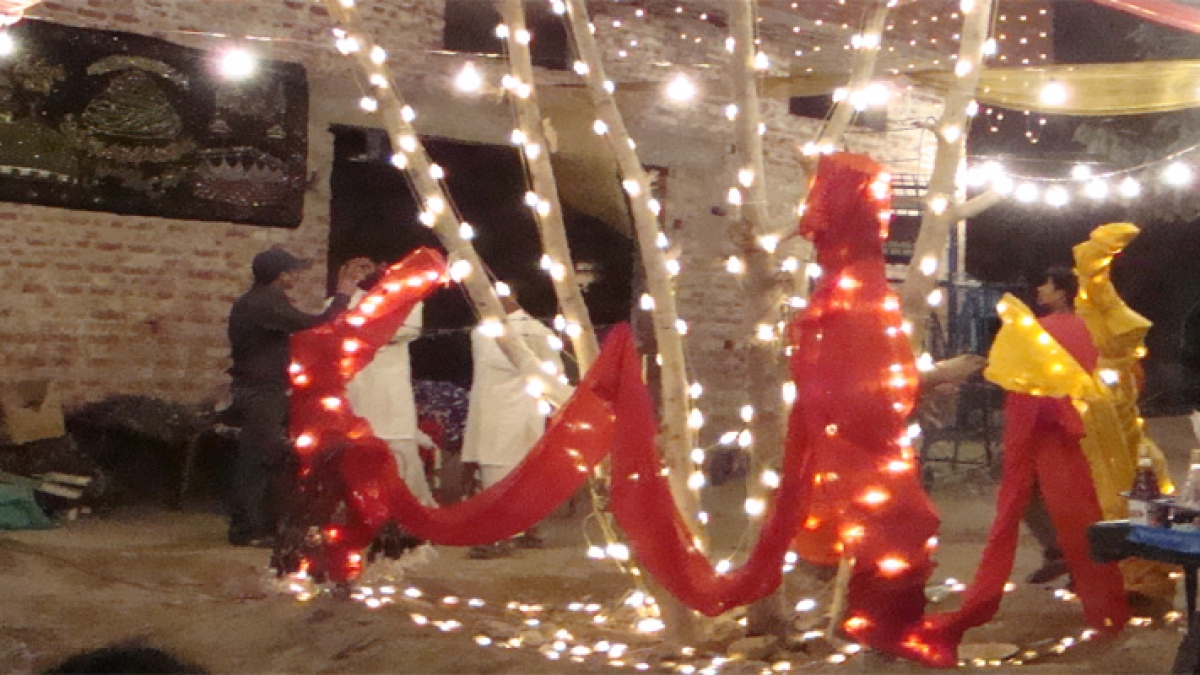



It is often said that people with positive outlook generally see a glass half-full, rather than half-empty. Is it possible that some time having positive outlook may be more appropriately related to seeing the glass as half-empty? Let's see.
In my family here in the US, except myself, all other members are female: my beloved wife and two daughters. Our married life basically begun here as expatriates somewhat untouched by the customs and cultures of our homeland. My two daughters were born and have grown up here in the USA.
When I first came to the US in 1981, as I started attending mosques here, I had a fundamental culture shock. I hope readers would forgive my dramatization. Women's coming to the mosque is generally not what we are exposed to, not only in our own homeland, but in much of the Muslim world. That women and mosques are two mutually-exclusive entities is not an uncommon sentiment. Or, at least, we prefer the mosques to be basically a place for us, the good old (and young too) men. If our generosity is overflowing then we might let those women attend mosques who just can't stay away, but we must make sure that nobody sees them or that they are there. A wall or screen is a must. [Note: There wasn't any at the time of the Prophet.] They may have eyes (indeed, most of those eyes probably are beautiful to see through), but they must benefit from mosque participation from only hearing - they usually can't even see the Imam. At the time of the Prophet, the women could hear AND see him at the prayer.
Well, I have seen some women attending mosques, for example, in Bangladesh. I had a bigger shock after coming to the US, when I observed women coming and attending the Eid prayer as well. What a monstrosity! I came to the US before getting married. Thus, at least I did not have to struggle with the decision about dealing with my beloved, who probably happily would have sent me, one of the good old (I was young, of course) men, to the Eid prayer (the gathering of joy and festivity).
At first I thought it was because of the socially polluting environment of this American society. In our homeland, Eid activities (the religious aspects) are primarily for men. We all would wake up early in the morning (usually drowsy from going to bed late), take a bath, dress up (and Thanks to Allah, not being those - you know those wretched poor! - every Eid we had new outfits, gifts, spending money and so on), and then we the good old men (and boys - the to-be-men) would march in joyous and perfumed spirit toward that place called Eidgah (the open venue for Eid prayers) - our masculine domain. Some of those poor, begging women, who know nothing about our precious Deen (way of life; religion) would be there of course to give us opportunity to show our generosity, but other than that women stayed back home. Ironically, it's not that they don't go out; so many shopping areas they are hitting regularly.
Of course, they were ONLY our beloved wives, mothers, sisters, or daughters. Young females at middle-class homes could have somewhat leisurely life the Eid day. But the adult women, basically most of the day there time is spent immersed in the joy of cooking those most delicious meals, even thoughts of those great items made with their personal touch makes me salivate. During the course of the day they might visit some of their friends or relatives or attend guests, but that's their happy share of the Eid (celebration). Therefore, what is this monstrous deviation here from and pollution of our custom?
Three years after I came to the U.S. I tied my knot with someone who stole my heart some time ago. The next Eid we were part of this monstrosity, and somehow it did not feel bad at all! Due to various other factors, into which I won't delve here, I readjusted the radar of my consciousness and conscience and started re-reading the Quran and the Hadith literature such as Sahih Bukhari (not the pulp literature: Maqsudul Muminin, Easy Salat Lessons, Neyamul Quran etc.). I have read Quran and quite a bit of Hadith literature before coming to the US, but when we have preconceived notions, we often read and receive only what we already have impressed in our minds.
I have read Sahih al-Bukhari and Muslim before. But as I now started reading somewhat conscious about gender-related narrations with readjusted antenna of my mind, I had to endure newer shocks. No, that the women were coming to mosques and, particularly, Eid prayer is not a monstrous deviation. They are doing the right thing as Islam inspires and instructs them to do. What we have in the predominant culture of our Muslim society, like in Bangladesh, is mostly, as in this case too, just the opposite of what Islam teaches. What does Islam teach? [emphasis mine]
Sahih Bukhari: Volume 1, Book 6, Number 321:
Narrated Aiyub:
Hafsa said, 'We used to forbid our young women to go out for the two 'Id prayers. A woman came and stayed at the palace of Bani Khalaf and she narrated about her sister whose husband took part in twelve holy battles long with the Prophet and her sister was with her husband in six (out of these twelve). She (the woman's sister) said, "We used to treat the wounded, look after the patients and once I asked the Prophet, 'Is there any harm for any of us to stay at home if she doesn't have a veil (WRONG TRANSLATION: In the Hadith the word is Jilbab meaning outer garment, including head-covering; not veil or face covering. This is translator's unwarranted bias)?' He said, 'She should cover herself with the veil (SHOULD BE "outer garment") of her companion and should participate in the good deeds and in the religious gathering of the Muslims.' When Um 'Atiya came I asked her whether she had heard it from the Prophet. She replied, "Yes. May my father be sacrificed for him (the Prophet)! . . . I have heard the Prophet saying, 'The unmarried young virgins and the mature girl who stay often screened or the young unmarried virgins who often stay screened and the menstruating women should come out and participate in the good deeds as well as the religious gathering of the faithful believers but the menstruating women should keep away from the Musalla (praying place).' " Hafsa asked Um 'Atiya surprisingly, "Do you say the menstruating women?" She replied, "Doesn't a menstruating woman attend 'Arafat (Hajj) and such and such (other deeds)?"
Sahih al-Bukhari: Volume 2, Book 15, Number 88:
Narrated Um 'Atiya:
We used to be ORDERED to come out on the Day of 'Id and even bring out the virgin girls from their houses and menstruating women so that they might stand behind the men and say Takbir along with them and invoke Allah along with them and hope for the blessings of that day and for purification from sins.
WOW! I must have read these Hadiths before, as I completed a thorough reading of Sahih al-Bukhari before coming to the U.S., but how did I still get my shock here? Do our respected religious scholars don't know about these? According to these Hadiths young or old, married or virgin, menstruating or non-menstruating, having means to cover head or not, women are to attend the Eid prayers.
Now my daughters are 17 and 13. They are part of our participation in mosques and in all other religious activities. I can't even imagine going to Eid prayer alone, leaving my wife and daughters at home. It just won't be Eid!
Some might say that we have not seen any among our women family members (mother, wife, sister, daughter) unhappy due to not going to the Eid prayer. Well, there is something called acculturation (the process by which a human being acquires the culture of a particular society from infancy). Isn't there? At the risk of making some of my women relatives back home upset due to the additional obligation, the fact of the matter is that in Islam we are supposed to live our lives together: in joy and sorrow, in health and sickness, in ease and adversity, as well as inside and outside home. Of course, it would be another injustice to women, if they are supposed to do all that they do now (cooking, cleaning, serving, taking care of the kids - the nobler things of life) and then on top of that they have to go the Eid prayer as well. Let alone the predicament as to what is going to happen to halwa and all those dishes prepared during Eid - yum yum! - that we good old (and young) men are supposed to feast ourselves upon our return to home!
Well, it's actually simple. Going to Eidgah is not for men only, as cooking/cleaning/serving are not for women only either. We men and women share these tasks. Now that does not sound Islamic, does it? That's right! Our custom is that good old (and young) men are for doing better, harder things of life. I have not seen my grandparents/parents generally doing any household chore. Of course, everyone's grandparents and parents are different. How about yours? But is this what Islam teaches us? Let's see.
Narrated Al-Aswad: I asked Aisha (r): What did the Prophet  use to do at home? She replied: He used to keep himself busy serving his family and when it was the time for prayer, he would get up for prayer. [Sahih al-Bukhari, Vol. 8, #65]
That our women are absent from the Eid prayer, despite the fact that Islam categorically and strongly emphasizes it, is merely an indication of perversions in the name of religion: in this case, it's Islam. This perversion and deviation have started long ago. Unfortunately, in some cases, Hadith collectors/compilers sometimes have become victims of bias, I believe not due to conscious prejudice. For example, in Sahih Muslim (English; vol. 2, #1932-1934) ALL THREE Hadith in regard to women's attending Eid prayer uses the expressions:
- The Prophet COMMANDED
- We were COMMANDED,
- The Prophet COMMANDED
But the compiler of the Hadith editorialized the Chapter heading as: "PERMISSIBILITY (in Arabic Ibaha) of going out of Id days toward the place of worship". [It's like saying "Permissibility of namaz, zakat or hajj by Muslims"! Do we say that Muslims are PERMITTED to offer Salat, give Zakat or perform hajj?] What the Prophet has COMMANDED has been rendered into PERMISSIBLE and then basically banishment. [Note: A person having a bias in one context does not imply a general bias in any person, and thus, my comment about Hadith collectors should not be misconstrued as a general statement either.)
This absence is more than just from the Eid prayer. In our predominant (seemingly) Muslim culture of Bangladesh (and it may apply to other countries as well), they are not part of anything meaningful and dynamic. I hate to say but am I wrong in saying that our Eid is a MASCULINE Eid?
During some of my visits to Bangladesh, when I had the opportunity to attend Eid prayers, I could say that it was half-full or half-empty. But saying it half-full might make us too comfortable with the half-full. It MUST change. Thus, presuming that I am taking a positive approach here, I feel more appropriate to see the Eidgah as half-empty so that I never fail to miss the other half.
Facilitating women's participation in the society, within the broad guidelines of Islam as Muslims would or should, stretching from home to school to even battle-field (as well as other corridors of power, rights, status), can begin joyfully right from Eidgah!
Actually, our overall Eid celebration should be inclusive of our non-Muslim friends (of course, when they are not unwilling to partake). But that's another subject.
Dr. Farooq is an associate professor of economics and finance at Upper Iowa University; Homepage: http://www.globalwebpost.com/farooqm; The author requests volunteers if anyone is interested in translating this piece in their native language. email: [email protected]
Category: Americas, Faith & Spirituality, Featured, Life & Society, Women
Topics: Festivals (Eid), Prayers (Salah), Women
Views: 17072
Topics: Festivals (Eid), Prayers (Salah), Women
Views: 17072
Related Suggestions








Older Comments:
MIKHAIL TING M. KUSAIN FROM PHILIPPINES said:
Very interesting article. In the Philippines, women are commonly seen participating both ramadhan prayers (taraweh),eid'l fitre and eid'l adha in the mosques.It's indeed a family affair so why restrict women attending this very significant event among muslims?I really wonder why some still practice this restriction.May Allah bless the writer.
2005-11-07
DR EDRISS FROM US said:
It depends where you coming from. I know the 22 arab land from where the best scholars of Islam came, all have any Musjid(not mosque, I don't know where people bring this mosque name) with a section for women. you said you are from Bangladish and you sound like claiming there is no such thing in bangladesh!!! I wonder how women become leaders of Bangladesh!!!!?
there is nothing wrong in saying more women in America attempt the Musjid and you can do it without lying on your native country. but you still have to open your mind and think about how many musjids in US and how many Musjids in moslem land? I believe for each Musjid in US, there is at least 100 Masjid in the worst Islamic country: which mean if you enter a Musjid in Islamic land and find few women, you have to multiply that number 100 times to be able to compare it to whatever you see in US.
we are Alhumdulillah happy that our women have their hearts with the Musjid. if they are in US or Russia or saudia, they are all our moslem women and we are proud of them. anybody who try to play devil between them to please somebody else(???) will be seen doing evil and we wish Allah guides Him to the right path.
It depends where you coming from. I know the 22 arab land from where the best scholars of Islam came, all have any Musjid(not mosque, I don't know where people bring this mosque name) with a section for women. you said you are from Bangladish and you sound like claiming there is no such thing in bangladesh!!! I wonder how women become leaders of Bangladesh!!!!?
there is nothing wrong in saying more women in America attempt the Musjid and you can do it without lying on your native country. but you still have to open your mind and think about how many musjids in US and how many Musjids in moslem land? I believe for each Musjid in US, there is at least 100 Masjid in the worst Islamic country: which mean if you enter a Musjid in Islamic land and find few women, you have to multiply that number 100 times to be able to compare it to whatever you see in US.
we are Alhumdulillah happy that our women have their hearts with the Musjid. if they are in US or Russia or saudia, they are all our moslem women and we are proud of them. anybody who try to play devil between them to please somebody else(???) will be seen doing evil and we wish Allah guides Him to the right path.
2005-11-06
HAYFA said:
This sure does bring alot of heated debate! Usually happens when talking about what women can and cannot do..
If women were expencted to cover 'head to toe with one eye showing' around men then :
a: why can't women go the mosque or anywhere else if we are decently covered then there is no issue
or
b: why would men then need to 'lower their gaze' if women were completely covered in such a manner?
Much about the Quran and Sunnah is tied into basic logic.
Why would Eid be separated seprately when the family is the cornerstone of Islamic life? Seems that the Quran and Hadiths clearly emphasize the positive relationship needed between husband and wife, children etc. Within basic guidelines of decency it seems illogical to prohibit it.
If women were expencted to cover 'head to toe with one eye showing' around men then :
a: why can't women go the mosque or anywhere else if we are decently covered then there is no issue
or
b: why would men then need to 'lower their gaze' if women were completely covered in such a manner?
Much about the Quran and Sunnah is tied into basic logic.
Why would Eid be separated seprately when the family is the cornerstone of Islamic life? Seems that the Quran and Hadiths clearly emphasize the positive relationship needed between husband and wife, children etc. Within basic guidelines of decency it seems illogical to prohibit it.
2005-11-04
IVIANELA FROM USA said:
One of the most interesting articles i have ever read.
2005-11-04
FAUZER UVAIS FROM AUSTRALIA said:
I largely agree with the author.
I genrally have trouble with the very restrictive interpretation of islam that has been traditionally dished out by 'ulemas', and even more restictive culturaly biases
that have crept into 'islam'. Some people belive in prohibiting things that God has permitted, 'just to be extra safe'. I feel this is very dangerous. God has given us
enough guidance as he sees fit, it is up to individuals and groups to act responsibly within the guide lines of God.
How anyone can claim that women should only expose 1 of their eyes is beyond me. Did God give women special 3 dimensional view on just the 1 eye or did he
decide women do not deserve to be able to tell differences in distances?
I can't understand how an intelligent people can not have cross gender engaments at various levels, including attending prayers. I don't believe God intended
us not to do so. It is up to all of us to do so responsibly.
I do agree with some comments that the eid gatherings have become a fashion show. I feel we need strong leedership from mosques and other community
leaders to actively encourage proper dress and behaviour code among our people.
Muslims have succesfully kept their heads burried under sand for so long under the guise of following islam, no wonder the western world trods all over us
despite being so many in numbers, and the seemingly endless natural wealth God has given to so called muslim countries.
Enough with prohibiting the permitted. Wake up! Educate! Strengthen! Show leadership! Have some say in what goes on in the world today for goodness sakes.
Quran is the only absolute guidance from God. Any interpretation of the Quran or hadiths should not be regarded as absolute, and must be discussed and debated where there is a need.
Eid mubarak, and salam to all.
I genrally have trouble with the very restrictive interpretation of islam that has been traditionally dished out by 'ulemas', and even more restictive culturaly biases
that have crept into 'islam'. Some people belive in prohibiting things that God has permitted, 'just to be extra safe'. I feel this is very dangerous. God has given us
enough guidance as he sees fit, it is up to individuals and groups to act responsibly within the guide lines of God.
How anyone can claim that women should only expose 1 of their eyes is beyond me. Did God give women special 3 dimensional view on just the 1 eye or did he
decide women do not deserve to be able to tell differences in distances?
I can't understand how an intelligent people can not have cross gender engaments at various levels, including attending prayers. I don't believe God intended
us not to do so. It is up to all of us to do so responsibly.
I do agree with some comments that the eid gatherings have become a fashion show. I feel we need strong leedership from mosques and other community
leaders to actively encourage proper dress and behaviour code among our people.
Muslims have succesfully kept their heads burried under sand for so long under the guise of following islam, no wonder the western world trods all over us
despite being so many in numbers, and the seemingly endless natural wealth God has given to so called muslim countries.
Enough with prohibiting the permitted. Wake up! Educate! Strengthen! Show leadership! Have some say in what goes on in the world today for goodness sakes.
Quran is the only absolute guidance from God. Any interpretation of the Quran or hadiths should not be regarded as absolute, and must be discussed and debated where there is a need.
Eid mubarak, and salam to all.
2005-11-04
LAILA NAMDARKHAN FROM UK said:
I attend Eid prayers and God willing every Jhumma, but I do so knowing that as a womon I am only provided with a small place to perform prayer behind a screen without being able to see the Imam...this behaviour from the Male elders of the Mosque is characteristic of all Pakistani and Kashmiree mosques.......womon are only accomodated as an after thought there are no real facilities for womon or children in these mosques and culture NOT the teachings of Islam descriminate against Muslim womon. I agree that most Mosques encourage a culture of separation rather than emphasising family unity...while men who claim to be Muslims continue to be allowed to manifest their own version of Islam rather than the truth Islam will forever be burden with their shame and sins against womon. For those there is Insha Allah no place in paradise.
2005-11-04
MOHAMED said:
the writer's own explantion on the word "gilbab" is absurd, totally condradicting the true meaning. In Surah ahzab verse 59 allah mentions " Tell thy wifes and thy daughters and the women of the believers to draw their cloaks close around them(when they go out). That will better so that they may be recognized and not annoyed. Ibn jareer has reported from ibn abbas in the tafseer of this verse ' a thick cloth in which a woman conceals herself from head to toe allowing a narrow opening by the eye for the means of seeing' the hadith giving permissibility for women to go out to the eid congregation was to project a greater number of muslims for the onlooking non-muslims.
2005-11-03
ANONYMOUS said:
A mother, wife, sister, aunt, in other words a woman, has more opportunities to inspire and educate our children in the ways of islam. Let's not continue to suffocate our women. Let our women bring our children to mosque, to prayer, to islam. Our islam needs our women now more than ever.
2005-11-03
ROSEMARY FROM BELGIUM said:
Dear Sir, Salaam Aleikoum,
I am a new convert to Islam and although I am glad, for you, that your eyes have been opened a bit since going to live in the States, it makes me very sad to think of the situation for women in Bangladesh. It seems like 'an old boys' club' which shuns outsiders (women = 50% of your population). It can never have been the intention of Allah, nor even of his prophet Mohamad (pbuh) to exclude women from practicing their religion. We know men are guilty of many things, and this is one of them.
Then there is an outcry in the west by moslims who claim their faith is misunderstood and wrongly represented. Is this the case ? I think not. I am really sad and pray for enlightenment for all.
I am a new convert to Islam and although I am glad, for you, that your eyes have been opened a bit since going to live in the States, it makes me very sad to think of the situation for women in Bangladesh. It seems like 'an old boys' club' which shuns outsiders (women = 50% of your population). It can never have been the intention of Allah, nor even of his prophet Mohamad (pbuh) to exclude women from practicing their religion. We know men are guilty of many things, and this is one of them.
Then there is an outcry in the west by moslims who claim their faith is misunderstood and wrongly represented. Is this the case ? I think not. I am really sad and pray for enlightenment for all.
2004-02-16
UMAIR ABDUL QADIR FROM CANADA said:
I rather see muslim women in the mosque and participating social and academic events. It says in the Qu'ran that Muslim men and women are protectors of one another protecters from whom ??Shaitaan. That's one place Shaytaan does not like to be, at the mosque. Please correct me if I'm wrong and back it up with Quran and sunnah. Kinda regreting posting my comments now well i hope someone can corrects me if I made any mistakes.
JazzahKallah Khairn. Stay strong sisters and know who your role models Haghar, Khadijah, A'isha RRA etc. Sisters we need to you to change people's minds about how Islam treats women.
JazzahKallah Khairn. Stay strong sisters and know who your role models Haghar, Khadijah, A'isha RRA etc. Sisters we need to you to change people's minds about how Islam treats women.
2003-12-25
NAIMA FROM USA said:
Al Hamdulillah! Thank you for such a sensitive and factual comment on the fundamental issue of participation. Allah says in the Quran: believing men and believing women, pious men and pious women...
2003-12-11
TAJAHI FROM US said:
This is a good article. I am glad you were able to change your view of women in the masjid and I think it is wonderful that you took the time to study and see the correct way women should be included in the masjid. I currently attend a masjid that has no screen and I must say that is so much better than being placed in a small room where it is hard to hear the Imam or even feel that you are a part of what is going on. Thank you for this article and hopefully more muslims who have been influenced by culture to can read this and look for themselves to see how the prophet felt about the woman participating in the masjid. Sister Tajahi
2003-12-07
USMAN FROM KSA said:
brother shakir
i dont think anybody has prevented it.its only said that its permissible-not cumpolsory 4 women to attend the eid prayers.in regular prayers its best to pray at home
PS-u cant follow the quran compeletely without following hadith,to follow the prophet is a command of the quran itself.
i dont think anybody has prevented it.its only said that its permissible-not cumpolsory 4 women to attend the eid prayers.in regular prayers its best to pray at home
PS-u cant follow the quran compeletely without following hadith,to follow the prophet is a command of the quran itself.
2003-12-06
SHAKIR EBRAHIM FROM INDIA said:
I am gald to see 57 people agreeing and only 10 disagreeing...there is some hope for the Muslim Ummah yet
2003-12-04
SHAFIQ FROM SAUDI ARABIA said:
As far as we know women should attend the Eid prayers, But with proper dress not revealing their beauty to the men. For normal paryers they get more Ajr (Reward) if they pray at their homes.
2003-12-03
SISTER SARA FROM PHILIPPINES said:
lhamdulillah i read this article. It has really enlighten me in terms of attendin Eid prayers. I've never met any muslim woman performing her Eid at home and i couldn't imagine myself as well.
2003-12-03
FARIDA FROM USA said:
I AGREE WITH THE ARTICLE. IF I CAN'T GO TO MOSQUE IN EID DAY,IT SEEMS TO ME INCOMPLETE.
2003-12-02
YASSINE FROM MOROCCO said:
Piety is not male. The male and the female are two facets of the same creation of Allah Soubhanah. Allah does not look at our faces (or at our differences of sex), but He looks at our hearts (place of piety according to Hadith). In Paradis, Adam and Eve were companions. After, it was the samething on Earth. Islam is Fitra. Men and Women are Brothers in the eyes of Islam. May Allah Soubhanah guide our Oumma to the straight Path, Amine.
2003-12-02
MARIAM BANGEE FROM U.S.A. said:
i found this article very interesting and informative...it sheds light on a very controversial subject and with hadeeth to back it up..i fully agree with what the author said..
2003-12-01
SIS NAZIRA ALI FROM TRINIDAD, WEST INDIES said:
Assalaamu Alaykum
SubhanAllah, I cannot imagine an Eid with me and my daughters staying at home and not going to the Masjid or Eidgah for Salaatul Eid, after fasting the whole month of Ramadan and I am 55 years of age . This has always been our practise in Trinidad where women and children as well as the menn go for the Eid Salaah. Food is shared and toys are distributed to the children; I got toys at our Masjid when I was a small girl.
Alhamdullilah , it is so good that more and more persons are realising that we need to re read and follow the Mathab of Muhammad ibn Abdullah upon whom be peace and not culture which sometimes goes against the very tenets of Islam.
Continue writing , Dr Omar Faroq and may Allah Subhanahi wata'ala reward you and your family immensely Insha'Allah .
Was salaams and Eid Mubarak
SubhanAllah, I cannot imagine an Eid with me and my daughters staying at home and not going to the Masjid or Eidgah for Salaatul Eid, after fasting the whole month of Ramadan and I am 55 years of age . This has always been our practise in Trinidad where women and children as well as the menn go for the Eid Salaah. Food is shared and toys are distributed to the children; I got toys at our Masjid when I was a small girl.
Alhamdullilah , it is so good that more and more persons are realising that we need to re read and follow the Mathab of Muhammad ibn Abdullah upon whom be peace and not culture which sometimes goes against the very tenets of Islam.
Continue writing , Dr Omar Faroq and may Allah Subhanahi wata'ala reward you and your family immensely Insha'Allah .
Was salaams and Eid Mubarak
2003-12-01
NAYEEM FROM INDIA said:
I do agree based on the information provided and I would love to see sisters be a part of Eid celebrations
2003-12-01
SHABNAM NISHA ALAM FROM USA (ORIGINALLY FROM FIJI ISLANDS) said:
Assalaam alaikum wa Rahmatullahi wa Barakatuh
I would like to bring to your attention only one of the importance of having a place for women in the mosque. (I know that there are also several other reasons too)
Muslims in the USA are now becoming more attached to the mosque; attending as many daily prayers, the Juma and Tarawih prayers and also the several lectures and classes conducted on Sundays and evenings. We are aware that the children are also part of this and mostly the fathers or male members bring them along. So what about those homes where there is no male and the women needs her sons (10 to 16 years old) to attend the Juma prayers which is now obligatory on them and the mosque is 20 miles away. It has come our attention that these women are so grateful that there is a place for them (women) to pray at these mosques in the USA. Because while these women are waiting for their children to participate in the prayers, they also have the opportunity to offer their prayers as well ( behind the same imam); or while bringing them for the lectures from Asr to Maghrib they also participate and both mother and children have their fixed times that so and so day they will be able to get knowledge and also offer prayers.
These children otherwise would have been left out if the policy here was the same as backhome; no women in the mosques!! Thanks for all those organisations and mosques where you have provisions for our sisters; at conferences, lectures, mosques, eid-gahs, etc.
I would like to bring to your attention only one of the importance of having a place for women in the mosque. (I know that there are also several other reasons too)
Muslims in the USA are now becoming more attached to the mosque; attending as many daily prayers, the Juma and Tarawih prayers and also the several lectures and classes conducted on Sundays and evenings. We are aware that the children are also part of this and mostly the fathers or male members bring them along. So what about those homes where there is no male and the women needs her sons (10 to 16 years old) to attend the Juma prayers which is now obligatory on them and the mosque is 20 miles away. It has come our attention that these women are so grateful that there is a place for them (women) to pray at these mosques in the USA. Because while these women are waiting for their children to participate in the prayers, they also have the opportunity to offer their prayers as well ( behind the same imam); or while bringing them for the lectures from Asr to Maghrib they also participate and both mother and children have their fixed times that so and so day they will be able to get knowledge and also offer prayers.
These children otherwise would have been left out if the policy here was the same as backhome; no women in the mosques!! Thanks for all those organisations and mosques where you have provisions for our sisters; at conferences, lectures, mosques, eid-gahs, etc.
2003-12-01
HAMAD FROM CANADA said:
salam 3alaykum
Ali, let me ask you one question:
you're the one telling us this is from the sunnah ,that is not etc
Is bad manners from the sunnah?
One of the conditions to post here is to have respect to others.
and btw, i would really be interested on knowing who are the scholars you're taking your knowledge from
what a typical salafi!
salam 3alaykum
JazakAllah khayr
Ali, let me ask you one question:
you're the one telling us this is from the sunnah ,that is not etc
Is bad manners from the sunnah?
One of the conditions to post here is to have respect to others.
and btw, i would really be interested on knowing who are the scholars you're taking your knowledge from
what a typical salafi!
salam 3alaykum
JazakAllah khayr
2003-12-01
USMAN FROM KSA said:
Allah Ta'ala says in the noble Qur'aan, 'O Nabi (Sallallaahu Alayhi
Wasallam) say toyour wives, your daughters and to the women of the Mu'mineen
that they draw over them their Jilbaabs (outer cloaks or Burqahs). That
(covering themselves with Jilbaab) is the least (minimum requirement which
they should adopt) so that they be recognised and not be molested (by
shameless people of loose morals).' (Ahzaab 59)
The word, 'Jilbaab' which appears in the Aayat is the plural of the word
'Jilbaab'. Hadhrat Ibn Abbaas (Radhiallaahu Anhu) says that a Jilbaab is
such a garment which covers the entire body. (Tafseer Roohul Ma'aan vol.22
pg.88)
The word, 'Khimaar' which appears in another Aayat refers to the
scarf/head-covering which is generally worn and is for daily use, but when
there is a need for the woman to emerge from the home, then it is necessary
for her to don the Jilbaab.
Hadhrat Ibn Abbaas (Radhiallaahu Anhu) further states, 'The women must cover
their faces and heads with their Jilbaabs and leave only one eye exposed
(covered).' (Ibid)
Hadhrat Abu Ubaydah Salmaani (Radhiallaahu Anhu) was asked by Muhammad ibn
Sireen regarding this Aaayat, then Hadhrat Salmaani demonstrated (as a means
of explanation) by covering his head and face with his shawl and he left his
head and face with his shawl and he left his left eye exposed.
(Tafseer Roohul Ma'aan vol.22 pg.89; Tafseer Mazhari vol.10 pg.252 (Urdu);
Tafseer Mawaahibur Rahmaan vol.5 pg.113)
Wasallam) say toyour wives, your daughters and to the women of the Mu'mineen
that they draw over them their Jilbaabs (outer cloaks or Burqahs). That
(covering themselves with Jilbaab) is the least (minimum requirement which
they should adopt) so that they be recognised and not be molested (by
shameless people of loose morals).' (Ahzaab 59)
The word, 'Jilbaab' which appears in the Aayat is the plural of the word
'Jilbaab'. Hadhrat Ibn Abbaas (Radhiallaahu Anhu) says that a Jilbaab is
such a garment which covers the entire body. (Tafseer Roohul Ma'aan vol.22
pg.88)
The word, 'Khimaar' which appears in another Aayat refers to the
scarf/head-covering which is generally worn and is for daily use, but when
there is a need for the woman to emerge from the home, then it is necessary
for her to don the Jilbaab.
Hadhrat Ibn Abbaas (Radhiallaahu Anhu) further states, 'The women must cover
their faces and heads with their Jilbaabs and leave only one eye exposed
(covered).' (Ibid)
Hadhrat Abu Ubaydah Salmaani (Radhiallaahu Anhu) was asked by Muhammad ibn
Sireen regarding this Aaayat, then Hadhrat Salmaani demonstrated (as a means
of explanation) by covering his head and face with his shawl and he left his
head and face with his shawl and he left his left eye exposed.
(Tafseer Roohul Ma'aan vol.22 pg.89; Tafseer Mazhari vol.10 pg.252 (Urdu);
Tafseer Mawaahibur Rahmaan vol.5 pg.113)
2003-11-30
USMAN FROM KSA said:
During the time of Nabi (Sallallaahu Alayhi Wasallam), women used to attend
the Musjid. Despite this, Nabi (Sallallaahu Alayhi Wasallam) still
encouraged women to perform their Salaat in the privacy of their homes.
However, he did not prevent them from attending the Musjid. This was so
because people of those days were strong in faith and staunch followers of
Deen. There was no immodesty and shamelessness among the women in the time
of Nabi (Sallallaahu Alayhi Wasallam). they knew and understood the
commandments of Allah Ta'ala and were very particular in fulfilling the
obligations of the Shari'ah. Despite all this, Nabi (Sallallaahu Alayhi
Wasallam) is reported to have said that the best place for a woman to
perform her Salat is in the seclusion of her home. (Musnad Ahmad vol.6
pg.297)
However, we find that later on, during the time of the Sahaaba (Radhiallaahu
Anhum), women were directly prevented from attending the Musjid due to
various reasons. This was in no way a conflicting view to that of Rasulullah
(Sallallaahu Alayhi Wasallam) for the simple reason that those factors, on
the basis of which the Sahaba (Radhiallaahu Anhum) laid down this directive
were such factors which were not prevalent in the time of Nabi (Sallallaahu
Alayhi Wasallam). In short, the factors were the fear of evil and
corruption. It was for this very same reason that Hadhrat Aaisha
(Radhiallaahu Anha) was reported to have said that if the Prophet
(Sallallaahu Alayhi Wasallam) were to witness the conditions around which
women attend the Musjid in our times, he would have certainly prohibited it.
(Bukhari vol.1 pg.120)
When this is what Hadhrat Aaisha (Radhiallaahu Anha) says with regards to
women attending the Musjid in her time where evil and corruption were far
lesser than in our times, what will it be like today? It is for this reason
that the Ulama strictly prohibit women from attending the Musjid.
the Musjid. Despite this, Nabi (Sallallaahu Alayhi Wasallam) still
encouraged women to perform their Salaat in the privacy of their homes.
However, he did not prevent them from attending the Musjid. This was so
because people of those days were strong in faith and staunch followers of
Deen. There was no immodesty and shamelessness among the women in the time
of Nabi (Sallallaahu Alayhi Wasallam). they knew and understood the
commandments of Allah Ta'ala and were very particular in fulfilling the
obligations of the Shari'ah. Despite all this, Nabi (Sallallaahu Alayhi
Wasallam) is reported to have said that the best place for a woman to
perform her Salat is in the seclusion of her home. (Musnad Ahmad vol.6
pg.297)
However, we find that later on, during the time of the Sahaaba (Radhiallaahu
Anhum), women were directly prevented from attending the Musjid due to
various reasons. This was in no way a conflicting view to that of Rasulullah
(Sallallaahu Alayhi Wasallam) for the simple reason that those factors, on
the basis of which the Sahaba (Radhiallaahu Anhum) laid down this directive
were such factors which were not prevalent in the time of Nabi (Sallallaahu
Alayhi Wasallam). In short, the factors were the fear of evil and
corruption. It was for this very same reason that Hadhrat Aaisha
(Radhiallaahu Anha) was reported to have said that if the Prophet
(Sallallaahu Alayhi Wasallam) were to witness the conditions around which
women attend the Musjid in our times, he would have certainly prohibited it.
(Bukhari vol.1 pg.120)
When this is what Hadhrat Aaisha (Radhiallaahu Anha) says with regards to
women attending the Musjid in her time where evil and corruption were far
lesser than in our times, what will it be like today? It is for this reason
that the Ulama strictly prohibit women from attending the Musjid.
2003-11-30
ALI TOFT FROM USA said:
It is nothing but pretense that one who hasn't the least proficiency in the Arabic language and is woefully illiterate in Islamic studies would so much as think of reinterpreting statements of Quran and Hadith, or would openly disregard the clear instructions of those revered scholars who were and are fit to guide the Muslims. And it nears the height of pretense that such a one would actually author a piece like "Masculine Eid". That it be published is the height of irresponsibility.
The author bases his incorrect opinion--that women should attend the Eid prayer and are in fact commanded to do so--on his own English translations of hadiths narrated by the hadith masters Muslim and Bukhari, rahimahumallah. Worse, the author accuses the respected author of Muslim of bias and of misunderstanding the very hadiths he reports in his book. Muslim is a hadith master who reported the hadiths in question and thousands besides and had memorized hundreds of thousands more. The author of "Masculine Eid" is an economist.
Basic books of Arabic rhetoric (balagah) teach that the notion of "command" ('amr) is used variously (approx. 10 ways) in different contexts. There is, for instance, the "obligating command," such as Allah's commands making Salat obligatory. "Amr" can also be used for supplication or requests, as is the case in 26:85: "Make me amongst the inheritors of Jannah" and any other dua. Another type of "Amr" is "giving permission" ('ibaha) such as ayah 7:31: "Eat and drink..".
According to Imam Muslim and all authorities, women are permitted, not enjoined, to attend Eid.
Now, today, should they?
Consider just these three:
The advice of our scholars.
The hadiths proving that the more secluded a woman's place of prayer, the more rewardable.
24:30-31, in which Allah ta'aalaa commands women specifically not to reveal their beauty to strangers, and that men and women lower their gazes.
Then, consider the fashion show that has b
The author bases his incorrect opinion--that women should attend the Eid prayer and are in fact commanded to do so--on his own English translations of hadiths narrated by the hadith masters Muslim and Bukhari, rahimahumallah. Worse, the author accuses the respected author of Muslim of bias and of misunderstanding the very hadiths he reports in his book. Muslim is a hadith master who reported the hadiths in question and thousands besides and had memorized hundreds of thousands more. The author of "Masculine Eid" is an economist.
Basic books of Arabic rhetoric (balagah) teach that the notion of "command" ('amr) is used variously (approx. 10 ways) in different contexts. There is, for instance, the "obligating command," such as Allah's commands making Salat obligatory. "Amr" can also be used for supplication or requests, as is the case in 26:85: "Make me amongst the inheritors of Jannah" and any other dua. Another type of "Amr" is "giving permission" ('ibaha) such as ayah 7:31: "Eat and drink..".
According to Imam Muslim and all authorities, women are permitted, not enjoined, to attend Eid.
Now, today, should they?
Consider just these three:
The advice of our scholars.
The hadiths proving that the more secluded a woman's place of prayer, the more rewardable.
24:30-31, in which Allah ta'aalaa commands women specifically not to reveal their beauty to strangers, and that men and women lower their gazes.
Then, consider the fashion show that has b
2003-11-29
ZERMEENA SERAJ FROM AFGHANISTAN said:
This site is very good for every muslim in the world. It shows you how to act like a real muslim.One comment or suggestion is to put up pictures of the Kaba or Madina or Makah. Thank you for your cooraporation. Have a nice day. Goodbye.
2003-11-28
RENAE FROM USA said:
2001 I went over seas to spend the last half of Ramadan and the Eid with my Husbands family. after spending two previous Eids with friends at a large New Jersey Mosque I couldnt wait to experience the joy and festivities in an Islamic Country (Jordan) My Husbands family is Palestinian and wonderful to me, I want to make it clear that I love them all. The eve of the Eid we layed out our new Jilbab and Hijab and all the children were telling me of the fun of the morning. I couldn't wait to see all the family together and laugh and play with the children. the morning of the Eid came. Why I got dressed up I don't know? The men all left! it was only me and my husbands mother and his young neice. can you believe no one came back after the prayer! the MEN went visiting relatives and left the women home! I changed out of my dress clothes and after waiting 4 hours put my one year old son to sleep, unable to communicate without my husband to translate i myself took a nap. i awoke to more waiting. helped cook a little. waited watched tv then around 5 all the men came back! laughing, joyus, healty glows, the women tired, smelly from cooking and the minute i saw my Husband i burst into tears. this was not the Eid I envisiond. My Husband cried for me. Im happy to say that this years Eid has been the best! we have moved and we got to experince meeting new people at our new Mosque and I was there!!! I spent it how it should be spent, Allah, Family ,and new friends and FOOD! I never want to have and Eid out of the USA again. Inshallah, I pray things will change. Alhamdollillah a Man has the courrage to write about this issue.
2003-11-28
HANI FROM USA said:
Salaamu Alaykum All,
Allah (SWT) is JUST and FAIR. The Muslim woman are raising children in Islam. Would men be responding? Hijab is the moving Da'wah for both men and woman in Islam. Its all possible because of Allah (SWT).
Salaam, Hani : )
Allah (SWT) is JUST and FAIR. The Muslim woman are raising children in Islam. Would men be responding? Hijab is the moving Da'wah for both men and woman in Islam. Its all possible because of Allah (SWT).
Salaam, Hani : )
2003-11-28
L.MOHAMMED FAROOQ AHMED FROM INDIA said:
The interpretation of Hadith is incorrect. Please leave the interpretation to Ulema. Do not give your own opinion in matters of relegion.
2003-11-28
MOHAMMED FROM USA said:
This is just normal whining from people who want more rights before they do anything.
If any man/woman is a true muslim they should ask allah for whatever they need by pleasing allah first. Please do not polticize the prayers also please.
Why only take example of women attending prayer during prophet mohammed(pbuh)times. there are lot of other things women use to do that were influential for the soceity during those times.
Women have raised great sahaba's and islamic scholars without the help of their husbands during those times without whining for rights.
Women now a days are not raising their children right, First of all not many men/women have good islamic knowledge. They know a little of hadith here and some quran there but only a few have scholarly wisdom.
What I want to say is stop whining and start working hard to please Allah.
I know from a hadith that the more inside the house women prays the better.
Jazakallah khairan.
Mohammed
If any man/woman is a true muslim they should ask allah for whatever they need by pleasing allah first. Please do not polticize the prayers also please.
Why only take example of women attending prayer during prophet mohammed(pbuh)times. there are lot of other things women use to do that were influential for the soceity during those times.
Women have raised great sahaba's and islamic scholars without the help of their husbands during those times without whining for rights.
Women now a days are not raising their children right, First of all not many men/women have good islamic knowledge. They know a little of hadith here and some quran there but only a few have scholarly wisdom.
What I want to say is stop whining and start working hard to please Allah.
I know from a hadith that the more inside the house women prays the better.
Jazakallah khairan.
Mohammed
2003-11-28
TAUFIQ FROM CHINA said:
This is just a note of greetings to you and your family, Eid Mubarak. Upon the thorough readings of your article published in http://www.islamicity.com i do agree with your views, which is also proven by the authentic hadith. Actually, all those islamic cultures and ideologies we are having in Bangladesh are quite contradictory with main stream Islam. Some of them are intermingled with the Hinduistic culture. Suppose when we come in terms of Dowry(Jowthook) issues etc. I greatly appreciate your approach of putting forward these issues.
By the way, I'm Taufiq Haider Chowdhury, doing my postgraduation in Datamining and information retrieval in Central South University (http://www.csu.edu.cn/), Changsha, China and i've done my graduation from the same university. I would like to keep in touch with you, as I feel like, we are having the same perspective of looking the things.
Best wishes!
Taufiq Haider Chowdhury
Overseas Students Dorm
Central South University
ChangSha
Hunan-410083
China
This is just a note of greetings to you and your family, Eid Mubarak. Upon the thorough readings of your article published in http://www.islamicity.com i do agree with your views, which is also proven by the authentic hadith. Actually, all those islamic cultures and ideologies we are having in Bangladesh are quite contradictory with main stream Islam. Some of them are intermingled with the Hinduistic culture. Suppose when we come in terms of Dowry(Jowthook) issues etc. I greatly appreciate your approach of putting forward these issues.
By the way, I'm Taufiq Haider Chowdhury, doing my postgraduation in Datamining and information retrieval in Central South University (http://www.csu.edu.cn/), Changsha, China and i've done my graduation from the same university. I would like to keep in touch with you, as I feel like, we are having the same perspective of looking the things.
Best wishes!
Taufiq Haider Chowdhury
Overseas Students Dorm
Central South University
ChangSha
Hunan-410083
China
2003-11-27
AFSAR SHAIKH FROM INDIA said:
Religion Lets Talk of it less & practise more. There is more to be done then just talking abt it. Any one can sit on the sea Shore n talk abt Swimming it across.
I always belive if u want to help some one in need dont give him FISH but teach him to catch one.
May Allha (SWT) guide us all to the right path.
And Allha (SWT) Knows the best
I always belive if u want to help some one in need dont give him FISH but teach him to catch one.
May Allha (SWT) guide us all to the right path.
And Allha (SWT) Knows the best
2003-11-27
AKEEM SUNMOLA FROM NIGERIA said:
I am very happy that topic of this nature is being discurse on this and i beleive this is goint to be an eye opener for people who sees islam as a religion for the male alone.
However, i don't now the true fact about matters concerning the 'vail' and i would be glad if i can get to know more about it.
may Allah bless u and your family
However, i don't now the true fact about matters concerning the 'vail' and i would be glad if i can get to know more about it.
may Allah bless u and your family
2003-11-27
ABUL SALAHUDDIN FROM CANADA said:
I fully agree with the view of Dr. Farook. While the womenfolk of Bangladesh become the most busy people found in the shopping malls and stores during Eid time bargaining with male salesman (sometime it's hard to see that these women are benefitted from the lesson of Ramadan, which call for restraint), I don't really understand what prevented them for attending the EID prayer. Where they got that women are not allowed to go mosque? This has become a tradition which has no religious base. Many a times, I cited example of Masjid Al-Haram at Makkah and Prophet's mosque in Madina where men and women pray together. The answer I got Saudi's deviated from real Islam. We are not following the tradition of the Mosque, which is the direction of Qibla for the prayer for all the muslims of the world. Bangladeshi people does not like change that's why they are still in the same situation as in 1971.
2003-11-27
MUHAMMAD FROM CANADA said:
Salamou alaykum,
brother Asif, seriously, what are you talking about?? Our 4 Imams say it's not fard then you come and tell me its fard. I'm gonna tall you another story from Sahih Muslim, Once there's a lady who asked the Prophet a question and she had brown cheeks.
Now if she wore niqab, how did people know she had brown cheeks.
Nobody here is against niqab, but dont make it fard. The hadith the sister was talking about is sahih according to Albani.
And Mohsin, my dear respected scholar, who told you the hadith the author gave were for the haramain???????
And even the Prophet's mosque is segregated today.
And btw, mixed gatherings doesn't mean it's free for all. The Prophet(pbuh) said: It is better for one of you to be pricked in the head with an iron pick than to touch a woman whom it is unlawful to touch"
As long as everybody has hix correct hijab, why do you wanna put a veil.
That's the problem: first its niqab being fard, then the women arn't allowed to drive a car, then theyre not allowed to go to the mosque anymore, then theyre not allowed to go to hajj etc....
The Prophet(pbuh) said: "The majority of my ummah will never go astray."
Majority dont wear niqab or think it's fard.
salamou alaykum
Eid Mubarak
brother Asif, seriously, what are you talking about?? Our 4 Imams say it's not fard then you come and tell me its fard. I'm gonna tall you another story from Sahih Muslim, Once there's a lady who asked the Prophet a question and she had brown cheeks.
Now if she wore niqab, how did people know she had brown cheeks.
Nobody here is against niqab, but dont make it fard. The hadith the sister was talking about is sahih according to Albani.
And Mohsin, my dear respected scholar, who told you the hadith the author gave were for the haramain???????
And even the Prophet's mosque is segregated today.
And btw, mixed gatherings doesn't mean it's free for all. The Prophet(pbuh) said: It is better for one of you to be pricked in the head with an iron pick than to touch a woman whom it is unlawful to touch"
As long as everybody has hix correct hijab, why do you wanna put a veil.
That's the problem: first its niqab being fard, then the women arn't allowed to drive a car, then theyre not allowed to go to the mosque anymore, then theyre not allowed to go to hajj etc....
The Prophet(pbuh) said: "The majority of my ummah will never go astray."
Majority dont wear niqab or think it's fard.
salamou alaykum
Eid Mubarak
2003-11-27
ASIF ZAIDI FROM USA said:
Ref: Mulimah said in post 19433
Salaam
I assume you meant me as Ahmed - I have not seen any other post regarding niqaab.
You have posted the hadith that prophet (pbuh) has said to women to cover their hair/arms etc but did not mention the face. According to a lot of scholars (and I am talking about ones who have studied in Madinah and some who I know personally), this hadith is weak - there is really no authoritative chain.
Second you give the example of our calipha Omar and give an example of a woman with a mole standing up. You say you have heard this - this statement has a lot of loopholes in it. Who did you hear this from (a Monday morning alim, a person whose 1st language is not arabic), did you read it - and if so did you read it in Arabic.
This is my main peeve about Muslims. Understand Islam in Arabic !!!
Not Eng/Urdu - it is fine to read translations to become a better person. Even if one is fluent in Arabic, it is not an easy matter - there is a certain methodology to understanding the tafseer. This expertise is acquired after yrs and yrs of study and experience.
Regarding hijaab - one poster said a very true thing which is missing in our understanding. hijab is not just about clothes, it is also about behavior something which is lacking in both Muslim men and women.
Asif
Salaam
I assume you meant me as Ahmed - I have not seen any other post regarding niqaab.
You have posted the hadith that prophet (pbuh) has said to women to cover their hair/arms etc but did not mention the face. According to a lot of scholars (and I am talking about ones who have studied in Madinah and some who I know personally), this hadith is weak - there is really no authoritative chain.
Second you give the example of our calipha Omar and give an example of a woman with a mole standing up. You say you have heard this - this statement has a lot of loopholes in it. Who did you hear this from (a Monday morning alim, a person whose 1st language is not arabic), did you read it - and if so did you read it in Arabic.
This is my main peeve about Muslims. Understand Islam in Arabic !!!
Not Eng/Urdu - it is fine to read translations to become a better person. Even if one is fluent in Arabic, it is not an easy matter - there is a certain methodology to understanding the tafseer. This expertise is acquired after yrs and yrs of study and experience.
Regarding hijaab - one poster said a very true thing which is missing in our understanding. hijab is not just about clothes, it is also about behavior something which is lacking in both Muslim men and women.
Asif
2003-11-26
LAYLAH FROM ENGLAND said:
I would love to attend the mosque. I did my Shaddah in April at the house of the Iman and his wife. i think the more islamic woman are seen in the community the better relations of all cutures there will be. Insha Allah
2003-11-26
STEVE said:
As with the Quran, so also with this article - it is incoherent.
2003-11-26
IDIRIS A FARARH FROM SOMALIA said:
aslaamu alaykum and eid mubarik all my brothers and sisters
i'm thousand times agree that women should go and attend all islamic activities whether in the mosque or out women has lot of rights in islam
jazzakumulaahi khyr allahu aclam
aslaamu calykum
i'm thousand times agree that women should go and attend all islamic activities whether in the mosque or out women has lot of rights in islam
jazzakumulaahi khyr allahu aclam
aslaamu calykum
2003-11-26
TASNIM HERMILA FROM CALIFORNIA, USA said:
All Praise to Allah!
Dear brothers and sisters,
When I made my heartfelt Shahada, a dormant stream of my Andalusian heritage was reinvigorated, Mash'llah! I must tell you, that in many places the question that I was (and still am asked, is "How could you (an educated, open-minded, balanced female (I suppose)) take up a religion that subjugates and minimalizes women?!
I am so sorry that for many non-Muslims, that is the first image that comes up for them. (A close contender is "The religion spread by the sword.")
Please, we must differentiate between what has been brought to Islam from cultural bias and what is given in Revelation for the whole community of believers. Ya Rahman, Ya Rahim, Ya Karim, Ya Wadood. Amin.
Dear brothers and sisters,
When I made my heartfelt Shahada, a dormant stream of my Andalusian heritage was reinvigorated, Mash'llah! I must tell you, that in many places the question that I was (and still am asked, is "How could you (an educated, open-minded, balanced female (I suppose)) take up a religion that subjugates and minimalizes women?!
I am so sorry that for many non-Muslims, that is the first image that comes up for them. (A close contender is "The religion spread by the sword.")
Please, we must differentiate between what has been brought to Islam from cultural bias and what is given in Revelation for the whole community of believers. Ya Rahman, Ya Rahim, Ya Karim, Ya Wadood. Amin.
2003-11-26
MOHSIN MUNSHI FROM ENGLAND said:
The respected author has quoted hadith relating to the two haramain (masjid-e-Nawi & masjid-e-Haram). However do the same laws apply to other mosques in other locations. I have yet to find hadith or examples in which women used to take part in salah in the mosques which were established out of localities Madinah and Macca. The laws which apply to the mosques of the haramain are diffrent from others, the jurist write.
2003-11-26
AISHA FROM GRENADA said:
Assalamu Alaikum,
I definitely agree with the writer. It is a problem that we are experiencing in our little community. I pray that Insha Allah the men will realise what is right and allow their wives and daughters to attend the mosque.
I definitely agree with the writer. It is a problem that we are experiencing in our little community. I pray that Insha Allah the men will realise what is right and allow their wives and daughters to attend the mosque.
2003-11-26
MUJAHIDEEN RYDER FROM USA said:
Very good points. Very true. Muslims have to get rid of culture and follow real Islam.
2003-11-26
BASHEER FROM NIGERIA said:
Well this article just go a long way in confirming my belief that the religion of Allah will become better understood and easy to practice and preach when we all agree to draw a line between culture and the rules of Allah. Let us endeavour to guide our life by the principle laid down in the Quran and as practised by His messenger (saw). Again as muslim we are menat to ask question(s) on things that are not clear to us dogmatiscm is never and will never be part of ISLAM insha Allah. Any culture that tries to take away from women right that has been granted them since the time of Muhaamad (saw) will do more harm than good in the propagation of islam. Allah knows best.
2003-11-26
FARAH FROM UK said:
It has been troubling me for some time that this great faith of ours has been misinterpreted + women left out of so much of the activities and celebrations of our busy month of Ramadhan. Thank you for discussing this so well ( with supporting evidence) in your article.
2003-11-26
IQBAL FROM USA said:
Women are excluded from Islamic events outside the home because the ahadith's and their reportings were written by men. Men who came from generations of ugly people who used to bury their baby girls ALIVE.
All over the Muslim world, women are treated like 2nd class citizens...and we wonder why such a large part of the Ummah is so ignorant, stupid, blind and misguided. We forget that the WOMAN is the person who molds the future Ummah.
Islam needs to be taken away from the backwards practices of the Arabs and cleaned of all the bida they introduced via their culture.
If you sit in a Kuthba and there are references to women, it's usually in a negative tone.
Our Prophet (saw) used to treat his wives like queens. He helped them in the house and he did not view nor treat them like 2nd class citizens without a voice.
Ever wondered why prophet muhammad only had girl children that lived to reach adulthood......
SO THE ONCE BACKWARDS PAGENS NOW MUSLIMS CAN LEARN HOW TO TREAT A WOMAN....
Unfortunately, this lesson is LOST on generations of ego centric males that propogate Islam.
We need to correct this flaw and embrace the role of the Woman in Islam....they are HALF of our resources...if we keep them locked up we're already fighting at 1/2 strength!
Think about it.....
All over the Muslim world, women are treated like 2nd class citizens...and we wonder why such a large part of the Ummah is so ignorant, stupid, blind and misguided. We forget that the WOMAN is the person who molds the future Ummah.
Islam needs to be taken away from the backwards practices of the Arabs and cleaned of all the bida they introduced via their culture.
If you sit in a Kuthba and there are references to women, it's usually in a negative tone.
Our Prophet (saw) used to treat his wives like queens. He helped them in the house and he did not view nor treat them like 2nd class citizens without a voice.
Ever wondered why prophet muhammad only had girl children that lived to reach adulthood......
SO THE ONCE BACKWARDS PAGENS NOW MUSLIMS CAN LEARN HOW TO TREAT A WOMAN....
Unfortunately, this lesson is LOST on generations of ego centric males that propogate Islam.
We need to correct this flaw and embrace the role of the Woman in Islam....they are HALF of our resources...if we keep them locked up we're already fighting at 1/2 strength!
Think about it.....
2003-11-26
ARIFIN FROM INDONESIA said:
In Indonesia, man and women attend mosque for praying "idul fitri".There is no different between them,they are equal.Both of them can hear and see Imam.
2003-11-26
MULIMAH FROM USA said:
To Ahmed, I would like to respond to your proof of niqaab for Muslim women. Aisha and the other wives of the prophet (PBUH) had different status than other Muslimahs. The niqaab was farad on them particularly, as was also the fact they were not allowed to remarry after the prophet's death.
I have heard that the hadiith's that show the prophet clearly indicating the covering to be all of the woman except the face and hands is not accepted by those who believe the niqaab is farad, because they site the ayah regarding hijaab came after that. Of course, that is their speculation, but even if we were to take that as fact, we should look at how the Muslimahs were dressed after the prophet's death. There is an account that prooves that niqaab was not compulsory, that is when Omar was giving the qutba on a friday and spoke of the limiting the amount of dowry women could ask for. A Muslimah stood up and interrupted Omar and reminded him that what Allah has given to women no man could take it away. Omar realized his mistake and acknowledged that she was right. In this account the woman is described of having a prominent mole on her face. It would have been impossible for any man to have noticed her mole if she was wearing niqaab.
I have heard that the hadiith's that show the prophet clearly indicating the covering to be all of the woman except the face and hands is not accepted by those who believe the niqaab is farad, because they site the ayah regarding hijaab came after that. Of course, that is their speculation, but even if we were to take that as fact, we should look at how the Muslimahs were dressed after the prophet's death. There is an account that prooves that niqaab was not compulsory, that is when Omar was giving the qutba on a friday and spoke of the limiting the amount of dowry women could ask for. A Muslimah stood up and interrupted Omar and reminded him that what Allah has given to women no man could take it away. Omar realized his mistake and acknowledged that she was right. In this account the woman is described of having a prominent mole on her face. It would have been impossible for any man to have noticed her mole if she was wearing niqaab.
2003-11-26
GWENDOLYN FROM UNITED STATESOF AMERICA said:
For the most part I believe that women should be allowed to participate in the Eid prayers. I think that men have distorted our beautiful way of life called Islam through their dominating was. However I do agree that the ladies have made this celebration somewhat of a fashion show.
we must remeber to keep the focus on ALLAH Subhanna at all times and then we can never go wrong.
we must remeber to keep the focus on ALLAH Subhanna at all times and then we can never go wrong.
2003-11-26
LINDA FROM SINGAPORE said:
Here in Singapore, women do quite often go for daily prayers and quite a lot attend Taraweeh prayers. However, when it comes to Eid, I feel that the priority for the praying space should be given for men instead of women. And Allah knows best.
2003-11-26
RAYAN B.T.S.A. RAFAY FROM CANADA said:
This article generally describes the misinformation, programmed into the youths in the majority of Muslim nations. Not allowing Women into Eid Salaat, was merely a ploy by the religious scholars of the time, to keep power within them, this is one of the reasons that they encouraged the reading of the Qu'ran in Arabic and not translated, so that people do not understand the liberations the Qu'ran gives to Women. Not allowing women, and women themselves not going to Eid Salaat, is a travesty one that is a reason for the gradual decay of Muslim society. We are losers in all aspects in comparison to other societies, our societies are corrupt, technologically backaward and so on, even if you are a so called tradionalist, a women is the main one to raise your children, what can she teach them, if you allow her nothing to learn, and experience true Salaat. Who has spread this rumour, that women get more reward for praying at home, this is a great sin to creat Hadith and Qu'ran without knowledge of which you know not, or fail to understand be mindful of this
2003-11-25
ASIF FROM USA said:
Problem today is that people (esp people with title Dr) think they can read Quran and hadiths in Eng/Urdu/Bangla and think they can issue decisions on very technical matters.
With regards to not seeing women in mosques - which country are you talking about. I will challenge anyone to show me a mosque in Middle East (Kuwait, Saudi) where women were not a part of daily prayers esp Eid. India/Pak/Bangla are different matters - those people do small shirks on a daily basis and try explaining to them and you will get a lecture.
As for women being without partition in front of the prophet - the author missed one important point. At the prophets time, women always wore niqab - not the watered down hijab that make women look more pretty but actual covering upto face (BTW, if you read the sunnah in Arabic (not eng/urdu) this is the proper hijab). Women did not appear in front of the prophet with their face showing.
Now before pompous doctors come up with articles, I would urge them to brush up on Arabic and visit countries over the world before writing articles.
Asif
With regards to not seeing women in mosques - which country are you talking about. I will challenge anyone to show me a mosque in Middle East (Kuwait, Saudi) where women were not a part of daily prayers esp Eid. India/Pak/Bangla are different matters - those people do small shirks on a daily basis and try explaining to them and you will get a lecture.
As for women being without partition in front of the prophet - the author missed one important point. At the prophets time, women always wore niqab - not the watered down hijab that make women look more pretty but actual covering upto face (BTW, if you read the sunnah in Arabic (not eng/urdu) this is the proper hijab). Women did not appear in front of the prophet with their face showing.
Now before pompous doctors come up with articles, I would urge them to brush up on Arabic and visit countries over the world before writing articles.
Asif
2003-11-25
BADIA FAKAAR-BELHADJ FROM UNITED STATES OF AMERICA said:
Asalaamu Alaykum: I can not be for or against the article. There is good and bad in it. What bothers me most is why foreigners come to this country and feel that the "loose" culture is what Allah wants us to accept, practice and espouse to others. The article talked in circles, and I could not get a handle on exactly what one wanted to say. I felt an attack on Al-Islam by someone who had come to the USA and had become supposedly "modern" and felt :"demon"-ocracy is what all Muslims showld accept. Perhaps there are a lot of cultural things in all countries that must be addressed by "the muslim community". But, why come to shaytanland and act as if Al-Islam is wrong in its dictates to protect women and that coming to America has opened one's eyes to the glory of western lifestyle. Thank you, Badia
2003-11-25
KHADIJA FROM USA said:
I was disappointed to find no women at Eid. I was the only woman at Eid. I did not have a good experience, and it has influenced me to attend another mosque. I was isolated in a separate room for women. One cannot see or hear the prayers. The speaker system does not even work. The men got to eat breakfast. no one even thought about me.
I converted to Islam five years ago, and I do not believe that it is islamic to exclude women. At the mosque where I converted, All of the women attended Eid. There was not enough room for all of us to sit, because there were so many of us. It was fun, and uplifting. Only a thin two way mirror separated the men from the women. We could hear, see, and participate in what was going on. We had our own breakfast afterwards. anway, I had to move to a small town to be with my husband. I went to this new mosque. I did not like it. Up until Eid, I had avoided attending the mosque for 7 months. The women are so isolated, and hidden away from the rest of the city.I got fed up with sisters telling me that if I want to know what is going on I have to wait for my husband to tell me. whatever! I am not a slave. I was drawn to the faith from watching and listening to the quran being recited in prayer. I was drawn to islam by the powerful speechs of the imam. These things strengthen my faith, and my knowledge of Islam. I would rather attend a mosque where women are included, not just as cooks!!, but as equals seeking spiritual enlightenment. The mosque, in my view, is the best place to learn about islam....for men and for women.
I converted to Islam five years ago, and I do not believe that it is islamic to exclude women. At the mosque where I converted, All of the women attended Eid. There was not enough room for all of us to sit, because there were so many of us. It was fun, and uplifting. Only a thin two way mirror separated the men from the women. We could hear, see, and participate in what was going on. We had our own breakfast afterwards. anway, I had to move to a small town to be with my husband. I went to this new mosque. I did not like it. Up until Eid, I had avoided attending the mosque for 7 months. The women are so isolated, and hidden away from the rest of the city.I got fed up with sisters telling me that if I want to know what is going on I have to wait for my husband to tell me. whatever! I am not a slave. I was drawn to the faith from watching and listening to the quran being recited in prayer. I was drawn to islam by the powerful speechs of the imam. These things strengthen my faith, and my knowledge of Islam. I would rather attend a mosque where women are included, not just as cooks!!, but as equals seeking spiritual enlightenment. The mosque, in my view, is the best place to learn about islam....for men and for women.
2003-11-25
SUMAYYAH FROM USA said:
As Salaamu Alaikum, we must remember that we should take the middle ground and be mindful of Allah. It is permissable for women to attend the eid salat with the same of hope and reward as the men. Just because our parents and grandparents did something does not make it correct if there is no basis for it except culture. Women and Men should always use proper adab ind dealing with each other. Our Muslim men deal with non Muslim women all the time and have but when they deal with the sister in faith they wish to shun her and pretend that she is haram simply because she is in the room. Remember the Rasul (pbuh) never treated women as though they did not count.
2003-11-25
ACKLIMA FROM TRINIDAD AND TOBAGO said:
I know and i agree
2003-11-25
AASIMKORE FROM USA said:
As Salaamu Alaikim,
The truth of Al-Islam will come light even though the oppressor will dispise it. It will not come without struggle but we will never prosper as long as our women are treated with disrespect and lies as to their lack of importance to the daily life of the Muslim community. We can not make the blind to see but we must educate the women to demand their mutal rights as Allah has given to us both.
"paradise is at the foot of the Woman"
The truth of Al-Islam will come light even though the oppressor will dispise it. It will not come without struggle but we will never prosper as long as our women are treated with disrespect and lies as to their lack of importance to the daily life of the Muslim community. We can not make the blind to see but we must educate the women to demand their mutal rights as Allah has given to us both.
"paradise is at the foot of the Woman"
2003-11-25
JAHEER FROM INDIA. said:
aslamualaikum.that niyyath is good.but the
sariath would disclose rules to the umma only
if it finds it to be unharmful on the whole.and a
matter like this on grounds of minglng sexes,,
we ought to be moreselective of place, time
and location. unfortunate, many muslims dont
know what "magrum' means in many parts of
my country.i mean women as well doesnt.a
simple permission might lead to more harm
than good.time is yet to come for a change.
sariath would disclose rules to the umma only
if it finds it to be unharmful on the whole.and a
matter like this on grounds of minglng sexes,,
we ought to be moreselective of place, time
and location. unfortunate, many muslims dont
know what "magrum' means in many parts of
my country.i mean women as well doesnt.a
simple permission might lead to more harm
than good.time is yet to come for a change.
2003-11-25
ABU HUSSAINI FROM USA said:
It is best for our womenfolk to pray the Eid prayers just like all the other prayers. To leave them out is a corruption of our Deen and it sets a poor statement when we say that the Muslim women have basic equal rights like the men. Leaving the women out also conflicts with the Hadith when the Prophet Mohammad( pbuh) said , " Jannah (Paradise) is at the feet of the mother". Oh , Jannah is at the feet of the mother but she is not good enough to pray the Eid salaat in the mosjid or wherever the gathering for the eid salaat is? Of course this does not make sense.
Its time for the Muslims to evaluate and make adjustments to some of the backwards thinkings about the women that cames from tribal or cultural traditions that are not based in Islam. When we put our womenfolk in a 2nd class position we handicap not only ourselves but future generations.
Its time for the Muslims to evaluate and make adjustments to some of the backwards thinkings about the women that cames from tribal or cultural traditions that are not based in Islam. When we put our womenfolk in a 2nd class position we handicap not only ourselves but future generations.
2003-11-25
MUHAMMAD FROM CANADA said:
JazakAllah khayr for this beatuiful article. It's pretty funny to see some people always saying we have to refer to Quran and sunnah, Quran and sunnah, but when it comes to women matters they always have to tell you that the situation today is different, we have to be careful with women ......Theyre basically saying that the sunnah of the Prophet was incomplete! Astaghfirullah!
The place I live over here makes you realize a few things and makes me realize that we have no choice than to return to the sunnah of the Prophet(p.b.u.H). Here people, love segregation. Me when I first saw their attitudes towards women, I asked myself 1 thing : How can these people who are so harsh on women actually live with their spouses and love them like the Prophet loved his wives?
Thats's the part where I realized something: these people cant even cooperate with their wives. The women over here talk in between each other of how theyre not satisfied by their husbands. Their attitudes towards women makes you believe that women are najis(impure).
THey even contradict the hadiths sometimes. They say women cannot go to mosques at fajr when it is clearly stated in sahih Bukhari that women used to do it. They say niqab is fard, voice of a woman is 3awrah, gloves are fard..... They want 1 thing: they want to basically control their wives.
All of this segregated ideology came from culture and people mixed culture with Islam. what a shame
The place I live over here makes you realize a few things and makes me realize that we have no choice than to return to the sunnah of the Prophet(p.b.u.H). Here people, love segregation. Me when I first saw their attitudes towards women, I asked myself 1 thing : How can these people who are so harsh on women actually live with their spouses and love them like the Prophet loved his wives?
Thats's the part where I realized something: these people cant even cooperate with their wives. The women over here talk in between each other of how theyre not satisfied by their husbands. Their attitudes towards women makes you believe that women are najis(impure).
THey even contradict the hadiths sometimes. They say women cannot go to mosques at fajr when it is clearly stated in sahih Bukhari that women used to do it. They say niqab is fard, voice of a woman is 3awrah, gloves are fard..... They want 1 thing: they want to basically control their wives.
All of this segregated ideology came from culture and people mixed culture with Islam. what a shame
2003-11-25
FARAAZ FROM USA said:
I am not sure what most people believe, but I believe that women are human beings just like men. And, if they wish to come to the mosque, there should not be anything stopping them from attending the mosque. Of course, men are not usually as chaste as women, so it is important that they do not mingle to the extreme of American society. Women should always be educated on the right path and sometimes even more so than men. For it is the mother that influences her children the most. They are as intelligent and should be allowed to use their full potential.
2003-11-25
IDRIS BANKSTON FROM US said:
Eid Mubarak!
Here in Detroit, Michigan, there are always
sisters attending juma services. They sit
above the brothers like in a balcony. I see
nothing wrong with this, after all they, too, are
muslims. We should respect and protect the
women of Islam. Myself, being a newcomer
to Islam, find it comforting to know that Islam
accepts all people from all races; this should
include women who are faithful. If there are
any brothers out there who feel threatened by
the presence of sisters in the Masjids, they
should, I think, re-evaluate their faith.
Wasn't the prophet Muhammad's (SAW) wife
respected and considered a powerful women
in Mecca???
Peace and Blessings
Here in Detroit, Michigan, there are always
sisters attending juma services. They sit
above the brothers like in a balcony. I see
nothing wrong with this, after all they, too, are
muslims. We should respect and protect the
women of Islam. Myself, being a newcomer
to Islam, find it comforting to know that Islam
accepts all people from all races; this should
include women who are faithful. If there are
any brothers out there who feel threatened by
the presence of sisters in the Masjids, they
should, I think, re-evaluate their faith.
Wasn't the prophet Muhammad's (SAW) wife
respected and considered a powerful women
in Mecca???
Peace and Blessings
2003-11-25
MULIMAH FROM USA said:
For those who disagree with the author, I would like to remind you that blind following of scholars has contributed to diversions from Islam.
I can tell you personal account of this; an old aunt of mine never learned the Qur'an because females were not allowed to. When she was a child she was caught sneeking on the back of a Qur'anic class, she was beaten for her interest in learning the Qur'an.
There have been many abuses to women that were allowed and promoted by the so called scholars, and today when someone discovers those abusive practices are not from Islam, some attack them and site the old over used line "How could our scholars for centuries have been wrong?".
Remember we were forewarned by the prophet that there will be many sects of Muslims, but only one will be in the right path. The best way to follow the right guided ones is to not follow any scholar blindly.
I can tell you personal account of this; an old aunt of mine never learned the Qur'an because females were not allowed to. When she was a child she was caught sneeking on the back of a Qur'anic class, she was beaten for her interest in learning the Qur'an.
There have been many abuses to women that were allowed and promoted by the so called scholars, and today when someone discovers those abusive practices are not from Islam, some attack them and site the old over used line "How could our scholars for centuries have been wrong?".
Remember we were forewarned by the prophet that there will be many sects of Muslims, but only one will be in the right path. The best way to follow the right guided ones is to not follow any scholar blindly.
2003-11-24
AMMAR FROM USA said:
Bismillah Ar Rahman Ir Raheem,
Alhumdullilah! May Allah (SWT) reward you for speaking the truth on this issue. This is not only a problem outside of the U.S. but here as well. Many years ago, I was too pregnant to attend the larger Eidgah and my husband decided that we should go to the mosque near our apartment (2 blocks away). I was somewhat surprised that we hadn't been there before until my husband said that he wasn't sure they allowed women inside. Having never heard of such a thing (e.g., a person who wished to worship Allah with other Muslims being turned away), I assumed he must be wrong. To my dismay, we were turned away at the door. This seemed particularly harsh given the late stage of my pregnancy and the clear difficulty we'd experienced just getting there; I felt that the brothers who refused our entry lacked the compassion I've always associated with members of the ummah. Over the next few years, this began to happen more and more. Once open mosques erected large purdahs and discouraged the full participation of women. Muslim men turned their backs to fully covered women and would not greet (or return a greeting to) them. One mosque in Chicago even forbids the attendance of young children! May Allah (SWT) end this biddah and return us to the true path!
Alhumdullilah! May Allah (SWT) reward you for speaking the truth on this issue. This is not only a problem outside of the U.S. but here as well. Many years ago, I was too pregnant to attend the larger Eidgah and my husband decided that we should go to the mosque near our apartment (2 blocks away). I was somewhat surprised that we hadn't been there before until my husband said that he wasn't sure they allowed women inside. Having never heard of such a thing (e.g., a person who wished to worship Allah with other Muslims being turned away), I assumed he must be wrong. To my dismay, we were turned away at the door. This seemed particularly harsh given the late stage of my pregnancy and the clear difficulty we'd experienced just getting there; I felt that the brothers who refused our entry lacked the compassion I've always associated with members of the ummah. Over the next few years, this began to happen more and more. Once open mosques erected large purdahs and discouraged the full participation of women. Muslim men turned their backs to fully covered women and would not greet (or return a greeting to) them. One mosque in Chicago even forbids the attendance of young children! May Allah (SWT) end this biddah and return us to the true path!
2003-11-24
AHMED FROM CANADA said:
I respectfully disagree with your assessment of the permissibility of women to the Eidgah. Now, I dont diagree with the concept of women being allowed to go to the Eidgah, just like their permissibility to the Masjid, I totally disagree how you have contorted and construed the meaning of the hadith being refered to. Permissibility of women to the masjid was in Niqab, not Jilbab and the women and men of those days were of a different character than now. Nowadays, the Eidgah has become a misnomer for an Islamic fashion show, there is no concept of hijab, no separation of the sexes, free intermingling of "Gair Mahram" males and females and all done to supposedly follow a "sunnah". There is more harm than good. Thus the requirement for a wall or separation between the two. Eid salaats have become so famous in some cities, that sikh and hindu young men come to these sites to "check out" the crowd. So we again come to the point that women were allowed to come to the masjid and their was no separation, why?. That I again say was because the women were in Niqab, how is this possible? I bring into my argument the story of the slander on Ayesha (rad) by the hypocrites. The women of that time did wear the Niqab, because when Ayesha(rad) at this occasion was "seen" by another sahabi and he remembered seeing her face in Makkah and right away recognized who she was and turned his face away, and as the hadith said, Ayesha pulled the over veil to cover her face. Now, if the women were wearing hijab than this would not have even mattered, but why did she cover her face? Permissibility of women to the masjid, public life, politics(eg Ayesha(rad)as a scholar, Ayesha rad during the battle of Siffin-Camel), and the eidgah are all allowed as long as their is a clear separation of the sexes and or the total covering of the women.
2003-11-24
ABDUL JALIL FROM MALAYSIA said:
Dr. Farooq is a weird man, going against the culture stream.
I pray his message goes to as many people as possible.
Women get more reward pray at home?, true in many case.
Eid are meant for Joy and remembering Allah, with takbir and tahmid. with Jamaah in mosque it is achived much better, and dont forget the word commanded has a strong influence about what follow.
I pray his message goes to as many people as possible.
Women get more reward pray at home?, true in many case.
Eid are meant for Joy and remembering Allah, with takbir and tahmid. with Jamaah in mosque it is achived much better, and dont forget the word commanded has a strong influence about what follow.
2003-11-24
FATIMA FROM USA said:
Women get more rewards(sawaab) if they pray Salaat at home. My mother told me that she did Eid Salaat with her mother and sisters at home
2003-11-24
UMMRAMIA FROM USA said:
Muhammad(SAW)said: Women should attend the EID prayer, even if mensing. There for we should obey!
Qur'an 2:3Every Mulim, male and female is oliged to offer his SALAT.
Qur'an 4:89 They wish that you reject faith, as they have rejected, and thus that you all become equal. So take not Auliya' from them, till they emigrate in the way of Allah(to Muhammad saw).
Qur'an 2:3Every Mulim, male and female is oliged to offer his SALAT.
Qur'an 4:89 They wish that you reject faith, as they have rejected, and thus that you all become equal. So take not Auliya' from them, till they emigrate in the way of Allah(to Muhammad saw).
2003-11-24
TAREK ABDULLAH FROM BANGLADESH said:
I think Brother Fawaad was too harsh on the the writer. We should all remember that the companions of the prophet did not have any religious "credentials" as it were during their time and I do beleive it is through dialogue and debate that the true essence of Islam can be propagated.
The writer is from my native country so I can understand his situation quite well. It is definitely true that for the subcontinent in general, half witted supposedly "religious scholars" do convey a very troublesome view of Islam. However I do think that for Women it is left to her discretion whether to come to the mosque or not, i.e. not made exactly compulsory for her as it is for the male.However I would emphasize that the husband according to the hadith should be accomodating in this respect.As for whether she should pray with or without a screen, I do think the basic concept of hijab should give us the answer. As for my opinion I really liked the accomodations made at Makkah Al-Mukarrama and Madina Al-Munawwara, which I had the previlige of visiting over ten times during my stay at the Kingdom with my parents.
And obviously it would be wonderful if our sisters at least feel free to come to the mosque for prayers with a little bit of help from us males. Wouldn't that be wonderful?
The writer is from my native country so I can understand his situation quite well. It is definitely true that for the subcontinent in general, half witted supposedly "religious scholars" do convey a very troublesome view of Islam. However I do think that for Women it is left to her discretion whether to come to the mosque or not, i.e. not made exactly compulsory for her as it is for the male.However I would emphasize that the husband according to the hadith should be accomodating in this respect.As for whether she should pray with or without a screen, I do think the basic concept of hijab should give us the answer. As for my opinion I really liked the accomodations made at Makkah Al-Mukarrama and Madina Al-Munawwara, which I had the previlige of visiting over ten times during my stay at the Kingdom with my parents.
And obviously it would be wonderful if our sisters at least feel free to come to the mosque for prayers with a little bit of help from us males. Wouldn't that be wonderful?
2003-11-24
HELENE DE-LA-HUNTY FROM N. IRELAND said:
Peace. I found the article fascinating as well as the various comments. I am an American who reverted to Islam six years ago. I was blessed to have expereinced a mosque in Boston where the woman had a strong supportive group. Though seperated from the brothers, we had classes and activities which helped our knowledge and faith grow, as well as develop relationships within a Muslim community. Eid prayer was always powerful...thousands of men and woman, old and young, gathered to worship Allah. It was that coming together as a whole community that gave strength to us all....and being a minority religion, one that is often beset with images of radicals and recieved by others with trepidation, the joining together of all gave us a blessed experience with which to take with us to help keep us strong in faith as we dispersed back into the larger community.
Muhammad, peace be upon him, was to be a role model for all who came after him. If we believe this to be true, then we should follow his respect and inclusion of women in all aspects of Islam as he showed us.
I wish you all a blessed Eid and may Allah have mercy on us, accept our repentance, and forgive us for our sins.
Muhammad, peace be upon him, was to be a role model for all who came after him. If we believe this to be true, then we should follow his respect and inclusion of women in all aspects of Islam as he showed us.
I wish you all a blessed Eid and may Allah have mercy on us, accept our repentance, and forgive us for our sins.
2003-11-24
DI FROM USA said:
I agree with the writer's analysis. Our women are in large part excluded from the benefits of active participation in our masjids. From Eid prayer, to Jummah and daily salat. The use of screens and seclusion of muslimah's in our masjids does more harm than good. Sisters aren't able to gain the full benefits of kutbahs and lectures-- often times because they can neither see nor adequately hear the khatib.
Allah knows best.
Allah knows best.
2003-11-24
JAMEELAH FROM USA said:
Al-Hamdulilah!!!! May Allah bless this brother for encouraging us all to do what is right! I hope this wakes many people up to how our cultural preferences have seeped into islam.
2003-11-24
UWAIS PATNI FROM INDIA said:
Assalamu Alaikum,
I totally agree with your article that women should be allowed in Masjid's and Eidgah's. the only problem is that in today's immoral times, it would not be appropriate for them to stand with men or be visible by men. They should have another room with all facilities for ablution, etc. Apart from that, it has been clearly learnt from various Hadiths that women have to cover themselves completely and that only their hands and legs can be visible. And especially now when people have become so immoral and it is so much more easier to deviate and think so many bad things. May Allah forgive me if i have erred. Allah Hafiz
I totally agree with your article that women should be allowed in Masjid's and Eidgah's. the only problem is that in today's immoral times, it would not be appropriate for them to stand with men or be visible by men. They should have another room with all facilities for ablution, etc. Apart from that, it has been clearly learnt from various Hadiths that women have to cover themselves completely and that only their hands and legs can be visible. And especially now when people have become so immoral and it is so much more easier to deviate and think so many bad things. May Allah forgive me if i have erred. Allah Hafiz
2003-11-24
SALIM SHAH FROM USA said:
Jizakumullah khair for bringing these issues to the front. When I talk of the damage being done to muslim society by the denial of women's participation in education, one only hears those ahadiths which support their primary role of home maker. Thanks to technology they can even work from home on computers. Thats if the fathers would let them have an education in countries like Bangladesh, Afghanistan, Yemen and many other economic basket cases. S Shah.
2003-11-24
ABDUL JABAAR GUENTER MICHELS FROM GERMANY said:
have You ever been in Makka al Makarama
( the holy Mosque)
Women are there!!!
have You beein in Medina (The prophets Mosque)?
Women are there!!!
They are Your sisters and equal to You.
Please learn from our Prophet !
( the holy Mosque)
Women are there!!!
have You beein in Medina (The prophets Mosque)?
Women are there!!!
They are Your sisters and equal to You.
Please learn from our Prophet !
2003-11-24
SULAIMAN S. ABUBAKAR FROM NIGERIA said:
When intellectuls like Dr. Farooq make comments on some issues it becomes a rule for some pple. I have no objection to his views as he has supported them with authentic ahadeeth but what about the hadeeth of the Rasul (SAW) that says the prayers of a woman is better in her home than in the masjid, although He (saw) said do not prevent the women from coming to the Masjids.
I agree that our cultures have overshadowed some things that we think is Islam but we find out that it is not. May Allah help us
I agree that our cultures have overshadowed some things that we think is Islam but we find out that it is not. May Allah help us
2003-11-24
RACHID MZAOUAKK FROM USA said:
Assalam Alaikum
A well thought out Article. Very informative and well researched. It could also apply to prayers in general and not just the Eid prayer. I Pray this article reaches a wide audience.
Jazzakum ALLAH khairn
A well thought out Article. Very informative and well researched. It could also apply to prayers in general and not just the Eid prayer. I Pray this article reaches a wide audience.
Jazzakum ALLAH khairn
2003-11-24
NATALIE GAMBLE FROM USA said:
Salaams,
I agree with the article and wish that more of our Brothers would do the research and see that what most of us are practicing is not Islam but tradition. I am the mother for three sons and one daughter and since taking my Sahada three years ago have endured being seperated from my husband and sons and even hearing my youngest one cry during prayers when his father couldnt be there to pray with him. Also in several of the Mosques here I have never felt welcomed but have had my 'faults' in making Salat and the way I have dress my daughter pointed out to me. I embraced Islam because I have read the Quran and believe in all that Allah (SWT) has revealed. I just have alot of trouble believing Allah (SWT) would want people to endure these types of things, I have been having alot of second thoughts about Islam because I dont want my daughter to have to be subject to the prejudices and traditions forced upon females myself included. At this point I am Muslim in the sense of the word I submit to Allah (SWT) and will continue to do so as the Quran and only the Quran as instructed me too.
I agree with the article and wish that more of our Brothers would do the research and see that what most of us are practicing is not Islam but tradition. I am the mother for three sons and one daughter and since taking my Sahada three years ago have endured being seperated from my husband and sons and even hearing my youngest one cry during prayers when his father couldnt be there to pray with him. Also in several of the Mosques here I have never felt welcomed but have had my 'faults' in making Salat and the way I have dress my daughter pointed out to me. I embraced Islam because I have read the Quran and believe in all that Allah (SWT) has revealed. I just have alot of trouble believing Allah (SWT) would want people to endure these types of things, I have been having alot of second thoughts about Islam because I dont want my daughter to have to be subject to the prejudices and traditions forced upon females myself included. At this point I am Muslim in the sense of the word I submit to Allah (SWT) and will continue to do so as the Quran and only the Quran as instructed me too.
2003-11-24
ADAAB FROM USA said:
Also add India, Pakistan,.. to the list.
Discrimination against women started duing the Omar (ra's) (second caliphates) rule.
The four sects has then very much biased Islam masculine.
Lot of Sunni's will be mad at my comments but truth could hurt.
Discrimination against women started duing the Omar (ra's) (second caliphates) rule.
The four sects has then very much biased Islam masculine.
Lot of Sunni's will be mad at my comments but truth could hurt.
2003-11-24
FAWAAD FROM USA said:
The scholars of deen are the inheritors of the
knowledge of the prophets (More or less the meaning of the hadith)
The writer will find this hadith in the Sahih books of hadith. Then why is he translating the hadiths by himself. Why doesn't my brother
ask a true scholar of Islam and they will point out the issue to him correctly. Just becuase muslims have such weak Iman these days doesn't mean that we have to listen to a half
scholar who read a few hadiths and is now ready to tell us that everything we have been doing for the last 1400 years is wrong according to his hadith translation. May Allah guide us to the right path and help the true scholars of deen to reject the wave of doctors in other fields (not religion) to interpret our deen for us. Jazakallah
knowledge of the prophets (More or less the meaning of the hadith)
The writer will find this hadith in the Sahih books of hadith. Then why is he translating the hadiths by himself. Why doesn't my brother
ask a true scholar of Islam and they will point out the issue to him correctly. Just becuase muslims have such weak Iman these days doesn't mean that we have to listen to a half
scholar who read a few hadiths and is now ready to tell us that everything we have been doing for the last 1400 years is wrong according to his hadith translation. May Allah guide us to the right path and help the true scholars of deen to reject the wave of doctors in other fields (not religion) to interpret our deen for us. Jazakallah
2003-11-24
KHALIL FROM HONG KONG (SAR) said:
Assalaamo Alaikum Dr. Faruq.
I fully agree that women should participate in Eidain & Friday prayers in Mosques / Eidgaah. That will be good for our young children if their first school (maa ki goad) - the lap of their mother, is more enlightened, educated, knowledgeable & aware rather than the lap of just a cook & cleaner.
Segregation for the excuse that uncultured and sinister Muslim men will cast an evil eye on our sisters & daughter, wife or mothers is unwise. Instead of punishing the women, by excluding them from Muslim social life, we must punish the vulgur men. Gouging out the erring eye may be too harsh but he must be castigated.
And the first thing, we should banish such men from the Mosque or Eidgaah. The first person deserving banishment is the Mullah who has conditioned our minds to think this way.
I was raised in India but I lived in many non-Muslim countries as expatriate executive - Russia, Yugoslavia, UK, Korea, Japan, Singapore,Hong Kong etc. This segregation is not so strong there as is in India, Pakistan & Bangladesh. Include Afghanistan, Yemen etc. - I suppose.
May Allah show us light.
Br. Khalil Ansari
I fully agree that women should participate in Eidain & Friday prayers in Mosques / Eidgaah. That will be good for our young children if their first school (maa ki goad) - the lap of their mother, is more enlightened, educated, knowledgeable & aware rather than the lap of just a cook & cleaner.
Segregation for the excuse that uncultured and sinister Muslim men will cast an evil eye on our sisters & daughter, wife or mothers is unwise. Instead of punishing the women, by excluding them from Muslim social life, we must punish the vulgur men. Gouging out the erring eye may be too harsh but he must be castigated.
And the first thing, we should banish such men from the Mosque or Eidgaah. The first person deserving banishment is the Mullah who has conditioned our minds to think this way.
I was raised in India but I lived in many non-Muslim countries as expatriate executive - Russia, Yugoslavia, UK, Korea, Japan, Singapore,Hong Kong etc. This segregation is not so strong there as is in India, Pakistan & Bangladesh. Include Afghanistan, Yemen etc. - I suppose.
May Allah show us light.
Br. Khalil Ansari
2003-11-24
PAMELA TAYLOR FROM USA said:
Thanks for this article, Brother. I appreciate your sincerity in searching for the Islamic approach to Eid, but even more so, your understanding that Islam sees men and women living side by side -- participating in the creation of a just society as equal partners.
2003-11-24
INAYA FROM USA said:
As a new female revert to Islam I have done a lot of reading and research on the subject of women's rights in Islam. None of what I learned left me prepared for the real life practices that I see and experience in the matter of gender bias which run contrary to the Quran and prophetic teachings that I embraced so wholeheartedly. I appreciate your article for the light it sheds on some hidden truths that need to be understood. Thank you.
2003-11-24
KHADIJAH FROM CANADA said:
Bismillshiarrahmanarrahim
Assalaamu'alaikum
It was a wonderful thing for you brother to move to the USA, so that you could find the true Islam. I know that in many so called Muslim countries people discard the true Islamic values just because are blinded by a tradition that is imposed on them by their forfathers.
Since long time ago women are treated unfairly by men. They were opressed and subjected to the most cruel practices by those that are supposed to be their protecters. Islam as was revieled in the Holy Quran to Rasul Allah (PBUH) brought freedom, liberation, equality and respect to women in general and the mu'minaat in perticular. It is sad enough that this great value was thrown out by the very Muslim "good old men" in many so called Muslim countries. It is also sad that it is taught to the young mail generation to desrespect the mother (womb) that bore them and the womb that will bare their children. In the Quram Allah asks Muslims to respect women.
However it is not in every so called Muslim country the way the brother was taught. In most of the Arab countries, such as Filisteen, Lebanon, Syria, Egypt, and others, the Mu'minaat are active members of the Umma. Is that because maybe they read more often the Quran and Hadith instead of the misguided explanations of certain scholars? Maybe.
Anyway I am really happy that there was a way for the truth to
prevail. Maybe would be a good idea if the brother would be able to make this truth (AL HAQ) be known in his native land as well so that those practicing their tradition could be revieled the truth.
A sister
Assalaamu'alaikum
It was a wonderful thing for you brother to move to the USA, so that you could find the true Islam. I know that in many so called Muslim countries people discard the true Islamic values just because are blinded by a tradition that is imposed on them by their forfathers.
Since long time ago women are treated unfairly by men. They were opressed and subjected to the most cruel practices by those that are supposed to be their protecters. Islam as was revieled in the Holy Quran to Rasul Allah (PBUH) brought freedom, liberation, equality and respect to women in general and the mu'minaat in perticular. It is sad enough that this great value was thrown out by the very Muslim "good old men" in many so called Muslim countries. It is also sad that it is taught to the young mail generation to desrespect the mother (womb) that bore them and the womb that will bare their children. In the Quram Allah asks Muslims to respect women.
However it is not in every so called Muslim country the way the brother was taught. In most of the Arab countries, such as Filisteen, Lebanon, Syria, Egypt, and others, the Mu'minaat are active members of the Umma. Is that because maybe they read more often the Quran and Hadith instead of the misguided explanations of certain scholars? Maybe.
Anyway I am really happy that there was a way for the truth to
prevail. Maybe would be a good idea if the brother would be able to make this truth (AL HAQ) be known in his native land as well so that those practicing their tradition could be revieled the truth.
A sister
2003-11-24
HYAT FROM CANADA said:
Most things we do, seem to be masculine; going to Hajj, Friday prayer, taking care and disciplining the children and making sure that they get a good education all seems to fall on the shoulder of the mother. Besides cleaning, and cooking and most of all making sure that the husband is happy. I have heard that many times how a woman is cursed if she upsets the head of the housed hold. It makes me very upset and angry so much that Muslim women are still treated as unequal. When in the Quran Allah said they are but that word "but men are one step above" and that's probably where all this inequality comes and our great scholars emphasizes it so much, they are the ones reading and interpreting the Quran and hadith. So, we women have no say. I read an article the other day which said that the Saudis my allow women to vote in the next election for the first time. But at some sermon I heard that women in Islam were the first to be given rights, what rights to cook, clean, take of the men folk, we do this naturally because we love our father, brothers, uncles and grandfathers but when it comes to religion they are from Mars. Just the other night I was planning to go to the Mosque and my mother in-law said the Imam was saying this morning on the Saudi TV that it is better for women to stay home and pray. And same thing for Friday prayer, it is best for (Her) if the woman prayed at home. Because she might distract the men is that absurd or what. And the part where the woman has to be covered from head to toe?
2003-11-24
AQEEL FROM USA said:
It is very important that sisters be allowed to attend the 'Eids. It is a true celebration and away to praise Allah(swt) for the blessings that have been bestowed upon us. Islam is about peace and community. Are the sisters not a part of our ummah? Brothers we have to do our best to follow the sunnah, as well as, the hadith.
2003-11-24
SUHAIL FROM PAKISTAN said:
Interesting indeed. It seems that our good friend and has done some research work before putting his words on paper. I would like to mention just one thing that is missing in the article and which should be considered before making any judgement on cultural/islam norms (that good "Old men" of ours have taught us). The concept of Mehram and Na'Mehram, which makes it almost impossible to have a mixed gathering of men and women anywhere except "Bait'ullah Sharif" and Prophet's (PBUH) mosque. Though women can go to mosque but should be in 'parda' (some sort of screen and hijab). Taking women to moques and to other religious fectivities is perfectly ok as long as the concept of Mehram and Na'Mehram is followed strictly. Unfortunately, such outings and gatherings tend to divert towards 'mix gathering' which is not allowed by any means. It becomes very difficuilt where to draw the line. Therefore its better not to take women to Id prayers and other such activities. Our elders (the old ones) are fully aware of the Hadiths that are quoted, but they understand and implement the teachings of Islam on whole not just is isolation.
2003-11-24
NILUFA RAHIM FROM BANGLADESH said:
I agree with the author, I had a same shock when i came to US from Bangladesh.
2003-11-24
PHILLIP RAMSEY FROM USA said:
The Bird of Life does have Two wings.
2003-11-24
KAMRUL FROM USA said:
Kudos to Dr. Farooq. I not only agree with him but also share the pain that our women folk are eduring because of our male chauvinist society. It would be more benificial if the writer could lay down some solutions to mitigate this unwarranted situation.Thank you for pointing out some of the social ills that we still have.
2003-11-24
SUMAYYA FROM CANADA said:
If Muslim Women are not taken to the mosques then they will not be educated. They are indeed the center & the core of every1's Islam as they are the ones who educate,care & train all their children(male & female). if they are left in the houses then they will remail Uneducated & our societies will fall apart. ANd much more to be said indeed.. Our societies back home is male dominant & they structure words, khutbah & every thing else that benefits to their good!People have surey forgotten the time of the Prophet S.A.W. & how he(S.a.W.)dealt with women in particular SubhanaALLAH! Wassalam. Sister in Islam. Peace! Eid Mubarak
2003-11-23
HAFSAH MIJINYAWA FROM UNITED STATES said:
All i really can say to this particular article is that in many places that are predominantly muslim, there are some biased ideas pertaining to this whole women coming to the mosque thing. From what I gather from this article,some of the dudes just don't want to be bothered by women. In that case, I would suggest that the women build their own mosques so they won't be bothered by the dudes. The masjid is a place of worship by young, old, male, female. Let's try and keep it that way.
2003-11-23
AUTIF FROM USA said:
I commend the author on the thought-provking article. I agree with his assessment that many of us have confused religion with culture and tradition. What Allah has commanded in the Quran is clear and easily understandable, but still most of us do not put in effort to read it with understanding (mere recital, without understanding will not help us to understand Allah's message). The Ahadith are an excellent source of information to us, but we have to take note that they were compiled and transmitted by humans, and humans can make mistakes. Allah asks us to use the Quran as the criterion for differentiating between right and wrong. So let's check every piece of information we get in the light of Quran, and then take necessary action. May Allah give wisdom to all of us and enable us to follow it up with good actions.
2003-11-23
RAJI ABDUS-SALAAM FROM USA said:
I,agree a large part of what's missing in the muslim society is the women's leadership.It is imperative that women be moved to the front.Our leadership is POOR and LACKING.I urge the the establishment of a muslim women leadership institute.
2003-11-23
