
IslamiCity
Listen PodCasts, Live Quran, Watch Videos @VideoHub

 |
Once the American Muslim community rarely ventured out of the confines of Islamic centers, yet interfaith communication has now become an essential part of its activities, at the local and national level.
This became abundantly clear following the 9/11 attacks, when Muslims realized their larger responsibility of communicating and collaborating with the broader American community.
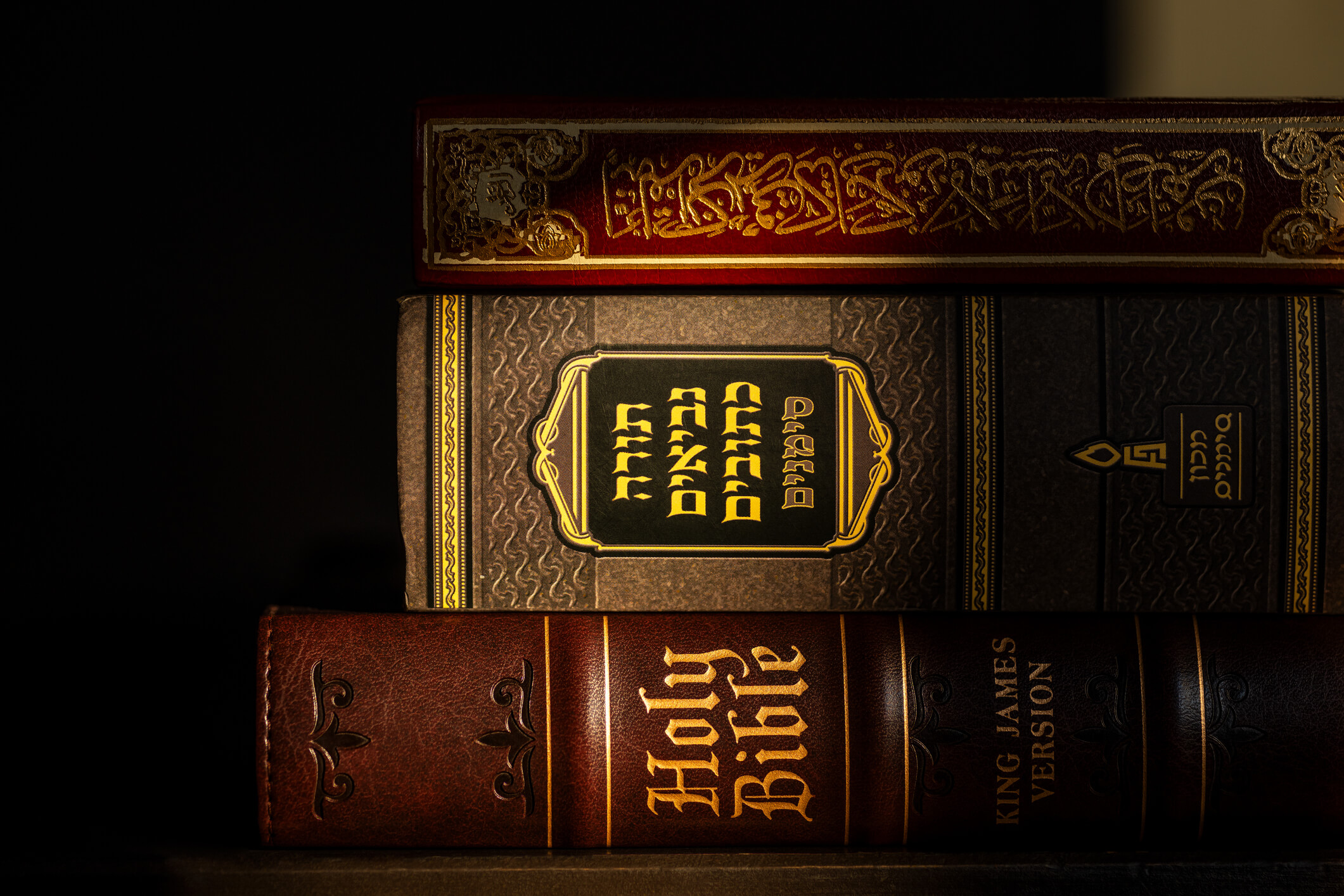
Judaism, Christianity and Islam are united in their acceptance of the Abrahamic faith, and consider it as the source of inspiration and guidance for human life. The faith inherited from Abraham has monotheism as its pivotal center.
The three faiths profess one God as the Creator of the universe and man, who is active in history but separated from it, and is the judge of man's actions, and has spoken to man through the prophets.
Despite doctrinal differences, this commonality of faith and its correlates is of such importance that Muslims, Jews and Christians could speak together in an atmosphere of understanding and friendship, since they are all "believers in the same God."
As such, they could join hands to guide and enlighten others on the essentiality of faith, and work united to further the causes of humanity.
The Quran gives Jews and Christians the honorific title of "People of the Scripture," and Muslims are required to respect their faiths. The Quran admonishes: "And argue not with the People of the Scripture except in a way that is better" (29:46).
Muslims have a firm belief that the Gospels are a Scripture revealed by God. That Moses and Jesus are God's beloved messengers who endured untold sufferings to disseminate His message. That the mother of Jesus, Mary, was chosen by God to be the most honorable among women.
Indeed, a chapter of the Quran is named after the Virgin Mary, while none is named after Khadijah, the wife of Prophet Muhammad, or his daughter Fatimah, or his mother, Aminah.
Furthermore, verses in the Quran describe many of the miracles by Jesus that are not found in the Gospels.
Following 9/11, as Muslims feared, the biased media, controlled by special interest groups, and the Christian conservatives came out spewing vitriol at them and their faith. This suited the neo-conservatives with their hegemonic designs and establishing a domineering world empire.
Given this, various Islamic organizations in the United States such as the Islamic Society of North America, the Islamic Circle of North America, the Council on American-Islamic Relations, the American Muslim Council, and the Muslim Public Affairs Council met with Christian leaders to arrange interfaith meetings.
Their efforts materialized when organizations, such as the New York-based National Council of the Churches of Christ in the U.S.A., adopted a resolution on Sept. 28, 2001, stating that Christian and Muslim religious workers will work together in monthly meetings to become more sensitive to Muslims and provide accurate information on Islam.
Following the attacks on Islam and American Muslims by evangelist preacher Franklin Graham and the degrading remarks on Prophet Mohammed by Jerry Vines, former head of the Southern Baptist Church, and televangelists Pat Robertson and Jerry Falwell, the National Council of the Churches of Christ in the U.S.A. immediately condemned these statements, saying they were "not only factually untrue and offensive, but also dangerous to the national security of every nation where Christians and Muslims are seeking a peaceful relation."
Siraj Mufti, Ph.D., is a researcher and free-lance journalist.


 Shared Visions of Humanity, Pilgrimage, and Justice in Islam and Judaism