
IslamiCity
Listen PodCasts, Live Quran, Watch Videos @VideoHub

We complain that young Muslims are delaying marriage, but have we stopped to consider how many obstacles we have placed in their way?
Marriage is meant to be one of life's most beautiful commitments. In Islam, it is encouraged as a means of companionship, love, mercy, and building a family. Yet for many young Muslims today, getting married feels less like beginning a new chapter and more like trying to pass an endless series of tests.
Before two people can even consider building a life together, they may have to navigate unrealistic financial expectations, expensive weddings, cultural traditions, family interference, and standards that seem increasingly difficult to meet. What should be a meaningful commitment between two people has, in many communities, become a complicated process shaped by social pressure and expectations.
And perhaps we need to ask ourselves an uncomfortable question: Have we made marriage so difficult that we are pushing people away from something our faith encourages?

The cost of living continues to rise, housing is increasingly expensive, and securing a stable income can take years. Yet the expectations surrounding marriage have not necessarily become more realistic.
Some families expect a potential husband to own a house, have a high-paying job, provide an elaborate wedding, and demonstrate financial success before he is even considered suitable.
Weddings themselves can become major financial burdens. Expensive venues, elaborate decorations, multiple events, extravagant outfits, and guest lists stretching into hundreds can turn a celebration into an enormous expense.
Instead of focusing on the beginning of a marriage, families sometimes become preoccupied with how impressive the wedding will look to others.
But when did a wedding become a measure of someone's worth?
A simple celebration should not be treated as a sign of failure, nor should a young couple feel pressured to begin their married life with unnecessary financial burdens simply to satisfy social expectations.
In some communities, compatibility is judged through family background, ethnicity, social standing, wealth, appearance, and professional achievements. While families naturally want their children to marry someone responsible and compatible, these preferences can sometimes become barriers that prevent otherwise suitable marriages.
A person may have good character, strong faith, a responsible attitude, and genuine intentions, yet still be rejected because they do not belong to the expected community, have the desired financial background, or meet a family's social standards.
Of course, compatibility matters. Marriage is a serious commitment, and people should consider emotional maturity, financial responsibility, values, and long-term expectations.
But there is a difference between being careful about whom you marry and creating a checklist so demanding that nobody seems good enough.
Islam places great importance on faith and character. These qualities should not be pushed aside in favour of superficial measures of success.
However, there are times when guidance becomes excessive interference.
Some young Muslims find themselves caught between their own preferences and the expectations of their families. A potential spouse may be rejected because of their ethnicity, financial circumstances, family reputation, or because they do not fit a particular cultural ideal.
In other situations, parents may impose expectations that their children cannot realistically fulfil, delaying marriage for years.
The intention may be to protect their children, but protection should not become unnecessary restriction.
Parents should ask themselves whether their expectations are genuinely helping their children find a suitable spouse or making the process unnecessarily difficult.
After all, the people entering the marriage are the ones who will share their lives together.
Young Muslims are constantly exposed to images of expensive weddings, luxurious homes, romantic proposals, lavish gifts, and seemingly perfect relationships. Over time, these images can create unrealistic expectations about what marriage should look like.
Some people begin searching for a spouse who meets every possible requirement: financially successful, physically attractive, emotionally available, professionally established, and perfectly aligned with every personal preference.
But marriage is not about finding a flawless person.
It is about finding someone with whom you can build a life, navigate difficulties, grow spiritually, and support one another through different stages of life.
No individual enters marriage with everything figured out. Financial circumstances change, careers develop, responsibilities increase, and both people continue to grow.
Waiting for every condition to be perfect can mean waiting indefinitely.
This does not mean ignoring serious incompatibilities or rushing into marriage without preparation. It means recognizing that reasonable expectations are important, but perfection is not a realistic requirement.
In Surah Ar-Rum, Allah says:
"And among His signs is that He created for you spouses from among yourselves so that you may find comfort in them. And He has placed between you compassion and mercy. Surely in this are signs for people who reflect." (Quran 30:21)
This verse reminds us that marriage is not simply about financial arrangements, social status, or fulfilling cultural expectations. At its heart, it is about companionship, compassion, and mercy.
The Prophet Muhammad, peace be upon him, also encouraged marriage and emphasized the importance of choosing a spouse based on religious commitment and character.
Islam does not require people to ignore financial responsibilities or enter marriage without careful consideration. However, simplicity, good character, and mutual understanding should not be sacrificed to satisfy unnecessary social pressures.
Perhaps we need to return to these principles and reconsider some of the traditions we have allowed to define marriage.
We express concern when young Muslims delay marriage. We worry about loneliness, relationships outside marriage, and the challenges facing Muslim families.
Yet at the same time, we sometimes make the path to marriage unnecessarily complicated.
We expect young people to be financially established before marriage, but housing and living costs make that increasingly difficult. We encourage marriage, but judge simple weddings. We tell our children to prioritize faith, but sometimes reject potential spouses over factors that have little to do with religious commitment or character.
We cannot keep asking why marriage is becoming less accessible without examining the expectations we have created.
Perhaps the solution begins with parents being more understanding, communities embracing simpler weddings, and individuals reconsidering what truly matters in a life partner.
Marriage should involve responsibility, preparation, and thoughtful decisions. But it should not require people to achieve an unrealistic level of financial or social perfection before they are allowed to begin.
Maybe young Muslims are not rejecting marriage. Maybe they are struggling with the version of marriage we have created for them.
If we want stronger Muslim families and healthier communities, perhaps it is time to make marriage less about impressing others and more about building a life that pleases Allah.


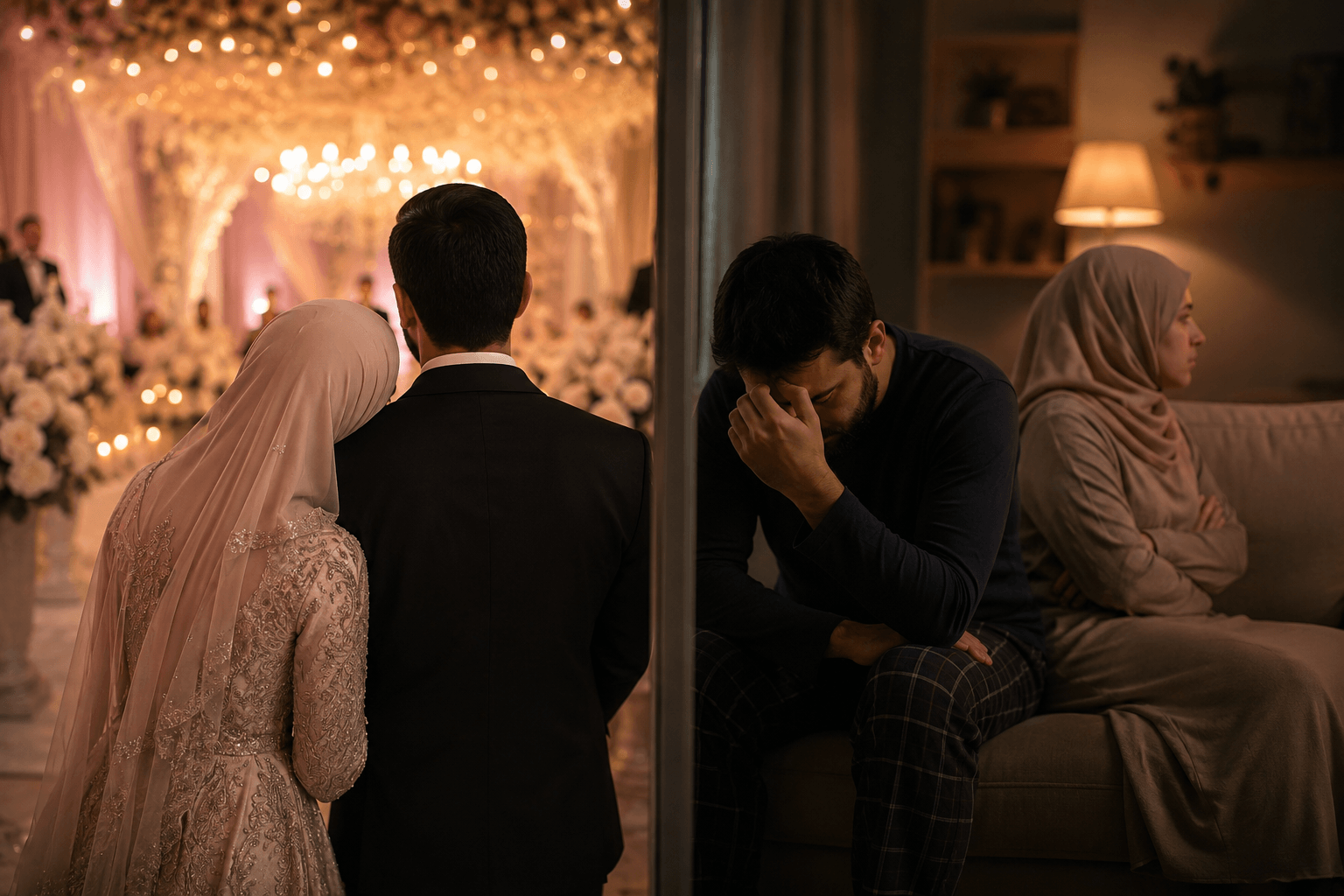 The 5 Most Dangerous Marriage Expectations Social Media Has Given Muslims