
IslamiCity
Listen PodCasts, Live Quran, Watch Videos @VideoHub

Artificial Intelligence (AI) is the capability of computer systems and software to perform tasks that normally require human intelligence, such as learning, reasoning, problem-solving, perception, and decision-making.
A Google search classified artificial intelligence into the following types based on its capabilities, how it functions, and its specific use cases:
There are several examples from our everyday life such as smartphones using services like digital assistant, chadbots, social media websites, and much more. Chadbot is a character who appears in computer program designed to simulate conversation with humans through what appears a speech. Many home electronics and Robot Vacuum cleaners and home security systems also use AI.
A large number of warnings about the potential dangers of AI have spurred calls for coordinated action to slow the technology's development. Claims by current and former AI researchers have said that the technology will endanger humanity - with one suggesting there is a greater than 10% chance of "killing of all humans " have raised alarm bells.
Major developers Open AI and Anthropic are urging lawmakers to regulate AI, with Microsoft's AI boss the latest to say rule are needed to prevent a "Silicon species" from eventually competing with humanity." But some have dismissed the calls as an effort by big AI developers to cement their dominance over rivals.
Regardless, the high profile claims have caused concern.
Why do some people think AI could be a threat?
Some AI researchers say there are worrying signs that the systems developing have capabilities to develop too quickly. Some, such as Evan Hubinger, made headlines that there is greater than 10% chance AI "could kill all humans" within the next decade.
While he thinks the risk from current systems was "low", his comments came from from another researcher Anthropic who quit and warned those developing the technology were losing the grip on it. Jacob Coxon and his other staff told BBC, they were "genuinely frightened" about the speed of advancements and what it could mean for humanity.
These concerns are the latest in a long line of fears about AI's potential to threaten humanity should it grow to match or surpass human abilities.
Such worries date back decades, with Alan Turing writing in the 1950s that should intelligent machines become possibly take control.
There is a possibility of human extinction, former Anthropic employee says about AI.
In the last few years major AI companies have been racing to develop increasingly capable systems, both for profit and in pursuit of creating what they call super intelligence - theoretical tech which is smarter than humans.
Unlike the systems and tools many people use daily to complete tasks like writing emails or generating videos, super intelligent AI systems should be able to to handle far more complex tasks.
But some critics believe machines can never truly match humans. They say AI firms exaggerate the tech's abilities to boost their prominence or profit.
Campaigners such as the Pause AI have also urged companies like Google to half efforts to build highly capable AI systems.
Dario Amodei wrote in September it had advanced "drastically faster" than expected, including in its "ability to build the next generation of AI".
This is the concern that AI, after it has reached a certain point, could theoretically begin improving itself without human involvement.
Such fears were sparked after a recent incident saw AI tools hack into websites, despite not being asked to.
Some concerned researchers have said those at the heart of its development are increasingly fearful about losing control of systems known as "AI agents".
These are tools given the ability to execute tasks and actions independently.
Other scenarios have included highly intelligent AI systems being used to amplify or lead espionage, cyber-attacks or biological warfare, or disrupt economies - whether by accident or design.
However, such warnings are prophetic, hypothetical and, for some, complete hyperbole. Some experts have also criticized focusing on existential risks instead of those already playing out - such as image generation tools being to used create non-consensual nude deepfakes of women, misinform people and amplify scams.
A cross-party group of MPs and peers has published a report outlining human rights risks posed by AI, saying new laws are needed to "address the scale and seriousness" of such threats.
It is not the first time bosses or wider industry voices have clamored for such action. But questions have continued to mount over what any sort of "slowdown" - also backed by SpaceX boss Elon Musk - would actually look like.
Amodei said it would not mean "halting model training or technical progress". Instead, he wants firms to "take adequate time" to safeguard the AI they are developing, and to ask for "third party evaluators" to check their work.
In a post on X, Altman said there was a need to pace development but added "when we talk about 'pacing' we do not mean 'stopping'." "Progress has been rapid and will continue to be," he said. "But it should be slower than it otherwise could be - interventions like safety cases and monitoring have significant costs."
The OpenAI co-founder also said companies did not - and would not - wait for governments to act. Altman later told attendees at a Salesforce conference said That people should have more faith in AI firms to keep the tech safe"
In another development, AI research lab Transluce said Wednesday that it had detecting AI agents going rouge on several occasions going back to at least March - predating previously known hacking incidents. The targets included a University of New Mexico library and the website of the Australian Institute of Health and Welfare, though none of the attempts were successful.
An ABC news by Aaron Ketersky on September 24, 2026 said nearly two dozen states are calling Congress to regulate AI, warning that unchecked development could put Americans and country at risk reported. The attorney General of 23 states, along with the District of Columbia, and American Samoa signed a letter to congressional leaders demanding "comprehensive federal regulation and safety protocols" for AI.
"Recent developments show that unchecked AI endangers Americans and could soon threaten our financial system, critical infrastructure, and national security," the letter said. "Although we are working to hold frontier AI labs accountable under existing state laws, federal oversight is urgently needed to prevent future disasters."
The attorneys general cited recent incidents involving AI, including reports involving Hugging Face, as evidence, as evidence of what they described as the risks of AI systems operating beyond their intended safeguards.
The states called for Federal oversight of AI model safety testing, international cooperation to pace AI advancement and leaders empowered to make safer decisions "unburdened by profit maximization," according to the letter.
"In recent weeks, alarming reports of AI agents breaking containment have shocked the nation," New York Attorney General Letitia James said. "My colleagues and I are calling on Congress to act swiftly to establish a regulatory framework for AI development to ensure this does not continue."
The letter comes as states and the federal government continue to debate how AI should be regulated, including the appropriate balance between federal oversight and state authority.
In addition to New York, the attorneys general of Arizona, California, Colorado, Connecticut, Delaware, Hawaii, Illinois, Maine, Maryland, Massachusetts, Michigan, Minnesota, Nevada, New Jersey, New Mexico, North Carolina, Oklahoma, Oregon, Rhode Island, Vermont, Virginia, Washington and Wisconsin signed the letter, along with the District of Columbia and American Samoa.
"No one thinks self-regulating is enough, " Gates told NBC News' "Meet the Press" in an interview set to air in full Sunday.
Asked by moderator Kristen Welker whether there needs to be legislation passed in Washington, Gates said, "Absolutely." "You need law enforcement and the politicians to get into the discussion about what safeguards and monitoring looks like," he said. And that has to be a required thing. And it will a little bit of overhead for the industry, but not a dramatic slowing of what they're doing."
In Wednesday's interview, Gates did not downplay the risks that AI could wipe out humanity in several years, but called for Americans not to ignore the risks that AI could be used by bad actors to cause large-scale harm as soon as today,
AI is certainly powerful enough to drive events that, you know, cause a billion deaths. You know, so even though it is pretty hard to get to 100%, there's never been s weapon as powerful as the combination of people with ill intent using the latest the latest AI tools, " he said.
But in the face of most recent warning about its potential impact on humanity, President Trump downplayed risks posed by AI. During his visit to Ireland he told reporters, he told reporters, "We are leading China on AI... and frankly, I am to keep it that way because whoever wins AI, wins." The president later dismissed fear about about AI safety risks entirely, describing them in posts on his platform Truth Social as a "hoax". He said the only "guardrails" needed for AI was a "strong and smart" President.
In the face of fierce competition and limitations on its access to US components and chips being used to build AI infrastructure, the country has spurred homegrown development of the technology. At the same time, it has called for greater global governance of AI.
The roll out of capable, open-source AI systems and tools by Chinese labs has shaken Western markets and developers in recent years.
Amodei warned in calling for a slowdown of AI development that China's progress and proficiency in AI would create national security risks for the US.
The Chinese foreign ministry criticized the comments, calling them narratives of threat, confrontation, and malicious competition that served no one's interest.
"I think I'm seeing tremendous self-policing. And they understand that they understand that they have to self-police" Trump told reporters during an impromptu press conference outside the West Wing. Trump and House Speaker Mike Johnson met with leading executives from top tech firms that are spending hundreds of billions of dollars to build out AI infrastructure, including data centers in communities across the country, which have sparked grassroots, bipartisan opposition. The accord was signed by Trump, Anthropic CEO Dario Amodei, Google CEO Sundur Pichai, and Elon Musk, founder of xAI, which is now part of SpaceX.
The accord, which Trump posted on his social media site, Truth Social, late Tuesday, opened the door to future regulation but focused on four voluntary steps for the companies to take.
The accord said the companies would implement "robust internal controls," partner with an "independent external auditor" to assess whether the controls were working, and establish a committee within each company's board of directors to evaluate reports from internal and external auditors.
"Over time, it may make sense to codify these steps into laws and regulations," the accord said.
Trump repeatedly praised the business executives for developing a technology that he said would produce "unbelievable growth." Investment in data centers and the accompanying computer equipment has accelerated the economy and boosted the stock market, which has swelled investment accounts for higher-income Americans and lifted their spending.
Yet there were some notes of caution Tuesday. Amodei, one of the most outspoken voices calling for a slowdown in AI development, said, "The technology has very real risks." "And, you know, the mechanism, how we address those risks is still under discussion," Amodei said.
Some of the actions outlined in the accord are measures these companies are already taking in some form or have previously committed to doing.
The intention of the accord balances the latitude needed for innovation with regulation, said Shri Narayanan, a university professor of electrical and computer engineering at the University of Southern California. That innovation is not just limited to improving the capabilities of these AI models, Narayanan said, but also to efforts to improve model safety and security.
Other experts are skeptical of putting "so much faith in self-policing," like Robin Jia, an assistant professor of computer science at the University of Southern California. Jia said it's crucial to ensure the leading labs' intentions are "well-aligned with the broader interest of the American public." He pointed to the recent disclosures of hacking incidents and said: "As the models get better, the consequences of such things are only going to get greater."
Some also took issue with the accord's vague, broad language. Alex Pascal, executive director of the Berkman Klein Center for Internet and Society, said: "The only way to reduce the risks and harms of AI to Americans is through robust legal liability, regulation and fundamentally changing the race dynamics that are driving unsafe decision-making by frontier AI developers whose costs are borne by the American people."
Earlier Tuesday, Trump promised that the U.S. government wouldn't limit the development of artificial intelligence or support calls for "guardrails" or other restrictions.
"I will never stifle the growth of a technology that will be bigger than the industrial revolution," Trump said at the unveiling of an AI chatbot, America.gov, intended to help Americans navigate government services. "We can't stifle it, and we're leading by a lot."
The unveiling of the AI government chatbot occurred at a daylong event in Washington during which multiple Trump administration officials celebrated a "Golden Age" fueled by what Trump insists on calling "super intelligence," rather than artificial intelligence. Secretary of State Marco Rubio highlighted that the chatbot at America.gov could soon be used to apply for a first-time passport fully online, without the in-person visit to a processing center currently required.
Also Tuesday, OpenAI CEO Sam Altman said in a television interview that the company is increasingly focused on safety. The day before, his company halted the rollout of a new model over safety concerns. "We are pacing our progress, which includes sometimes not training a model," he said on CNBC. "We have to do these in a way where we can make very confident safety cases and claims, so that people don't have a bunch of anxiety."
For his part, Trump on Tuesday portrayed the race to develop AI as largely a global competition between the United States and China. He said there would be a winner and a loser, with no "second place."
The two countries agreed last week to establish a channel for handling AI-related incidents during Chinese President Xi Jinping's visit to Washington. But Trump underscored Tuesday that he didn't want to cooperate too much with China: "I didn't want to do anything, because we're leading. Why would I want to do anything?"
The field of artificial intelligence has made remarkable progress in the past five years and is having real-world impact on people, institutions and culture. The ability of computer programs to perform sophisticated language- and image-processing tasks, core problems that have driven the field since its birth in the 1950s, has advanced significantly.
Although the current state of AI technology is still far short of the field's founding aspiration of recreating full human-like intelligence in machines, research and development teams are leveraging these advances and incorporating them into society-facing applications.
For example, the use of AI techniques in healthcare is becoming a reality, and the brain sciences are both a beneficiary of and a contributor to AI advances. Old and new companies are investing money and attention to varying degrees to find ways to build on this progress and provide services that scale in unprecedented ways.
The field's successes have led to an inflection point: It is now urgent to think seriously about the downsides and risks that the broad application of AI is revealing. The increasing capacity to automate decisions at scale is a double-edged sword; intentional deepfakes or simply unaccountable algorithms making mission-critical recommendations can result in people being misled, discriminated against, and even physically harmed. Algorithms trained on historical data are disposed to reinforce and even exacerbate existing biases and inequalities.
Whereas AI research has traditionally been the purview of computer scientists and researchers studying cognitive processes, it has become clear that all areas of human inquiry, especially the social sciences, need to be included in a broader conversation about the future of the field.
Minimizing the negative impacts on society and enhancing the positive requires more than one-shot technological solutions; keeping AI on track for positive outcomes relevant to society requires ongoing engagement and continual attention.
Looking ahead, a number of important steps need to be taken. Governments play a critical role in shaping the development and application of AI, and they have been rapidly adjusting to acknowledge the importance of the technology to science, economics, and the process of governing itself. But government institutions are still behind the curve, and sustained investment of time and resources will be needed to meet the challenges posed by rapidly evolving technology.
In addition to regulating the most influential aspects of AI applications on society, governments need to look ahead to ensure the creation of informed communities. Incorporating understanding of AI concepts and implications into K-12 education is an example of a needed step to help prepare the next generation to live in and contribute to an equitable AI-infused world.
The AI research community itself has a critical role to play in this regard, learning how to share important trends and findings with the public in informative and actionable ways, free of hype and clear about the dangers and unintended consequences along with the opportunities and benefits. AI researchers should also recognize that complete autonomy is not the eventual goal for AI systems.
Our strength as a species comes from our ability to work together and accomplish more than any of us could alone. AI needs to be incorporated into that community-wide system, with clear lines of communication between human and automated decision-makers. At the end of the day, the success of the field will be measured by how it has empowered all people, not by how efficiently machines devalue the very people they are trying to help.
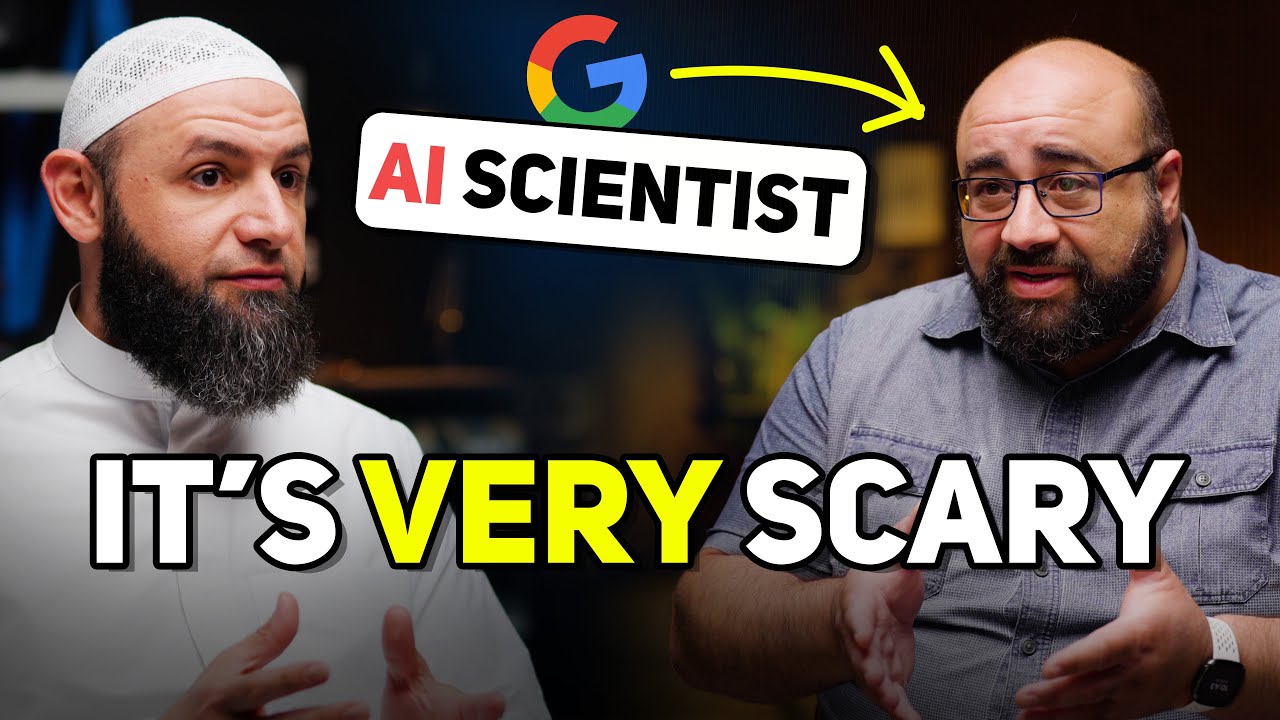 AI SCIENTIST From Google sends WARNING to Muslims


