
IslamiCity
Listen PodCasts, Live Quran, Watch Videos @VideoHub

The Qur'an's occasional correction of the Prophet Muhammad (peace and blessings be upon him and his family) represents one of the most profound yet frequently overlooked dimensions of the Qur'anic conception of prophethood.
To modern readers, and even to some Muslims accustomed to thinking of the Prophet exclusively through the language of praise and veneration, it may initially appear striking that the Qur'an sometimes reproves, redirects or corrects him. These corrections occur in matters of varying significance, including personal decisions, social interactions, political judgements and religious practices.
Yet precisely because the Prophet occupies the highest position among human beings in Islam, the Qur'an's willingness to correct him carries far-reaching theological, moral and civilizational implications.
The purpose of such correction was not to humiliate the Prophet or diminish his rank. On the contrary, it clarified the nature of his mission, demonstrated the independence of revelation, established the limits of human authority and educated the Muslim community through concrete historical circumstances.
More importantly, however, the principle extends beyond the immediate life of the Prophet. If the Qur'an itself could correct the Messenger of God, then no political leader, religious authority, scholar, dynasty, sect or historical personality after him can reasonably claim immunity from examination and constructive criticism. The Qur'anic treatment of the Prophet thus contains within it the foundations of a powerful culture of accountability, consultation, intellectual honesty and civilizational self-criticism.
This is significant because the Prophet publicly recited and preserved passages that did not always flatter him. He did not conceal them, alter them or exclude them from the revelation transmitted to his followers. The opening verses of Surah 'Abasa, the passages concerning certain decisions made during the aftermath of Badr, the correction concerning permission granted to some individuals, and the Qur'anic intervention in certain personal matters all illustrate this remarkable independence of revelation.
Had the Qur'an been merely a literary or ideological product of the Prophet himself, such passages would be difficult to explain. An author normally controls his own text and has every reason to protect his reputation, justify his decisions and suppress material that might appear critical of him. The Qur'an, nonetheless, does the opposite. It preserves correction alongside praise and places divine truth above the personal image of the Messenger.
The resulting picture is theologically overwhelming. Muhammad is the recipient and conveyor of revelation, but revelation does not belong to Muhammad. He does not stand above it, edit it or determine its content according to his personal interests. He submits to it. Indeed, his willingness to convey revelation even when it corrected him constitutes one of the strongest illustrations of his sincerity and faithfulness to his mission.
For this reason, the Qur'an also emphasizes that revelation was sent upon the heart of the Prophet, rather than emerging from within his heart. The Qur'an states in Surah al-Shu'ara' that the Trustworthy Spirit brought it down "upon your heart, so that you may be among the warners" (26:193-194). The distinction is deeply significant. The heart of the Prophet was the recipient and locus of revelation, but it was not its source. The Qur'an came to him from beyond himself, through the agency of the Trustworthy Spirit, as something received rather than invented, discovered or generated by his own consciousness. Its origin therefore lay outside the Prophet and, ultimately, outside created existence altogether: it came from God.
This distinction is essential. God alone is absolute, perfect and beyond correction. Human beings, regardless of their spiritual rank, remain servants of God. The Prophet's greatness, it goes without saying, does not require the claim that every independent human judgement he made was automatically identical with divine revelation. Rather, one dimension of his greatness lies precisely in his perfect readiness to submit when revelation clarified, redirected or corrected a matter.
The Qur'anic model consequently avoids two opposite errors. On the one hand, it rejects any attempt to diminish the Prophet's rank by treating correction as evidence of moral or spiritual failure. On the other hand, it prevents excessive veneration from transforming him into an untouchable figure whose every personal decision must be defended regardless of context.
The Prophet is honoured without being deified. He is obeyed without being placed above God. He is the supreme human model, yet his life itself teaches humanity the meaning of submission to a truth higher than oneself.
The Qur'anic emphasis on the Prophet's servanthood is reinforced by the way it identifies the most fundamental and honourable status of Muhammad: 'abd, the servant of Allah. This is why, in the shahadah, the testimony of faith, Muhammad is affirmed first and foremost as the servant of Allah and then His Messenger.
In passing, the same principle applies to the other prophets. Their greatness does not remove their servanthood; rather, their greatness is inseparable from it. Prophet 'Isa (Jesus), for example, is introduced in the Qur'an through the same declaration. Speaking miraculously as an infant, he says: "Indeed, I am the servant of Allah" (Qur'an 19:30). Only then does he identify himself as one to whom God has given the Scripture and made a prophet: "He has given me the Scripture and made me a prophet." Elsewhere, the Qur'an describes 'Isa as a messenger of Allah and His word bestowed upon Mary (4:171). The order is instructive: before prophethood, messengership, scripture and all other exalted distinctions stands servanthood to Allah.
Such is one of the distinctive features of the Qur'anic method of education. It does not always teach through abstract propositions detached from life. Instead, historical events, personal decisions, social interactions and political challenges become occasions for moral and intellectual instruction.
Hence, an apparently limited incident could yield a universal lesson about human dignity, social equality, justice, leadership, consultation or moral responsibility. The correction of the Prophet was therefore not simply about him. It was about the community being formed around him and, ultimately, about all those who would later claim to follow his example.
Equally important is the manner of many of these corrections. Their purpose is guidance rather than humiliation. The Qur'an distinguishes between correcting an action and destroying a person's dignity. This itself is a major ethical lesson. Constructive criticism should seek truth and improvement, not personal degradation. The purpose of correction is to guide, clarify and elevate.
The Prophet's response completes the lesson. He accepted divine correction and transmitted it faithfully. In doing so, he demonstrated that genuine greatness is not the refusal to acknowledge correction but the ability to submit to truth when it becomes clear.
The same applies to institutions, dynasties and sects. Their achievements may be immense and their contributions worthy of gratitude, but none is infallible. Political power does not sanctify its decisions. Religious learning does not eliminate the possibility of error. Historical success does not justify every action performed in its name.
This principle should have produced a particularly strong culture of accountability within Muslim societies. Those who exercise power should expect to be questioned. Scholars should expect their arguments to be examined. Religious authorities should distinguish between divine revelation and their own interpretations of it. Communities should be able to identify mistakes within their own traditions without imagining that such honesty constitutes betrayal.
Respect and criticism are not opposites. One may respect a scholar and disagree with him. One may admire a ruler's achievements while condemning his injustices. One may take pride in a civilization while honestly acknowledging its failures. Indeed, such distinctions are marks of intellectual maturity.
The alternative is the dangerous transformation of human personalities into objects of unquestioning loyalty. Once this happens, truth becomes subordinate to reputation. The question ceases to be whether something is right and becomes instead whether the person or group responsible for it belongs to "us." Such a mentality is incompatible with the deeper Qur'anic principle that truth stands above personalities.
For the same reason, one of the fundamental principles of Islamic scholarship is the need to distinguish between revelation itself and the human understanding and application of revelation. The Shari'ah, as divine guidance and normative will, is one thing; fiqh, the human effort to understand and derive legal rulings from that guidance, is another. The Islamic aqidah, as established by revelation, is one thing; ijtihad, the human intellectual effort to understand particular questions and apply revealed principles to changing circumstances, is another.
Jihad and da'wah as Qur'anic and Prophetic concepts are one thing; the particular political structures, states, dynasties and even empires that Muslims historically created in their name are something else. Likewise, Islam as revealed by the Creator is one thing; Muslims as human beings attempting to understand, embody and implement Islam are another.
This distinction is not designed to diminish fiqh, ijtihad, jihad, da'wah or Muslim political history. Rather, it protects them from being unnecessarily elevated to the level where they do not belong. Human interpretations can be correct or mistaken; ijtihad can succeed or fail; political institutions can embody Islamic principles to greater or lesser degrees; and Muslim societies can live up to their ideals or depart from them. Revelation is infallible; human understanding is not. Islam is perfect; Muslims are not. The divine norm is one thing, while its historical interpretation and embodiment constitute another.
Once this distinction is properly understood, Muslims can appreciate the achievements of their scholars, institutions and civilizations without turning them into objects of unquestioning veneration. It also creates the intellectual space necessary for criticism, correction, renewal and reform - because what is human can always be examined in the light of what is divine.
The Qur'an is revelation. The fundamental principles of Islam derive from divine guidance. Muslim history, however, is the record of human beings attempting to understand, implement and sometimes depart from those principles. It contains extraordinary achievements, but it also contains political conflicts, injustices, intellectual stagnation, sectarianism and failures.
To recognise this in no way diminishes Islamic civilisation. On the contrary, it enables the civilisation to be understood as it truly was. In doing so, furthermore, it renders a service both to it and to all Muslims.
The past, as a result, must be studied as opposed to worshipped. Historical personalities may be respected without being idolized. Great civilizations may be admired without being romanticized. A mature relationship with history requires both gratitude and honesty. To do this, however, is easier said than done. There is a host of requirements that must be fulfilled beforehand. Foremost among them is coming to full terms with the historical‑cum‑civilizational presence, performance, and legacy of the superhuman maker of history: the Prophet.
Muslims have every reason to take pride in the remarkable intellectual, scientific, artistic, educational and spiritual achievements of their civilization. Yet pride becomes intellectually destructive when it develops into the belief that everything done by Muslims in the past must have been correct. A Muslim ruler was still capable of injustice. A famous scholar was still capable of error. A powerful empire was still capable of decline and corruption. A religious movement was still capable of becoming narrow, intolerant or self-serving.
No aspect of history should become immune from honest investigation simply because it occurred under a Muslim dynasty or involved a revered historical personality. To examine history critically is not to disrespect Islam. The opposite is often true: honest historical examination may be necessary precisely in order to distinguish Islamic principles from the imperfect ways in which Muslims sometimes implemented them.
This requires difficult questions. Where did we succeed? Where did we fail? What internal weaknesses emerged? When did political institutions cease to embody justice? When did religious authority become excessively dependent on power? When did sectarian loyalty overcome intellectual openness? When did imitation replace creativity? When did the Muslim world fail to live up to its own principles? Where should Muslims stop blaming others and instead begin to blame themselves?
Such questions cannot be answered if history is approached exclusively through nostalgia and a utopian sentiment, beginning with the history of the first - and, as universally agreed, most exemplary - generations of Islam.
One of the major intellectual problems confronting many Muslims today is an excessive tendency to romanticize the past. Historical personalities are sometimes glorified beyond proportion. Dynasties are remembered only for their victories and monuments. Civilizational achievements are celebrated while structural failures are ignored. Criticism is often interpreted as hostility, and historical investigation is confused with disrespect.
Then again, a civilization cannot build its future upon an inaccurate diagnosis of its past. If every problem is attributed exclusively to external enemies while internal failures remain unexamined, the foundations of genuine renewal remain weak. External forces may indeed contribute to decline, but serious civilizations must also possess the courage to ask what they themselves did wrong.
The first step towards renewal is therefore intellectual honesty. One must learn to love the past without becoming blind to it.
Consultation should not be reduced to a ceremonial exercise. It requires genuine openness to alternative opinions and the willingness of leaders to hear what they may not wish to hear. Likewise, accountability should not be demanded selectively. Muslims should not insist that their opponents be transparent and just while excusing wrongdoing when committed by their own leaders, institutions or communities.
The same holds true with regard to the Islamic obligation to enjoin what is right and to oppose what is wrong. This principle must be understood universally rather than tribally or sectarianly. Wrongdoing does not become right because it is committed by one's own side. Justice does not become injustice because it benefits an opponent. The moral standard must remain consistent: support the truth regardless of who speaks it and oppose wrongdoing regardless of who commits it.
Such an ethic could enable Muslims to make a distinctive contribution to the contemporary world. In lieu of merely adopting democracy and consultation as imported political slogans, Muslim societies could rediscover within their own intellectual and ethical tradition powerful foundations for participatory governance, public accountability, principled criticism and responsible consultation. These values should not be seen as concessions to modernity but as natural implications of a worldview in which no human authority is absolute.
A mature Muslim civilization should be able to say that its past produced some of humanity's greatest achievements while also admitting that Muslims sometimes failed to live according to the ideals they proclaimed. It should honour its great scholars without claiming their flawlessness, admire its political achievements without concealing injustice, and celebrate its intellectual heritage without pretending that creativity and excellence continued uninterrupted throughout every period.
This capacity for self-examination is not a sign of weakness. It is a source of strength. Civilizations that cannot criticize themselves become prisoners of their own mythology. They repeat mistakes because they refuse to acknowledge that mistakes occurred.
The Qur'an, normatively, offers a different model. It establishes truth above personality, accountability above reputation and guidance above self-protection. Even the Prophet's extraordinary status did not mean that revelation would conceal a matter requiring divine correction. His willingness to transmit that correction became part of his enduring example.
There is another serious consequence of the inability to accept criticism: the tendency to regard anyone who thinks differently, questions one's assumptions or offers unwelcome advice as an enemy. Such a mentality is intellectually dangerous because it deprives a person, community or civilization of precisely the perspectives it may need most. Disagreement does not necessarily signify hostility, just as agreement does not necessarily signify friendship. Sometimes the person who challenges us most honestly is doing us a greater service than the person who continually praises us.
If truth be told, wisdom requires listening even to one's opponents. An enemy's assessment may be distorted by hostility, but that does not mean that everything the enemy says is false. On the contrary, an adversary may notice weaknesses that friends, out of affection, loyalty or reluctance to cause discomfort, fail to see. Friends often look at us through the lens of familiarity and goodwill; opponents look at us from another angle, with different assumptions, experiences and expectations. Their judgment may thus reveal dimensions of our conduct, character or institutions that remain invisible to those closest to us.
This becomes particularly important during periods of conflict. An opponent who is trying to defeat us is, in effect, telling us something about ourselves through his actions. He is responding to weaknesses that he perceives, exploiting vulnerabilities that he has identified and exposing aspects of our conduct that may require attention. To dismiss all such observations simply because they come from an adversary is to throw away potentially valuable information. One does not have to accept an enemy's interpretation, motives or conclusions in order to examine what lies behind them.
The Qur'an's occasional correction of the Prophet Muhammad (peace and blessings be upon him and his family) contains lessons that extend far beyond the particular incidents in which those corrections occurred. It demonstrates the independence of revelation from the Prophet's personal interests and protects the absolute distinction between divine perfection and human excellence. It teaches that correction can be an act of education rather than humiliation and that genuine greatness lies partly in the willingness to submit to truth.
Its wider civilizational import is equally important. If the Qur'an could correct the Prophet, no Muslim after him - whether ruler, scholar, religious authority, intellectual, dynasty or sect - can claim to be above constructive criticism. Islam is sacred; Muslim history is not. The past should be respected, studied and appreciated, but never placed beyond honest examination.
For Muslims seeking renewal today, this lesson is indispensable. A civilization cannot recover if it refuses to diagnose its own weaknesses. Excessive romanticization of history may provide emotional comfort, but it cannot produce intellectual renewal. The past must become a source of both inspiration and instruction: its achievements should show what is possible, while its failures should warn against repeating what went wrong.
Ultimately, the Qur'anic treatment of the Prophet teaches a culture of profound moral and intellectual humility. Truth is greater than personalities. Principles are greater than power. Respect does not require silence, and criticism does not require hostility. A renewed Muslim civilization must learn to honour its past without becoming captive to it, respect its great personalities without idolizing them, and confront its mistakes honestly enough to construct a better future.
Perhaps the central lesson can be expressed most simply: a civilization begins to rise again when it acquires the courage to examine itself truthfully.
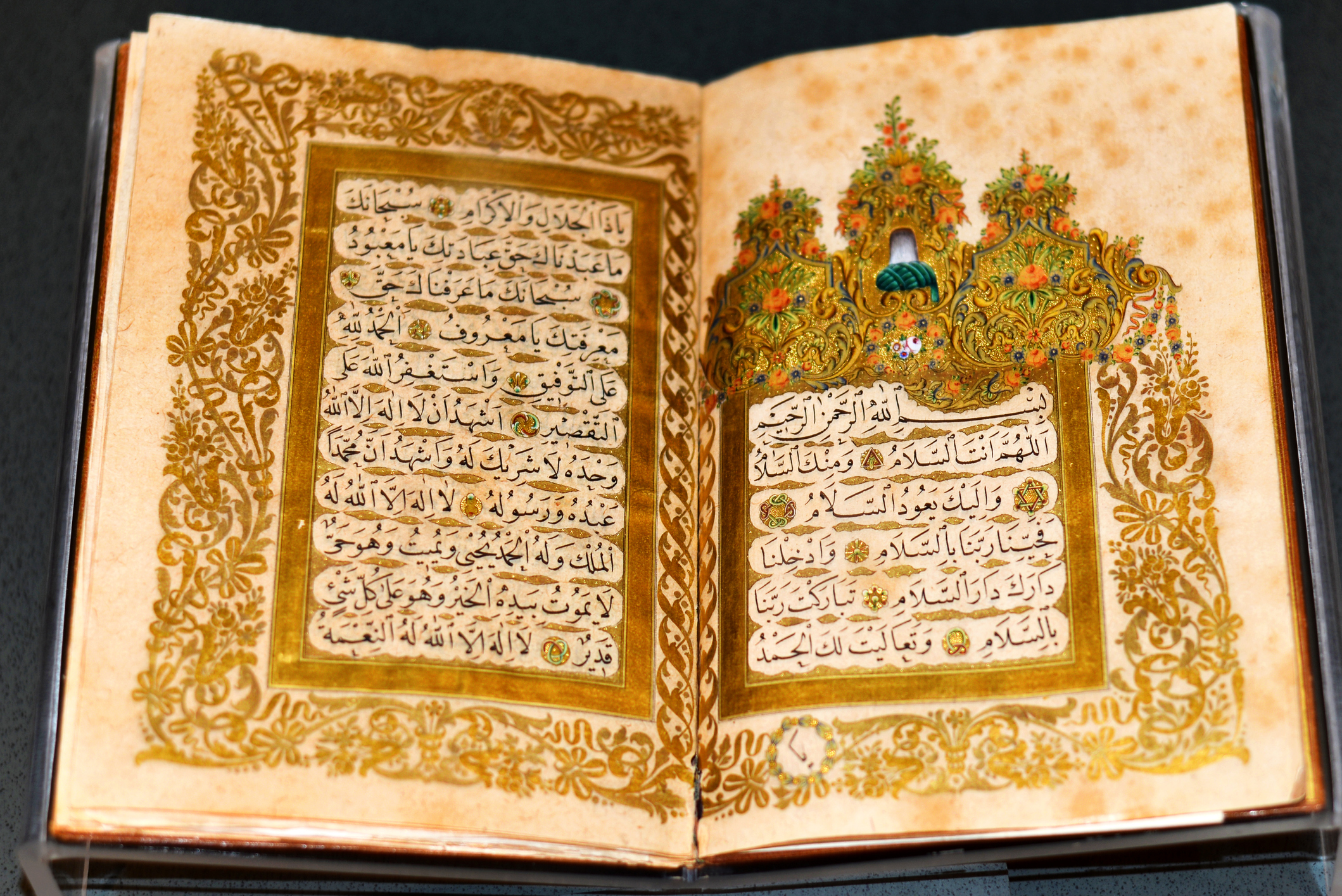 The Quran and Muslim Unity


