
IslamiCity
Listen PodCasts, Live Quran, Watch Videos @VideoHub

God Almighty sent prophets and messengers to guide humanity along the right path so that it may succeed in both this world and the Hereafter. To communicate His Will, He also bestowed scriptures upon His prophets as signs from Him and as moral guidebooks to explain to the masses the dos and don'ts of life.
According to a hadith of Prophet Muhammad (SAW), Allah sent around 124,000 prophets and messengers, along with many heavenly books. It is popularly believed that the Holy Qur'an mentions only 25 prophets by name.
Among the divine books mentioned in the Qur'an are the Tawrat, Zabur, Injil, and Al-Qur'an. In addition, the Qur'an also refers to the Suhuf (scrolls or booklets) given to Prophet Ibrahim (AS) and to a few other prophets.
With the passing of time and the scattering of the masses to every nook and cranny of the world, heavenly books that were not preserved in written form either went missing or lost their original message. The Qur'an states that the divine books revealed before it were distorted by priestly elites for their worldly gains or claims of racial superiority.
The Revelation of the Qur'an
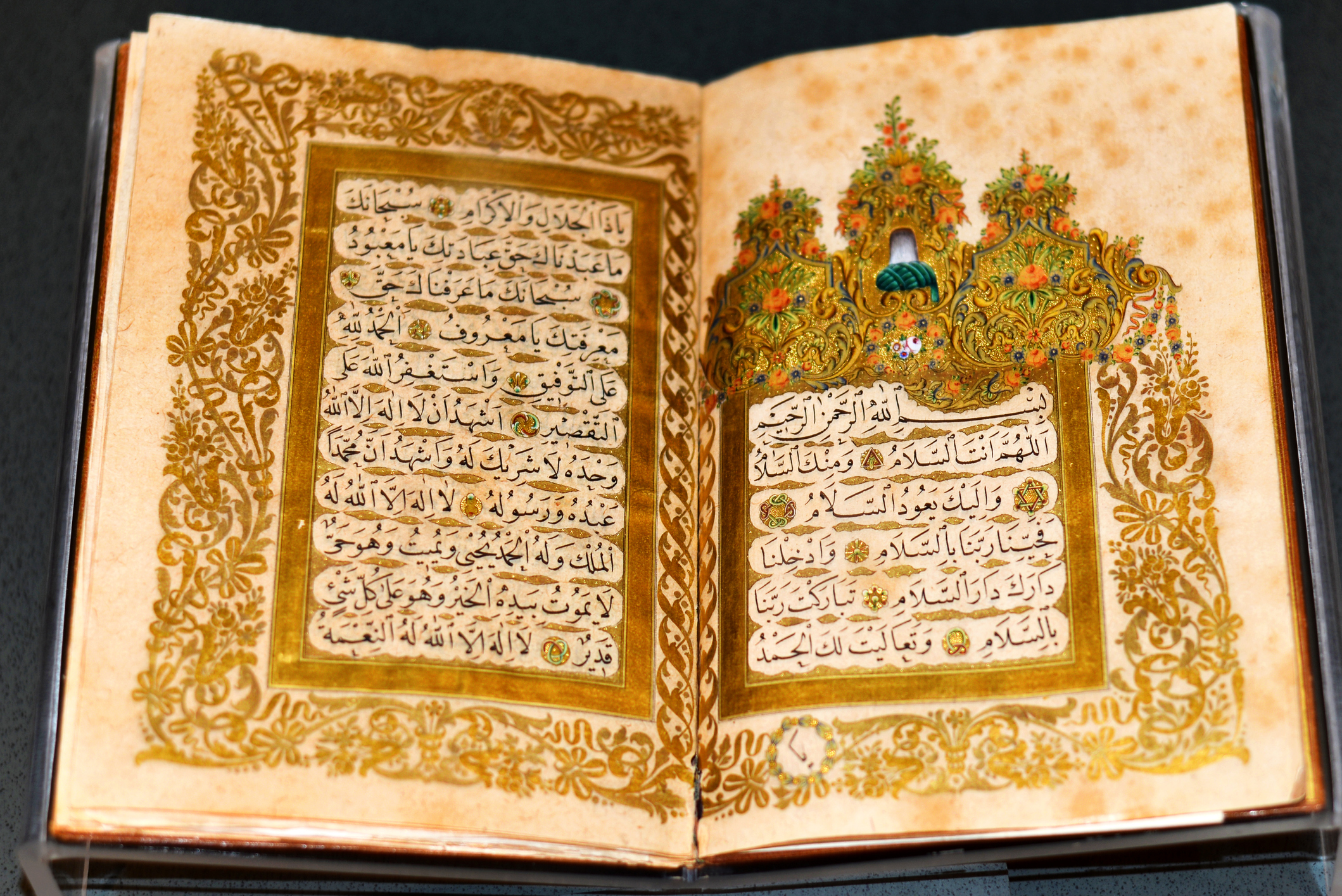
The Qur'an, which came as the final testament from Allah (SWT), was revealed to Prophet Muhammad (SAW) during the month of Ramadhan. History tells us that, unlike earlier scriptures, the message of the Qur'an, which is meant to last for eternity, was preserved in written form. Whenever the Prophet (SAW) received revelations through the intermediary of the Archangel Jibrail (AS), they were recorded in writing. In contrast to earlier scriptures, the Qur'an assures the Muslims that Allah Himself will preserve its message from being lost or subjected to any form of corruption. The Qur'anic verse below justifies this claim:
We have, without doubt, sent down the Message; and We will assuredly guard it (from corruption). (Surah Al-Hijr 15: 9).
While the followers of earlier prophets may have claimed that the revelation they received was exclusive to their own racial group, the Qur'an, as the final revelation, asserts that Prophet Muhammad (SAW) and the Qur'an are not confined to any one race alone. On the contrary, the Qur'an, Prophet Muhammad (SAW), and Islam as a religion are meant for the whole of humanity, Arabs and non-Arabs, white, black, brown, and all ethnicities that inhabit this planet. As such, one finds that the Qur'an at times addresses the believers, and at other times calls upon humanity at large to Islam as the final and culminating message of all earlier revelations given to the prophets before Muhammad (SAW).
In contrast to other religious books, the Qur'an, as the final revelation from God, not only addresses spirituality and the Hereafter but also discusses histories of bygone people, civilization, science, cosmology, dietary laws, Syariah laws, family matters, commerce, astronomy, geology, oceanography, tectonic plates, embryology, morality, ethics, human psychology, and much more. The Qur'an is a comprehensive religious book sent to guide humanity in every aspect of life, personal and interpersonal relations, humanity's relationship with God, the universe, flora, fauna, and beyond.
The Qur'an and Ramadhan
When speaking about the first revelation, Allah honours the month of Ramadhan as the month in which the Qur'an was revealed. The Qur'an states: "The month of Ramadhan is the month in which the Qur'an was revealed as guidance for mankind, with clear proofs of guidance and the criterion" (Al-Baqarah 2:185).
Therefore, the arrival of Ramadhan every year reminds Muslims of the importance of the Qur'an in their lives. Reading the Qur'an and reflecting on its meanings brings greater reward to believers. Ramadhan also gives Muslims the motivation and the opportunity to strengthen and renew their relationship with the Qur'an as a book sent to guide humanity.
Since tilawah (the recitation of the Qur'an) adds beauty, meaning, and spiritual value to fasting, Muslims read the Qur'an more regularly during Ramadhan than in other months. They do so in the hope of drawing closer to their Creator.
Across the Muslim world, from the first day until the last day of Ramadhan, the recitation of the Qur'an can be heard in homes and mosques, whether done individually or in groups. In addition, Qur'anic recitation is also broadcast on government and private radio and television channels.
Views on the Qur'an
Today, Muslim communities in the United States, the United Kingdom, and many parts of Europe have attracted many people to Islam. Westerners who visit mosques and see how Muslims live their daily lives have gained a better understanding of the true message of Islam, especially its belief in God and the idea of living a balanced life between this world and the hereafter.
The rise of social media, YouTube, and other online platforms has also helped people in the West learn about the Qur'an and Islam. These technologies give Muslim scholars and preachers a good chance to respond to wrong ideas or accusations about Islam, the Prophet of Islam (SAW), and the Qur'an.
The views expressed are those of Dr. Mohd Abbas Abdul Razak from the Department of Fundamental and Interdisciplinary Studies, AHAS KIRKHS, IIUM, and do not necessarily reflect the views of IslamiCity.
 The Quran and Muslim Unity


