
IslamiCity
Listen PodCasts, Live Quran, Watch Videos @VideoHub

Islam is the last of Abrahamic faiths revealed by Muhammad, PBUH. He was born in Mecca in 570 CE and died in Medina on June 8, 632 CE. Islam is based on the monotheistic teachings of Adam, Noah, Moses and other biblical prophets. The Quran uses the word Allah for the Supreme Creator which is synonymous with Yehuda or Jehovah, but unlike God has no Gender and cannot be plural.
God is the designer, creator and controller of all that exists. Our universe or universes is now known is not the result of some chance mechanism, and its established order is designed by a wise intelligence which controls it until the end of times.
King Charles of England, then Prince Charles, the Prince of Wales became King on the death of his mother Queen Elizabeth II on 8 September 2022. He gave a speech at the Oxford Center for Islamic Studies on October 27, 1993. He talked about the past and present histories of Western and Islamic civilizations at length. We quote parts of his speech recorded in ewe.furman.edu in the following:
"It is odd, in many ways that misunderstandings between Islam and the West should persist. For that which binds our two worlds together is so much more powerful than that which divides us. Muslims, Christians - and Jews - are all 'peoples of the Book'. Islam and Christianity share a common monotheistic vision: a belief in one divine God, in the transience of our earthly life, in our accountability for our actions, and in the assurance of life to come. We share many key values in common: respect for knowledge, for justice, compassion towards the poor and underprivileged, the importance of family life, respect for parents. 'Honor thy father and thy mother' is a Quranic precept too. Our history has been closely bound up together. There, however, is one root of the problem. For much of that history has been one of conflict: fourteen centuries too often marked by mutual hostility. That has given rise to an enduring tradition of fear and distrust, because our two worlds have so often seen that past in contradictory ways. To Western school children, the two hundred years of Crusades are traditionally seen as a series of heroic, chivalrous exploits in which the kings, knights, princes - and children - of Europe tried to wrest Jerusalem from the wicked Muslim infidel. To Muslims, the Crusades were an episode of great cruelty and terrible plunder, of Western infidel soldiers of fortune and horrific atrocities, perhaps exemplified best by the massacres committed by the Crusaders when, in 1099, they took back Jerusalem, the third holiest city in Islam. For us in the West, 1492 speaks of human endeavor and new horizons, of Columbus and the discovery of the Americas. To Muslims, 1492 is a year of tragedy - the year Granada fell to Ferdinand and Isabella, signifying the end of eight centuries of Muslim civilization in Europe. The point, I think, is not that one or other picture is more true or has a monopoly of truth. It is that misunderstandings arise when we fail to appreciate how others look at the world, its history, and our respective roles in it.
"The corollary of how we in the West see our history has so often been to regard Islam as a threat - in mediaeval times as a military conqueror, and in more modern times as a source of intolerance, extremism and terrorism. One can understand how the taking of Constantinople, when it fell to Sultan Mehmet in 1453, and the close-run defeats of the Turks outside Vienna in 1529 and 1683, should have sent shivers of fear through Europe's rulers. The history of the Balkans under Ottoman rule provided examples of cruelty which sank deep into Western feelings. But the threat has not been one way. With Napoleon's invasion of Egypt in 1798, followed by the invasions and conquests of the 19th century, the pendulum swung, and almost all the Arab world became occupied by the Western powers. With the fall of the Ottoman Empire, Europe's triumph over Islam seemed complete. Those days of conquest are over. But even now our common attitude to Islam suffers because the way we understand it has been hijacked by the extreme and the superficial. To many of us in the West, Islam is seen in terms of the tragic civil war in Lebanon, the killings and bombings perpetrated by extremist groups in the Middle East, and by what is commonly referred to as 'Islamic fundamentalism'. Our judgement of Islam has been grossly distorted by taking the extremes to be the norm. That, ladies and gentlemen, is a serious mistake. It is like judging the quality of life in Britain by the existence of murder and rape, child abuse and drug addiction. The extremes exist, and they must be dealt with. But when used as a basis to judge a society, they lead to distortion and unfairness.
"For example, people in this country frequently argue that the Sharia law of the Islamic world is cruel, barbaric and unjust. Our newspapers, above all, love to peddle those unthinking prejudices. The truth is, of course, different and always more complex. My own understanding is that extremes, like the cutting off of hands, are rarely practiced. The guiding principle and spirit of Islamic law, taken straight from the Qur'an, should be those of equity and compassion. We need to study its actual application before we make judgements. We must distinguish between systems of justice administered with integrity, and systems of justice as we may see them practiced which have been deformed for political reasons into something no longer Islamic. We must bear in mind the sharp debate taking place in the Islamic world itself about the extent of the universality or timelessness of Sharia law, and the degree to which the application of that law is continually changing and evolving."
Muhammad Marmaduke Pickthall was an English Islamic scholar noted for his 1930 English translation of the Quran, called The Meaning of the Glorious Koran. His translation of the Quran is one of the most widely known and used in the English-speaking world. He was born on April 7, 1875, in Cambridge, England. He was raised in a privileged Anglican family and this early exposure to rigorous academic and theological training laid the foundation for his later scholarly approach to Islam and his profound respect for religious studies.
Pickthall's first significant encounter with Islam occurred during his extensive travels in the Middle East and Asia in the late 19th and early 20th centuries. A pivotal moment came during his travels in Palestine in the 1890s, where he was deeply moved by the beauty and depth of Islamic teachings and the devotion of the Muslim communities he encountered. He immersing himself in the cultures and traditions of the Middle East to experience Islam firsthand. He was particularly struck by the call to prayer, the discipline of daily prayers, and the pervasive sense of peace and spirituality in Muslim life. His growing curiosity led him to study the Quran and Islamic theology, fostering a deep respect and admiration for the faith.
Pickthall's conversion to Islam was a gradual and deeply personal journey. By the time he publicly declared his faith in 1917, he had spent years studying Islamic teachings and integrating them into his life. His conversion was not just an intellectual assent but a heartfelt acceptance of Islam's spiritual and ethical teachings. This significant life change marked the beginning of his lifelong commitment to promoting and understanding Islam. He formalized his conversion in London, taking the Shahada (the Islamic declaration of faith). This momentous event marked him as one of the most prominent Western converts to Islam of his time. His new name, Muhammad Marmaduke Pickthall, symbolized his deep integration into the Muslim community.
One of his most enduring contributions to Islam is his English translation of the Quran. Published in 1930, "The Meaning of the Glorious Qur'an" remains a highly regarded translation, praised for its linguistic precision and poetic beauty. Pickthall approached this monumental task with immense dedication, aiming to capture the essence and spirituality of the Quran's original Arabic text. His translation has since become a key resource for English-speaking Muslims and scholars worldwide.
Beyond his translation of the Quran, Pickthall was a prolific writer and speaker on Islamic topics. His works, such as "The Cultural Side of Islam" and "Islam and the Modern World," sought to bridge the cultural and intellectual divide between East and West. Through his writings, Pickthall endeavoured to present Islam in a manner that was accessible and comprehensible to Western audiences, while also dispelling misconceptions and prejudices.
In an era marked by colonialism and cultural misunderstandings, his efforts to foster mutual respect and understanding between different cultures were pioneering. He used his literary talents to write novels and articles that portrayed Islamic culture with nuance and empathy. His works served as a bridge, helping Western readers gain insights into the rich tapestry of Islamic civilization.
Pickthall's role as a cultural ambassador extended beyond his literary endeavours. He was actively involved in the Muslim community in England, serving as the editor of the journal "Islamic Review" and working with organisations such as the Islamic Society of Great Britain. His leadership and advocacy were instrumental in promoting a more nuanced and respectful understanding of Islam in the West.
Dr. Thomas Cleary (1949-2021), one of the most celebrated translators of spiritual classics into English, earned a PhD in East Asian Languages from Harvard University is the author of Essential Koran.
And in the introduction to it he said as follows. "The Qur'an is undeniably a book of great importance even to the non-Muslim, perhaps more today than ever, if that is possible. One aspect of Islam that is unexpected and yet appealing to the post-Christian secular mind is the harmonious interplay of faith and reason. Islam does not demand unreasoned belief. Rather, it invites intelligent faith, growing from observation, reflection, and contemplation, beginning with nature and what is all around us. Accordingly, antagonism between religion and science such as that familiar to Westerners is foreign to Islam.
"This connection between faith and reason enabled Islamic civilization to absorb and vivify useful knowledge, including that of ancient peoples, whereby it eventually nursed Europe out of Dark Ages, laying the foundation for the Renaissance. When Europe got on its cultural feet and expelled Islam, however, the European mind was rent by the inability of the Christian church to tolerate the indivisibility of the sacred and secular that characterized Islam and had enabled Islamic civilization to develop natural science and abstract art as well as philosophy and social science. The result was a painful, ill-fated divorce between science and religion in Europe, one whose consequences have adversely affected the entire world. "In the post-Christian West, where thinking people, including scientists themselves once more, are seeking solutions to the difficulties created by the Christian divorce between religion and science, the Qur'an offers a way to explore an attitude that fully embraces the quest for knowledge and understanding that is essence of science, while at the same time, and indeed for the same reasons, fully embrace the awe, humility, reverence, and conscience without which "humankind does indeed go too far in considering itself to be self-sufficient."(Al Alaq 96: 6-7).
"Even for the secular Westerner, apart from from any question of religious belief or faith, there are immediate benefits to be found in reading the Quran. First in view of the sacredness and vital importance of the Qur'an to approximately one-fifth of all humanity, a thinking citizen of the world can hardly develop a rational and mature social consciousness without considering the message of the Qur'an and its meaning for the Muslim community.
"With the fall of communism, it has become particularly clear that global peace, order, and self- determination of peoples cannot be achieved without intelligent respect for Islam and the inalienable right of Muslims to live their religion. The second immediate benefit in reading the Qur'an, therefore, is that it is a necessary step toward the understanding and tolerance without which world peace is in fact inconceivable.
"For non-Muslims, one special advantage in reading the Qur'an is that it provides an authentic point of reference from which to examine the biased stereotypes of Islam to which the Westerners are habitually exposed. Primary information is essential to distinguish between opinion and fact in a reasonable manner. This exercise may also enable the thinking individual to understand the inherently defective nature of prejudice nature of prejudice itself, and thus be the more generally receptive to all information and knowledge of possible use to humankind."
Demographics project a phenomenal increase in the world Muslim population as well as their commitment to Islam.
A phenomenal increase in the world population of Muslims is forecast by a number of demographic studies, such as the Washington-based Pew Research Center, which carried out a number of surveys in Muslim countries between 2010 and 2015. Its findings on The Future of World Religions reported on April 2, 2015, confirmed that Muslims are the fastest-growing world religious group, and they will grow more than twice as fast as the overall world population between 2010 and 2050. While the overall world population is projected to grow by 35% to 9.3 billion, the number of Muslims is expected to increase by 73% to 2.8 billion in 2050. And in fact, Muslims will be the only major religious group projected to increase faster than the world's population as a whole.
After the publication of this report, Michael Lipka and Conrad Hackett of the Center stated the main reason for Islam's growth is simple demographics. Muslims have a higher fertility rate and, on average, have 3.1 children, significantly above the average of 2.7 for Christians and the average of 2.3 for all others. In all major world regions where there is a sizable Muslim population, Muslim fertility exceeds non-Muslim fertility.
And that the Muslim population is also helped by Muslims having the youngest median age of 23, which is seven years younger than the median of 31 for all non-Muslims in 2010. Thus a larger number of Muslims will come to have children at a time when people begin to have them - this, combined with higher fertility rates, will accelerate the growth of Muslims worldwide.
The report said the above projections apply to Muslims in countries with substantial populations, such as India and Nigeria. India's Muslims will grow at a faster rate than its majority Hindu population, with a projected rise from 180 million, or 14.9% of India's 2015 population to 19.4 %, or 333 million in 2060. Similarly, in Nigeria, there was almost a similar number of Muslims and Christians in 2015, but Muslims are projected to grow to a solid majority of the 60.5% population in 2060.
Not reported in these findings is the faith-based inherent strength of Muslim families. This stands out clearly when contrasted to the Western countries where half of the population does not marry, a majority cohabitates, and about half of the married couple's divorce within a year. Even the idea of a family as the productive unit of society is under attack by the dominant secular revisionists. For Muslims, the family is a divinely-ordained basic institution wherein to nurture future generations to become God's honorable representatives on earth. The subject is discussed thoroughly in Western Families in Crisis, Muslims Resurging, published in 2019.
Family is intimately tied to the survival and furtherance of civilization, and any harm done to families is tantamount to harming civilization. Thus the current risky secularist course adopted for families does not bode well for Western civilization.
After the 9/11 incidents, two important studies were carried out on Muslims by organizations in the United States described in the following.
This study was carried out by John L. Esposito and his research associate Dalia Mogahed. It posed questions and responses to millions of Muslims to determine what "Islam" thought about America, terrorism, as well as about their own society. The results were published in Who Speaks for Islam? What a Billion Muslims Really Think. The authors demonstrated conclusively that most Americans' opinions about Islam were misguided, and terrorism is not an activity advocated by Islam.
The Gallup Poll said about 80 percent of Muslims live outside of the Middle East, and a majority of them considered terrorism antithetical to jihad. Jihad must be declared by the state or religious body and must not target civilians. Among Muslims globally, Jihad is synonymous with physical and spiritual struggle.
The study found a majority of Muslims desired democracy, and the lack of democracy in the Muslim world is more a function of history than religion. A majority of Muslims wanted the legal structure of their governments should be based on Sharia, and Sharia and democracy are not mutually exclusive.
Contrary to the general Western view that women are suppressed by men in Islamic society, the authors found that Muslim women track Muslim men on nearly every issue. They want liberty but not libertinism and support Sharia as a basis for law, and a large percentage consider it "protective" of women.
While the spread of democracy has been the stated goal of U.S. administrations, majorities in virtually every nation, with very few exceptions, agreed that the United States is not serious about the establishment of democratic systems in the region. The politically radicalized fear of Western control and domination and the lack of their self-determination reinforce their sense of powerlessness.
The poll data showed over 90 percent of Muslims disapproved of terrorism. In addition, the great majority of terrorists who self-identified by action or by opinion are not demonstrably religious. The authors pointed out these were eye-opening in that they appear against the prevailing Western secular, liberal thought.
The book ended with data about whether Muslim World hates the U.S. for its freedoms and prosperity, as concluded by many pundits in the West. In fact, the majority of Muslims admire American freedoms and their advanced technology. Even more surprisingly, the self-identified terrorists admired American freedoms at a higher rate than the general population. The authors concluded that perhaps a disillusionment with the disconnect between American professed idealism and American actions has a role in the formation of terrorists in the Muslim world.
The survey results reported in August 2012 indicated there is "a strong desire for democracy in Arab and predominantly Muslim nations. Solid majorities in Lebanon, Turkey, Egypt, Tunisia, and Jordan believe democracy is the best form of government, as do a plurality of Pakistanis. Indeed, these publics do not just support the general notion of democracy - they also embrace specific features of a democratic system, such as competitive elections and free speech." Muslims across all the regions surveyed overwhelmingly agreed that "in order for a person to be moral, he or she must believe in God." They also generally agreed that "certain behaviors - such as suicide, homosexuality, and consuming alcohol - are morally unacceptable."
Among the important goals for their countries were political stability and economic prosperity. There was support for gender equality, but not in all circumstances. Extremist groups were largely rejected in predominantly Muslim nations, although significant numbers expressed support for groups such as the Palestinian organization Hamas.
Overwhelming percentages of Muslims want sharia to be the law of the land. But "many supporters of sharia say it should apply to their country's Muslim population." "Moreover, Muslims are not equally comfortable with all aspects of sharia... The surveys also show that Muslims differ widely in how they interpret certain aspects of sharia, including whether divorce and family planning are morally acceptable."
It needs to be pointed out Sharia was the law of the land before colonialist occupation. And countries with a Muslim majority could come up with what suits their country using the guidelines of the Qur'an and Sunnah helped by their legislature and judiciary in this endeavor. Muslim caliphates and the ascendency of Islamic civilization.
The Qur'an uses the term Khilafa (Caliphate) and its plural khulafa some nine times to describe humans are given the honor as God's stewards of the earth. Beginning with Adam, all subsequent prophets represented this honor to the best of their communities. Muhammad(p), the last of prophets, exemplified this caliphate par excellence in establishing a temporal and spiritual example in all affairs of worldly life for success here and in the eternity of Hereafter.
Muhammad(p) came as a mercy for God's creation, as attested in the following verse: "We sent you not, but as a mercy for all creatures." (Al Anbiya 21:107). And through his conduct, he set an example for others to follow: "You have indeed in the Messenger of God a beautiful pattern (of conduct) for anyone whose hope is in God and the Final Day, and who engages much in praise of God." (Al Ahzab 33:21). His character was superb: "And you (stand) on an exalted standard of character."(Al Qalam 68:2). His wife, Aisha, who lived long after described him in great detail and taught others, when asked about the Prophet responded by quoting this verse. There are a number of verses in the Qur'an to obey him. For example: "Say: "if you do love God, follow me: God will love you and forgive your sins; for God is Oft-Forgiving, Most Merciful." Say: "Obey God and His Messenger": But if you turn back, God loves not those who reject Faith." (Al Imran 3:31-32).
Born in 570 in Mecca, the religious center of Arabia, Muhammad(p) was known among his compatriots as the Truthful (al Sadiq) and Trustworthy (al Amin). He married Khadija, a wealthy widow, when he was about twenty-five.
The Meccan polytheists turned against Muhammad(p) when he began propagating the Islamic message and persecuted him and those who responded to his call. He asked the early Muslims to migrate to Christian Abyssinia, and in 622, when atrocities became unbearable, he made the migration - hijrah with his companions from Mecca to Medina.
Soon after migration, the Prophet(p) brought together disparate tribes of Medina under Islamic rule and enacted the first written constitution called the Charter of Medina. The first Islamic polity established in Medina has served as a model for Muslims worldwide for their communities.
The mission of Muhammad(p) was to lead humankind out of ignorance (Jahiliyah) to the enlightened path of Islam and to teach how to conduct its affairs of this worldly life in order to succeed here as well as in the eternity of Hereafter. Among his accomplishments, perhaps the greatest is he founded a unique community, the Ummah, which is alive and well today and is struggling to establish his ideal welfare state in a world apparently gone mad in pursuit of self-aggrandizement, greed, and corruption. With the first words of the Qur'an, Iqra, Read/Recite (Al Alaq 96:1), he initiated education in an illiterate society that rose and enlightened the world as torch-bearers of education and the pursuit of knowledge.
The first four caliphs after Muhammad(p) - namely Abu Bakr, Umar, Uthman, and Ali collectively comprise the Rashidun Caliphate, the Rightly Guided Caliphate (632-661) presented the ideal for the Muslim community and is looked upon as a golden period when a true Islamic polity was in existence. These caliphs were pious, humble, and unassuming and stood as an example for all others. The administrative and judicial organization of the Muslim community was largely established during the Rashidun rule.
Abu Bakr (632-634), the first caliph, set the basic principle for Islamic polity. On his election, in his inaugural address said, "O people, I have been put in authority over you, and I am not the best of you. If I do the right thing, then help me. If I do the wrong, then correct me. Truthfulness is a sacred trust, and lying is a betrayal. The weak among you are strong in my sight. I will surely try to remove their pain and suffering. And the strong among you are weak to me. I will, if Allah wills, fulfill the rights in full. When obscene things spread among any nation, calamities continue to descend upon them. As long as I obey Allah and His messenger, you should obey me. If I do not obey Allah and His messenger, then obedience to me is not an obligation upon you. Now, stand for the prayer; may Allah have mercy upon you."
Umar al-Khattab, the second caliph ruled the Muslim community from 634 to 644. He was gifted both militarily and politically. He defeated two superpowers of the day - the Persian and Byzantine Empires. By 640, all of Mesopotamia and most of Syria and Palestine were subdued. He widely expanded the Muslim dominions and also ruled them effectively.
Umar pioneered reforms that are still valid today. Such as allocating stipends for infants, disabled, widows, and the helpless, state intervention to control the prices of merchandise, and that rulers and government officials must declare their assets. For the first time in history, he established a special cell to investigate complaints against officials of the state, with legal procedures personally led by him. Thus as a great ruler, he had a long-lasting impact on all times to come.
The Rashidun Caliphate rule was followed by the Umayyads. The Umayyad rule lasted for about 90 years, from 661 to 750. The Muslim populace was unhappy with the Umayyads for their murder of Ali, initiating dynastic rule, and they were toppled by Abbasids. The Abbasid rule, direct and indirect, lasted for over 500 years, from 750 to 1258. The Abbasids changed their capital from Damascus to Baghdad. Caliph al-Mansur (754-775) is credited with founding Baghdad. Others Abbasid caliphs of fame are Harun al-Rashid and al-Mamun. Caliph Harun encouraged translations from Greek, Chinese, Sanskrit, Persian and Syrian languages. He started establishing Dar-a l-Hikma, or the House of Wisdom in Baghdad, which was extended by Caliph Al-Mamun (813-833). The House of Wisdom served as the rendezvous for great scholars of the time from around the world to come together, discuss, debate, and pursue knowledge and further its various areas.
The Abbasid period is called the Islamic Golden Age. It was a magnificent period of the progress of education and intellectual advancement that began in the eighth century. The Abbasids had great passion for learning, and this opened the doors for new discoveries in sciences, literature, and technology. The discoveries were pioneered by remarkable Muslim intellectuals and thinkers, such as ibn Hayyan, the father of chemistry, al-Khwarizmi, the pioneer of Algebra, ibn al-Haytham, the founder of optics. and advances in astronomy made by astronomers such as Al-Battani. Baghdad had over 800 doctors, including the famous Ibn Sina, who wrote the Canon of Medicine and the Book of Healing.
There were significant advances in Literature. The most famous piece of fiction Alif Layla wa Layla, One Thousand and One Nights stands out to this day with its classic characters of Aladdin, Sindbad, and Ali Baba and continues to inspire many in the West.
Among technological advances, inventions such as gunpowder and paper mills were established. There was a revolution in agriculture and industries established for clocks, glass, ceramics, matting, mosaics, and astronomical instruments. The breakthroughs accomplished during this period paved the way for modern innovations.
During this period in Europe, all lands were owned by the noble aristocrats and peasants were serfs bound to the land they cultivated, the artisans had a servile status, and the mercantile communities existed through bribery to gain certain privileges. In the Muslim realm, the peasant, the artisan, and the merchant were all free men.
The material prosperity of people in the Islamic golden age was the envy of the Europeans, and their merchant corporations vied with one another for the privilege of trading with it.
Tragically, the Mongol hordes under Hulegu, the grandson of Chingis Khan, invaded Baghdad and completely destroyed the House of Wisdom, killed the last Abbasid caliph Al-Musta'sim and ordered the slaughter of his entire family and relatives. The great collection of books and manuscripts was thrown into the waters of Tigris that became black for days because of their destruction.
Abdul Rahman, an Umayyad that escaped from Abbasids, came to Spain and established Muslim rule there from 71 to 1492. Matthew Carr, a modern English writer acknowledges that until the expulsion of Moriscos, the last remaining Muslims, prosperity attained under Muslim Spain began to decline under the Catholic kings.
The last of the Muslim caliphates came into being under the Ottoman dynasty The Ottomans, through a series of conquests, created a vast empire that was the largest and long-lasting of the empires in history. It existed from 1300 to 1924 and was a multiethnic, multireligious, and multicultural entity. At its peak in 1500, the Ottoman Empire was one of the biggest military and economic powers in the world, controlling an expanse that included not just its base in Anatolia, Asia Minor but also much of southeastern Europe, the Middle East, and North Africa, and controlled territory that stretched from the Danube to the Nile. It had a powerful military, lucrative commerce, and impressive achievements in fields from architecture to astronomy. Its founder Osman I, came from Oghuz Turks of Central Asia. He was born in 1258, the year Baghdad was destroyed by the Mongols. The Turks were in constant conflict with Byzantines and had organized themselves into legendary warriors called Beyliks. Many refugees escaping Mongols joined them. Osman succeeded in greatly expanding his territories into southeastern Europe and defeated the Byzantine army in 1071 at the battle of Manzikert. Osman died in 1326, and before his death advised his son Orhan (1324-1360) to be foremost in observing his religious obligations, choose the God-fearing righteous subjects for suitable duties, and be just and fair towards his people.
The conquests of Ottomans were facilitated by their policies allowing Christians in control of their lands as long as they provided tribute and warriors without any other compulsion. This first Ottoman Empire incorporated Greece, Romania, Bulgaria, Macedonia, Serbia-Montenegro, Bosnia, and Croatia but bypassed the Byzantine capital Constantinople, which despite the damage inflicted by Crusaders, held out by massive defense walls.
Sultan Suleyman, called Kanuni, the Lawgiver and The Magnificent in Europe, reigned from 1520 to 1566. He conquered Hungary in 1526 and in 1529 put Vienna under siege with raids into central Europe. He created a powerful navy under the command of the Algerian Hayruddin Barbarossa, who brought the entire Mediterranean under Ottoman rule. In 1534 Suleyman conquered Iraq and the southern Caucasus from the Safavids and built an eastern fleet from bases in the Persian Gulf and the Red Sea to Yemen.
The rule of Suleyman was at the peak of Ottoman power and prosperity and in the developing of the social and economic systems of government. However, in the second half of the 16th century, a series of external and internal challenges emerged that led to crises in the military, political, and financial institutions. The long wars that continued into the early 17th century with the Habsburgs of Austria increased the financial burdens and strained the army along with the corruption of the land class and the taxation system.
A secret group called the Young Turks was responsible for the fall and demise of the Ottoman Caliphate. The Turkish Ottoman Sultan Abdulhamid tried to modernize the caliphate while maintaining its Islamic character but was unable to stop the spread of liberalism and secularism. The Western-educated Young Turks worked out a plan for revolution against the established government and, when they feared being discovered, fled to Paris. They brought into their scheme a group of discontented army officers. A Committee of Union and Progress or CUP was formed to depose Abdulhamid and change Turkey into a secular state based on European liberal ideals.
Unable to rely on the government troops, Abdulhamid announced the restoration of the constitution and recalled the parliament on July 23, 1908. But the CUP, under the leadership of Talat Pasha, Cemal Pasha, and Enver Pasha, demanded the end of his administration but chose not to end the sultanate. Two more sultans were given the rule, but only as puppets with no authority. Their programs introduced further secularization and reforms, including the education of women.
The Young Turks made disastrous foreign policy decisions in their hasty appraisal of the German military capability and, against the advice of the sultan, joined Germany in WWI. Upon the end of the war, with defeat imminent, The CUP cabinet resigned on October 9, 1918, and fled Turkey, less than a month before the Ottoman's defeat and signing of the Armistice treaty imposed by the Alliance.
If it weren't for Turkey's fateful entry into World War I, it is argued that the empire might have survived. According to Mostafa Minawi, a historian at Cornell University, the Ottoman Empire had the potential to evolve into a modern multi-ethnic, multi-lingual federal state. Instead, it joined World War I triggering its disintegration. "The Ottoman Empire joined the losing side," he said. As a result, when the war ended, "The division of territories of the Ottoman Empire was decided by the victors."
The two countries leading Muslims into the future. At present, among the countries leading Muslims into the future is Turkey along with its Justice and Development Party, known by the initials AKP. Turkey has history on its side and earns the respect of Muslims worldwide. The Pew Research Center, in its 2012 survey, found Turkey significantly increased its profile in the Middle East and is held in high respect in predominantly Muslim nations, and Erdogan received positive reviews among Muslim scholars. Sonar Cagaptay, an expert on Turkey at the Washington Institute concluded Why Turkey will emerge as the leader of the Muslim World with AKP as the party in power and Erdogan as its leader committed to Islamic ideology.
Indonesia has the world's largest Muslim population, and Nahdlatul Ulama, the world's largest Muslim organization known for its moderate Islamic stance, is the other that will lead world Muslims into the future. Joshua Kurlantzick, a fellow at the Council on Foreign Relations called Indonesia A Muslim Model- What Indonesia can teach the world? Indonesia has also taken up a number of exemplary Sharia-complaint businesses.
3. A virtual upward future for Islam and Muslim Ummah. As discussed above, Pew Research has shown that in a couple of decades Islam and Muslims will become the most dominant group in the world. Moreover, they are committed to the principles of the Islamic faith. As such, a number of intellectuals envision a recovery of the past in the context of a progressive future. Among others, these individuals are presented by Ziauddin Sardar, Seyyed Hussain Nasr, Yusuf al-Qaradawi, Anwar Ibrahim, Sohail Inayatullah, and Mohammad Hashim Kamali. These individuals, through their writings, contacts, and speeches, will create a movement to bring this vision into reality. They will draw on the cultural resources from Islamic history and use them to engage with other civilizations through dialogue and Islamic universals stated in clear terms. It will be multinational in outlook and against any imposition of one on other nations.
Islamic intellectuals such as Sohail Inayatullah, a Pakistani Australian Professor at the Graduate Institute of Future Studies at Tamkang University in Taipei, Taiwan, have listed five basic requirements to bring this future Islamic vision into existence, as discussed in the following.
Muslim countries, including the GCC region, Malaysia, Indonesia, Turkey, and Pakistan, have developed interest-free Islamic finance institutions. These institutions avoid the uncertain practices of conventional banks and currently have about $35 trillion that is expected to boom when combined with better environmental, social, and governance practices. These interest-free institutions are catching the interest of non-Muslim countries, with assets reaching $2.25 billion in 2017.
Although the modern state has encroached on the autonomy of Philanthropic organizations, wherever possible Muslim philanthropists and organizations should establish Islamic trusts (Waqfs) for the good of the public and serve as hospitals, schools, and other services.
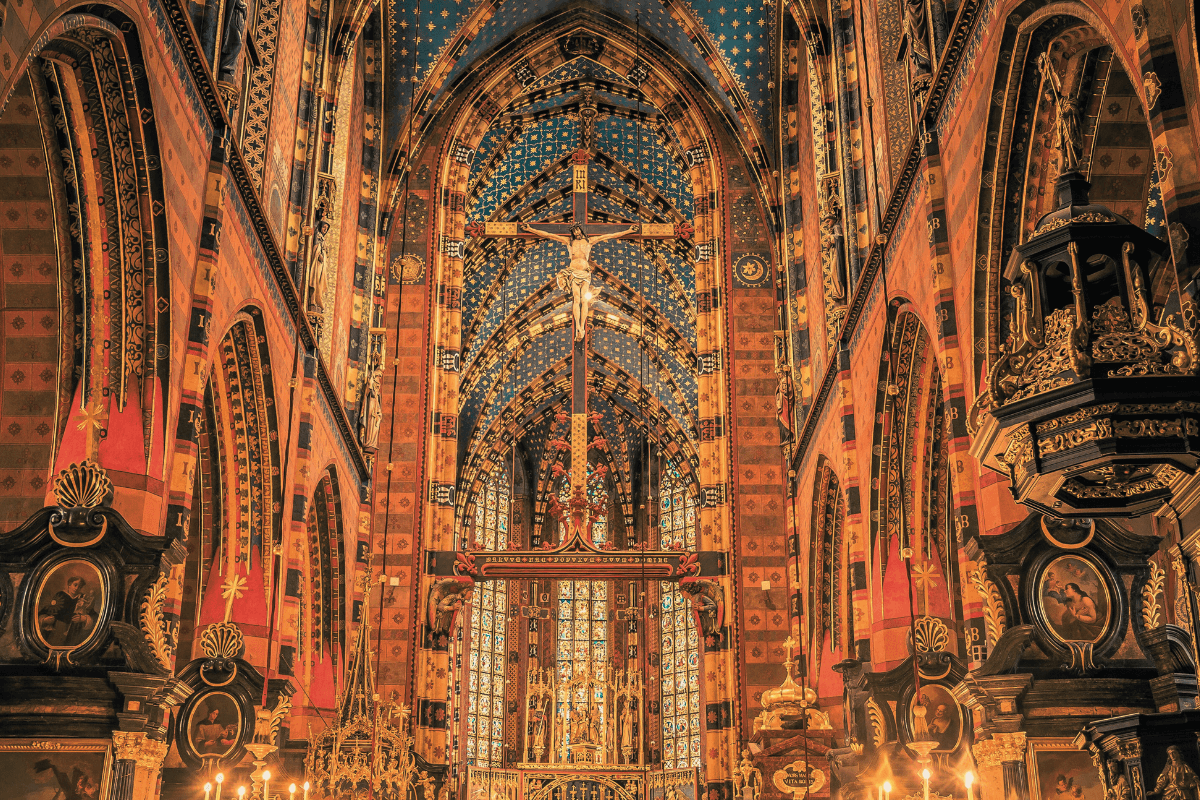 Islam and Building Churches


