
IslamiCity
Listen PodCasts, Live Quran, Watch Videos @VideoHub

Abrogation-naskh in Arabic-has long been one of the most intricate and debated concepts within Islamic jurisprudence. While unfamiliar to many outside scholarly circles, it carries enormous theological and practical weight because of its connection to the Quran, Islam's most authoritative source of law.
A newly written work titled The Abrogation Issue by Aabedan offers one of the most extensive modern treatments of this subject, re-examining centuries of claims and counter-claims about whether any Quranic verses remain in the scripture but are no longer binding.
This article distills the key themes and insights presented in that work, tracing the meaning, history, controversies, and implications of the Abrogation Doctrine.
In classical Islamic scholarship, "abrogation" refers to the claim that a Quranic ruling has been annulled-no longer applicable-even though the verse itself remains physically in the Quran. This is not simply about reconciling texts or contextualizing verses; rather, abrogation implies complete annulment of a ruling, regardless of circumstances.
A famous example often cited is verse 2:256, "There is no compulsion in religion." Some classical scholars argued that this ruling was replaced by later martial verses; others firmly rejected this view. Such debates illustrate how differing perceptions of conflict between verses lead to dramatically different interpretations and legal outcomes.
The idea of naskh originates partly from Quranic language-particularly verse 2:106, which speaks of God "abrogating" or "causing to be forgotten" certain aaya (signs). Early Muslim scholars interpreted this in different ways, noting that the word aaya can mean a verse, a miracle, or a sign. Linguistically, naskh itself can mean annulment, transfer, modification, or even clarification.
Even companions of the Prophet used the word in broader senses, sometimes meaning "to qualify," "to restrict," or "to make an exception"-not necessarily to cancel.
This semantic diversity is one source of confusion in later abrogation literature.
Over centuries, one specific idea became dominant:
that some Quranic verses remain in the mushaf (the physical Quran) but their rulings are no longer binding.
This two-part doctrine asserts that:
This second point is crucial. Because there is no direct divine designation, scholars must infer abrogation through interpretation-which is where disagreements multiply.
Abrogation claims depend heavily on interpreting conflicts between verses. But interpretation varies.
One scholar sees two verses as irreconcilable; another sees them as complementary.
As a result:
Notably, no single verse has ever been identified unanimously as abrogated.
The book documents 432 historical claims, showing how subjective and inconsistent the process has been.
Because abrogation effectively cancels a divine ruling, scholars across history-both for and against abrogation-agree on one thing: the burden of proof must be extremely high.
Pro-abrogation authorities such as Al-Zahiri, Al-Nahhas, Al-Amidi, and Ibn Taymiyya have insisted that:
In practice, however, many historical claims relied on thinly sourced narrations or interpretations that left room for reconciliation.
One common objection is that abrogation implies a "change of mind"-something impossible for God. The book addresses this by distinguishing change of ruling from change of circumstances.
Examples include:
These changes reflect shifting contexts, not divine reconsideration.
However, the book raises a key philosophical question:
If a ruling is truly annulled, why would the verse remain in the Quran without a label indicating its cancellation?
This question underlies much of the modern critique of the doctrine.
Early Muslim communities did not leave written records of abrogation doctrine, but later works reveal a gradual evolution:
This is not an abstract academic exercise. Whether one views a verse as abrogated can fundamentally alter:
The book argues that many harmful interpretations in modern discourse stem from uncritical acceptance of abrogation claims developed centuries earlier under very different historical pressures.
The Abrogation Issue urges Muslims-scholars and non-specialists alike-to re-examine the foundations of the Abrogation Doctrine with rigor and fairness. It highlights:
The conclusion is not merely polemical; it is methodological. To respect the sanctity of the Quran, any claim of cancellation must meet a standard of certainty that the historical record has failed to reach.
Whether readers ultimately agree or disagree with the doctrine, the book offers one of the most comprehensive modern explorations of abrogation-situating the debate within scripture, history, linguistic analysis, and legal theory.
To read the complete book. Please Click Here.
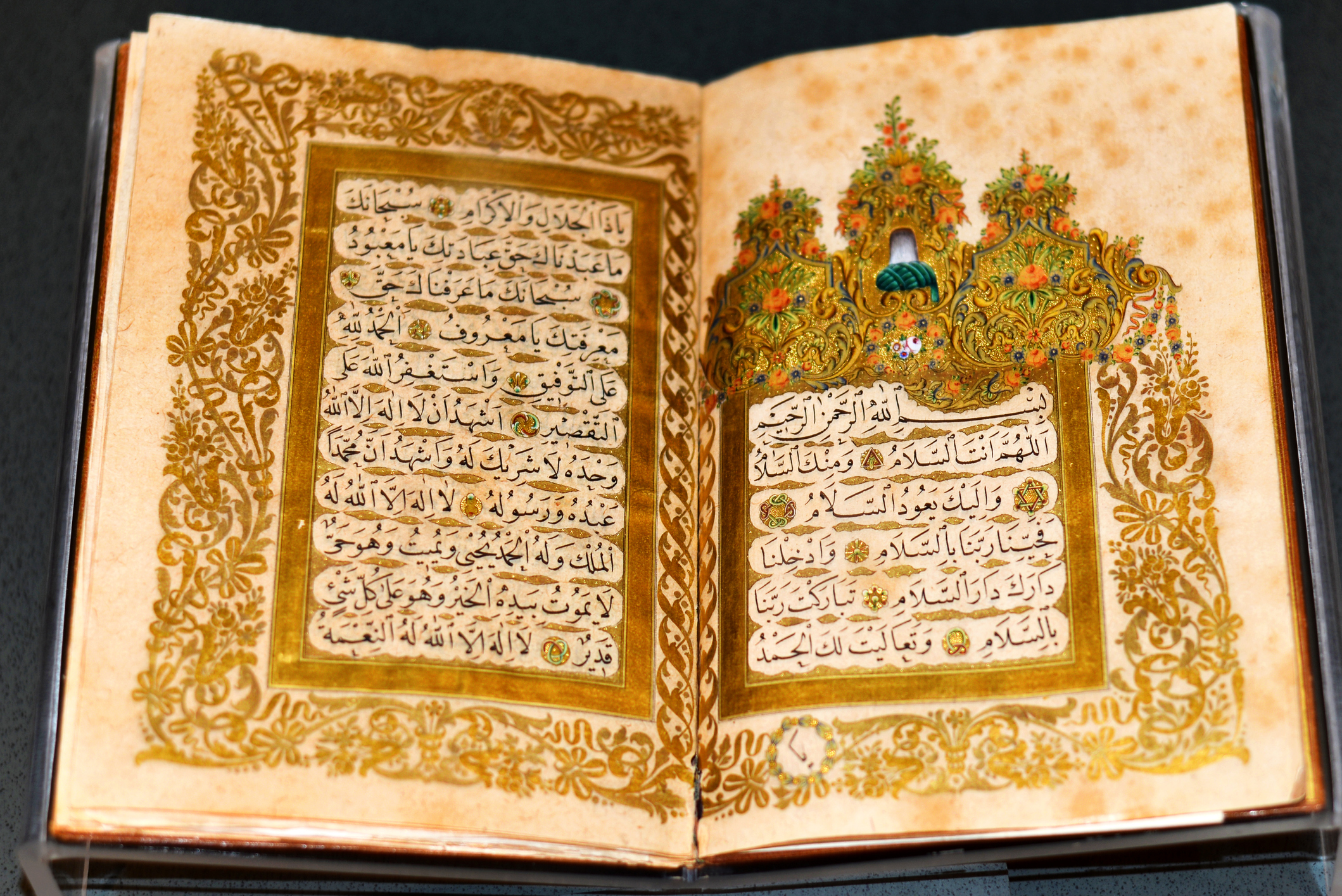 The Quran and Muslim Unity


