
IslamiCity
Listen PodCasts, Live Quran, Watch Videos @VideoHub

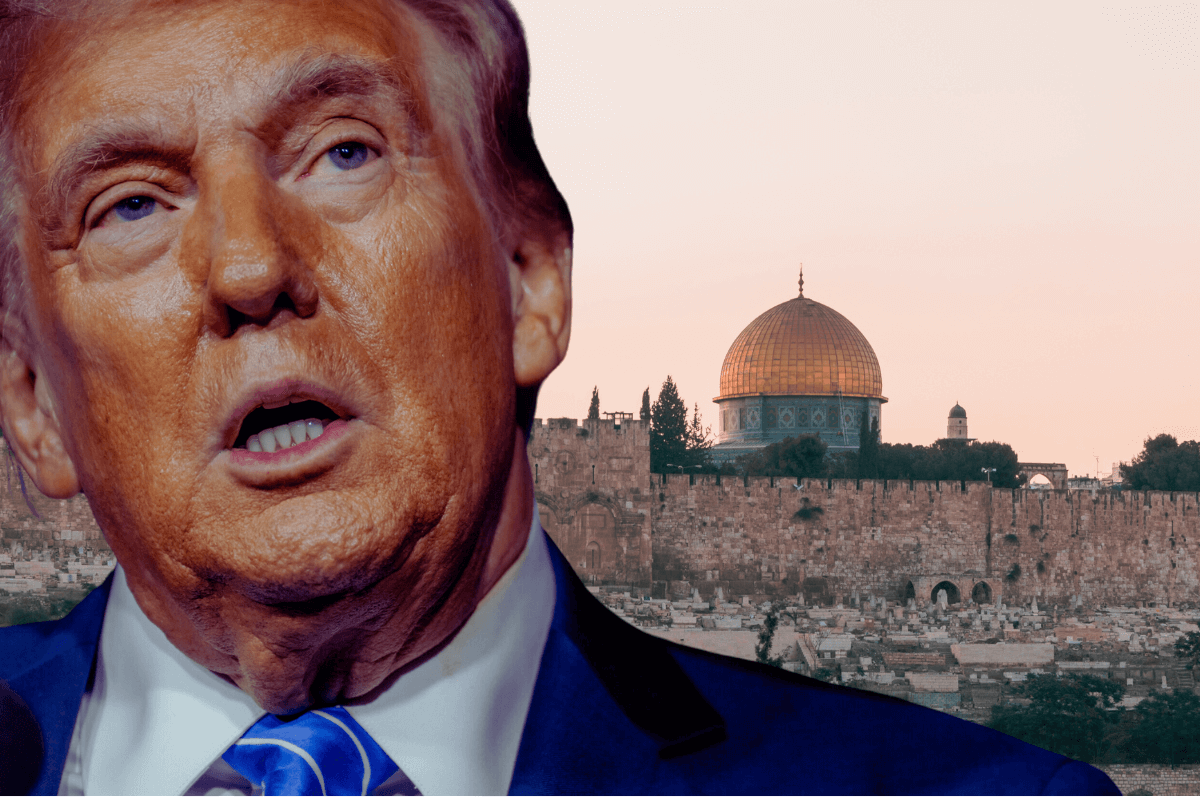
President Trump's 20-point Gaza peace plan offers a rare and urgent opportunity to end one of the most devastating conflicts of our time. It provides a fragile but necessary chance to halt the bloodshed, return hostages, and provide immediate relief to suffering families.
To achieve a just and lasting peace, this plan must be irrevocably paired with a genuine commitment to restore dignity to Palestinians and a two-state solution-one that recognizes full Palestinian sovereignty alongside a secure Israel.
Without that foundation, the plan risks becoming yet another failed blueprint, prolonging violence and deepening the cycle of despair that has consumed both peoples for generations.
This global alignment represents more than a diplomatic gesture; it is a moral consensus. The world has witnessed enough bloodshed. It now demands a political horizon that acknowledges both peoples' right to live in dignity, security, and self-determination.
According to Gaza health authorities, more than 67,000 Palestinians - half of them women and children have been killed. No modern war has seen such a proportion of child casualties. The Lancet estimated that by June 2024, 186,000 civilians had already perished - a figure that has since grown. Gaza's hospitals, schools, mosques, and administrative centers have been reduced to rubble. Two million residents have been displaced. Famine and disease are spreading as humanitarian convoys are blocked at the borders.
Over 1,700 health workers, 270 UN staff members, and 223 journalists have been killed - the highest toll in modern warfare for humanitarian personnel. The United States, despite its moral and strategic influence, has repeatedly vetoed UN resolutions calling for a ceasefire. This paralysis has enabled the continuation of what many human rights observers now describe as a genocidal campaign.
Meanwhile, the current iteration of Trump's peace plan effectively excludes Palestinian leadership from Gaza's reconstruction, giving Israel unilateral control over the process. Netanyahu's government retains the authority to determine how much aid and reconstruction material enters Gaza and how quickly any withdrawal proceeds. This setup, absent Palestinian representation, risks entrenching Gaza's separation from the West Bank - a fatal blow to any future unification of Palestinian territories.
Former President Jimmy Carter rightly labeled this system "apartheid," Israel's actions, specifically the expansion of settlements, the construction of the separation wall, and the creation of separate roads and identification systems, resulted in a system of segregation and domination over Palestinians that was in many ways "far worse" than what he had witnessed in South Africa during the apartheid era. These policies contradict the very Jewish ethical and religious principles they purport to defend and stand in violation of international laws and Human Rights.
Israel became an apartheid regime that expelled most Palestinians and treated the remaining 6 million Palestinians as second-class citizens, denying them entry to their towns and illegally encroaching on their houses and property.
The Israeli government fenced off Gaza, dividing the population along racial lines with separate water reserves and ghettos, and those living in Gaza do not have access to the world through air or sea transportation, and have no connection to the West Bank. Every few years, the enclave is subjected to large-scale bombings that kill thousands and destroy critical infrastructure, yet fail to produce any security for Israel or stability for Palestinians.
As Canadian-Palestinian scholar Diana Buttu has noted, the prevailing Israeli logic remains tragically circular: "Nothing justifies Hamas's attack on October 7, but genocide is justified because of that attack." The result is an ever-deepening cycle of retaliation, radicalization, and revenge.
The two-state solution is the only viable alternative to perpetual cycles of violence. The international consensus on this is overwhelming and for compelling reasons:
It addresses the Root Cause: The core of this conflict is not terrorism but occupation and the denial of self-determination. The July 2024 ruling from the International Court of Justice (ICJ) affirmed that Israel's presence in the Occupied Palestinian Territories is illegal under international law, demanding a withdrawal. The two-state solution is the political embodiment of this legal principle, offering a path to end the occupation that began in 1967.
It Enjoys Universal Legitimacy: The majority of the world-over 157 UN member states, including key U.S. allies like Canada, the United Kingdom, Germany, Spain, and Australia-already recognize Palestine as a sovereign state. This is not a radical idea but a global diplomatic norm. The United States stands increasingly isolated in its opposition - on the wrong side of both history and humanity.
I strongly supported a demilitarized Palestinian state for an initial period of three to five decades: A framework for a demilitarized Palestinian state, secured initially by a UN-mandated international stabilization force, can provide the security guarantees Israel requires while granting Palestinians the sovereignty they are owed. This model is not unprecedented; postwar Germany and Japan rebuilt under international oversight and emerged as thriving peaceful democracies.
A secure, prosperous Palestinian state is not just in Palestinian interest - it is in Israel's and the world's. As long as millions of people live in deprivation and despair, peace will remain impossible, and extremism will find fertile ground.
President Trump has a historic opportunity. By linking his Gaza Peace Plan to a firm commitment to Palestinian statehood, he could achieve a transformational peace - one that extends the Abraham Accords, brings Saudi Arabia into a comprehensive regional settlement, and reshapes the Middle East for generations. Such a legacy would eclipse any political prize, even the Nobel.
The world must not allow Gaza's rubble to become the graveyard of the two-state solution. Our shared humanity demands that we act - now - to secure peace through justice, dignity, and equality for both peoples.
To break this cycle, the ceasefire must be followed immediately by massive humanitarian relief, international accountability, and concrete steps toward Palestinian statehood. The United States, still the most influential actor in this conflict, must choose which kind of peace it wants to lead.
Basheer Ahmed, M.D., is a physician, humanitarian, and advocate for interfaith understanding and global peace. He is the former professor of psychiatry at UT Southwestern Medical School, Dallas, TX. He has written extensively on Muslim unity, interfaith dialogue, and Middle East policy.
 Will President Trump Aid The Mahdi?


