
IslamiCity
Listen PodCasts, Live Quran, Watch Videos @VideoHub

In Madinah, Prophet Muhammad  used to set aside time every morning to teach his Companions. He was renowned for his eloquence and clarity of speech. He did not speak too quickly, and though his phrasing was precise, he did not speak slowly, or in fragments with lots of pauses. It was easy for everyone to follow what he said.
'A'ishah described his way of speaking as follows: "Allah's Messenger did not ramble on the way you do these days. His speech was clear and precise. Those who listened to him easily remembered what he said." [Sahih al-Bukhari (3568) and Sahih Muslim (2493)]
Almost every day, he would sit in the mosque in Madinah with his Companions gathered around him. He would often start a discussion by posing a question. Once, he asked: "Might I inform you of the gravest of major sins?" When his Companions replied in the affirmative, he said:
| "The gravest of major sins are to associate partners in worship with Allah, to disrespect your parents, and to bear false witness." [Sahih al-Bukhari (2654)] |
| "Do you know what it means to be bankrupt?" |
| With respect to my followers, the one who is bankrupt is one who is brought forth on the day of judgment with prayers, fasts, and charity to his credit, but he had spoken ill of some people, falsely accused some people, misappropriated the wealth of others, and assaulted people or shed their blood. Those he had wronged will be compensated from his good deeds until he has no more to his credit. Then the remainder of those he had wronged will be compensated by having some of their sins placed on him. As a consequence, he is consigned to Hell. [Sahih Muslim (2581)] |
Then it occurred to 'Abd Allah b. 'Umar b. Al-Khattab that the tree in question might be the date palm. However, he was the youngest of the ten Companions in the Prophet's company on that occasion, and his father 'Umar as well as Abu Bakr were also present, so he felt shy to speak. Then the Prophet said: "It is the date palm." [Sahih al-Bukhari (2209) and Sahih Muslim (2811)]
The Prophet would sometimes repeat a statement three times to emphasize its importance. For instance, once when enumerating the major sins, he came to the point where he said: "And beware of making false testimony; beware of bearing false witness." He began repeating it over and over again, until his Companions started to utter:
| "If he would only desist..." [Sahih al-Bukharī (2654)] |
Sometimes, the Prophet took his Companions by surprise with a question in order to bring the discussion to a surprising conclusion. For instance, once he asked: "Who among you is fasting today?" This question took them off guard, since he had not even hinted to them earlier that they should fast on this day. Had he done so, they would have all been fasting.
They all sat silently for a while. Then Abu Bakr spoke up:
| "I am fasting, O Messenger of Allah." |
asked:
| "Who visited a sick person today?" |
| "Who followed a funeral procession today?" |
| "Who fed a poor person?" |
Finally the Prophet said:
| "Anyone who carries out these four deeds in a single day will enter Paradise." [Sahih Muslim (1028)] |
used drawings to illustrate his point. On one occasion, he drew a square on the ground. He then drew a straight line going through the middle of the square but emerging out of it at the top end. Then he drew other smaller lines coming from the edges of the square and pointing inwards towards the larger straight line. Then he asked his Companions:
| "Do you know what this means?" |
He said:
| The line going through the middle of the box represents the human being. The other lines aiming towards it are the trials of life that come at him from all directions. If a person manages to avoid one of those trials, he will run into one of the others. The surrounding square is the lifespan that encompasses a person. The extension of the line outside the box represent hiss hopes. The person remains busy with those hopes, but the term of life comes to an end before they are fulfilled. [Sahih al-Bukhari (6417)] |
Source: Islam Today - Sheikh Abd al-Wahhab al-Turayri, former professor at al-Imam University in Riyadh
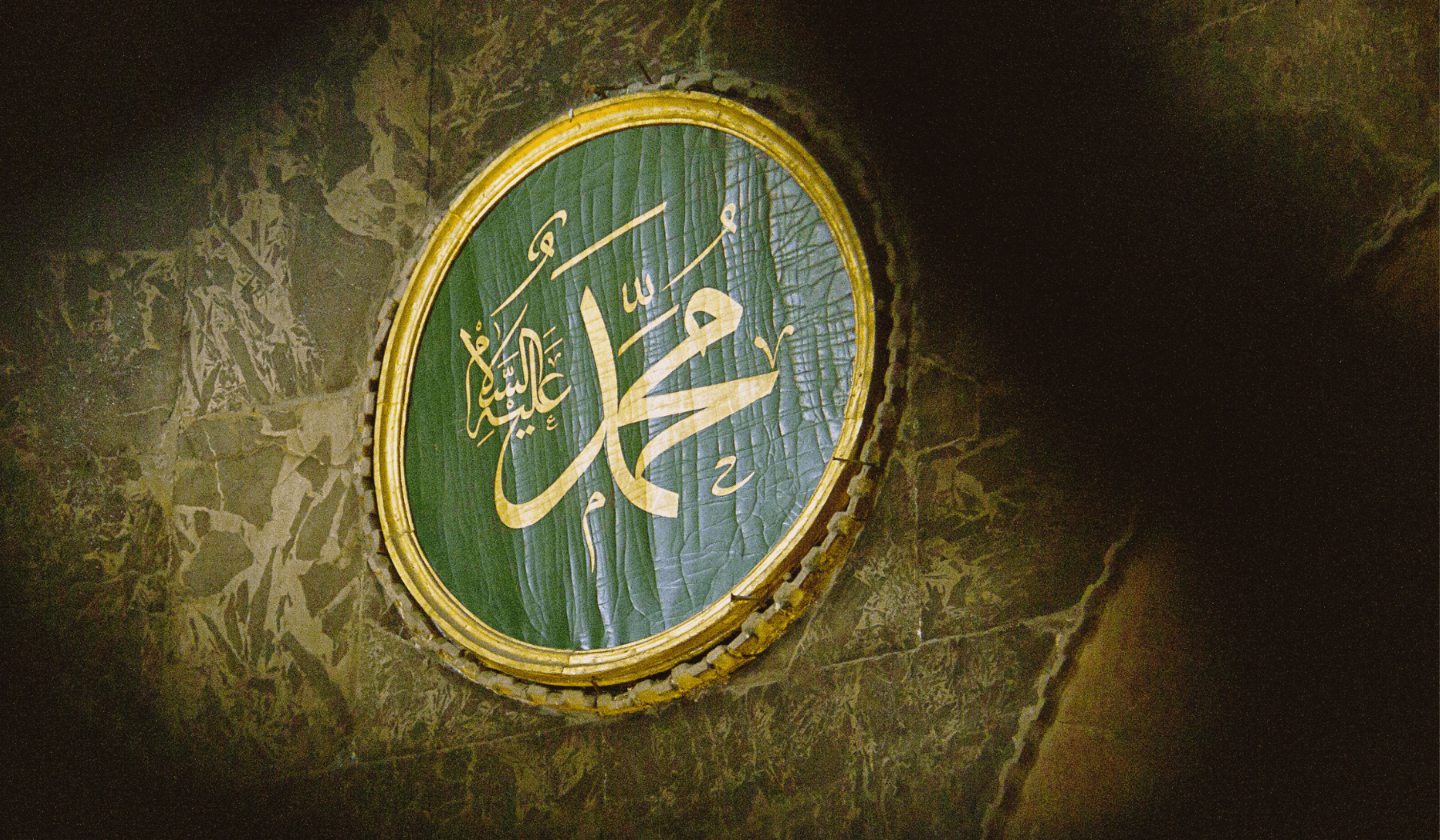 A Legacy of Mercy: 1500 Years of Prophetic Light


