
IslamiCity
Listen PodCasts, Live Quran, Watch Videos @VideoHub

India and greatness are not strangers. It was always great and hence it attracted so many to its natural richness and bounty.
The Aryans, the Muslims, the Europeans and now the Americans have pursued India either to become part of it, rule it, exploit it or as in the case of the U.S. today, partner with it in strategic pursuits. India gave the world great empires, the Mauryas, the Guptas and the Mughals, to name a few. They collectively created a rich and glorious civilization.
So when India became independent from British colonial rule, even though it had become underdeveloped, poor due to two centuries of British looting, and traumatized as a result of a bloody partition, it expected to soon regain its past greatness. In recent years India's economy has grown, its military has become more powerful, it is respected more than ever before in the international arena and hence, for many in India imminent greatness is a foregone conclusion.
In this short essay commemorating India's seventy-five years of independence, I wish to look at India today with a critical eye to examine if India's destiny is in its grasp. I identify five of its major achievements, but I also note three major failures which could make India's journey bumpy and slower if not completely derail it. So first the achievements and then the setbacks.
However, India's democratic decline needs to be understood in the global context. Democracy has been on a steady retreat since 2005 and the world by and large has seen the rise of illiberalism, populism, and authoritarianism. Less than twenty percent of the world now lives in full democracies. In this context India is still the best democracy in South Asia by far. I feel that while India's current trend towards majoritarianism must be noted its democracy should also be celebrated.
Nuclear weapons are ultimate guarantors of national security. If Ukraine had not given up its nuclear weapons it would certainly not be in the position it is in at present.
India has also developed ballistic missile technology and with the world's third largest defense budget it is well on its way to becoming a major global military power. While many of my liberal and constructivist colleagues may not like this realist assessment, I am convinced that given the unfriendly presence of nuclear China and nuclear Pakistan in its neighborhood, India did well to secure itself.
In 2003, nearly a third of the country was in extreme poverty. Today less than 1 percent of its population lives in extreme poverty. From 2006 to 2016, India lifted 273 million people out of poverty. This is like eliminating poverty in a nation the size of Indonesia. This is indeed an exceptional achievement for a post-colonial country that has suffered from four major wars and a lot of domestic challenges. India is still a low middle income economy with poor Human Development Index rating, but it has taken giant steps forward and the momentum is in its favor.
India's investment in education and in human resources is one of its biggest achievements. Moreover, Indian achievers are a source of billions of dollars in hard currency remittances and transfer of knowledge to India. They are also a source of soft power.
India's failures like its successes are numerous. I want to highlight these three because I think they are critical to India's future as a rising power and the preservation of its democracy.
Muslim life, culture, heritage, and property are at the mercy of the mobs, the law enforcement agencies and judiciary all of whom are profoundly communalized. If this war on Muslims is not checked it could undermine all the progress India has made at home and make it a pariah abroad. A tiny glimpse of what could happen was on display during the recent domestic and international uproar over a former ruling party spokesperson's denigration of the Prophet of Islam.
Even though the constitutional status of Kashmir was changed to essentially integrate it in the country, the changes were made in profoundly undemocratic and oppressive fashion and do not enjoy legitimacy in the eyes of Kashmiris. This conflict has radicalized the domestic politics of both nations, diverts large chunks of the budget away from development and stunts the growth of the two nations as well as the region.
India as the biggest nation in South Asia has failed to bring peace and stability, growth, and regional integration to South Asia. How can it ever become a global leader without first becoming a leader in its own region?
This inequality is now also showing across the gender divide as the role of women in India's economy is suddenly shrinking. Inequality along with the end of secularism are India's greatest failures in the past few decades.
India has much to celebrate on August 15th. It has indeed arrived at the cusp of greatness. But there are serious challenges, some old and festering, some new and emerging. They must be overcome before India can taste its destiny. The famous observation made by the Sufi Saint Nizamuddin Auliya meanwhile captures India's situation quite aptly - Hanooz Dilli Door Asth meaning "Delhi is still far away".
Dr. Muqtedar Khan is a Professor in the Department of Political Science and International Relations at the University of Delaware. He is the author of the award-winning book Islam and Good Governance: Political Philosophy of Ihsan (Palgrave Macmillan, 2019). His essays have appeared in The Wall Street Journal, The New York Times, The Washington Post, The National Interest, The Conversation, The Diplomat, The Indian Express, Outlook India, The Wire, and many other publications worldwide. He hosts a YouTube show called Khanversations and his website is www.ijtihad.org. He Tweets @MuqtedarKhan.
Note: This article was first published by The Diplomat


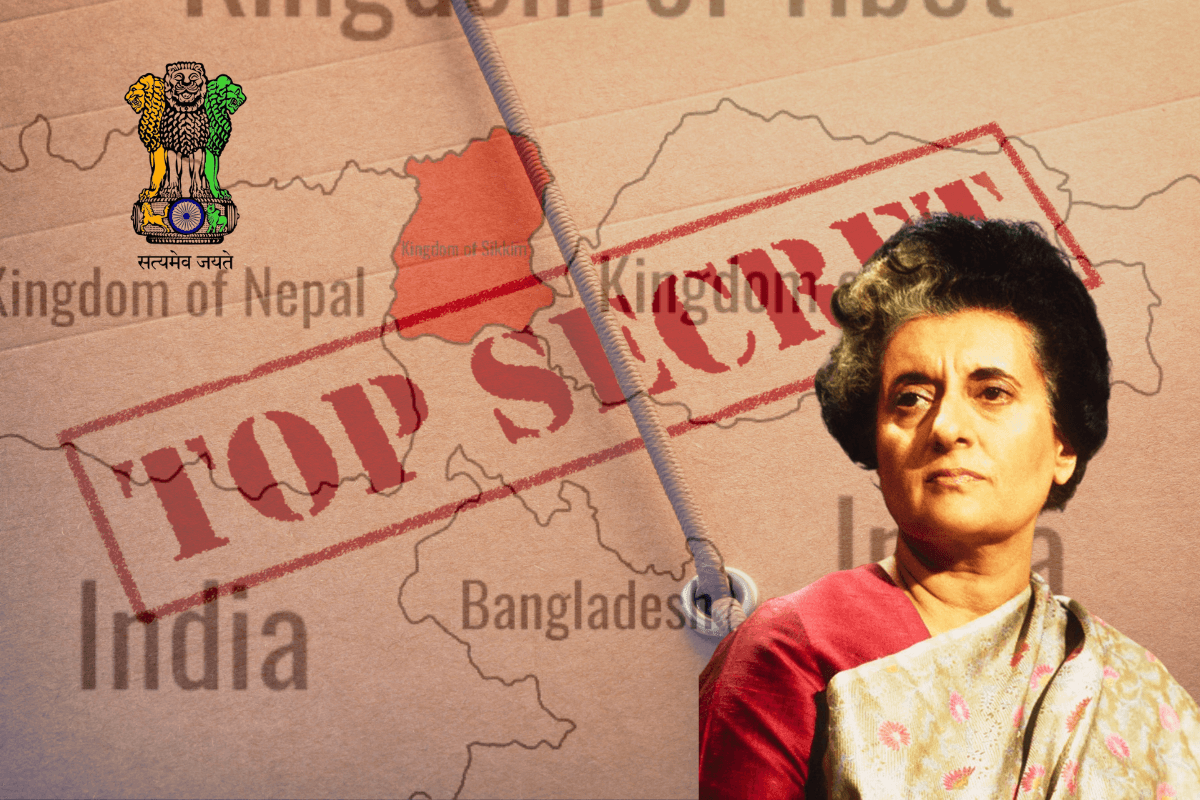 The Forgotten Annexation: How India Absorbed Sikkim Through Intrigue and Fo...