
IslamiCity
Listen PodCasts, Live Quran, Watch Videos @VideoHub

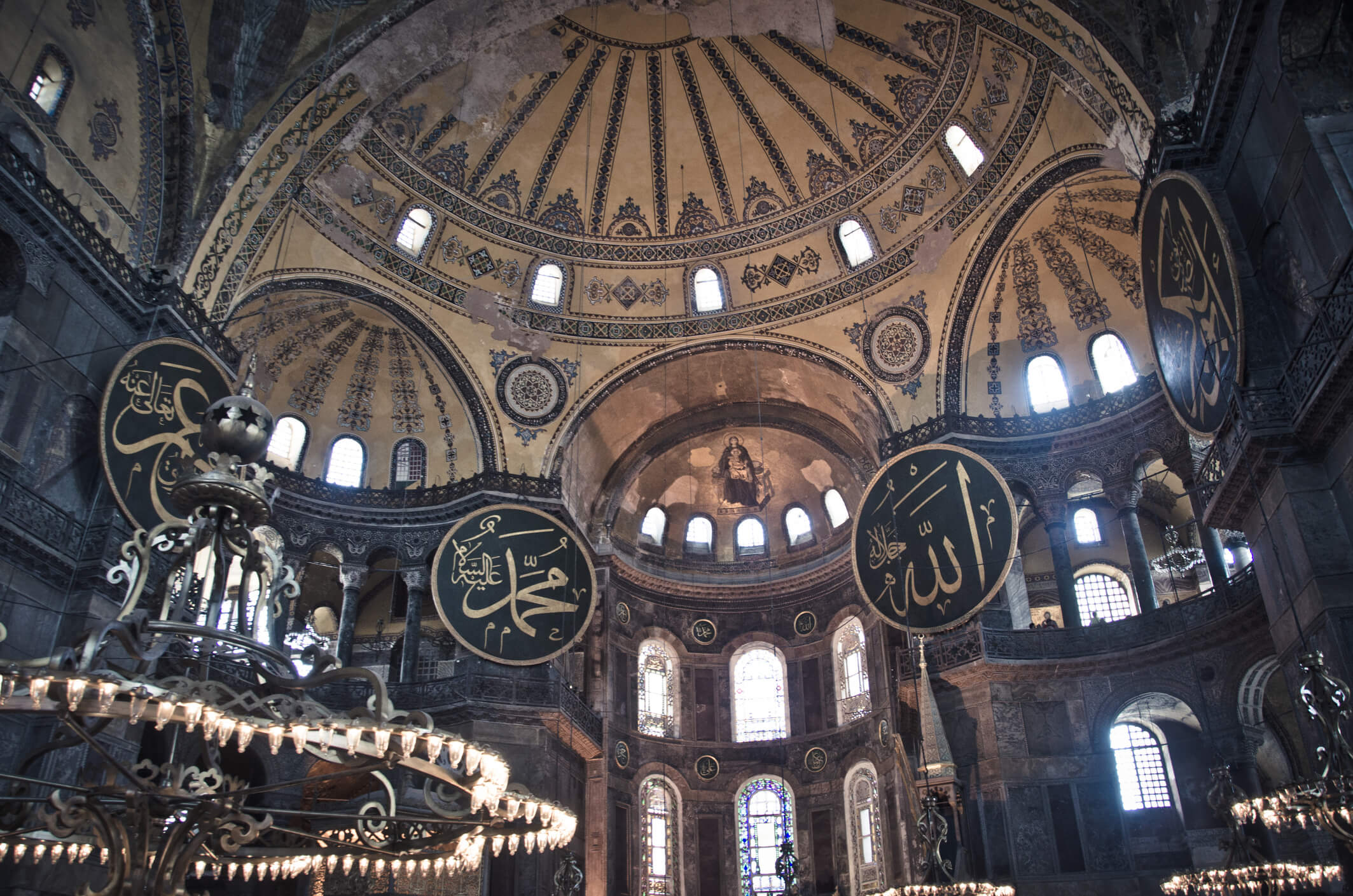
ALLAH - for Muslims the greatest and most inclusive of the Names of God, an Arabic word of rich and varied meaning, denoting the one who is adored in worship, who creates all that exists, who has priority over all creation, who is lofty and hidden, who confounds all human understanding. It is exactly the same word as, in Hebrew (eloh), the Jews use for God (elohim), the word which Jesus Christ used in Aramaic when he prayed to God (elah). God has an identical (root) name in Judaism, Christianity and Islam; Allah is the same God worshipped by Muslims, Christians and Jews.
| "He is God, the One God, Independent and Sought by all; He begets not, nor is He begotten, and there is none like unto Him. (The Holy Qur'an Chapter of Sincerity of Faith) |
| The existence of a Supreme Being, the one and only God, whose sovereignty is to be acknowledged in worship and in the pledge to obey His teaching and commandments, conveyed through His messengers and prophets who were sent at various times and in many places throughout history. |
Islam teaches that the objective of the Commandments of God is that peace should be established in the human societies of this world, in preparation for a further dimension of human existence in the world to come, the Afterlife. Islam's vision of peace is therefore truly universal; it transcends time and belongs to the order of God's eternity.
Islam does not regard itself to be a new teaching, different or separate from that of other world religions. It is the re-affirmation of the ancient yet living truth of all religions which can be expressed in the following beliefs:
|
| قُلْ آمَنَّا بِاللّهِ وَمَا أُنزِلَ عَلَيْنَا وَمَا أُنزِلَ عَلَى إِبْرَاهِيمَ وَإِسْمَاعِيلَ وَإِسْحَقَ وَيَعْقُوبَ وَالأَسْبَاطِ وَمَا أُوتِيَ مُوسَى وَعِيسَى وَالنَّبِيُّونَ مِن رَّبِّهِمْ لاَ نُفَرِّقُ بَيْنَ أَحَدٍ مِّنْهُمْ وَنَحْنُ لَهُ مُسْلِمُونَ |
| "Say: we believe in God, and that which was revealed unto us, and that which was revealed unto Abraham and Ishmael and Isaac and Jacob, and the tribes, and that which was vouchsafed unto Moses and Jesus and the prophets from their Lord; We make no distinction between any of them, and unto Him we have surrendered. " (The Holy Qur'an 3:84) |
Islam teaches that human diversity is a sign of the richness of God's mercy, and that God wills human bangs to compete with each other in goodness in order to test who is the finest in action: this is, according to Islam, the reason for the creation of the universe. To strive for peace in the societies of this world is to compete in the fulfillment of human destiny in preparation for the ultimate Abode of Peace in a further, renewed dimension of human existence in the Afterlife. The irreducible minimum of faith is to believe in God as the sole sovereign Lord of this world and of the next, and to believe in the reality of the Afterlife for which human beings are to prepare by living righteously in this world. God alone is the Judge of human righteousness, and it is God alone who rewards and punishes in this life and in the life hereafter.
Righteousness does not mean for you to turn your faces towards the East and West, but righteousness means one should believe in God (Alone), the Last Day, angels, the Book and prophets; and no matter how he loves it, to give his wealth away to near relatives, orphans, the needy, the wayfarer and beggars, and towards freeing captives; and to keep up prayer and pay the welfare tax; and those who keep their word whenever they promise anything; and are patient under suffering and hardship and in time of peril (stress). Those are the ones who act loyal and perform their duty. (The Holy Qur'an 2:177)
A Muslim is one who is committed to peace by continuously striving to follow the way of righteousness and justice revealed by God; the Arabic word Muslim refers to a man, Muslima to a woman. In either case the literal meaning is "one who submits to God's teachings and commandments which leads to peace".
Muslims have three distinct advantages to help them in the practice of Islam as their way of life:
1) The Sacred Scripture, called the Qur'an, which was revealed to the Prophet Muhammad (peace be upon him) in the 7th. century of the common era, and which, after 1,400 years, remains authentic in its original Arabic text, in the language which is still used and understood by millions of people in the world today; it contains God's guidance in teachings and commandments which are valid for all times and places, and which encompass all spheres of human life;
2) The Prophet Muhammad, whom the Qur'an names as "the Seal (last) of the Prophets", and of whose life and mission there is a complete and authentic record in the Sira and the Hadith (Sunna); these show how he exemplified the teachings and commandments of God in practice, and elaborated the principles laid down in the Qur'an in order to provide a sure guidance for their interpretation and application for all later times and societies;
3) The Sacred Law, called the Shari'ah, which sets out the way of worship prescribed in the Qur'an and the Prophet's practice; it goes beyond the common understanding of worship as the performance of religious rituals, and encompasses the whole of human life, individual and social; thus all so-called secular activities become acts of worship, provided they are performed with pure and righteous intention, seeking God's pleasure.
Muslims are enjoined to organize their lives on the basis of a series of ritual acts of worship which are ordained in the Qur'an as ways which discipline human beings to remember God constantly, accepting His Sovereignty and pledging to obey His commandments:
|
"I bear witness that Muhammad is His servant and His prophet"
God, as well as their kinship with, and responsibility for the millions of human beings in the
world who experience involuntary fasting because of the lack of provisions, or their unjust distribution.
Each of these prescribed acts of worship bring Muslims daily and repeatedly before God Almighty as the Creator, Sustainer and Judge of all humanity.
Through these acts of worship God helps Muslims to fulfill the obligation of striving which He has ordained for this life: the striving actively and freely to surrender one's own will in obedience to the Will of God, inwardly in intention and outwardly in word and deed, individually in personal conduct and collectively in the improvement of society; the striving for peace in the world through the announcement of true faith, and its defense against all that threatens it.
Islam presents human beings with a simple twofold invitation:
to witness that there is no god but God Almighty; to witness that Muhammad is the Messenger of God.
This declaration is the door to a life of service, and to participation in a community of believers whose highest duty is to call humanity to embrace what is righteous and good, and to reject what is evil and degrading. Muslims are sisters and brothers of all people of true faith, and wish to strive with them for peace in this world.
The intention here has been to explain clearly the fundamental principles of Islam.
Many current references to Islamic fundamentalism, particularly as they appear in public media, seem to ignore these principles and treat Islam as nothing more than a political phenomenon.
It is hoped that this information will serve - by the Grace of God - to remedy this imbalance.
Source: Article published by Mr. Abdul Jalil, Chairman of Al-Huda Islamic Center, P. O. Box 962, Elberton, GA 30635, USA; in consultation with Dr. David Kerr, Professor of Islamic Studies, Hartford Seminary, Hartford, Connecticut, USA.
 How Did Prophet Muhammad Show Mercy and Compassion to Humanity?


