
IslamiCity
Listen PodCasts, Live Quran, Watch Videos @VideoHub

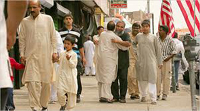 |
The number of U.S. Muslims will more than double, so you are as likely to know a Muslim here in 20 years as you are to know someone Jewish or Episcopalian today. Those are among key findings in "The Future of the Global Muslim Population," the first comprehensive examination of Muslims, whose numbers have been growing at a faster rate than all other groups combined.
"We're not surprised. Our mosques and schools are already overflowing," says Imam Johari Abdul-Malik, outreach director of a mosque in Falls Church, Va.
The Pew Forum on Religion & Public Life analyzed statistics from United Nations data and census material from more than 200 countries and studies by 50 international demographers. If immigration patterns and Muslims' comparatively higher birth rates continue, Pew projects:
Just as now, about 3% of the global Muslim population will live in the world's most developed regions.
In several northern and eastern European nations, the percentage of Muslims will near or pass 10%, raising their political and cultural clout, particularly in urban areas.
Alan Cooperman, Pew Forum associate director of research, says the Muslim rate is "growing but slowing" and political and economic uncertainties can make dramatic shifts in projections.
"The study does not project Muslims' religiosity or their politics," Cooperman says. "People will say, 'I don't care how many Muslims there will be, I care how many radical Muslim terrorists there will be.' But no one knows that."
Ibrahim Hooper, spokesman for the Council on American-Islamic Relations, says, "We Muslims need to redouble our outreach efforts because of growing challenges from the vocal minority who see us as suspect."
Source: USA Today - Garrett Hubbard
 Can Muslims befriend Christians and Jews?


