
IslamiCity
Listen PodCasts, Live Quran, Watch Videos @VideoHub

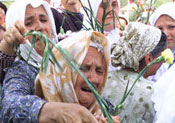 |
Ten years have passed since the Srebrenica massacre took place, termed as the biggest tragedy in Europe since World War II.
Official commemoration ceremonies for the 10th anniversary of the Srebrenica massacre of 8,000 Bosnians by Serbs in July 1995 will be held on Monday July 11. New discoveries are being made about the Srebrenica massacre that took place in area the United Nations (UN) peace forces had declared as a "safe zone" for civilians. At the 10th anniversary of the massacre, statements by Dutch soldiers, who handed Bosnian civilians to Serbs, once again reveals the atrocity of the incident. The Dutch administration does not feel responsible for the issue but soldiers now express their regret and shame for being bystanders to the massacre of Bosnian civilians they had supposed to protect. Statements by 171 out of 600 Dutch soldiers, many of whom have been undergoing psychological therapy for the events they had witnessed, have been compiled in a book called the "Memories of Srebrenica".
Steve van de Veer is one of these soldiers. He relates how Serbs massacred Bosnian civilians they had handed over. According to him Bosnian Muslims had been loaded onto the back of a truck. They had covered the bodies so that the Serbs could not discover the Muslims. The Bosnians were shouting and crying. Halfway on the journey, a 40-year-old man climbed onto the truck. Van de Veer had assured them of their safety. The 40-year-old man did not know that all men in the truck aged between 12 and 60 would be shot to death. Van de Veer said he could not forget the grievous moment. When he returned to the Netherlands, his wife and children left him because he could not overcome his trauma. The Dutch soldier, retired from the army with a report of disability to serve has been undergoing psychological therapy at a medical center.
Manolo Serrano Yvan der Hoeven was also among the soldiers, who have been unable to overcome the trauma they suffered. Hoeven describes the massacre and how they were mere onlookers to it. He says there were only women, children and helpless people running about in the streets. The Dutch soldiers had promised them all protection. Hoeven regrets they could not defend these civilians. After he returned to the Netherlands, he had undergone psychological therapy for years but he still suffers the effect of the incident. He expresses his guilt saying he had wanted to die. He was ashamed of not keeping his promise to protect the innocent civilians. The Dutch soldier unburdened his heart in an unsent letter he wrote to the children of Srebrenica. He hopes to be forgiven and not to be charged for all that happened. Hoeven asks the children of Srebrenica to understand the deep pain he feels from the bottom of his heart whenever he recalls them. He ends his letter with, "I love you". Two thirds of the Dutch soldiers witnessing the Srebrenica massacre have resigned from their positions in the army.
Mr. Basri Dogan writes for Zaman
 Kabul School Bombing Condemned


