
IslamiCity
Listen PodCasts, Live Quran, Watch Videos @VideoHub

| What made them animals? What motivated them to drive so far from their homes, to spend weeks planning their assault and, finally, to execute it in such a bloody and ruthless manner? Does the answer really lie just in their flawed and twisted nature? |
What words do you use to express the horror of what happened in a Beslan school? How can any words capture the total awfulness, the total senselessness, the total tragedy of what happened there?
How do you describe the scenes of bloodied, naked children fleeing in terror; row after row of bodies; grieving parents and mass funerals? How do you even begin to understand the feelings of Beslan's residents? There are no words.
Who does one blame for such an atrocity? The terrorists, of course, who carried it out. 'Hostage takers' - the term used in most media reports - is far too benign for such people.
Accounts of the 50-plus hour ordeal coming out reveal a group for whom killing was like coughing - it took that little thought and was that easily forgotten. The values (if any) of the terrorists who seized control of the Middle School-1 were so completely alien to what we call 'civilization' and 'humanity' that many have (justifiably) called them animals.
Who were the terrorists? The media and most analysts pointed the finger at Chechen militants close to Shamil Basayev, notorious Chechen rebel fighter. But Russian government spokesmen blamed foreign Islamic terrorists.
They claimed that ten of those killed (from among the terrorists) were Arab. Such claims come as no surprise: far more convenient to blame international Islamic terrorism and Al Qaeda - and thereby join Bush's war on terror and win global sympathy - than to acknowledge that the problem is a domestic one between the Russian government and a recalcitrant republic.
Weigh up the evidence for both arguments - international Al Qaeda versus Chechen nationalists - and that for the latter is overwhelming. The similarities between Beslan and the Moscow theatre hostage-taking two years ago, the geographical location (in the north Caucasus), hostage accounts that terrorists spoke with Chechen accents - and, most of all, the history of Chechen violence against Russia.
In the past few days alone there have been two attacks (not counting Beslan): a bomb in Moscow that killed ten people, and suicide bombings that downed two civilian planes within minutes of each other. Recall also some of the other statements made by Moscow - that there were only 350 hostages in the school, seven terrorists... and its credibility has to be questioned.
But even if the Russian government is telling the truth and some foreigners were involved, this was still a Chechen operation: executed by Chechens and stemming from Chechen anger against Moscow.
Any internationalization of the Chechen conflict, through the induction of foreign fighters, is a consequence of what is happening in Chechnya: it is not the cause.
Why did Chechen terrorists seize Beslan's Middle School-1 and cause the deaths of over 300 people, half of them children? The simple answer is because they are animals, sub-humans, killers. Of course they are - were (most of them are dead).
But is that sufficient explanation? What made them animals? What motivated them to drive so far from their homes, to spend weeks planning their assault and, finally, to execute it in such a bloody and ruthless manner? Does the answer really lie just in their flawed and twisted nature?
If nature alone could produce such monsters, there would be many more Beslans. No, for the full answer you have to look at nurture too: the environment in which people grow up.
In the case of young Chechens, for over a decade now that environment has been one of war, conflict and terrible suffering. This is the other face of Chechnya - the one obscured by terrorists like those who seized the school and the Moscow theatre. It is a face as grief-stricken, as traumatized and as sad as those you see in Beslan today.
Chechen suffering dates back many decades: no need to go through all that history - just start from 1994 when Boris Yeltsin's post-USSR Russia invaded the republic. Killing and destruction followed.
Fast-forward to 1997 and the democratically elected government of Aslan Maskhadov struggles to establish order in a state radicalized and divided by conflict. Move on to 1999 and this time it is Vladimir Putin's Russia that is going to war in Chechnya. More killing, more destruction, more division, more radicalization.
Vladimir Putin does not encourage human rights groups to count the dead in Chechnya: if he did, the figures would quickly outstrip the Beslan dead - many thousand-fold. Russia's war in Chechnya has been a dirty one, fought with little respect for civilian life and property or the rules of war. Many innocents have perished.
The Beslan terrorists' demands stemmed directly from their homeland's bloody history: the withdrawal of Russian troops from Chechnya, the release of Chechen militants, and Chechen independence. Can anyone still believe that this was terrorism motivated by Al Qaeda's hatred of the West?
Vladimir Putin's war made him President, but that was all. It did not achieve any of the objectives trumpeted by the Kremlin: it did not win peace in Chechnya, it did not crush nationalist aspirations in the republic, and it did not make Russians secure.
Quite the opposite: it turned Chechnya into a raging fire, it fuelled nationalist aspirations and - as demonstrated all too visibly in Beslan - it brought terror to ordinary Russians. One could have said: 'Seldom can a policy have proven to be so disastrous' - were it not for George W. Bush's even more calamitous 'war on terror'.
As Russia buries its dead, it is all too easy to plot revenge, to strike out, to hit back with force. But that will only exacerbate the problem. It should be obvious now - not just from what is happening in Chechnya and Russia, but also in Afghanistan, Iraq and Palestine - that the answer to terrorism does not lie in force.
Security, yes, but not force: hitting back at civilian populations who had nothing to do with the terrorist attacks. Such policies only serve as recruiting campaigns for the terrorists, swelling the ranks of suicide bombers.
If you want to end terrorism you have to look beyond the blood, the mangled bodies, the horror and anger. You have to go to the root causes and address those.
What drives ordinary people to become terrorists? Why are they angry? What are the aggravating factors? Most important, what can bring them back into the mainstream? It is these questions that have to be answered if terrorism is ever to be brought under control. [Eradicating it is perhaps too much to hope for in these bloody times.]
Has Putin learnt from his mistakes? Will the 350-odd funerals taking place in Beslan cause him to rethink his policy and try a different approach? Listen to his speech after the Beslan hostage crisis ended so tragically, and it is clear he has not.
Change comes from pressure: domestic and/or international. It is too early to gauge whether Beslan will cause Russians to end their love affair with Putin. Certainly there is anger at the lies told by government officials, and at the lack of preparedness of the authorities.
Anger too that it is taking days just to find out how many people are missing - let alone what happened to them. But will this immediate public outrage become focused on the Russian President? Given that most Russians get their news from state-controlled television, and given the general suppression of free speech under Putin, there is every chance that the Russian President will survive.
International pressure is one factor that has been conspicuously absent from the Chechen issue. The war on terror launched by George Bush after 9/11 provided the perfect cover for Vladimir Putin to continue his own war against Chechen nationalists.
When the 'leader of the free world' is happily bombing civilians and occupying countries without any legal mandate, who will question what Russia does in backstage Chechnya? When 'terrorism' is used to justify targeted assassinations, illegal detention and torture, how can anyone accuse Putin of violating human rights?
Will the situation change after Beslan? Will the international community realize that condemning terrorism and reacting with knee-jerk force is not the answer? Will it look for the root causes of the Beslan tragedy? Will it acknowledge that Russian - and in particular Putin's - policies have much to do with what happened in Beslan? Will it finally start demanding that Russia halt its strong-arm tactics in Chechnya and look for political solutions? Listening to the rhetoric coming out of the Republican (Kerry-bashing) Convention in New York, this seems wishful thinking.
Until change comes, Russia and the world should be ready for another Beslan - or worse.
Dr. Iffat Idris can be reached at [email protected]
Source: Dawn
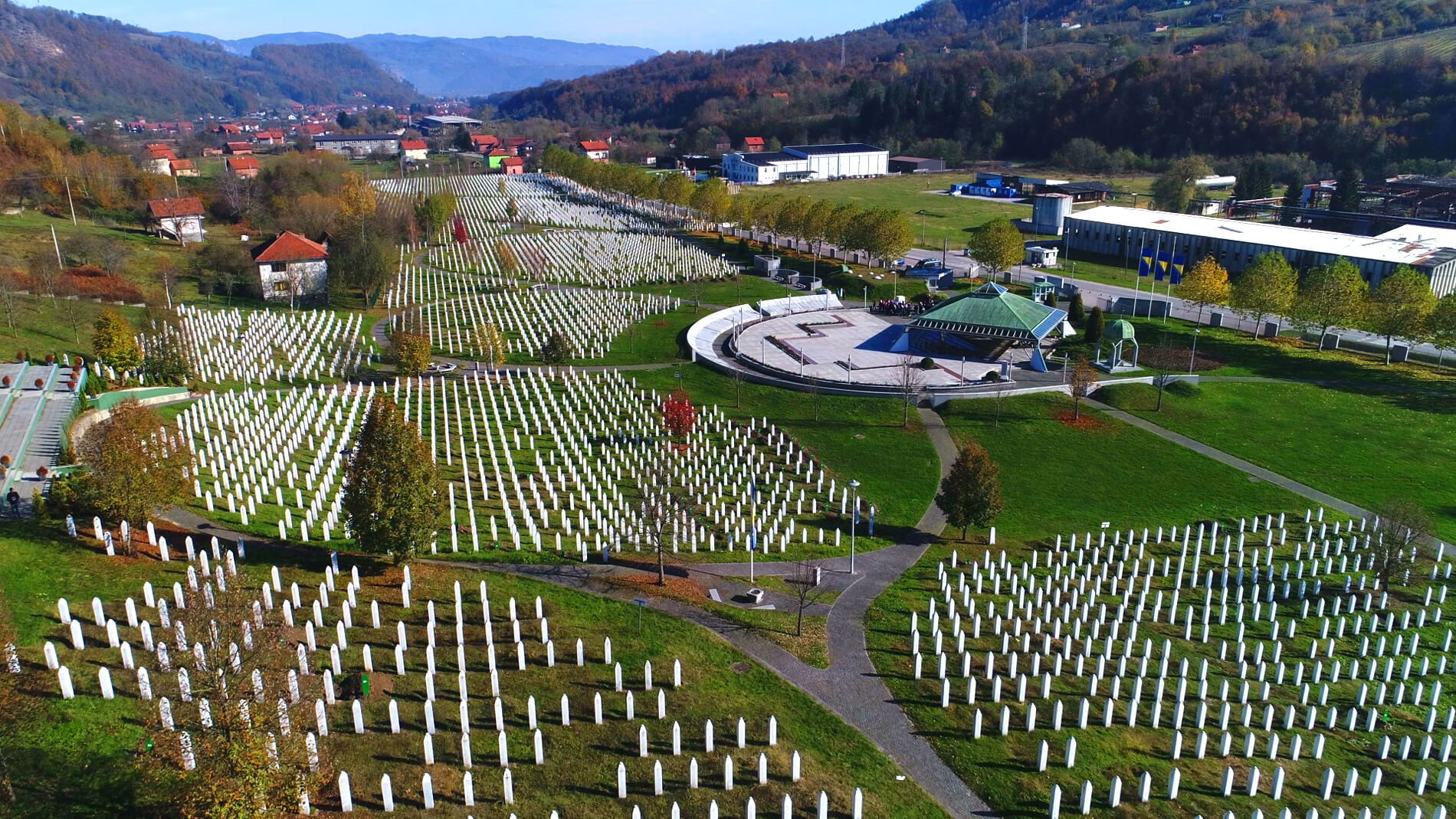 The Srebrenica Genocide (July 11): Lest We Forget


