
IslamiCity
Listen PodCasts, Live Quran, Watch Videos @VideoHub

 |
The events in Madrid should be proof enough that each of America's allies has no choice but to follow Washington.
George Washington, that is.
In 1796, George Washington penned his farewell address in which he expressed what was known as the "Golden Rule" of American foreign policy. At the time, Europe was the America of today: powerful, rich, and spread across the world. Warning against the "insidious wiles of foreign influence," Washington advised his country to extend its commerce with the world, but to have "as little political connection as possible" with any foreign country, but especially Europe. He asked his people a question that we should also ask about our nation's respective relationships with America: "Why, by interweaving our destiny with that of any part of Europe, entangle our peace and prosperity in the toils of European ambition, rivalry, interest, humor, or caprice?"
Terrorists want to attack America's allies because these states are now entangled with American interference in the Middle East. This is a fact attested to by the FBI and the intelligences agencies of countries such as the UK and Australia, who all acknowledge that it is participation in American military adventures in Iraq and Afghanistan that has put us at risk of cataclysmic terror. We, like Spain, are now firmly interwoven with America and their destiny is now interwoven with our own.
Yet, military intervention and occupation has always had a price: terrorism. The British paid in the early 20th century when besieged by the Irish. Between 1952 and 1962, French cafes and nightclubs were bombed by Algerian resistance movements. In 1983, the American embassy and marine barracks in Lebanon were bombed with hundreds killed. While Israel occupied Lebanon, it endured daily attacks by Hezbollah guerillas.
In all these examples when the occupation ended, the terror stopped. When Ronald Reagan withdrew American troops from Lebanon, the terror ended; but when Reagan attacked Libya, Libya responded with Lockerbie.
It's a simple formula: intervention begets terrorism; disentanglement ends it. It took the horrible events in Madrid for the Spanish people to realize this truism; we should learn from their lesson before we learn from our own. As John Pistole, the FBI's executive assistant director for counter-terrorism told Australian radio recently, "Any country that allies itself with the United States, unfortunately, is a target."
America's cheerleaders in the media argue that this price is worth it. They glibly deny that Iraq, Afghanistan, and the fealty of many Western governments to the United States has any relationship with the heightened threat of terrorism. Instead they offer this simple explanation: terrorists hate us because they are "evil" and we are "good."
The reality is that we are hated not because of our democracy, freedoms, and generous social security systems; rather, we are hated because of our involvement in foreign conflicts and quarrels that were never our concern.
All countries must abandon the idea of "permanent alliances" with America - or indeed any nation - that has been used as a key justification for us having entered conflicts with enemies that neither threatened us nor attacked us. Our relationship with others must be defined purely upon their behavior towards us; not on their internal conditions or politics, or the demands of our allies. If Iraq is not democratic, why should the people of Australia or Britain be expected to pay with men and money for Iraqi democracy? As long as nations do not threaten us, then let us not threaten them but extend our honest friendship to all peoples.
A terrorist attack on would be a tragedy on many levels. No citizen- regardless of race or creed - could ever wish that for his country. It would shift our way of lives forever. If we are serious about preventing it, then history teaches only one solution. If terrorism is the last weapon of the weak against occupation, then surely it stands to reason that we can nullify that threat by disengaging ourselves from provocative and unwarranted military adventures in the Middle East.
As we face a future characterized by what many Western intelligence agencies warn as almost certain terror, the case for a humble foreign policy can be reduced to one question: are we safer now than before we joined the War on Terror?
Amir Butler is executive director of the Australian Muslim Public Affairs Committee (AMPAC). He can be contacted at [email protected]
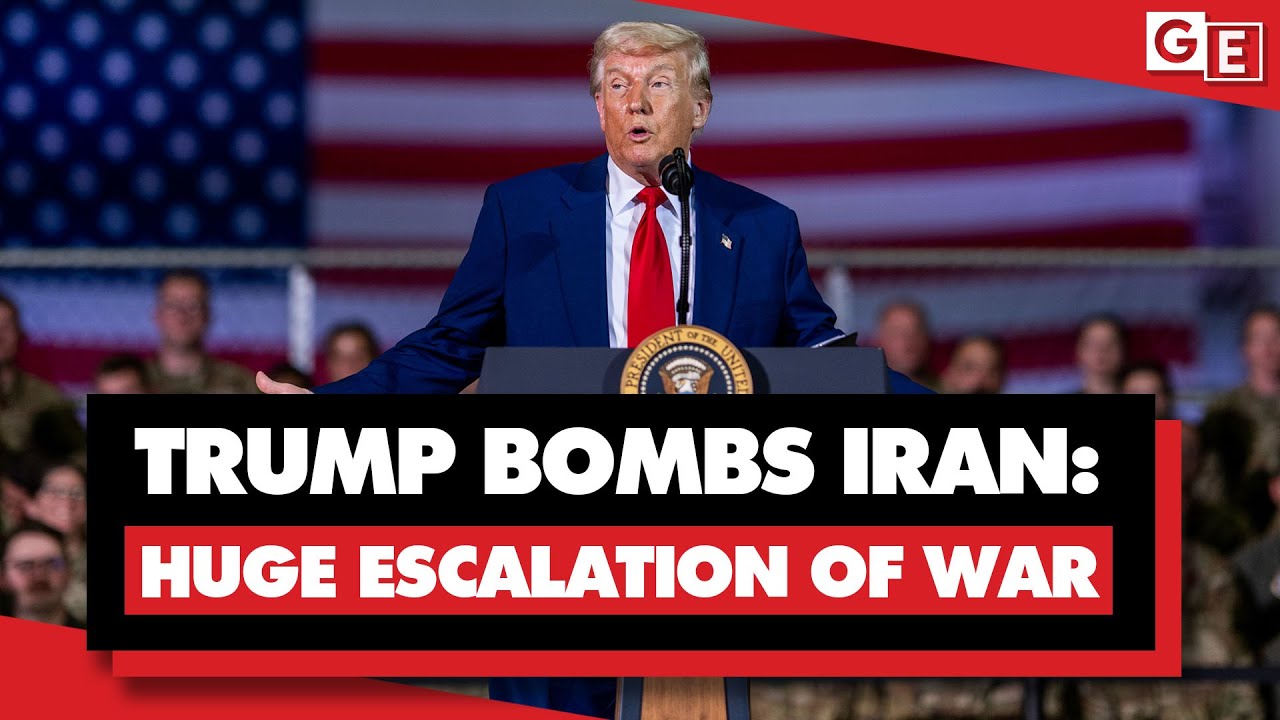 Trump Bombs Iran


