
IslamiCity
Listen PodCasts, Live Quran, Watch Videos @VideoHub

So many times election day arrives and the media declares the winner before the first ballot is cast. It's called polling, and it has diminished motivation for voting A 30-40% turnout in an election in America is considered a good voting day. That might be a good batting percentage in baseball or a shooting percentage in basketball, but it's bad for the future of democracy. Causes for such low turnout are rooted in cynicism with the political process and dissatisfaction with the choices of candidates.
In the debate among democratic presidential candidate, Dennis Kucinich, the congressman from Ohio, was asked why he was still running if he reportedly had no chance to win the nomination of his party for President. He answered, "Because I believe the people should decide who will be President not the media." That pithy answer led to a roaring applause from the audience. In this election, as we have witnessed in several elections in the past and will experience in the future, talking heads on television networks will tell us who will likely win. The underlying message is why bother voting at all.
For Muslims, that concern is amplified when we see politicians courting the Muslim dollar and the Muslim vote, but when the candidate is elected and is tested on issues of civil liberties and accessibility to the government, we do not see as much progress as we desire. We must, therefore, look beyond the candidates and the ballot measures.
Voting, therefore, is pursued not only for the desired effect of choosing someone for office that we as a people collectively empower. Voting must be viewed as an act of preserving our democracy. For without the vote, the party in power runs the country without the consent of the people. And without the vote, the alternative is government by coercion, i.e. a dictatorship.
The greatest feature of a democracy is its most peaceful exercise, the transition of power. Without the vote, that transition is more violent and more destructive. When a new governor or a new president is inaugurated, there is no questioning of the process, even if their is disgruntlement over the results. The constitutional process in America has been tested so many times, and it has passed each and every one of those tests to date. When African Americans and women were denied voting, movements for redressing grievances forced our country to correct the injustices through a political process. Preserving our constitutional rights through voting is a fundamental means of purifying an imperfect system.
The Quran says: Obey God and His Prophet and those with whom you have entrusted authority. The key to this verse is not to equate the authority with obedience to God, but to identify the process of entrustment as a Divine Will. As in politics, religion is typically viewed through the lens of who is the authority without engaging in the process of determining legitimate means of gaining authority from illegitimate means. When the Prophet Muhammad (pbuh) died, his supporters elected a successor. That election process, with all of its shortcomings due to nature of a tribal society at that time, continued for decades. It was the first electoral process in history. It preceded the Magna Carta and the Declaration of Independence. In part, this sacred process of entrusting authority, and not simply blindly following rulers with military might, led to the rise of a great Islamic civilization.
Now in America, the Islamic exercise of self-governance is realized again, and it cannot be taken for granted. Perhaps the choices are not ideal, and indeed our voice is weak in the malaise of modern politics. But voting does matter, and voting today will shape a better path for our children and grandchildren tomorrow.
It has been reported that American Muslims vote at a rate above the average of other ethnic and religious groups. Several studies have indicated that at least two-thirds of our community votes. That's good because political parties and the media take us more seriously as a result. We should continue to encourage ourselves, our friends and our families to get out the vote on election day.
After the Presidential election is over, no matter who wins, the challenges of preserving our democracy will continue and the challenge of advancing US-Muslim world relations for a more peaceful future falls primarily on our shoulder. No one can change that responsibility. And no group other than American Muslims can play a vital role in such a noble endeavor. Get out the vote.
Salam Al-Marayati is executive director of the Muslim Public Affairs Council in Washington, D.C.
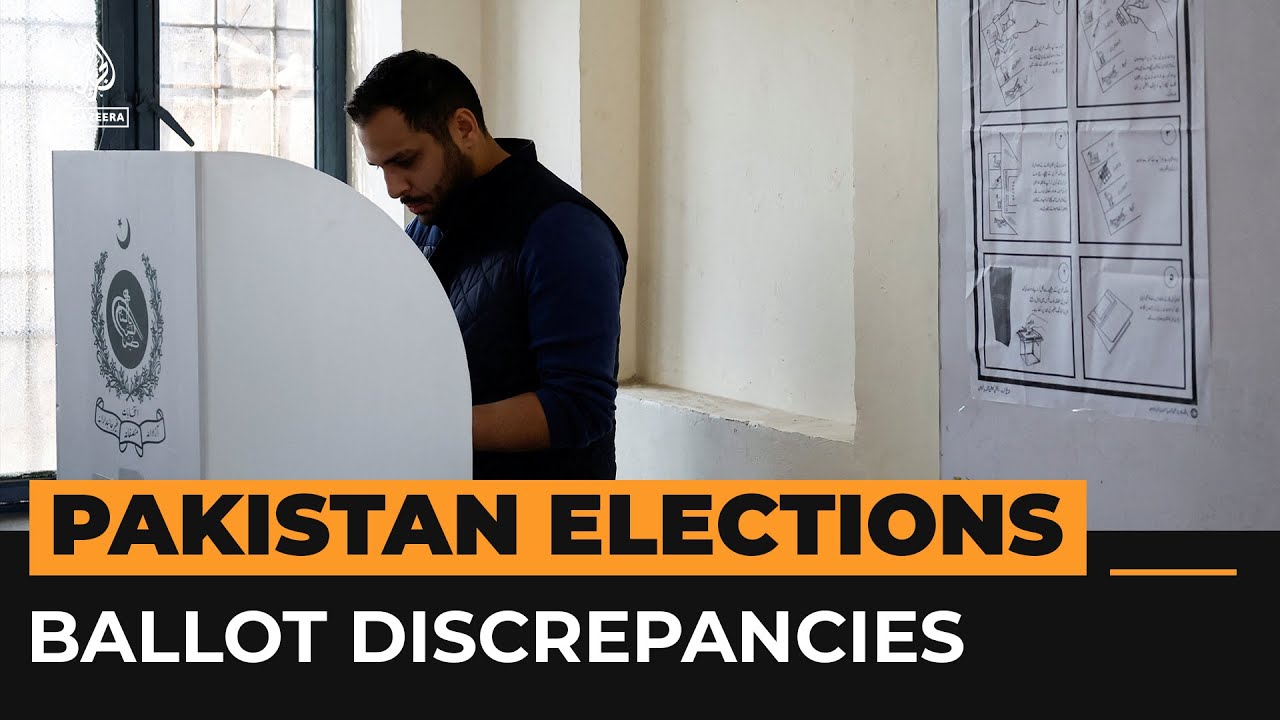 Pakistan Election Results Discrepancies


