
IslamiCity
Listen PodCasts, Live Quran, Watch Videos @VideoHub

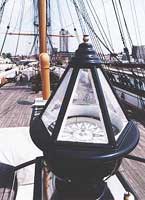
In the collection of Imam Bukhari, Nu'man bin Bashir reported that the Prophet Muhammad (peace be upon him) said, "The example of the person abiding by God's order and restrictions in comparison to those who violate them is like the example of those persons who drew lots for their seats in a boat. Some of them got seats in the upper part, and the others in the lower. When the latter needed water, they had to go up to bring water (and that troubled the upper deck passengers), so they said, 'Let us make a hole in our share of the ship (and get water) so that we do not trouble the upper deck passengers.' If the people in the upper part left the lower deck passengers to do what they had suggested; then all the people of the ship would be destroyed, but if they had prevented them, then both parties would be safe."
 |
The lesson that the Prophet is giving us in the above example is important to understand. The upper deck passengers must ensure that the lower deck passengers are well cared for so that they do not make a hole in the hull to get their water. Furthermore, they should not feel troubled by the lower deck passengers' repeated forays up to the upper deck for water. Indeed, the fact that the thinking of the passengers on the lower deck that they should make a hole in the hull of the ship so that they do not trouble the upper deck passengers is a sign of serious dysfunctionality among the ship community.
The Prophet likened the upper deck passengers to those who follow God's commands and abide by His rules. Abiding by God's law allows them to live fully in the Divine Sunlight, absorbing its rays and enjoying the sweet, fragrant trade-winds of life's ocean. During many Friday sermons I have heard this Hadith, and the imam usually claims that it is the Muslims who are the upper deck passengers. This is well and good, but there is a serious danger of instilling complacency in whoever hears or reads this Hadith. The purpose of the Hadith is not to make Muslims feel good about themselves as being a privileged class enjoying the upper deck. In fact the purpose is to convey the message that the upper deck passengers are equivalent to people who abide by God's law with a sense of responsibility. If Muslims claim to be the upper deck passengers, then they need to understand the enormous responsibility that has been thrust upon them.
As they bask in the Divine Sunlight on the upper deck, the upper deck passengers must never forget about their lower deck co-passengers. More than simply supplying them with water, they must try to bring them to the upper deck. It is expected that some of the lower deck passengers will refuse to come to the Light, but as long as the lower deck passengers get their water and the upper deck passengers are not "troubled" by their continued request for water, the ship will stay afloat. If Muslims are those upper deck passengers, they have failed to fully discharge their responsibilities.
If we carry this analogy further, we will find that not only have Muslims not cared about their lower deck companions, they have simply forgotten about them altogether, preferring to rub suntan lotion on their bodies and pull out their lawn chairs to "bask in the sun." Most have fallen asleep in their lawn chairs, leaving the lower deck passengers thirsty and discontent. When some of the upper deck passengers wake up from their slumber, and -- after feeling guilty for falling asleep -- they try to gently wake the others from their blissful sleep and remind them of their responsibility but only a few awaken from their slumber. A small minority of those who awaken -- for some unknown reason -- begin to wreak havoc on the upper deck, creating unnecessary destruction. The lower deck passengers, after beholding the chaos on the upper deck, become afraid of the upper deck passengers and are content to stay where they are and make holes in the hull for their water. Meanwhile, the ship is veering off course and is headed for a shallow reef which will sink the ship if it collides with the reef. The captain is oblivious of the reef, and the upper deck passengers are too busy sleeping or throwing other passengers overboard to notice the ship's impending disaster.
This status quo can not continue. If Muslims are those upper deck passengers, they are truly fortunate. In fact, the Hadith states that the upper deck passengers got there because they won the lots that were cast. The most proper way they can thank God for the blessing of being on the upper deck is to wake up from their slumber and take hold of the chaos. They must stop the wild ones who are throwing other passengers overboard while frightening and preventing the lower deck passengers from coming up to the top, at the very least, get their water. Furthermore, if they do not guide the captain of the ship, the ship will collide with the reef and sink, destroying everyone. If Muslims are the upper deck passengers, then they need to starting "walking the walk." For far too long, they have only "talked the talk,".
Hesham A. Hassaballa is a Chicago physician and columnist for the Independent Writers Syndicate. He is author of "Why I Love the Ten Commandments," published in the Book Taking Back Islam: American Muslims Reclaim Their Faith (Rodale).
 The Science of moon-sighting


