
IslamiCity
Listen PodCasts, Live Quran, Watch Videos @VideoHub

I was recently in Iraq as part of a delegation of members of Congress who traveled there to observe the humanitarian conditions, press upon the Iraqis the need for weapons inspections and gain insight into the dangerous implications a unilateral, preemptive strike would have on U.S. national interest. These are subject areas generally ignored in our current discourse.
President George W. Bush has offered a litany of reasons for why Saddam Hussein is a "homicidal dictator." The president did not have to convince many on that point, as there is no question of the brutality of Saddam Hussein's regime. His past actions demonstrate the need for disarmament and a strict weapons inspections program with unfettered access to all sites, including the presidential compounds. We made that point with unrelenting consistency in every meeting in Iraq. And after our meetings with United Nations officials, I am more confident that weapons inspectors can disarm Saddam Hussein. One need only look at the Gulf War example, where far more chemical and biological weapons were destroyed by inspections than war. In a seven-year period, we had hundreds of inspectors conducting thousands of inspections and destroying tons of weapons.
The only reason not to seek a diplomatic solution to this crisis is if one can make the case that Saddam Hussein posses an imminent threat. With all of the white papers, dossiers, speeches and hearings, that case has not been made.
We are indeed facing an imminent threat. The imminent threat to the safety of the American people, our diplomatic core serving overseas and our brave men and women in the military comes from the scourge of terrorism. President Bush assembled a formidable coalition of world nations in our fight against al-Qaeda. A unilateral attack against Iraq will destroy that coalition and harm our foreign, military and intelligence objectives. It will harm our national security by altering the world stage for our war on terror and its broader global implications will be far reaching.
In thirty years of service to my country - four years in the Air Force and twenty-six in the House of Representatives - this is the most fragile, dangerous state I have ever seen the world in. I liken it to a tinderbox where any one incident can set off a grave sequence of events.
How will the nuclear powers of India and Pakistan interpret our unilateral action as they continue their battle over Kashmir? What if China and Taiwan heed our new preemptive strike doctrine? How long can we continue to overlook the unrelenting violence of the Palestinian-Israeli conflict while we launch a war presumably to enforce UN resolutions?
Upon my return, I began to think about the severe divide between Americans and Arabs on this issue. For an Iraqi audience, I stressed disarmament and compliance with inspections. For Americans, we need to understand the nature of Iraqi suffering.
President Bush said, "America is a friend to the people of Iraq." After visiting hospitals, teaching a high school class and simply walking around the streets of Baghdad talking to ordinary citizens, I learned they do not have that same impression.
Whether the blame lies at Saddam Hussein's footsteps or not, the devastation of the most comprehensive sanctions regime imposed in modern history makes it clear why we are not viewed as a friend. Ordinary people talked about how sanctions have destroyed their lives. A humanitarian panel commissioned by the United Nations Security Council in 1999 concurred stating "the gravity of the humanitarian situation is indisputable and cannot be overstated . . . Iraq has experienced a shift from relative affluence to massive poverty."
It follows a deadly cycle. Food rations are leading to a lack of protein resulting in low birth weights - 4% before the war, now at 25%. Whether it is diarrhea, dehydration, respiratory problems, or malnutrition - the result is the death of 50,000 children prematurely a year, half-a-million over ten years. For those lucky enough to survive, we have an entire generation of Iraqi children whose growth is stunted.
On a tour of a hospital in the southern town of Basra, a doctor told us that before the war, the first question asked in their hospital when a new baby is born is "is it a boy or girl?" After the war and the use of depleted uranium shells, the question became "is it normal or not?" People fear getting pregnant because of the rates of birth defects and the rate of some cancers has increased by 120%.
The challenge of Iraq is not just disarming a dictator. It is not just averting an unnecessary war. It is understanding the nature of suffering inflicted upon innocent Iraqis in the aftermath of the Gulf War and the potential for further harm with a new military engagement. It is understanding how the Arab and Muslim world view the United States in relation to that suffering.
That challenge is now President Bush's alone since Congress has given him the option of war - a war that will ultimately show our power, but not our strength.
U.S. Congressman David Bonior, D-Michigan
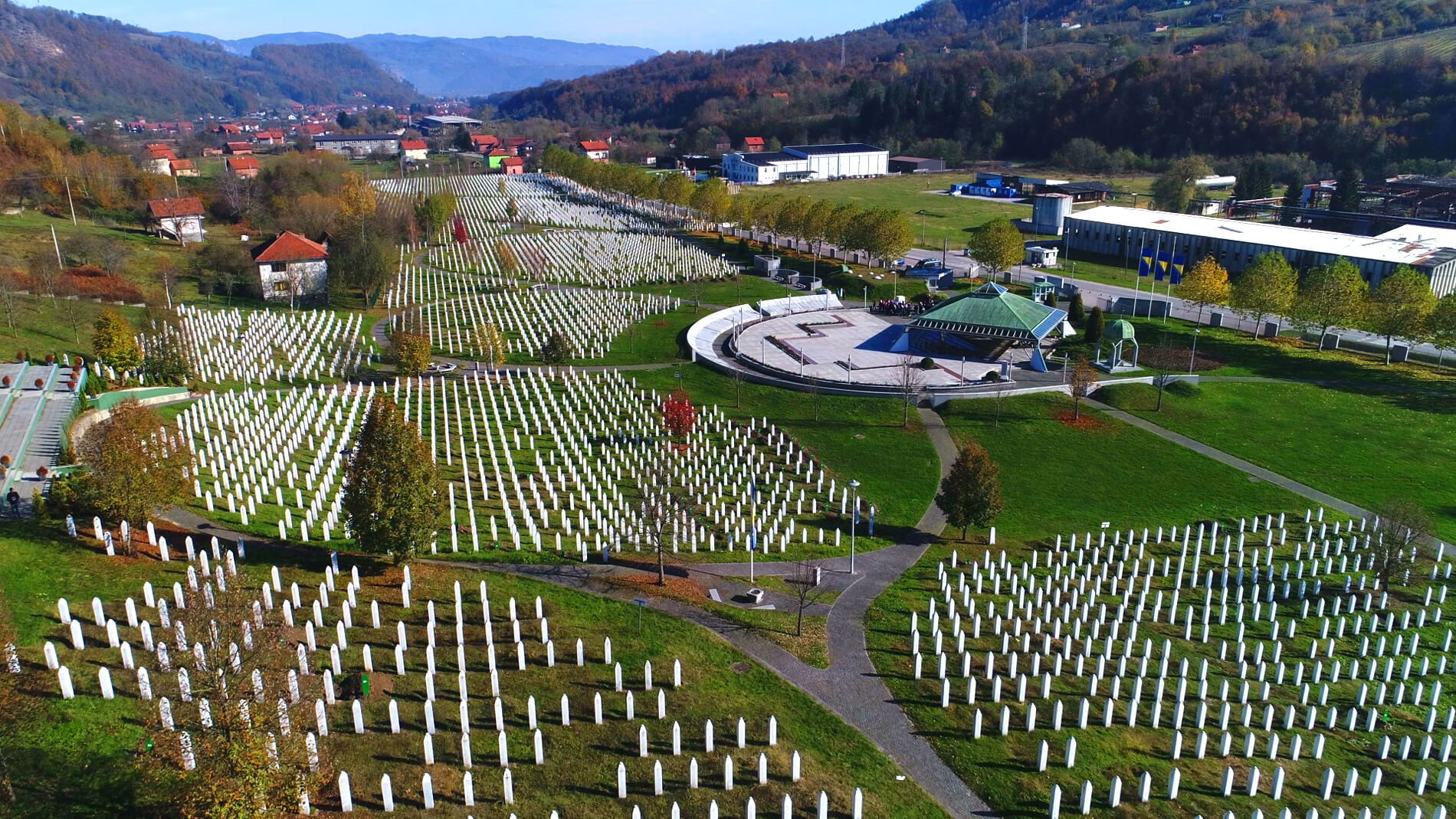 The Srebrenica Genocide (July 11): Lest We Forget


