
IslamiCity
Listen PodCasts, Live Quran, Watch Videos @VideoHub

The idea of a "Greater Israel" is increasingly raising questions about the future of the Middle East, particularly as Israeli military operations expand across Gaza, the occupied West Bank and Lebanon. What may appear to be a religious belief rooted in ancient scripture is also influencing modern political debates, US foreign policy and the regional balance of power. At the centre of this debate is a movement that connects biblical prophecy with Israel's territorial ambitions, raising concerns about whether religious interpretations are being used to justify the expansion of state power.
One of the most influential figures in this movement is American pastor and televangelist John Hagee, founder of Christians United for Israel (CUFI), an organisation that claims to have more than 10 million members. Hagee promotes a theological interpretation of the Bible in which God promised the Jewish people a vast territory extending from the Nile to the Euphrates. Under this interpretation, the promised land would include not only present-day Israel and Palestine but also significant portions of Egypt, Lebanon, Syria, Jordan, Iraq, Kuwait and Saudi Arabia. These claims have attracted attention because they extend far beyond Israel's internationally recognised boundaries and involve territories belonging to several sovereign nations.
The influence of Christian Zionism in the United States is particularly significant because of its connection to evangelical voters and Republican politics. According to figures cited in the documentary, around 70% of white evangelicals believe God gave Israel to the Jewish people, while 80% believe Israel fulfils biblical prophecy concerning the second coming of Jesus Christ. For many within this religious movement, support for Israel is therefore not simply a foreign policy preference but a central part of their understanding of biblical prophecy. This has created a powerful political constituency that American politicians are often reluctant to challenge.
At the heart of this theology is the belief in Armageddon, a final battle that some evangelical groups believe will take place around Jerusalem before the return of Jesus Christ. According to this interpretation, Israel must remain central to the unfolding of biblical events, and escalating regional conflict is sometimes viewed as part of a larger prophetic timeline. The documentary highlights concerns that certain religious leaders interpret wars and instability not as tragedies to be prevented but as events leading towards the fulfilment of prophecy. Such beliefs raise difficult questions about how religious ideology can influence decisions involving war, diplomacy and human lives.
This influence is not limited to religious gatherings. John Hagee and other prominent evangelical leaders have developed close relationships with Republican politicians and members of successive US administrations. Hagee's Bible study meetings have reportedly included members of Congress and officials from the Trump administration. The documentary also points to the wider financial and political networks supporting Christian Zionism, including CUFI and other pro-Israel organisations. The International Fellowship of Christians and Jews, for example, says it has raised approximately $3.6 billion since 1983, with 92% of its donors identifying as Christians. Together, these networks demonstrate how religious beliefs, political lobbying and financial resources can reinforce one another.
The roots of this relationship go back centuries. The documentary traces some of its origins to English Protestant preachers who believed Jewish people needed to return to the Holy Land before the second coming of Jesus Christ. In the late nineteenth century, political Zionism emerged amid rising antisemitism in Europe. Theodor Herzl, an Austro-Hungarian Jewish journalist and political thinker, became a leading advocate for establishing a Jewish state in Palestine. However, the documentary also highlights how some European political figures supported Zionism partly because they wanted Jewish communities to leave Europe. In 1917, British Jewish minister Edwin Montagu warned that defining Palestine as a national home for Jews could encourage other countries to treat their Jewish citizens as outsiders and seek their removal.
The debate over territorial expansion has also resurfaced through statements by political and religious figures. During an interview with Tucker Carlson, US Ambassador to Israel Mike Huckabee was questioned about the biblical boundaries described in Genesis, including the territory between the Euphrates and the Nile. When asked whether Israel would be entitled to take all that land, Huckabee responded that it would be fine if they did. He later told Al Jazeera that his comments had been deceptively edited and that he had been speaking sarcastically, adding that Israel only sought to hold the territory it currently possesses. Nevertheless, the exchange reignited concerns about the relationship between biblical interpretations and contemporary territorial ambitions.
Inside Israel, far-right political figures have also promoted ideas associated with Greater Israel. Finance Minister Bezalel Smotrich and other religious nationalist politicians have advocated extending Israeli control over territories they regard as part of biblical Israel. The documentary also revisits historical discussions among early Zionist leaders about the geographical scope of a future Jewish state, including areas of Palestine, southern Lebanon, southern Syria and the Sinai Peninsula. While these historical positions do not establish a single agreed-upon Israeli territorial policy, they demonstrate that debates about the country's borders and expansion have existed within Zionist political thought for generations.
These developments have become particularly concerning for neighbouring countries. Israeli military operations in Gaza, continued settlement expansion in the occupied West Bank and the invasion of Lebanon have intensified fears that the conflict could extend beyond Palestine. The documentary recalls warnings made decades ago by Saudi Arabia's King Faisal bin Abdulaziz, who viewed Israeli expansionism as a threat to regional peace and stability. Today, the growing influence of far-right religious nationalist parties within Israel's governing coalition has renewed concerns that territorial ambitions could further destabilise an already fragile region.
The United States' military relationship with Israel adds another dimension to these concerns. The documentary discusses the establishment of a permanent US military presence at a base in Israel, raising questions about the risks of Washington becoming directly involved in a wider regional confrontation. If American personnel or military installations were targeted during an escalation involving Israel and neighbouring countries, the United States could face pressure to respond militarily. When combined with apocalyptic religious beliefs that anticipate a final war in the region, this creates a troubling intersection between military strategy, political commitments and religious ideology.
However, the political landscape in the United States is not as unified as it once appeared. Public support for Israel has declined, with the documentary citing Pew Research figures showing that approximately 60% of Americans view Israel unfavourably. Younger Republicans are also increasingly questioning unconditional military support. A 2024 Chicago Council survey cited in the documentary found that 64% of evangelicals believed Israel's actions in Gaza were justified, while 60% opposed cutting military assistance. Yet growing criticism from conservative commentators, including Tucker Carlson, suggests that traditional pro-Israel positions are facing challenges even within right-wing political circles.
Beyond the political debate, the consequences are being felt by millions of people across the region. Palestinians continue to face displacement, military occupation and the expansion of Israeli settlements. In Lebanon and Syria, Israeli military actions have raised fears of further territorial instability. The documentary describes a broader system of control involving checkpoints, roads, walls, permits and settlements, through which Palestinian communities face increasing restrictions on their land and movement. For those living in these territories, the debate over Greater Israel is not simply an argument about biblical history. It concerns homes, livelihoods, national sovereignty and the right of people to remain on their ancestral land.
Ultimately, the debate over Greater Israel raises a fundamental question: can ancient religious interpretations be used to justify modern territorial expansion and the displacement of existing populations? Religious beliefs may shape personal convictions, but the use of those beliefs to influence military policy and international relations has consequences far beyond any single religious community. The future of Palestine and the wider Middle East cannot be separated from questions of international law, sovereignty, accountability and the protection of civilian lives. As political alliances shift and regional tensions deepen, the world faces an increasingly urgent challenge: ensuring that the pursuit of religious or political ambitions does not come at the expense of entire populations and the possibility of lasting peace.
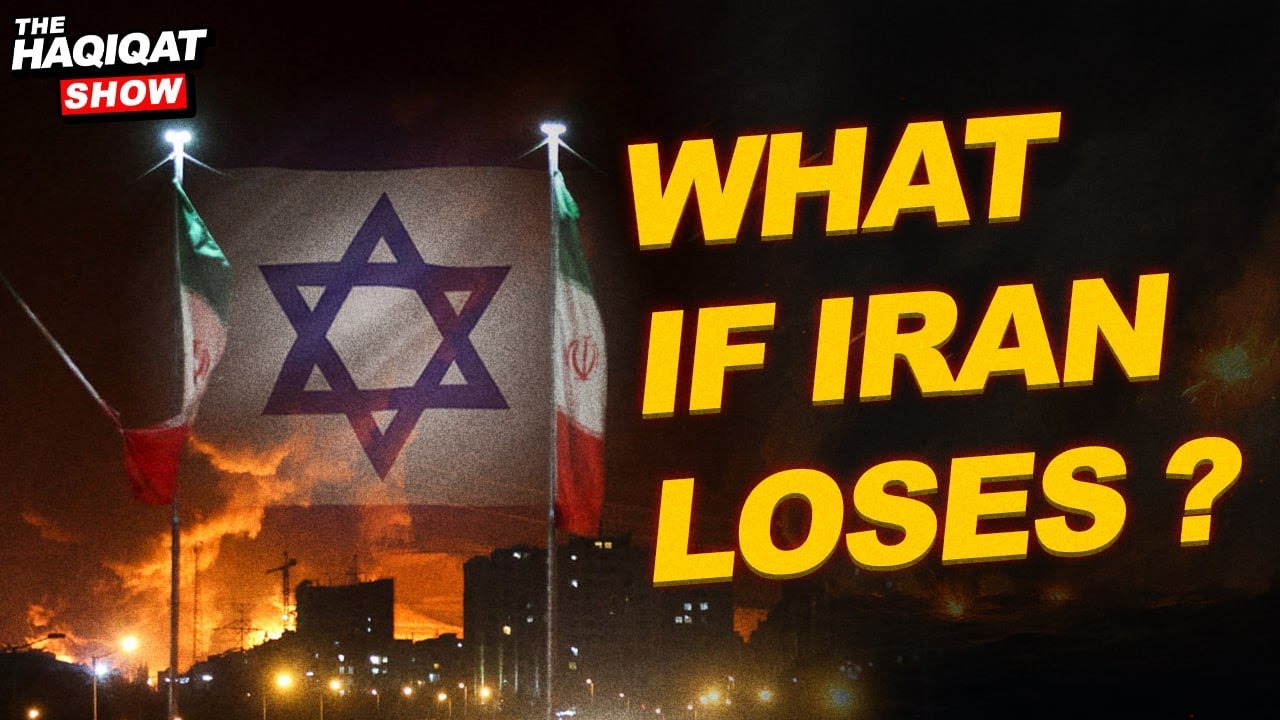 What Will Happen to the Muslim World If Iran Is Defeated?


