
IslamiCity
Listen PodCasts, Live Quran, Watch Videos @VideoHub

In a world torn apart by war, stark racial divides, ethnic cleansing, and other dehumanizing ideologies, Islam stands unchanged as a philosophy of life. Since its emergence, Islam, as a universal religion, has consistently preached compassion, forgiveness, peace, equality, and respect for all of humanity. The Qur'an contains no ideology of racial supremacy.
The God of Islam is just to everyone, including those who do not follow Islam. Everyone is equal in the sight of Allah, and the depth of their faith determines a person's standing and how devoutly they follow the commandments of God (Qur'an 49:13).
In contrast to the message of Islam, the world has witnessed, and continues to witness, the emergence and practice of extreme religious beliefs that go so far as to call for the extermination of certain racial and religious groups. Besides such fanatical religious beliefs, the world has also witnessed the emergence of political ideologies that advocate and carry out the genocidal killing of people who are different from their own groups. Human history provides ample evidence of the emergence of such cruel and heartless leaders as Leopold II (1835-1909) of Belgium, Adolf Hitler (1889-1945) of Germany, Joseph Stalin (1878-1953) of the former Soviet Union, Pol Pot (1925-1998) of Cambodia, and many others.
Fanatical leaders, both past and present, driven by greed and hatred towards certain ethnic groups, have carried out mass killings of defenceless minorities. In addition to killing innocent people, such despotic leaders subject women and children to rape, imprisonment, and inhumane torture. These atrocities are committed to eliminate entire ethnic groups and seize their land and property. Worse still, some leaders and their followers call themselves "God's Chosen People," "Children of God," or "members of the highest caste." By assigning themselves such elevated status, they feel that they have the right to kill others and carry out ethnic cleansing.
When the ill-treatment and genocide of the oppressed, marginalized, colonised, and voiceless communities are brought to our attention by the media, the vast majority of humanity rise to the occasion to question and lament such atrocities through peace marches and mass demonstrations. Many good-hearted citizens in both the East and the West who are against the cruelty inflicted on innocent people ask questions such as, "Why on God's earth are you behaving in such a cruel way?" "There is enough for everyone on earth. Why do you have to kill innocent and defenceless people for your own survival?" "Are these people human beings, and do they have a conscience?"
In contrast to the aforementioned ideologies, Islam promotes peaceful coexistence and calls upon Muslims to cooperate with all of humanity, regardless of race or religion, and to establish good relationships with others (Qur'an 60:8). It encourages dialogue and negotiation as means of resolving disputes and differences amicably, without bloodshed or loss of life (Qur'an 16:125; 8:61). However, when war is imposed on Muslims and they have no choice but to defend themselves, Islam permits them to fight (Qur'an 22:39-40).
Permission to engage in defensive warfare is granted when Muslims face attacks or aggression that threaten their lives and country (Qur'an 2:190). In preparing for such a war, they must be well-equipped in terms of logistics and strategies. Even in times of war, Muslims are expected to observe ethical and moral principles and are prohibited from transgressing the limits set by Allah (Qur'an 2:190).
Among other things, they are prohibited from killing non-combatants, such as women, children, the elderly, and incapacitated individuals. They must also refrain from destroying food sources or polluting water supplies. Religious figures, such as priests, and their places of worship must likewise be protected from attack, provided they are not participating in hostilities. The Qur'an refers to the protection of monasteries, churches, synagogues, and mosques (Qur'an 22:40).
Since all souls belong to God, and the human race has come into existence through Him and will eventually return to Him, Muslims are encouraged to lead a God-centred life, with the awareness that God is ever-present in all their affairs. Guided by this philosophy of life, a Muslim is expected to conduct himself in accordance with the Qur'an and Sunnah. Conscious that Allah knows his actions and that the angels bear witness to them, he strives to avoid wrongdoing.
To remain sober and conscious of God, a Muslim is prohibited from consuming alcohol and abusing drugs that can intoxicate the mind or impair one's consciousness. In Islam, the underlying purpose of maintaining such consciousness is to ensure that a Muslim does not lose sight of his connection with God. Muslims believe that when an individual neglects this connection, he becomes more vulnerable to the influence of Satan. Under such influence, a person may be more likely to commit heinous and shameful acts.
As a religion that stands against racism, Islam declares in the Qur'an that God created human beings with different skin colours, ethnic backgrounds, and languages (Qur'an 30:22; 49:13). These variations are not meant to divide humanity along racial or colour lines. Rather, they invite humanity to reflect on the might and creativity of Almighty God.
To Muslims, the Qur'an is the word of God (Qur'an 9:6). Its teachings confirm the previously revealed scriptures (Qur'an 3:3; 5:48). It has been preserved in its pristine form without undergoing any alteration or adulteration (Qur'an 15:9; 41:42). The arrangement of its verses and chapters has been preserved in accordance with the instructions of the Prophet SAW.
As the final revelation from Allah, the Qur'an contains the knowledge and guidance needed by humanity until the end of time (Qur'an 5:3; 16:89). What many people may not know is that it is not a book meant only for Muslims, but also a source of light and guidance for the entire human race (Qur'an 2:185; 14:1; 34:28).
In the Qur'an, one reads about humanity's relationship with God, nature, and fellow human beings. In addition, it contains discussions of the creation of the universe and subjects related to embryology, oceanography, geology, botany, zoology, astronomy, and many other fields of knowledge relevant to human life.
To maintain law and order, the Qur'an contains laws and guidelines relating to family, society, criminal acts, business transactions, marriage, divorce, inheritance, interpersonal relations, religious harmony, and other aspects of human life. Furthermore, the Qur'an guides humanity towards ethical behaviour and provides insights into the reality of earthly life, the Hereafter, and Islamic eschatology.
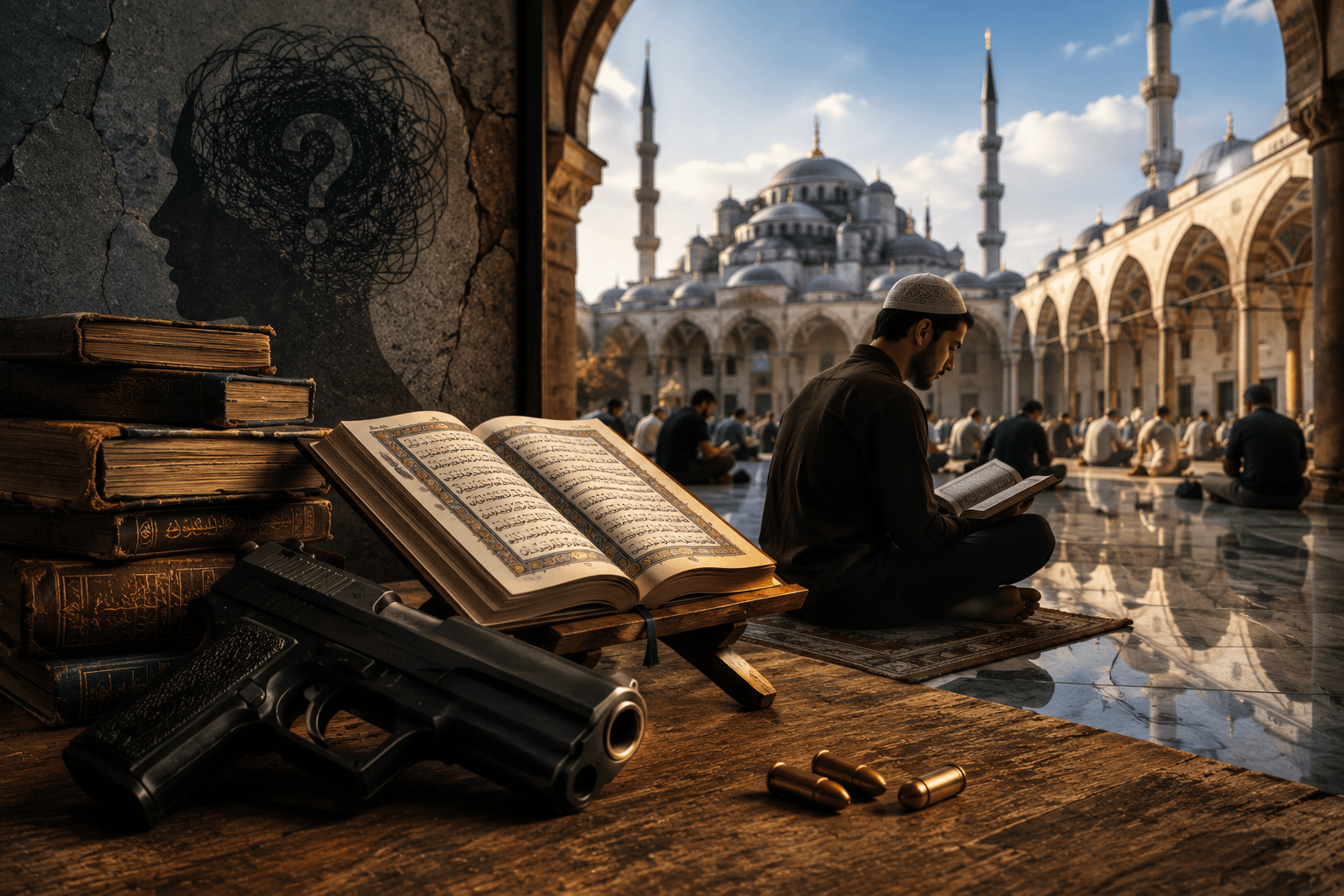
As the final heavenly revelation from God, the Qur'an is dynamic in its message and representation. It serves as a manual for life and is intended for all of humanity. Its central message is to guide humanity towards peace, harmony, tranquillity of the heart, and success in this life and the Hereafter. It is certainly not an ideological book that preaches fanaticism and extremism, as often portrayed by the Western media. Its message is primarily spiritual, but at times it also addresses scientific and philosophical questions, inviting humanity to think about and contemplate the wonders of creation.
Among religious scriptures, the Qur'an is unique in its approach, as it challenges humanity to reflect on past civilizations and learn lessons from the mistakes of previous generations. Those who are sceptical of the Islamic philosophy of life should have the courage to read the Qur'an for themselves and discover its true message. Relying solely on Western and other media representations may not provide an accurate understanding of Islam, as media organizations may have their own agendas. The best way to understand the Qur'an is to approach it directly, read it with an open mind, and reflect on its message.
(The views expressed are those of Dr. Mohd Abbas Abdul Razak from the Department of Fundamental and Interdisciplinary Studies, AHAS KIRKHS, IIUM, and do not necessarily reflect the views of IslamiCity)


 An Empty Gun Cannot Fire: What My Journey Through Turkiye Revealed About Is...