
IslamiCity
Listen PodCasts, Live Quran, Watch Videos @VideoHub

The meeting ends. Someone is thanked by name for the work. You carried half of it, and your name is not mentioned. You smile. You tell yourself it does not matter.
Then you sit in the car, and it does.
Most of us know this feeling. A sacrifice treated as though it cost nothing. A kindness forgotten by the very person it was for. A hard duty done every day, for years, without one word from anyone.
And something in us aches.
Not because we want applause. We are not asking to be admired. We just want somebody to know.
To know that it was hard. To know that we tried. To know that we were there.
The younger generation has a word for this. Validation. They say it openly. "I just need some validation." The word is new. The longing is not.
There is something childlike in this. A small child runs to her mother with a drawing held in both hands and waits for the face to light up. "Look what I did, Ma." I do not think we ever outgrow that child. We only learn to hide her.
We become dignified about it. We say recognition does not matter to us. We say, "It is okay." And somewhere under the dignity, the desire to be seen truly and fully stays exactly where it was. Perhaps this longing points us towards something greater.
Because a Day is coming when we will be seen. Not roughly. Not by reputation. Not through what people heard, assumed, or chose to remember about us.
فَمَن يَعْمَلْ مِثْقَالَ ذَرَّةٍ خَيْرًا يَرَهُ · وَمَن يَعْمَلْ مِثْقَالَ ذَرَّةٍ شَرًّا يَرَهُ
"So whoever does an atom's weight of good will see it, and whoever does an atom's weight of evil will see it." (Qur'an 99:7-8)
Will see it.
Think about what that means. A deed from twenty years ago that we have entirely forgotten.
A few ringgit slipped into someone's hand when we had little ourselves. Sahur prepared for the whole family when we ourselves had barely slept. A harsh word swallowed before it reached our tongue. A frightened child held at two in the morning.
An ageing parent cleaned and fed, again and again, when no one else saw the fatigue or the patience.
A dua whispered for someone who never knew we made it. A temptation refused in a room where no human being would ever have found out. All of these exist.
A moment seems to end once it passes. It does not. Allah keeps it. That changes what it means to be unseen. Some people's goodness is public. Their service is praised. Their giving is known. Their names are on plaques.
Other people do their finest work behind closed doors. A mother sits by a sick child's bed while the house sleeps. A son washes his elderly father after an accident, gently, so his father is not ashamed. A woman forgives words that cut her deeply. A man sends money to a struggling relative and makes sure it cannot be traced back to him.
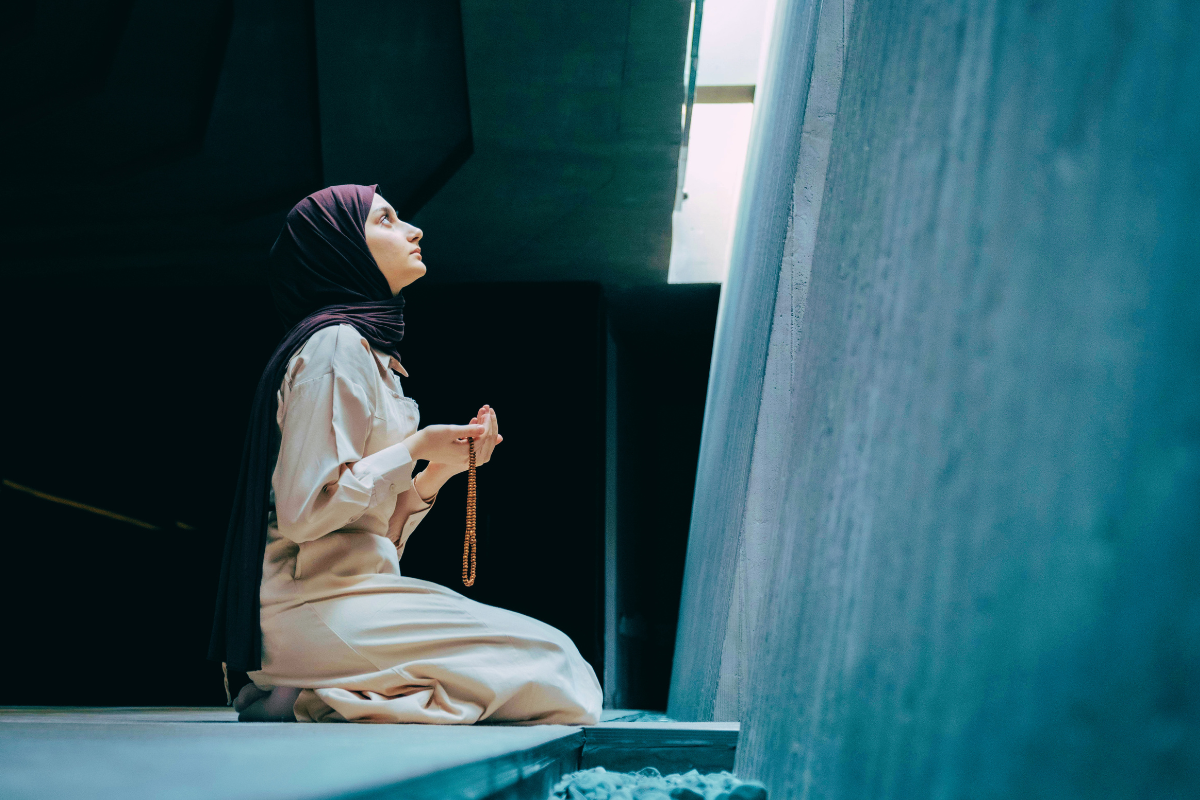
Someone rises before Fajr, presses a forehead to the floor, and weeps to Allah about a thing they have never said aloud to anyone.
No photograph. No certificate. No applause. Nobody knows.
Notice what is being honoured there. Not the size of the gift. It is the hiddenness of it.
Human recognition is thin. People see the finished thing, never the struggle inside it.
They see the smiling mother, not the night she cried in the bathroom so the children would not hear. They see the graduate on the stage, not the mornings they almost gave up.
They see the person who stayed quiet in an argument, not the words they fought so hard not to say.
People see what happened outside us. Allah sees what happened inside.
This is why complete recognition can never happen here, in dunya. Human beings do not have enough information. We misread one another all the time. We praise what was easy and overlook what nearly broke someone. We assume good intentions where there were none, and suspect bad ones where the heart was clean.
Some who look righteous in public are hiding rot. Some who look ordinary in public carry extraordinary private goodness. A true accounting needs Someone who knows everything.
The Qur'an shows us people on that Day, staring at their own record in disbelief:
مَالِ هَٰذَا الْكِتَابِ لَا يُغَادِرُ صَغِيرَةً وَلَا كَبِيرَةً إِلَّا أَحْصَاهَا
"What is this record that leaves nothing, small or great, except that it has counted it?" (Qur'an 18:49)
This verse should make us shiver. Because the Day of Judgment is not only the day hidden goodness comes to light.
Hidden evil comes to light too. A cruelty tucked behind good manners. A betrayal nobody discovered. A lie kept up for years.
An injustice done by someone powerful enough to escape the consequences. These are recorded too.
So the same Lord who remembers the good we have forgotten also hides the wrong we wish we could forget.
He remembers for us. He conceals for us. Who else has ever done that?
Perhaps this is why the desire to be recognised can never be fully satisfied by people. What we want, underneath, is not praise. It is a world in which things are known as they truly are.
Good known as good. Evil known as evil. Sacrifice counted. Injustice brought into the open. Intentions weighed. Truth out.
That is exactly what the Last Day promises.
And there is a lovely tension in our faith. We long to be seen, and we are also taught to keep some of our goodness out of sight.
The Qur'an praises those who feed the poor and say:
إِنَّمَا نُطْعِمُكُمْ لِوَجْهِ اللَّهِ لَا نُرِيدُ مِنكُمْ جَزَاءً وَلَا شُكُورًا
"We feed you only for the sake of Allah. We want from you neither reward nor thanks." (Qur'an 76:9)
Neither reward nor thanks.
And then, a few verses later, Allah answers them:
إِنَّ هَٰذَا كَانَ لَكُمْ جَزَاءً وَكَانَ سَعْيُكُم مَّشْكُورًا
"This is your reward. Your effort has been appreciated." (Qur'an 76:22)
Appreciated.
The Arabic is mashkur. It shares its root with one of Allah's names, Ash-Shakur, the One who appreciates.
Read that slowly. The Lord of the worlds needs nothing from us, and He describes Himself as appreciating what we do.
Nobody noticed our effort. He did. And He calls it appreciated.
That is the validation we have been looking for all along. It was never going to be completed by people.
Secrecy also protects the heart. When nobody knows, there is no one to perform for. There is only the deed, the servant, and Allah.
I think one of the freest places a believer can reach is this. We do something good. We are completely overlooked. We feel the small sting any human being feels. And then we say to ourselves:
Allah sees. Allah knows what it cost me. Allah knows why I did it. And Allah does not forget.
None of this means we should stop thanking one another. Recognition is a kindness, and we should be generous with it. Thank people. Notice effort. Tell someone when their goodness reached us. The Prophet ﷺ said that whoever does not thank people has not thanked Allah (Tirmidhi).
But we should also know the limit of human thanks. It is never complete. It cannot be.
So there may be things in our lives that are better left unseen. Quiet worship. Private sacrifice. Goodness that never becomes part of who people think we are. Things we do only for Allah.
And on the Day when everything hidden is brought into the light, we will understand why some of our goodness was allowed to pass unnoticed here. It was never lost. It was waiting.
Waiting for a Day when no one can misread it, shrink it, claim it, forget it, or fail to see it for what it was. The deepest human longing is not to be praised.
It is to be fully known. And there is only One who has always known us.
Rabiah Tul Adawiyah Mohamed Salleh is Associate Professor of Linguistics at the Department of English Language and Literature, AHAS KIRKHS, International Islamic University Malaysia. Her work centres on language, faith, and identity, and engages critically with the decolonisation of knowledge in linguistic scholarship.


 When the Heart Hurts, Return to Allah: Healing Through Surah al-fatiha