
IslamiCity
Listen PodCasts, Live Quran, Watch Videos @VideoHub

Twenty-five years after September 11, 2001, nearly 3,000 families continue to carry the loss of loved ones who never came home that day. For two mothers, the anniversary is not simply a moment to remember a tragedy.
It is a reminder of two young lives filled with promise, compassion and love-and of the years they have spent trying to preserve their children's memories while speaking out against hatred.
Donna Marsh O'Connor lost her 29-year-old daughter, Vanessa, who was four months pregnant and working in the South Tower of the World Trade Center. Talat Hamdani lost her 23-year-old son, Muhammad Salman Hamdani, a Muslim New Yorker, certified EMT and NYPD cadet who was on his way to a medical research job that morning. Instead, after seeing the devastation at the World Trade Center, he went toward the towers to help.
Neither mother has allowed the passage of time to erase the people their children were.
O'Connor remembers Vanessa as a joyful young woman who was excited about becoming a mother herself. She had told her mother that she would soon be called "grandma." That future disappeared on September 11, along with Vanessa and the unborn child she was carrying.
"Not a day goes by," O'Connor said when reflecting on her daughter.

She described Vanessa as a loving sister and a person whose presence shaped the entire family. Vanessa was especially close to her younger brothers, and her mother said they were "absolute best friends." Twenty-five years later, the family continues to feel the absence of the daughter and sister who should have grown older alongside them.
For Hamdani, memories of Salman reveal the character of a young man whose instinct was to help others. She recalled how, as a child, he once brought home an injured bird and tried to care for it. When he discovered that the bird had died, he retrieved it from the trash and buried it because he could not bear to simply discard a life.
That compassion remained part of him as he grew older.
Salman was a devout Muslim who prayed five times a day. He was also a certified EMT and an NYPD cadet. On the morning of September 11, he was heading toward his medical research job when he saw what was happening at the World Trade Center. Rather than continuing to work, he went toward the disaster.
He never came home.
For Hamdani, the pain of losing her son was compounded by what happened afterward. As her family searched for answers, some media reports questioned Salman's whereabouts and portrayed his Muslim identity in a suspicious light. His mother recalled telling a reporter that Salman carried the Qur'an and prayed regularly. That information, she said, was presented in a way that contributed to suspicion rather than recognizing the faith and character of the young man she knew.
The experience exposed another painful reality of the post-9/11 period: Muslim Americans were often forced to defend themselves and their loved ones at the very moment when they were grieving.
Hamdani spent years seeking formal recognition for Salman's actions at Ground Zero. She has argued that his training as an EMT and his status as an NYPD cadet, combined with his decision to enter the disaster area to help others, should be part of how his story is remembered.
She says that recognition has still not come in the way she believes it should.
For her, the fight has become part of her life's work. She described it as her "jihad"-a personal struggle to ensure that her son's sacrifice is not forgotten.
O'Connor's grief took her in another direction. After losing Vanessa, she became an outspoken advocate for peace and against anti-Muslim hatred. She questioned the rush toward war that followed September 11 and argued that grief and anger should not become a reason to collectively blame nations or communities.
Her position also came from a deeply personal understanding of what it meant to be an American mother.
She recalled feeling that her children were blessed to be born in America, only to see the country transformed by fear, nationalism and hatred after the attacks. When Muslims became a target of suspicion and blame, she felt that something deeply connected to her own understanding of America was being taken away.
For O'Connor, standing against Islamophobia was not an abstract political cause. It was connected to the memory of her daughter and to the kind of country she believed Vanessa should have inherited.
The stories of Vanessa and Salman also challenge the tendency to reduce September 11 to statistics. Nearly 3,000 people died, but each number represented a person with a family, friendships, hopes and an unfinished future.
Vanessa was a daughter, sister and expectant mother.
Salman was a son, brother, Muslim, EMT, NYPD cadet, student and young man who chose to move toward people in danger.
Their mothers have spent 25 years ensuring that those identities remain part of the story.
The anniversary also comes amid renewed debates in New York over Islamophobia and the place of Muslims in American public life. For the families of September 11 victims, those debates can carry a particular weight. The question is not only how America remembers the people who died, but what lessons it chooses to draw from the tragedy.
For O'Connor and Hamdani, remembering their children means more than looking backward. It means asking what kind of society emerges from grief.
Does tragedy become a reason to fear an entire faith community, or an opportunity to reaffirm the humanity shared by people of different backgrounds?
Does remembrance stop with ceremonies and names engraved on a memorial, or does it also include confronting the hatred that followed?
And can the lives of those who died be remembered without allowing their deaths to become justification for further suffering?
Twenty-five years later, the two mothers continue to carry these questions.
Their children cannot return. Vanessa will never meet the child she was carrying. Salman will never complete the life that began with his dreams of medicine and service. Their families will always live with what was taken from them.
But their stories remain.
One mother remembers a daughter who brought joy to her family. Another remembers a son whose instinct was to help even when danger surrounded him. And both mothers, in different ways, have spent decades insisting that the legacy of September 11 should not be hatred.
Their grief has become testimony: that behind every name is a human being, that Muslim lives are not separate from the American story, and that remembering the dead also means considering what their deaths have taught the living.
Twenty-five years later, Vanessa and Salman are still remembered not simply for how they died, but for who they were while they lived.
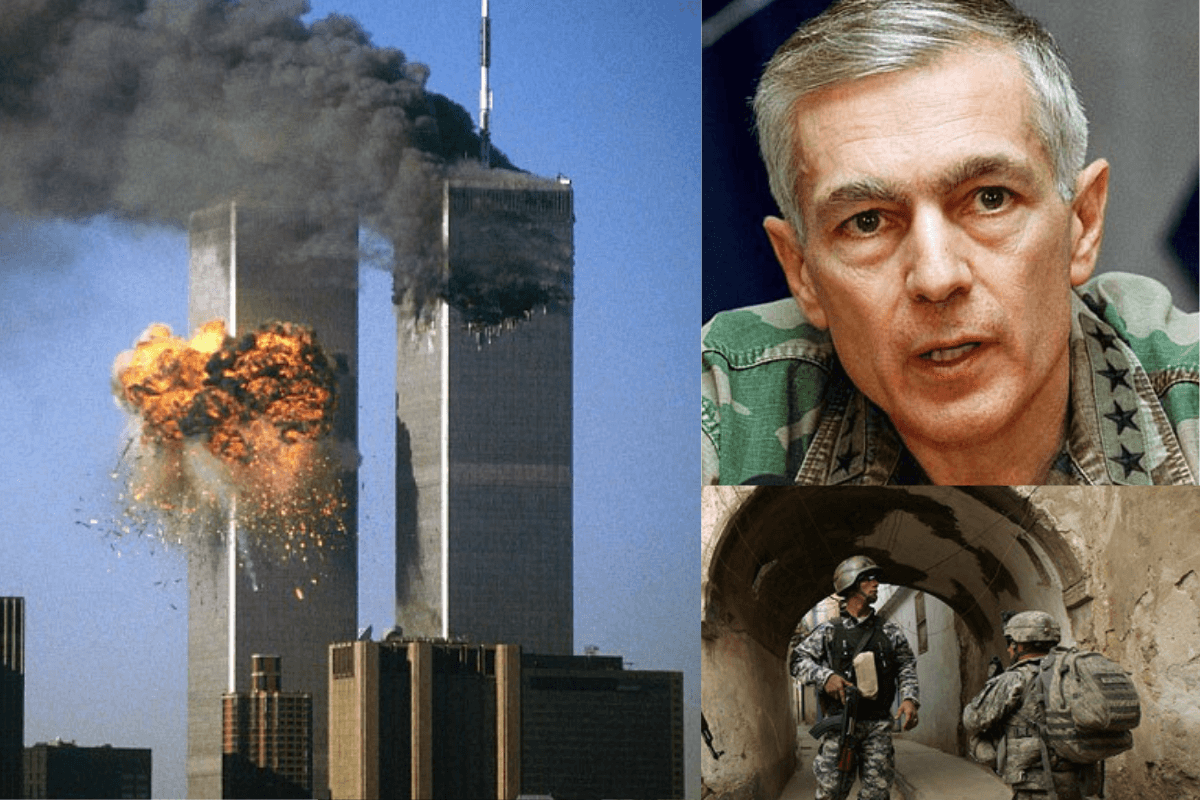 Secret Agenda Behind Post-9/11 US Military Actions


