IslamiCity
Listen PodCasts, Live Quran, Watch Videos @VideoHub

Who Controls the Narrative?
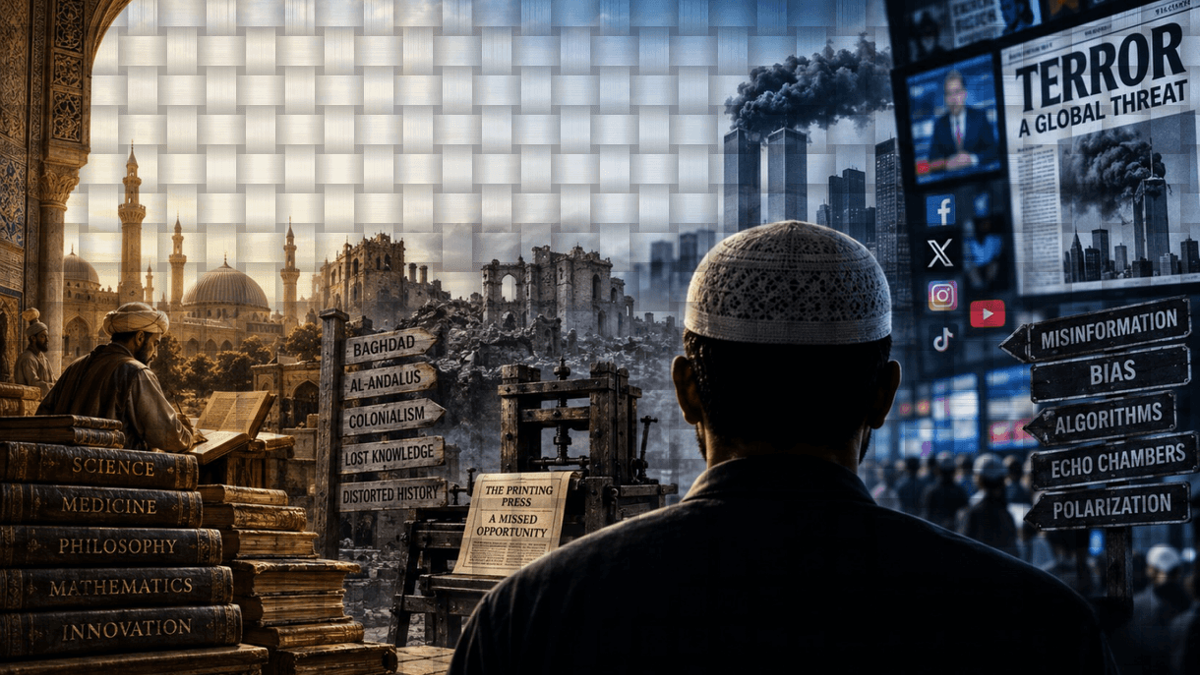
We live in an era when, not too long ago, the information, news, and entertainment we consumed were largely controlled by a handful of players, including news channels, newspapers, news agencies, and major radio stations. We had very few options beyond that to verify or diversify from alternate sources. The narrative of what is happening in the world was controlled by a handful of sources. The advent of the internet, social media, and instant global communication changed it all. And still, the big corporations, through acquisitions, manage to wrestle control of large chunks of the most popular avenues. Then they deployed algorithms to feed us content that we are inclined towards, thereby creating echo chambers that further reinforced our biases. The result is the extreme polarization that we see in our societies today.
Power Has Always Understood the Importance of the Story
Historically, those in power realized the importance of controlling the narrative. Early Caliphs knew that the most effective platform for defining the narrative is the weekly Khutbahs on Friday, which attract most of the Muslims in a community. Hence, they began the practice of delivering Khutbahs in the name of the current ruler. As we noted above, another means of disseminating a particular narrative was through educational institutions. The rulers of the time gained control over them by formalizing and funding these schools to replace what had been a loose, individual, and hence independent effort.
When Persuasion Gave Way to Power
Those in power did not have just these subtle means. They could force their narrative on the rest with the threat of violence and intimidation. This loss of control of an independent narrative was internal within the Muslim community. What is more glaring is how we yielded the ground to Non-Muslim forces because of our flawed decision-making.
When Others Began Writing Our History
Initially, the defeats of Muslim rule were followed by brutal campaigns of death and destruction, like in Baghdad and Al-Andalus where all records of Muslim innovation and progress were destroyed systematically. Then, these colonial powers began their campaign of filling the void with a narrative of their own greatness, which was often exaggerated and fabricated. Because of the fact that the Muslims withdrew inward and did not bother reading, let alone countering it gave their narrative unrestricted broadcast capabilities. Our mindset of studying; nay, regurgitating only the religious knowledge, meant that the books written by Muslims were mainly for the consumption of Muslims.
Abandoning Our Intellectual Legacy
And since we had marginalized the sciences, philosophy, and other "worldly" subjects, we willingly abandoned the progress that early Muslims made in these areas, which was later picked up by Westerners who took pains to learn our language and translate our works into their own. They ensured that they excluded any credit to Muslim pioneers, as if the gap of several centuries between the Greek and post-Renaissance Europe did not exist. The Renaissance, in part, was a result of Europeans learning from Muslims about concepts such as equality, justice, hygiene, and medicine, among other things.
The Printing Press We Failed to Embrace
When the opportunity arose to adopt the latest instrument of broadcasting, i.e., the printing press, we rejected it for 400 years. One wonders even if we had adopted the printing press, what we would have printed on it besides the Quran and a collection of Ahadith. We certainly could not publish any scientific papers or philosophical inquiry because it was widely absent from our society. Imagine how Muslims appeared for centuries to the outside world with our inward-looking, static, imitative mindset. Actually, we don't have to imagine; we can simply look around us in the present day, as things have not changed significantly.
From Rejecting the West to Imitating It
And finally, when some of the progressive Muslims in the last couple of centuries realized that our attitude towards education was not sustainable and the root cause of our decline, they started advocating the one thing which the Ummah has been good at for generations. We started imitating, this time imitating the West. We introduced Western-style schools and curricula, and opened new schools modeled after European schools. Yes, the worldly education in those schools was good, but there was no spiritual component or connection.
Caught Between Two Worlds
Hence, these newly educated doctors and engineers found themselves in the middle of a dichotomy, where on one side was this apparent progress, and on the other side, at home, was a religion that was no more than a collection of rituals without any logical explanation. The benefits from worldly knowledge and degrees were tangible, while the religious benefits were based entirely on faith in the reward in the hereafter. They felt like they were connected to two huge blocks of ice drifting apart, stretching their grip to its limit. They were forced to let go of one or the other. Usually, they let go of the religious block and became completely westernized, often changing their names as well. They had to be reminded that they are Muslims, and soon, in their following generations, these reminders would draw blank stares because they would have nothing to relate to being called a Muslim.
Silence Is Not a Narrative Strategy
Maintaining complete radio silence in the face of an onslaught of misinformation is never effective. That is, in effect, what Muslims have been doing for several generations now. The response needed to be towards those non-Muslims who are manipulating the narrative, and not towards the Muslim audiences. Even when the "independent" Muslim states became wealthy, they lacked the moral courage, awareness, and knowledge base to counter this anti-Muslim narrative.
Looking Inward While the World Defined Us
They did, however, use their wealth and influence to promote their brand of rigid Islam on the poorer Muslim communities around the world to further distract them from progress and thinking, to push them further towards imitation and memorization. The rinse-and-repeat theme of blaming our decline on not performing our ritual prayers regularly, and if we do, not in the mosques, dominates all forms of inquiry into the topic. This approach is as convenient as it is inactionable and useless.
9/11 and the Narrative War
The events that followed the 9-11 attacks turned this sword of narrative offensive against Muslims into an arrow lodged in the middle of the back of the Muslim persona. It hurts tremendously with every move we make, and yet we cannot reach it to remove it and dress the wound. In the short run, every attempt to deal with it only exacerbates the pain. But with time and good planning, we should be able to pull the arrow out, which will be a traumatic experience. If we can overcome that pain and allow the body to heal, we will be stronger for it.
Reclaiming the Muslim Narrative
Reclaiming the narrative does not mean replacing one distortion with another. It means rediscovering our intellectual confidence by studying and researching our rich history, and telling our story with honesty, scholarship, and courage. Muslims must once again engage the world through education, research, journalism, culture, technology, and thoughtful public discourse.
If we do not tell our own story, others will continue to distort it against us. The tools to reclaim that voice have never been more accessible. The question is whether we have the courage, creativity, and commitment to use them. As Muslims we are commanded in the Quran to fight falsehood with truth. The truth shall indeed prevail! and we must be proactive in narrating the truth with confidence and clarity.
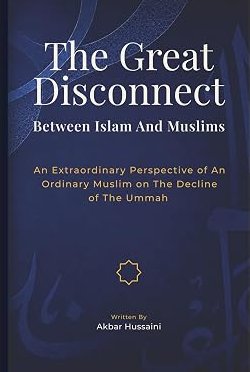
Excerpted and adapted from the book, The Great Disconnect Between Islam and Muslims: An Extraordinary Perspective of An Ordinary Muslim on The Decline of The Ummah by Akbar Hussaini
 Muslim Sicily