
IslamiCity
Listen PodCasts, Live Quran, Watch Videos @VideoHub

For many Muslims, the word gambling immediately creates a familiar image: a casino, a betting shop, a roulette wheel, or someone risking large amounts of money on a game of chance.
Most people look at these examples and think:
"That is not me. I do not gamble."
But the world has changed.
Today, gambling does not always look like a casino. It can appear through a smartphone screen, a sports app, a video game, a financial platform, or the desire to become wealthy overnight.
This raises an important question:
Have some forms of gambling become so normalised that people no longer recognise them?
Islam's warning against gambling is not only about losing money. It is about protecting the human heart from a mindset built around chance, greed, and the illusion of easy success.
The Qur'an says:
"O you who believe, indeed intoxicants, gambling, idols, and divining arrows are but filth from the work of Satan, so avoid it that you may be successful."The verse does not only command believers to avoid gambling. It connects avoiding it with true success.
Why?
Because gambling affects the way people view wealth, effort, and dependence upon Allah.
"Isn't all business risky?"
Yes, business involves risk.
Investing involves risk.
Starting a company involves risk.
Life itself involves risk.
So why is gambling different?
Islam does not prohibit risk. It prohibits a type of risk where wealth is gained primarily through chance, excessive uncertainty, and the loss of others.
A legitimate transaction involves value being exchanged.
A person provides a product, service, skill, or contribution.
Gambling, however, creates a situation where the excitement comes from the possibility of winning without meaningful effort or contribution.
The gambler is not creating wealth.
They are hoping to transfer wealth.
This is why gambling can become spiritually dangerous. It trains a person to search for shortcuts rather than develop patience, discipline, and trust in Allah.
One of the fastest-growing forms of gambling today is sports betting.
A person may say:
"I am only putting £5 on the match."
"I am not addicted."
"It is just entertainment."
But Islam encourages believers to look beyond the amount of money involved.
The deeper question is:
What habit is being created?
A small action repeated over time can shape the heart.
The excitement of predicting outcomes, chasing wins, and hoping for quick returns can create a mindset where money becomes connected to chance rather than effort.
The danger is not always the first bet.
The danger is the thinking that follows:
"Maybe the next one will work."
2. Crypto and Speculative Trading: Investment or Gambling?
Few modern financial topics create as much debate as cryptocurrency and high-risk trading.
This discussion requires balance.
Not every cryptocurrency transaction is gambling.
Not every investment is speculation.
However, certain behaviours raise serious concerns.
For example:
"What am I buying?"
It is also:
"Why am I buying it?"
Islam places great importance on knowledge, responsibility, and avoiding excessive uncertainty.
A Muslim should not allow the desire for fast wealth to override wisdom.
3. Video Games and Loot Boxes
A surprising area of discussion is the gaming industry.
Many modern games include systems where players pay money for a random reward.
A person may spend money to open a digital box without knowing what they will receive.
They might get a valuable item.
They might get something almost worthless.
Then comes the temptation:
"Try again."
This has led to debate among Muslims and scholars about whether certain systems resemble gambling because money is exchanged for an uncertain outcome.
The concern is not only financial.
It is psychological.
Young people can become accustomed to the idea that excitement comes from chance and that rewards come through repeated attempts rather than achievement.
It is the human desire for effortless success.
Everyone wants security.
Everyone wants comfort.
Everyone wants to improve their life.
Islam does not discourage ambition.
But Islam teaches that blessings come with responsibility.
Allah says:
"And that there is not for man except that for which he strives."There is wisdom in effort.
There is dignity in earning.
There is blessing in patience.
The problem with gambling is that it creates the illusion that a person can skip the process.
It whispers:
"You do not need to build. You only need to get lucky."
But the believer understands that provision (rizq) comes from Allah, and that chasing wealth through prohibited means does not bring true success.
"Am I sitting in a casino?"
The better question is:
"Has my relationship with money become dependent on chance?"
Ask yourself:
Sometimes the greatest loss is losing perspective.
The Prophet ﷺ encouraged honest work, trade, and responsibility.
The goal is not simply having more money.
The goal is having wealth that carries barakah - blessing.
A smaller amount earned through halal means can bring more peace than a larger amount earned through doubtful methods.
The believer knows:
What Allah has written for you will reach you.
What Allah has not written for you will never belong to you.
This understanding frees the heart from desperation.
"Get rich quickly."
"Do not wait."
"Take the shortcut."
But Islam teaches a different path:
Seek knowledge.
Work honestly.
Be patient.
Trust Allah.
The challenge today is not only avoiding casinos.
It is recognising when the mindset of gambling enters our lives through new doors.
Because gambling is not only about money.
It is about what the heart begins to depend upon.
And the heart of a believer should always depend first upon Allah.
May Allah protect us from deception, bless our earnings, and grant us wealth that brings us closer to Him. Ameen.
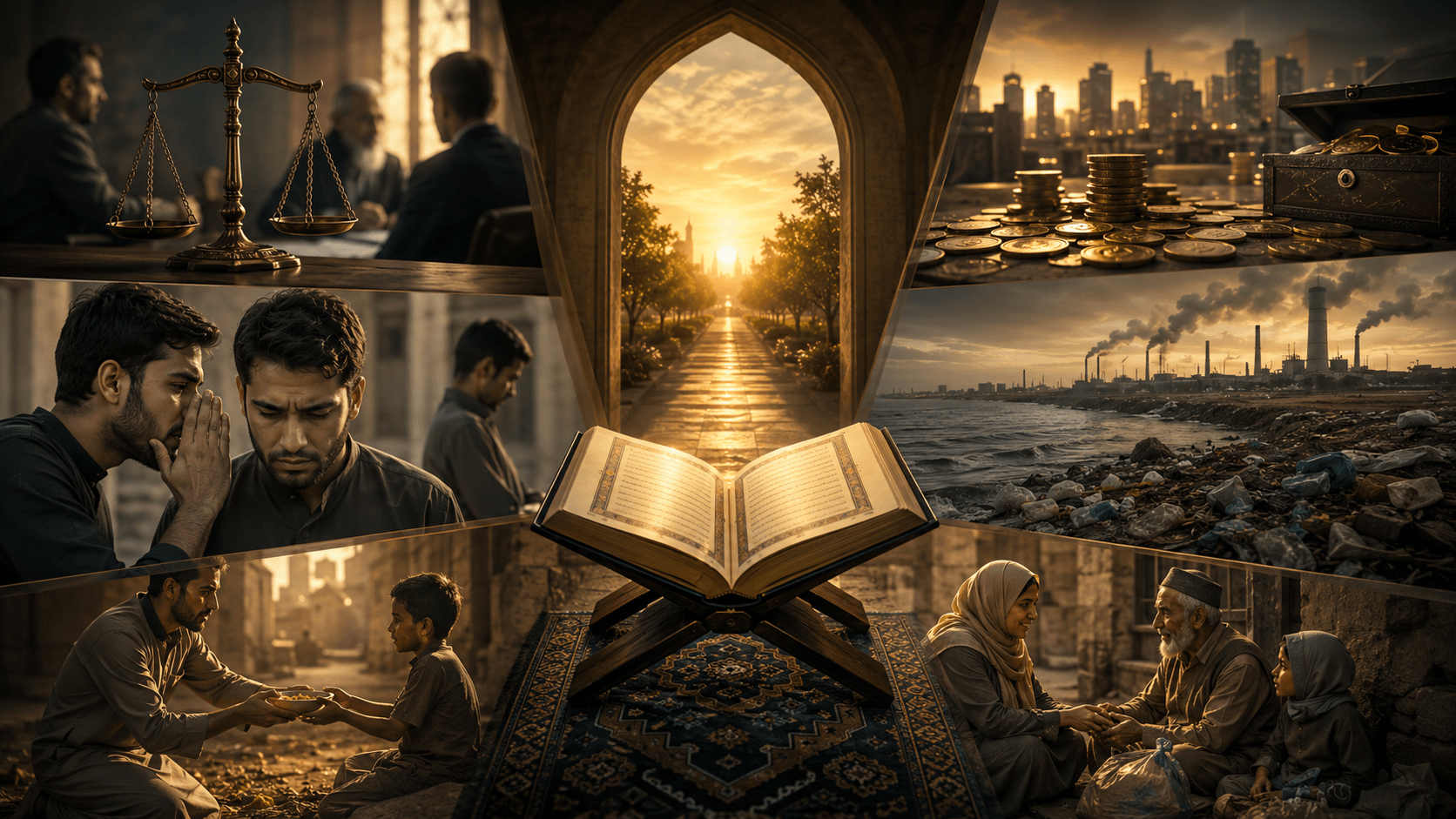 The Quran Warned Us About These 5 Things — And We Still Do Them


