
IslamiCity
Listen PodCasts, Live Quran, Watch Videos @VideoHub

Artificial intelligence has rapidly moved from being a tool we use occasionally to something that increasingly feels like a companion. Millions of people now interact with AI systems daily - asking questions, seeking advice, sharing personal thoughts, and even developing emotional attachments to digital assistants.
A simple question reveals how quickly society is changing:
How many people now speak to an AI chatbot more frequently than they speak to other human beings?
For some, AI has become a place where they express frustrations, seek comfort, and hold conversations that feel surprisingly personal. Some users even give their AI assistants names and begin interacting with them as if they were human.
This transformation raises important questions.
What happens to human relationships when technology provides endless attention, instant answers, and complete customization? What happens when people become accustomed to interacting with something that always responds exactly how they want?
The discussion around artificial intelligence often focuses on productivity, innovation, and convenience. But there is another dimension that deserves attention: how AI may influence our character, our patience, and the way we treat one another.
Human relationships are complicated. People misunderstand each other. They become tired, frustrated, emotional, and imperfect.
AI is different.
It adapts to the user's preferences. It responds instantly. It does not become exhausted after a long day. It does not have personal struggles, responsibilities, or emotional needs.
This creates a unique temptation: the attraction of a relationship without difficulty.
But meaningful human relationships require patience, compromise, forgiveness, and empathy. The very challenges that make relationships difficult are also what develop our humanity.
When people become accustomed to an interaction where everything revolves around their own needs, they may begin expecting the same from real people.
And that expectation can damage families, friendships, and communities.
Food arrives within minutes. Shopping happens with a single click. Entertainment is available immediately. Information appears instantly through search engines and digital assistants.
Technology has trained people to expect speed.
The problem is that this mindset can extend beyond products and services into areas where patience is essential - including faith, relationships, and personal growth.
Many people struggle when things do not happen immediately. They become frustrated when goals take time, when prayers are not answered quickly, or when life does not follow their preferred timeline.
Artificial intelligence can intensify this mindset because it creates an environment where commands receive immediate responses.
You ask.
It answers.
You request.
It delivers.
Over time, this interaction can subtly reshape how people view the world around them.
Instead of approaching relationships with humility and cooperation, they may begin approaching people with expectations of obedience.
When interacting with AI, users naturally give instructions:
"Write this."
"Change that."
"Fix this."
"Explain this."
The AI does not complain. It does not feel disrespected. It does not need emotional consideration.
But humans are not machines.
A spouse is not an employee.
A child is not a servant.
A friend is not a customer service representative.
A community member is not someone whose only purpose is to fulfill our demands.
Yet modern habits can blur these boundaries. People may begin speaking to family members, coworkers, and community members with the same directness and impatience they use with technology.
The result is a society where people become increasingly comfortable giving orders but increasingly uncomfortable practicing kindness.
Good character is not viewed as a minor personality trait. It is connected to faith itself.
The Prophet Muhammad ﷺ demonstrated that authority does not justify harshness.
The Qur'an describes his leadership with the words that he was gentle with people through Allah's mercy. Despite possessing the highest spiritual authority, he interacted with others through compassion, patience, and kindness.
This teaches an important lesson:
The more authority someone has, the more responsibility they have to use it with mercy.
A person does not prove strength by humiliating others. True strength is maintaining dignity and kindness even when correction or leadership is necessary.
They assume that being a good leader requires being harsh, intimidating, or demanding.
The prophetic example shows otherwise.
A person can give instructions without disrespect.
A parent can discipline without humiliating.
A teacher can correct without embarrassing.
A leader can maintain authority without destroying someone's dignity.
The difference often comes down to simple language.
Compare:
"Why did you do this?"
with:
"Could you help me understand what happened?"
Compare:
"You always make mistakes."
with:
"Let's work together to fix this."
The message may be similar, but the emotional impact is completely different.
Anas described how the Prophet never insulted him, never harshly questioned him, and never used degrading language toward him.
This is remarkable because service naturally creates opportunities for authority to be abused.
Yet the Prophet ﷺ demonstrated that having power over someone does not mean treating them as lesser.
He still gave instructions. He still expected responsibility. But he combined expectations with mercy.
This balance is essential in every relationship.
If someone grows up surrounded by anger, humiliation, and constant criticism, they often reproduce that behavior with others.
Children learn not only from what parents say but from how parents speak.
Employees learn not only from workplace rules but from how leaders treat them.
Communities learn not only from speeches but from everyday interactions.
A harsh environment creates people who fear mistakes.
A compassionate environment creates people who feel safe admitting mistakes and improving.
AI can be a powerful tool for education, creativity, research, and problem-solving.
The challenge is ensuring that technology serves humanity rather than reshaping humanity into something less compassionate.
The question is not:
"Will AI become more human?"
The more important question is:
"Will humans become less human because of AI?"
If technology teaches us convenience without patience, answers without reflection, and commands without empathy, then it risks weakening the qualities that make human relationships meaningful.
But if people use technology wisely while preserving kindness, humility, and compassion, AI can remain a tool rather than a replacement for human connection.
The future will undoubtedly include more artificial intelligence. It will become faster, smarter, and more integrated into everyday life.
But the qualities that matter most will remain deeply human:
Kind speech. Patience. Forgiveness. Compassion. Understanding.
The greatest danger is not that machines will learn to communicate like humans.
The greater danger is that humans will forget how to communicate with humanity.
In an age of instant answers and unlimited convenience, maintaining kindness may become one of the most important forms of resistance. Technology can make life easier. But only character can make life meaningful.
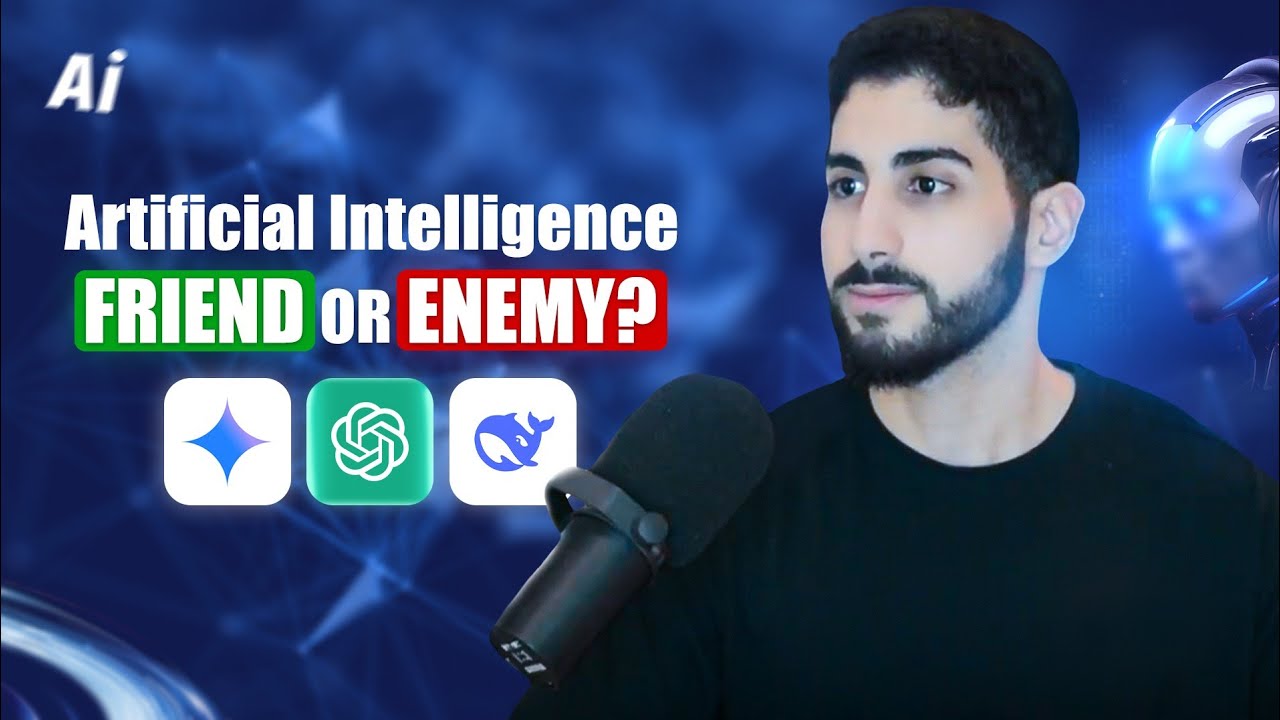 Can Muslims Really Trust Artificial Intelligence?!


