
IslamiCity
Listen PodCasts, Live Quran, Watch Videos @VideoHub

Against a global backdrop of rapid technological shifts and rising geopolitical fractures, a historic gathering has convened in Uzbekistan. Held from 7-11 July 2026, the First International Islamic Civilization Forum marks a watershed moment for global intercultural dialogue.
Hosted by the Centre of Islamic Civilization in Uzbekistan, this landmark event has brought together distinguished scholars, representatives of esteemed international organizations, government officials, and public figures from more than forty countries. Organized in three historically important intellectual hubs of Tashkent, Samarkand, and Termez, the forum underscores a flourishing global recognition of Islamic civilization's profound spiritual, scientific, and cultural heritage.
Enlightenment Against Ignorance: An Urgent Global Imperative
The world is currently navigating deep transformations. While humanity enjoys unparalleled leaps in science and technology, it simultaneously faces severe headwinds, characterized by escalating mutual mistrust, the spread of destructive ideologies, intolerance, extremism, and a sharp rise in Islamophobia. In these fragmented times, the forum champions a conceptual initiative first introduced by Uzbekistan to the United Nations in 2017 that is "Enlightenment Against Ignorance."
The forum's core message positions science, education, upbringing, and high moral values as the most enduring foundations for global stability. Rather than allowing differences in custom and tradition to become flashpoints for conflict, the conference seeks to remind the world that Islamic values have historically served as powerful catalysts for scientific advancement, cultural renewal, and universal human dignity.
Anchored in a Legacy of Brilliance
In his opening address, the President of the Republic of Uzbekistan, His Excellency Shavkat Mirziyoyev, highlighted that Uzbekistan's historical position at the crossroads of civilizations makes it the ultimate symbolic venue for this forum. The event explicitly honors the region's First and Second Renaissances, both are the eras that permanently shaped global intellectual traditions. Throughout the forum, participants immersed themselves in the enduring legacy of the region's finest minds. This heritage includes pioneering breakthroughs in the sciences, championed by legendary polymaths such as Muhammad al-Khwarizmi, Ahmad al-Farghani, Abu Rayhan Biruni, Abu Ali ibn Sina (Avicenna), and Mirzo Ulugh Beg. It also encompasses profound contributions to philosophy and literature by Alisher Navoi and Babur Mirzo, alongside the foundational pillars of Islamic spirituality and jurisprudence preserved through the monumental works of Imam al-Bukhari, Imam al-Tirmidhi, Imam al-Maturidi, and Burkhan al-Din al-Marghinani.
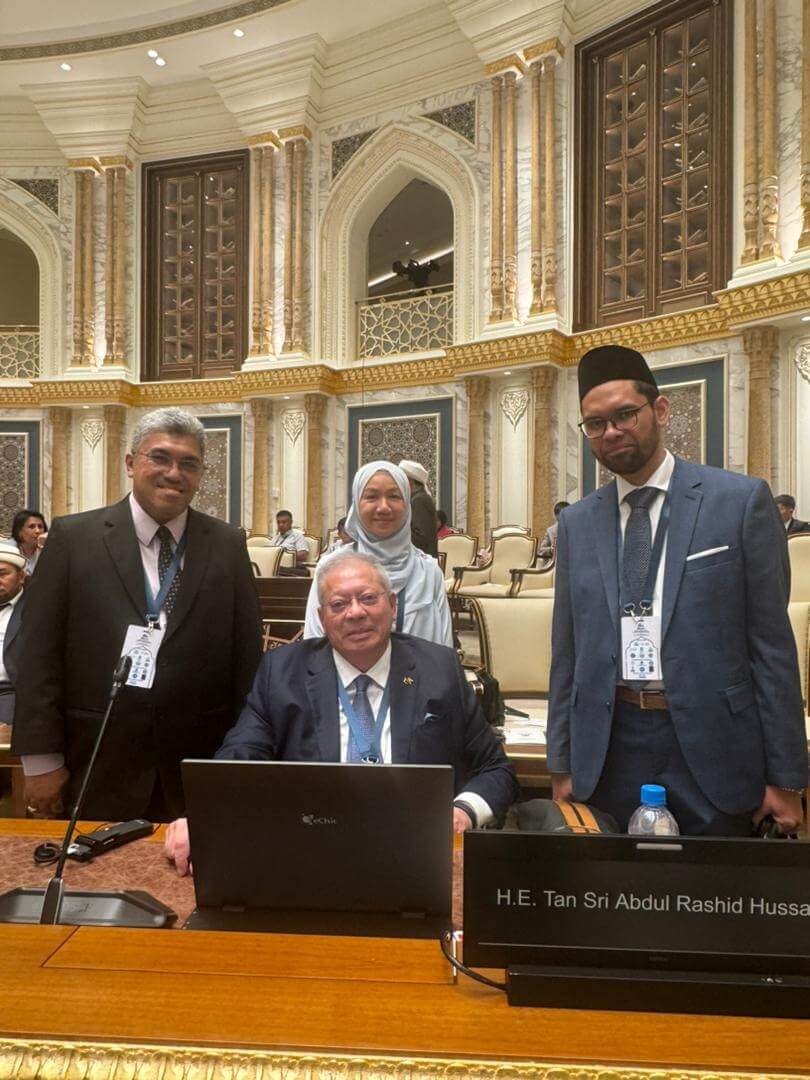 Today, as part of its state policy, Uzbekistan is actively collaborating with the international community to lay the groundwork for a Third Renaissance. This new era is envisioned as a development model grounded firmly in modern education, innovation, spiritual advancement, and deep respect for historical heritage. A tangible manifestation of this state priority is the recent reconstruction of the majestic Imam al-Bukhari Memorial Complex in the Samarkand Region, which has quickly gained recognition as one of the largest spiritual, scientific, and educational centers in the Muslim world. Furthermore, the main gate of the Centre of Islamic Civilization features the eternal Quranic commandment, "Iqra!" ("Read!"), serving as its foundational mission statement.
The Way Forward: Structuring Future Progress
It can be gathered from His Excellency President Shavkat Mirziyoyev's address that the primary attention should be given to translating these days of dialogue into an enduring, actionable joint program. To ensure that the spirit of Tashkent, Samarkand, and Termez yields practical global outcomes, the way forward must focus on four foundational pillars of action:
1. Building Better Relationships and Understanding
To dismantle Islamophobia, extremism, and cultural distrust, we must invest heavily in how people talk to and understand one another. This means creating permanent, welcoming spaces for open dialogue, prejudice-reduction workshops, and youth cultural exchange programs. By focusing directly on changing attitudes, building empathy, and fostering open communication lines among everyday citizens, scholars, and community leaders worldwide, we can counter destructive narratives at the grassroots level. Without repairing the baseline human connections and correcting cultural misconceptions, structural or technical changes will fail to take root. True enlightenment begins with empathy and a mutual willingness to listen.
2. Nurturing Talent and Future Leaders
The realization of a Third Renaissance depends entirely on cultivating the next generation of thinkers. We must establish structured pathways to train highly qualified specialists, researchers, and educators who can seamlessly bridge classical Islamic knowledge with modern science. This involves creating international scholarship programs through the Centre of Islamic Civilisation, establishing joint research fellowships between Uzbek institutions and global universities, and developing updated school and university curricula that emphasize critical thinking, science, and history. Investing heavily in human intellect ensures that the profound legacy of past polymaths becomes a living, breathing blueprint for the future rather than a static page in history books.
3. Modernizing Technology and Infrastructure
To maximize global reach, the ways we share knowledge must be brought into the 21st century. This means we need to optimize how international research centers, libraries, and museums work together. Key steps include building a state-of-the-art, interconnected digital library for ancient manuscripts, utilizing advanced translation technologies to make historical texts accessible in multiple languages, and streamlining day-to-day coordination between the Centre in Uzbekistan and its global partners. By digitizing and translating priceless historical works, we tear down geographic and language barriers, giving global thinkers equal access to the spiritual and scientific treasures of Islamic civilization.
4. Engaging Global Leaders and Policy Makers
The insights gained from this forum cannot remain confined to academic circles but must influence high-level global policy. We must proactively partner with major international bodies such as the UN, UNESCO, and ICESCO. By continuously organizing high-profile international forums, publishing joint research, and advising governments on educational reforms, the Centre can ensure that the values of peace and enlightenment actively shape international development goals. Engaging policy makers help us ensures that the core principles of tolerance and education are structurally woven into global governance, legal protections, and international development strategies.
Conclusion
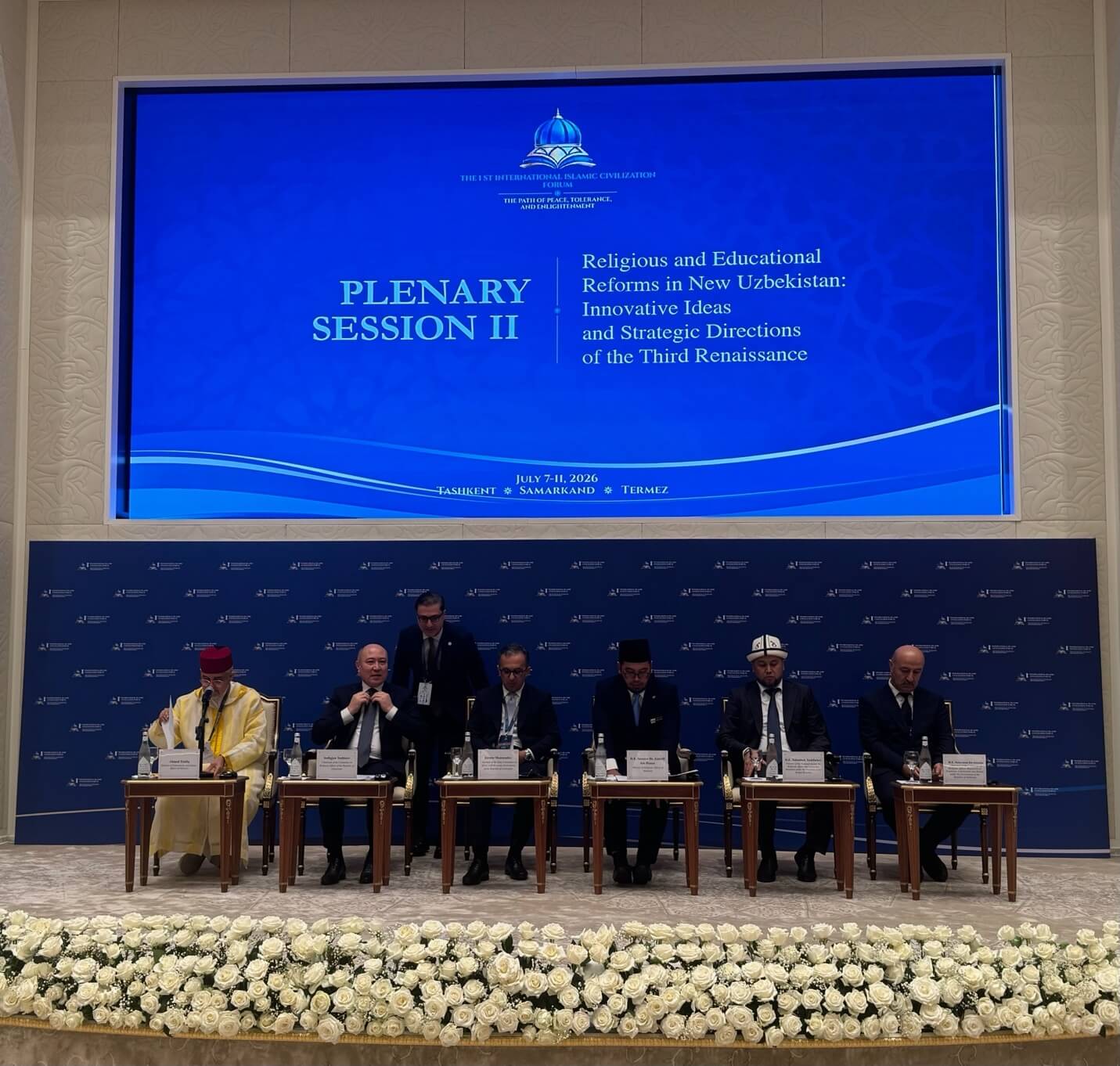 The First International Islamic Civilization Forum has proved to be far more than a reflective look at past glories; it has established a dynamic launchpad for global renewal. By anchoring itself in the timeless intellectual wealth of Tashkent, Samarkand, and Termez, the Centre of Islamic Civilization in Uzbekistan has built a vital bridge between centuries-old scientific wisdom and modern global progress.
Moving forward, the successful execution of these four pillars of way forward interventions will determine the lasting impact of this historic summit. Through a balanced dedication to healing relationships, elevating human talent, upgrading collaborative technologies, and influencing international policy, the forum's grand objective, that is "Enlightenment Against Ignorance" can truly be realized.
Sincere gratitude is extended to the Centre of Islamic Civilization, Uzbekistan for visionary organization, for extending its generous invitation, providing exceptional hospitality, and offering an unmatched wealth of knowledge to all participants. The path toward global peace and harmony has been mapped; it is now the shared responsibility of the international community to walk it together.
Dr. Shukran Abd Rahman is a professor of Industrial and Organisational Psychology in the Department of Psychology, AbdulHamid AbuSulayman Kulliyyah of Islamic Revealed Knowledge and Human Sciences, International Islamic University Malaysia. His research areas include organization development, organizational behavior, and change and development in higher learning institutions.
 Islamic Worldview in Comparative Perspective


