
IslamiCity
Listen PodCasts, Live Quran, Watch Videos @VideoHub

A chronicle of a century and a half, from the fall of Algiers to its rebirth on the same date - an anthem to Algeria and to all who gave their blood so that she might liveBow your head before you read further. What follows is not an anniversary tribute. It is an accounting.
For one hundred and thirty-two years, from the Mediterranean shore to the deepest Sahara, from the peaks of Kabylia to the gates of Laghouat, this land answered for the crime of wanting to remain itself. Every region paid its share. The mountains gave their warrior-saints. The desert gave its cities. The forests gave their trees to fire from the sky, the frontiers gave their dead to wire and mines, and families were put in ships' holds and scattered across oceans, never to return. Even a river in the coloniser's own capital was made to carry Algerian dead. The whole of it, every province, every household, gave its share of a million and a half - a debt this nation has never renounced.
The fifth of July is not a feast. It is a debt. Here is its ledger, in order, from the first morning to the last.
In the west, at Mascara, a twenty-four-year-old scholar of the Qadiriyya order was raised onto a shield by tribal elders in November 1832 and named Emir al-Mu'minin. Abdelkader ibn Muhieddine did what no one before him had done: he built, in the middle of a war, an actual state, with an army, a treasury, schools, and a body of law binding Muslim, Christian and Jew alike. For fifteen years he held one of Europe's finest armies to a standstill. He is remembered today as the founder of the modern Algerian state, and decades later, in Damascus, he would risk his life to shelter thousands of Christians from a sectarian massacre - proof of the civilisation his conquerors claimed to bring him and never possessed themselves.
The war he could not win alone was fought in his name across the country. In the Dahra, a young mystic the people nicknamed Bou Maza - "father of the goat" - raised the whole Chélif valley in 1845 and held French columns at bay for two years. It was in his shadow, in June of that year, that the conquest showed its truest face.
A French column drove an entire tribe, the Ouled Riah, some five hundred souls with their children and their flocks, into the caves of the Dahra for shelter, then lit fires at the mouths of the caves and fed them through the night.
By morning there was nothing to hear. The French had a word for it: enfumade, a smoking-out, the term a farmer uses to clear a burrow of vermin. Weeks later a second officer, Saint-Arnaud, sealed a second tribe into a second cave and recorded it in his letters without a tremor of the hand. This was not madness; it was policy, and it was written down. Lieutenant-Colonel Lucien de Montagnac had already told a friend, in 1843, that the war should be fought by killing every Arab male above fifteen and deporting the women and children, until nothing was left that would not crawl beneath French feet "like dogs." And the sentence that should be read in every school of political philosophy on earth belongs not to a brute on the frontier but to the most celebrated liberal mind of the century.
Alexis de Tocqueville, the theorist of democracy, returned from Algeria in 1841 to write that burning harvests and seizing unarmed women and children were "unfortunate necessities" of the war France had chosen. He was honest about one thing: France, he admitted, made war more barbarous than the Arabs themselves. Hold that morning in the caves in your mind. It will return.
In the east, at Zaâtcha in the Biskra oasis, Cheikh Bouziane held a desert fortress through a five-month siege in 1849 that cost the French so dearly that on its fall they severed his head and paraded it through the province as a warning. And off the coast of Cannes, on the small island of Sainte-Marguerite, the crown converted the fort that once held the Man in the Iron Mask into a prison for a different kind of captive: between 1841 and 1884, more than three thousand Algerians were interned there without trial, hostages held as leverage against those still fighting at home. Five hundred members of Abdelkader's own household were confined there, some of the women held in the very cell built for the Iron Mask.
Then came Laghouat - my town. In the winter of 1852, General Aimable Pélissier laid siege to it, and a lieutenant of the Emir named Bennacer Ben Chohra, who would resist for thirty-three unbroken years, the longest single resistance of the entire conquest, spent that summer fortifying its approaches in expectation of what was coming. On 4 December the city fell, and the storming turned at once into days of slaughter. Of some four to six thousand souls within the walls, roughly two in every three were killed - men, women, children - in what many historians record as one of the first uses of a chemical weapon against a civilian population. The people of Laghouat still call that year âm el-khalya, the year of emptiness, and the year of the sacks, for the men and boys sewed alive into hessian and thrown into the trenches.
Mothers, to save their small sons, dressed them as girls and pierced one ear with a single earring - a mark some boys in Laghouat still wear, not knowing it began as a mother's terror. Pélissier, in his official dispatch, praised his gunners for having "celebrated Saint Barbara's Day with dignity." He used that word - dignity - for his cannon, on the day he emptied a town. It was never his to use. It belonged to the town that refused to kneel. I will name this plainly, as the historians and my own people now name it: a genocide.
Five years later, in Kabylia, a young woman who had refused a forced marriage commanded five thousand fighters. Lalla Fatma N'Soumer defeated an eight-thousand-strong French force at the Battle of Tazrouk in 1854 and held the Djurdjura mountains until her capture in 1857. The French, searching for a comparison worthy of her, called her the Joan of Arc of the Djurdjura. She died six years later, in a cell, at thirty-three.
And in the south-west, a generation later, a Sufi sheikh named Bouamama built a fortress at Moghrar with thirty-two watchtowers and fought, from 1881 to 1904, one of the fiercest resistances of the whole nineteenth century. Oranie, the Dahra, the Zibane, Kabylia, the Sahara, the south-west: there was no region this conquest did not have to fight for twice, and none that did not refuse it in its own tongue.
Each generation was promised France had come to stay a thousand years. And when, on 8 May 1945 - the very day of Europe's liberation from fascism - crowds in Sétif, Guelma and Kherrata marched to claim the dignity promised in return for the blood their sons had spilled against that same fascism, they were answered with a massacre that ran for weeks and left thousands dead. That month buried the last illusion of reform. The fighters of November would be the children of Sétif.
The revolution was never fought alone, and France knew it, which is why, on 22 October 1956, it committed an act of open piracy against the men leading it from abroad. Five founding leaders - Ahmed Ben Bella, Mohamed Boudiaf, Hocine Aït Ahmed, Mohamed Khider, Mostefa Lacheraf - boarded a Moroccan civilian aircraft in Rabat bound for a summit in Tunis under the patronage of the Sultan of Morocco and President Bourguiba.
French air traffic control diverted the plane to Algiers. The five were seized and held in French prisons for the rest of the war, kidnapped from an ally's sovereign airspace in an operation that scandalised even France's own government. But it proved to the world what France had denied: this had become the affair of nations. Egypt trained hundreds of Algerian cadets and gave the cause the loudest radio voice in the Arab world.
Tunisia and Morocco, newly independent themselves, gave the ALN sanctuary at real cost. Iraq, Kuwait and Saudi Arabia funded more than half the war's material cost by 1959. In September 1958, the Provisional Government of the Algerian Republic was proclaimed simultaneously in Cairo, Tunis and Rabat, recognised that same day by Iraq, Libya, Morocco and Tunisia, within weeks by Communist China, and by October 1960 by the Soviet Union, which sent hospital ships to treat the wounded of the coming border war.
At Bandung in 1955, Algeria - not yet a state - had already sat among the assembled nations of the decolonising world as an equal, the first stage France could not silence. Even Washington, wary of pushing Algeria toward Moscow, abstained for the first time from backing France outright at the United Nations. A war fought by a poor and disarmed people had made itself impossible for the world to ignore.
Inside Algeria, the war reached the capital itself. Through 1956 and 1957, French paratroopers and the ALN's urban networks fought the Battle of Algiers street by street, cellar by cellar, through the Casbah. There, buried alive beneath the rubble rather than surrender, died Ali La Pointe, little Omar, and Hassiba Ben Bouali, twenty years old, who chose to die standing.
On 8 February 1958, hunting a unit that had crossed into Tunisia, French aircraft bombed the market town of Sakiet Sidi Youssef on its weekly market day, striking a school in the process. More than two hundred people were killed, eleven of them children - a village that was not even Algerian, punished for a war Algeria refused to lose.
Inside the wire, another weapon did its quieter work. Napalm fell on the forests where the maquis hid, and on the villages beneath them, while Paris officially denied for the length of the war that it existed in Algeria at all. In the forest of Boumehni, in Kabylia, in August 1960, a fighter named Salah Ouzrourou was burned alongside two companions; for a month afterward he could not lower his scorched arms without unbearable pain.
In December 1957 the village of Aït-Ouabane was razed and its people driven out under bombardment. Rural Algeria learned to read one particular shape in the sky before all others: a small, unarmed, brightly painted yellow aircraft, drifting low over the ridgelines to mark a target for what followed. A fighter of the ALN remembered them leaping "from ridge to ridge like grasshoppers." Where the yellow plane lingered, fire soon fell, and a whole generation of rural Algerians learned to read that sky the way others read clouds for rain - except what this sky promised was fire.
The war reached even my own remote south. In September 1960, near El-Ghicha, moudjahidine met the enemy at what is remembered as the great battle of Chouabir. More than thirteen hundred enemy soldiers were killed; twenty-five Algerians, eleven of them unarmed civilians, fell as chouhada - a battle few outside my region have heard named, and one that deserves to be.
And that same year, in the deep Sahara near Reggane, a different fire fell - not from an aircraft but from the sky itself. On 13 February 1960, in the middle of the war, France detonated its first atomic bomb, Gerboise Bleue, three times the force of the weapon dropped on Nagasaki, in a desert the French command called empty though several thousand people lived within reach of the blast. Three more atmospheric tests followed within the year, and thirteen more underground until 1966, four years after independence, under a clause of the Évian Accords that let France keep testing on Algerian soil even after Algeria was free.
Fallout was later traced as far as Senegal, Sudan, and Libya. France did not offer even partial compensation until 2009. The bomb that made France a nuclear power was set off in a desert that was never empty.
On 17 October 1961, twenty to thirty thousand Algerians living in Paris marched peacefully against a curfew imposed on them alone. Under the orders of police prefect Maurice Papon, seven thousand police met them with a violence without precedent in postwar Western Europe. Marchers were beaten to death before ever reaching a station; others were beaten inside the stations, in courtyards renamed, with black humour, "welcoming committees." Along the bridges of the Seine, officers drove demonstrators to the parapets and threw them into the river - some already dead, some bound, some merely unconscious.
For days afterward, bodies surfaced downstream between Paris and Rouen. The official toll admitted at the time was three dead. Historians today place the true number, unresolved and perhaps unresolvable, somewhere between two hundred and three hundred. France's official memory took decades even to permit the word: not until 1998 did the state acknowledge forty deaths, not until 2021 did a French president call it "crimes inexcusable for the Republic." The Seine did not run through Algeria. It carried Algeria's dead all the same.
It would be unjust, in this account, to mourn only our own, for Algeria had friends: men and women born on the side of the oppressor who chose, freely, the side of justice, and paid for it. Fernand Iveton, guillotined in 1957 though he had killed no one. Henri Maillot, who deserted to carry arms to the Revolution. The porteurs de valises, and beside them the militants of the Federation of France, the Algerians of the exile who carried the Revolution into the heart of the metropole - my own father among them, an anonymous man among thousands.
Maurice Audin, tortured to death in 1957, a truth the French state took sixty-one years to admit. Frantz Fanon, who gave the Revolution, in The Wretched of the Earth, the voice of every colonised people on earth, and who lies, as he asked, in Algerian soil.
But not every settler chose that path. In the war's last months, the Organisation armée secrète, determined that Algeria stay French whatever the cost, turned to a campaign meant to make independence unlivable. Between 1961 and 1962 it killed an estimated two thousand people, most of them Algerian civilians: a car bomb in Oran on 28 February 1962 killed twenty-five; one in Algiers on 2 May killed sixty-two; on 7 June, days before independence, its commandos burned the library of the University of Algiers, sixty thousand books turned to ash, as if a people about to be free should not be left even its books.
Peoples do not always choose the date of their defeat. Great nations choose the date of their rebirth.
In 1992 he was called home to save a nation losing its way, and he came, old and incorruptible, carrying the oath of 1954 still intact - and was shot at a public podium, on live television, on the very soil he had helped set free, by the hand of the corruption he had returned to fight. Nations do not die of their enemies. They die of forgetting their martyrs. November did not end in 1962; in every generation, it asks to be defended again.
Malek Bennabi taught that colonisation can achieve nothing without colonisabilité, the inner readiness of a broken people to submit. The fifth of July was the answer to that curse: a people the world had called resigned recovered the first of all freedoms, the freedom to say no. That is the inheritance - not a monument, but a demand. It is not paid in speeches. It is paid in justice, in labour, in the refusal of the division that spills no blood yet squanders what the blood bought.
Now return to the caves with which this account began.
For more than a century, the Dahra kept its silence. The tribe smoked into the rock had no grave and no name in any French register. The streets of Laghouat stayed empty. Islands on the far side of the world still hold the unmarked graves of exiles who never came home. The Seine still flows past the bridges from which men were thrown. The desert near Reggane still glows faintly with what was buried in it. A century and a half of empire rested on the certainty that all this silence would be the last word.
On the fifth of July 1962, a people answered it - not alone, but with the nations that had refused to look away, and not with a wreath, but with a living voice, its own, free at last, rising from every region and every sea that had taken its dead: the mountains, the desert, the plains, the caves, the wire, the burned forests, the far islands, the river of Paris. That is the whole meaning of the day, and the whole of the debt: that the silence was not permitted to have the final word.
The fifth of July is not a feast; it is a debt. Let us pay it - not with wreaths, but with an Algeria worthy of the dead.
Glory to our martyrs, from every region of this land. Glory to the exiled and the deported. Glory to the friends of Algeria and the nations that stood with her. And long live Algeria, free - so that they did not die in vain.


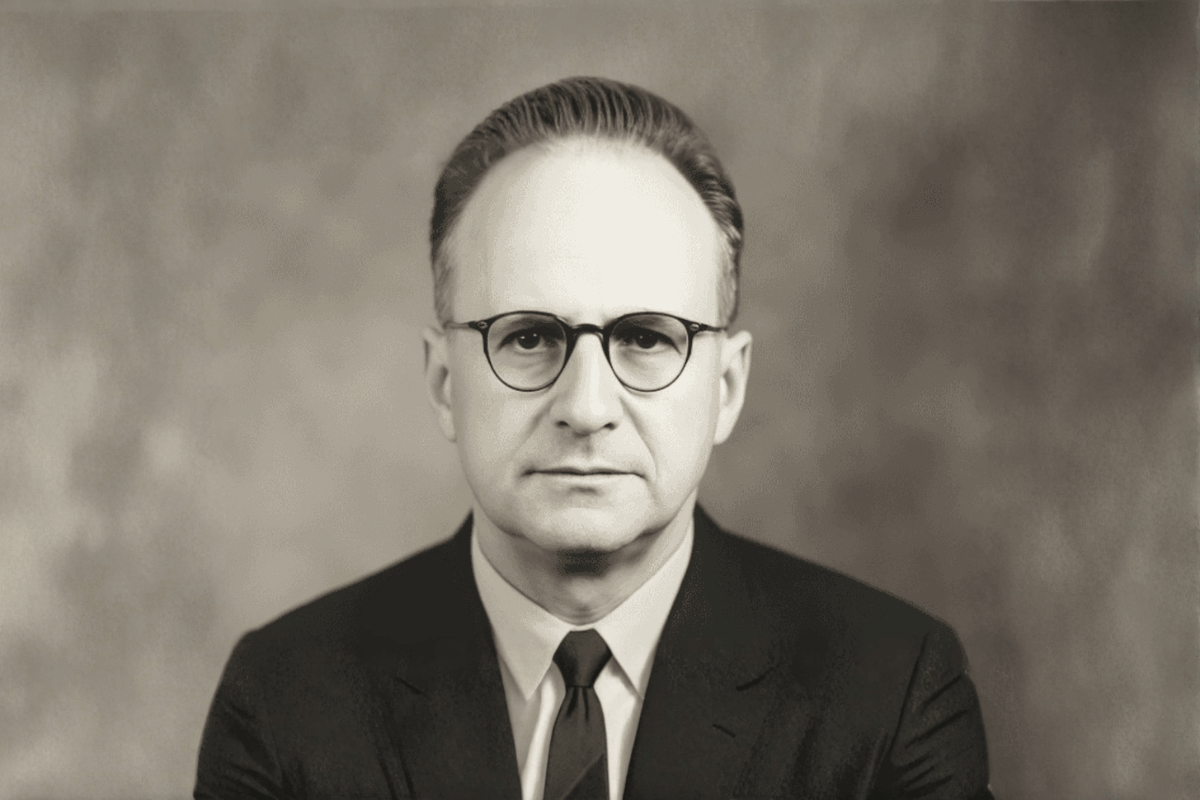 MALEK BENNABI - An Algerian Genius Confronting the Barbarity of the Contemp...