
IslamiCity
Listen PodCasts, Live Quran, Watch Videos @VideoHub

Discussions about the Sunni-Shia divide often collapse into two extremes: either calls for total unity that ignore real theological differences, or rigid sectarianism that treats other Muslims as irredeemably "other." A recent podcast conversation on intra-Muslim relations challenges both approaches and instead argues for something more practical: not forced agreement, but structured cooperation grounded in shared purpose, ethical limits, and intellectual honesty.
A central theme of the discussion is that much of today's sectarian tension is less about theology itself and more about identity tribalism. People often gravitate toward religious "teams" rather than focusing on outcomes-what they actually contribute to the Muslim community.
In this framing, sectarian identity becomes performative: markers of belonging matter more than measurable impact. The critique is not of religious conviction, but of reducing Islam to symbolic alignment rather than meaningful action.
The proposed alternative is a shift from belonging to a group -> to pursuing shared goals. Across Sunni and Shia communities, there are overlapping concerns: preserving faith, strengthening families, supporting institutions, and responding to global crises affecting Muslims.
The conversation identifies two problematic extremes:
The argument is that both extremes fail because they avoid the real complexity of Islamic intellectual and political history.
Instead, the proposed model accepts that:
A key metaphor used in the discussion describes the Muslim community as a "house."
This framing suggests that disagreement within the tradition does not negate shared belonging. The goal is not to eliminate internal walls, but to ensure they do not become reasons for destruction, betrayal, or external manipulation.
A major practical proposal is that Muslims can cooperate without full theological agreement.
Examples include:
The principle is simple: agreement is not required for collaboration on mutual interests.
A comparison is even made to everyday relationships-people do not fully agree with their spouses, friends, or colleagues, yet still cooperate meaningfully.
Another important thread is historical honesty. The discussion argues that Muslim communities sometimes avoid difficult parts of history-whether internal conflicts, political violence, or controversial dynasties-in favor of idealized narratives.
However, the argument here is not to undermine tradition, but to strengthen it through intellectual maturity:
This approach also applies to both Sunni and Shia narratives: neither tradition is monolithic or static across history.
A particularly important point raised is the relative silence in some Sunni spaces around the figure of Imam Husayn ibn Ali.
The argument is not to adopt sectarian rituals, but to recognize that Husayn's stand against injustice at Karbala holds broad ethical significance across the Muslim world.
Ignoring such figures entirely can:
The suggestion is that acknowledging shared moral figures does not require doctrinal convergence.
A serious concern raised is the danger of turning theological disagreement into political or even violent exclusion.
The discussion emphasizes:
Historical examples are used to show how internal divisions have been exploited by outside powers when Muslim communities lose internal cohesion and proportionality.
The conversation also challenges overly simplistic advice like "don't take knowledge from X group."
Instead, it argues for specificity:
Even across sectarian lines, cooperation in non-theological fields (organization, administration, civic work) can be both practical and beneficial.
At the same time, theological learning is acknowledged as more sensitive and may require clearer boundaries.
Rather than seeking uniform belief, the proposed model emphasizes unity of purpose.
This means:
Unity, in this sense, is not emotional harmony or doctrinal agreement-it is strategic and ethical coordination.
The core message of the discussion is a call for intellectual maturity in how Muslims engage internal difference.
It does not deny Sunni-Shia اختلاف (difference), nor does it romanticize unity. Instead, it proposes a middle path:
In a fragmented global context, this approach argues that the most urgent task is not eliminating difference-but learning how to live with it without letting it destroy collective purpose.
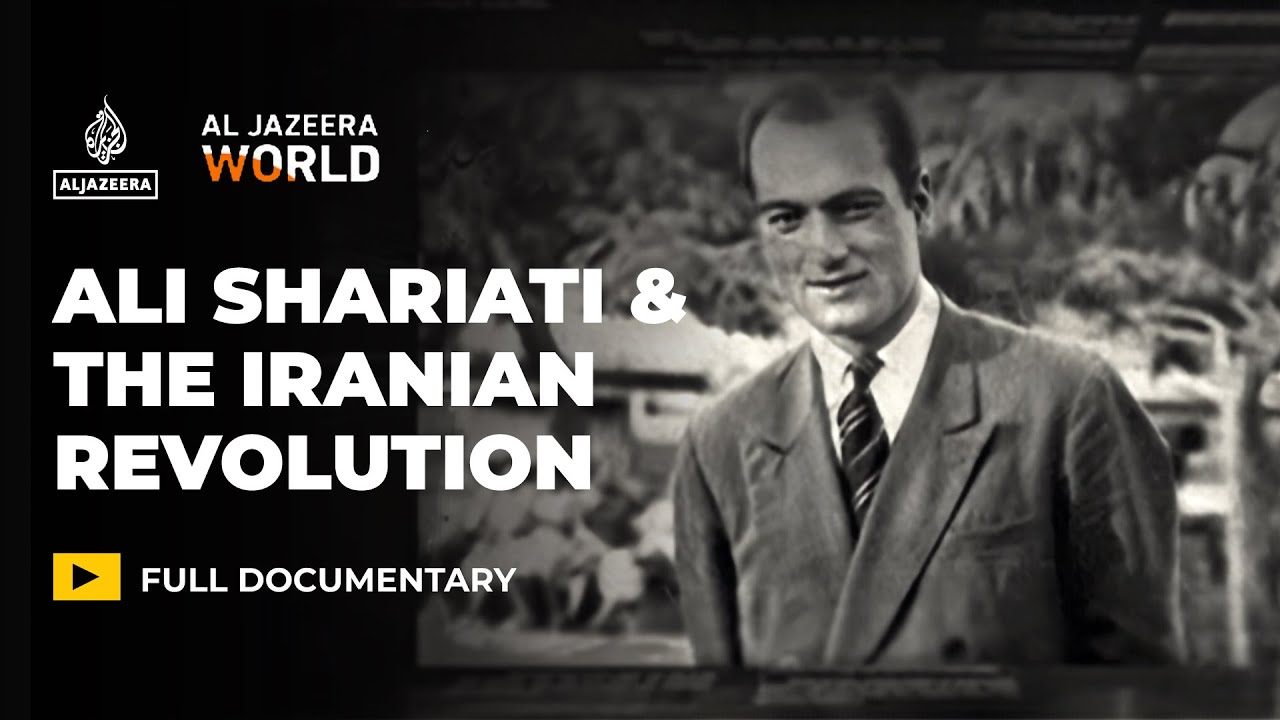 Ali Shariati: The Revolutionary Thinker Whose Ideas Changed Iran


