
IslamiCity
Listen PodCasts, Live Quran, Watch Videos @VideoHub

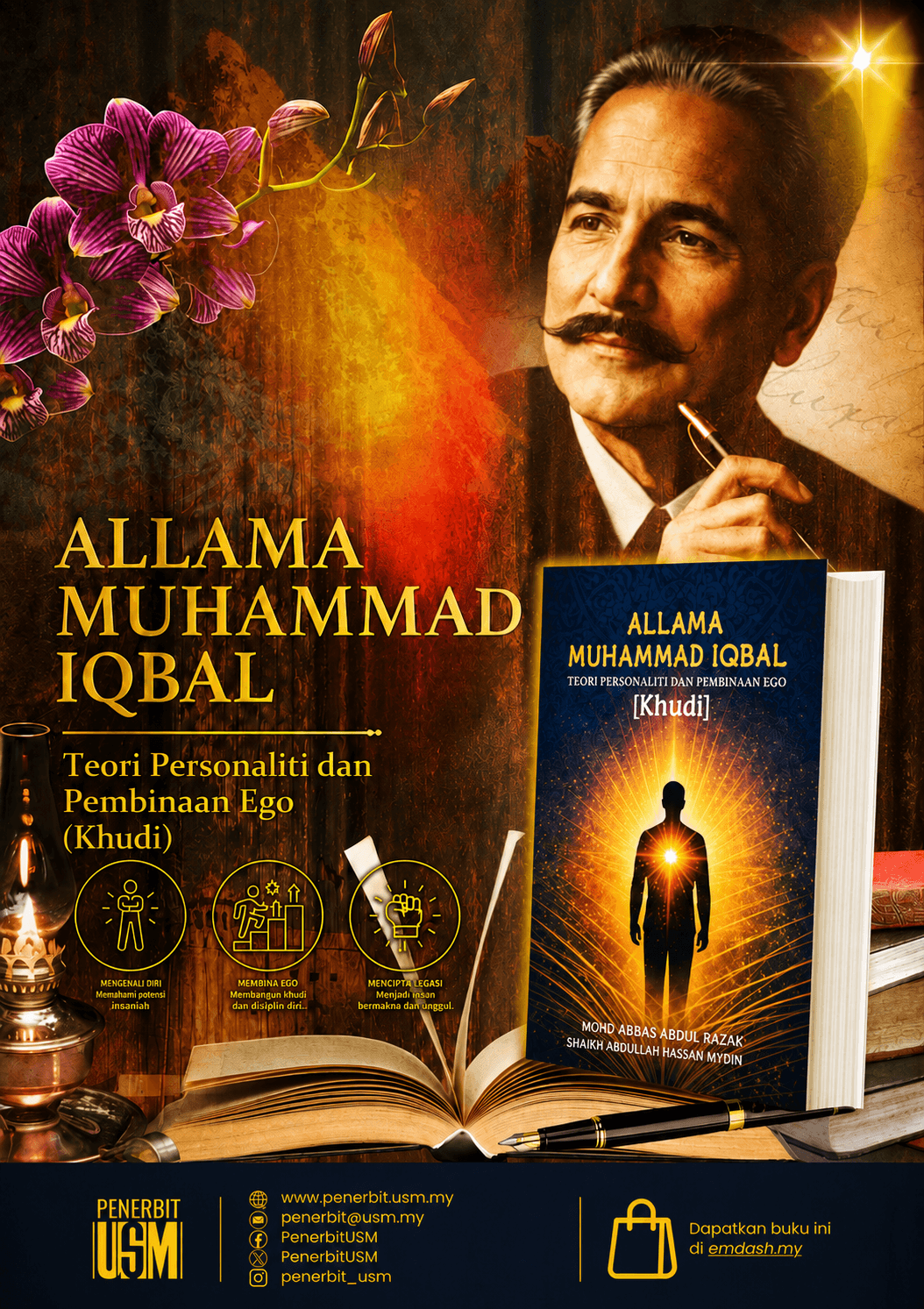
In shāʾ Allāh (God willing), my latest book on Muhammad Iqbal (1877-1938) will soon see the light of day in print. As someone who has primarily written in English, this book marks my first publication in the Malay language. It is titled 'Allama Muhammad Iqbal: Teori Personaliti dan Pembinaan Ego (Khudi)'.
The book is the result of a collaborative research project between Universiti Sains Malaysia (USM) and the International Islamic University Malaysia (IIUM). This time, my co-researcher, Assoc. Dr. Shaik Abdullah Hassan Mydin, joined me in this research project on Iqbal. The book will be published by Penerbit Universiti Sains Malaysia. Madam Nurul Asyqin Kamarun Baharen, who heads the publishing unit at USM, showed great interest in bringing this book to publication.
Writing an academic book is never an easy undertaking, and it took us two years to bring this work to fruition. The main challenge was converting Indonesian expressions into acceptable local Malay language while preserving the intended meaning and academic quality of the text.
Ever since I joined IIUM as a member of its academic staff and as a humble Iqbalian researcher, I have made it my mission to introduce Iqbal, primarily to undergraduate students. However, my research on Iqbal dates back to my undergraduate years at IAIN Ar-Raniry in Aceh, now known as Universitas Islam Negeri Ar-Raniry (UIN Ar-Raniry), Banda Aceh, Indonesia.
During my time at Ar-Raniry, all graduating students were required to produce an academic manuscript known as a Skripsi. For most students, writing a Skripsi was the most demanding academic task. At that time, personal computers were virtually nonexistent on our campus, and the Internet had yet to become part of academic life. Research depended almost entirely on books, journals, and other printed materials available in the university library. As a qualitative researcher relying heavily on library sources, the campus library became my favourite place for conducting research.
Using a portable Olympia typewriter, I typed my undergraduate research titled 'Konsepsi Pendidikan Menurut Mohamed Iqbal' (The Concept of Moral Education According to Mohamed Iqbal). Looking back, the process was both demanding and rewarding.
To be honest, defending one's research before a four-member thesis committee was no easy task. The oral defence normally lasted about two hours. In my case, the defence of my undergraduate Skripsi took about two hours, which was considerably longer than the time I spent defending my doctoral dissertation.
My research experience in Aceh later led me to complete my Master's research on human nature and subsequently to write a doctoral dissertation comparing the theories of personality presented to the world by Sigmund Freud and Muhammad Iqbal.
Since completing my postdoctoral research, I have written books, journal articles, and online articles, all of which have focused on Iqbal's thought process.
Iqbal emerged in the early twentieth century at a time when the Muslim world was facing profound political, social, intellectual, and spiritual challenges. The decline of Muslim societies, coupled with the effects of colonial domination and intellectual stagnation, inspired him to formulate a philosophy of renewal grounded in the teachings of the Qur'an and the Sunnah of the Prophet Muhammad (peace be upon him). Through his poetry and philosophical writings, Iqbal called upon Muslims to rediscover their inner strength, cultivate self-confidence, and reclaim their role as builders of civilization.
At the heart of Iqbal's thought lies the concept of Khudi, or Ego, a philosophy that emphasizes self-development, self-awareness, and the strengthening of human personality. According to Iqbal, human beings are not created to live in weakness, fear, or passive submission to circumstances. Rather, every individual possesses immense potential that can be developed through knowledge, righteous action, creativity, self-discipline, and a meaningful relationship with God. By nurturing a dynamic and healthy ego, individuals can achieve personal excellence and contribute positively to society and civilization.
As a visionary thinker and reformer, Iqbal strongly opposed self-negating philosophies, fatalistic attitudes, superstitious beliefs, slavish mentalities, and pseudo-mysticism, which he regarded as major causes of Muslim decline. At the same time, he did not reject Western thought outright. Instead, he critically examined both the strengths and weaknesses of modern Western civilization and argued that material progress must be balanced by spiritual and moral values.
Iqbal's ideas continue to attract the attention of scholars around the world because of their enduring relevance to contemporary issues such as identity crises, moral decline, loss of purpose, and weak leadership. Studies of his works reveal that many of the problems he identified within Muslim societies remain unresolved and continue to affect humanity at large.
This book explores Iqbal's life and intellectual legacy, the condition of Muslims during his time, the philosophy of Khudi, the hidden potential of the human ego, its relationship with God, nature, and society, as well as the factors that strengthen or weaken personality development. It also demonstrates how Iqbal's ideas can serve as a guide for nurturing knowledgeable, ethical, confident, and socially responsible individuals.
Overall, this book offers a comprehensive introduction to Iqbal's philosophy of personality and highlights its significance for those seeking to understand human potential, strengthen character, and contribute to the development of a balanced and flourishing civilization in the modern world.
(The views expressed are those of Dr. Mohd Abbas Abdul Razak from the Department of Fundamental and Interdisciplinary Studies, AHAS KIRKHS, IIUM, and do not necessarily reflect the views of IslamiCity).
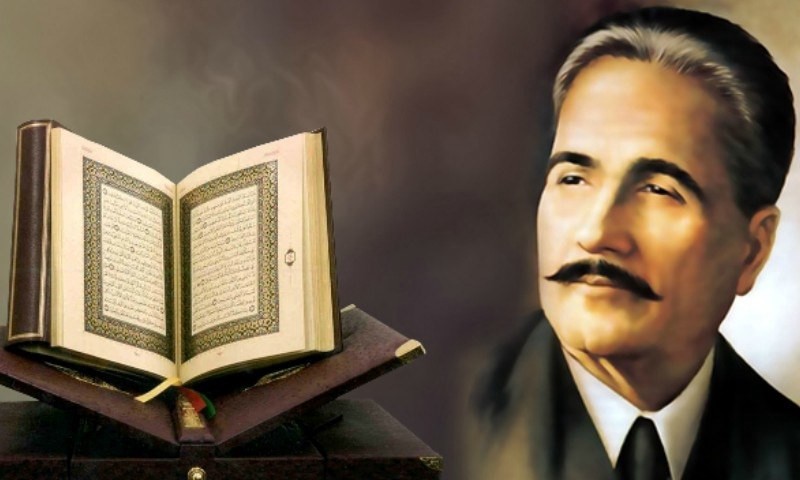 Who in the World is or was Iqbal?


