
IslamiCity
Listen PodCasts, Live Quran, Watch Videos @VideoHub

When Muslims speak about tawḥīd, they usually define it as the belief in the Oneness of God. This definition is correct, but it is incomplete. Limiting tawḥīd to a theological proposition risks overlooking its profound implications for how we understand reality, knowledge, ethics, civilization, and even the future.
Perhaps one of the greatest challenges facing humanity today is not a crisis of politics, economics, or technology. It is a crisis of reality itself. We live in a world flooded with information yet increasingly uncertain about truth. We are more connected than ever before, yet more fragmented. We possess extraordinary technological power, yet remain deeply confused about what it means to be human.
In such a world, tawḥīd deserves to be revisited-not merely as a religious doctrine, but as a philosophical and civilizational framework.
The central question is simple: What if tawḥīd is not only about God? What if tawḥīd is also about reality?
Modern culture often assumes that reality is merely what can be observed, measured, quantified, and controlled. The unseen is marginalized, meaning is privatized, and truth is increasingly reduced to perspective. As a result, many people experience a profound sense of fragmentation. Knowledge is separated from wisdom, technology from ethics, economics from morality, and individual freedom from collective responsibility.
Tawḥīd begins by challenging this fragmentation.
At its deepest level, tawḥīd affirms that reality is not ultimately divided because its source is One. The universe is not a collection of disconnected objects; it is a meaningful order originating from a single Creator. Truth is not fragmented. Knowledge is not fragmented. Humanity is not fragmented. Creation itself is not fragmented.
This insight carries revolutionary implications.
The Qur'an repeatedly invites human beings to look beyond appearances. It describes the universe not merely as a physical system but as a collection of signs (āyāt) pointing toward deeper realities:
"Indeed, in the creation of the heavens and the earth and the alternation of night and day are signs for those of understanding." (Qur'an 3:190)
The key concept here is that the world is meaningful. Nature is not merely matter. History is not merely events. Human beings are not merely biological organisms. Everything points beyond itself.
This leads us to an often-overlooked aspect of tawḥīd: imagination.
In modern discourse, imagination is frequently contrasted with reality. Reality is what exists; imagination is what we invent. Classical Muslim thinkers offered a far more nuanced understanding. Philosophers such as Ibn Sīnā and later mystics such as Ibn Arabi viewed imagination (khayāl) not as fantasy but as a faculty that enables human beings to perceive meanings that are not immediately visible through the senses.
From this perspective, imagination is not the enemy of reality. It is one of the pathways to reality.
Every major transformation in human history began with imagination. Before slavery was abolished, someone had to imagine a world in which human dignity transcended social status. Before colonialism was challenged, someone had to imagine freedom. Before social reform became reality, someone had to envision justice.
The critical question is not whether human beings imagine. The critical question is whether they imagine truthfully.
This is where tawḥīd provides a criterion.
Unlike utopian ideologies that create imaginary worlds detached from reality, tawḥīd disciplines imagination by anchoring it to truth. It asks whether our visions of the future correspond to the deeper moral and metaphysical structure of existence.
In this sense, tawḥīd becomes a scale by which ideas, institutions, and civilizations can be evaluated.
Does a particular worldview promote unity or fragmentation?
Does it affirm human dignity or undermine it?
Does it bring balance or disorder?
Does it orient humanity toward truth or toward illusion?
The Qur'an speaks of mīzān-the balance established by God in creation. Tawḥīd functions as such a balance. It measures whether human beings are placing things in their proper relationship to ultimate reality.
This understanding also sheds light on one of the most important questions of our age: the distinction between truth and myth.
Every civilization lives by narratives. Ancient societies had myths of divine kings and heroic gods. Modern societies have their own myths: the myth of endless progress, the myth that economic growth alone guarantees happiness, the myth that technology can solve every human problem, or the myth that human beings can flourish without any transcendent reference point.
The Qur'an repeatedly warns against confusing conjecture with truth:
"They follow nothing but conjecture, and surely conjecture can never replace the truth." (Qur'an 53:28)
Tawḥīd does not reject imagination. It rejects false absolutes.
Whenever a nation, race, ideology, market, technology, or even the self claims ultimate authority, it becomes an idol. The idols of our age may not be carved from stone, but they remain idols nonetheless.
This reveals another dimension of tawḥīd that is often neglected: its relationship to resistance.
Resistance is usually understood in political terms. Yet every political system rests upon assumptions about reality. Oppression begins when false ideas become normalized. Colonialism required the myth of superiority. Racism required the myth of hierarchy. Exploitation requires the myth that some lives matter less than others.
Tawḥīd challenges all such myths.
By affirming the unity of creation and the dignity of every human being, it resists every attempt to fragment humanity into categories of worth and worthlessness. In this sense, tawḥīd is not passive belief; it is an act of intellectual and moral resistance.
Indeed, the first declaration of Islam-Lā ilāha illa Allāh-is not only a theological statement. It is also a refusal to grant ultimate authority to anything other than God. It liberates human beings from the worship of power, wealth, status, ideology, and even their own desires.
This is why tawḥīd should not be confused with absolutism. Absolutism occurs when human beings claim absolute authority. Tawḥīd does the opposite. It places the Absolute beyond human possession. It reminds us that while truth is absolute, our understanding of it remains limited. This creates humility rather than dogmatism.
Perhaps this is the contribution of tawḥīd to the contemporary world.
In an age of fragmentation, it offers wholeness.
In an age of confusion, it offers orientation.
In an age of competing narratives, it offers a criterion for truth.
And in an age where reality itself seems increasingly unstable-shaped by virtual worlds, artificial intelligence, and endless streams of information-it reminds us that the ultimate task of humanity is not merely to imagine new worlds, but to align our imagination with what is Real.
For tawḥīd is not merely the belief that God is One.
It is the courage to see reality as one when everything around us appears fragmented, to see meaning where others see chaos, and to recognize that the search for truth, the search for justice, and the search for God are ultimately part of the same journey.
Dr. Abdul Wahed Jalal Nori is an assistant professor in the Department of Fundamental and Inter-Disciplinary Studies, AbdulHamid AbuSulayman Kulliyyah of Islamic Revealed Knowledge and Human Sciences, International Islamic University Malaysia
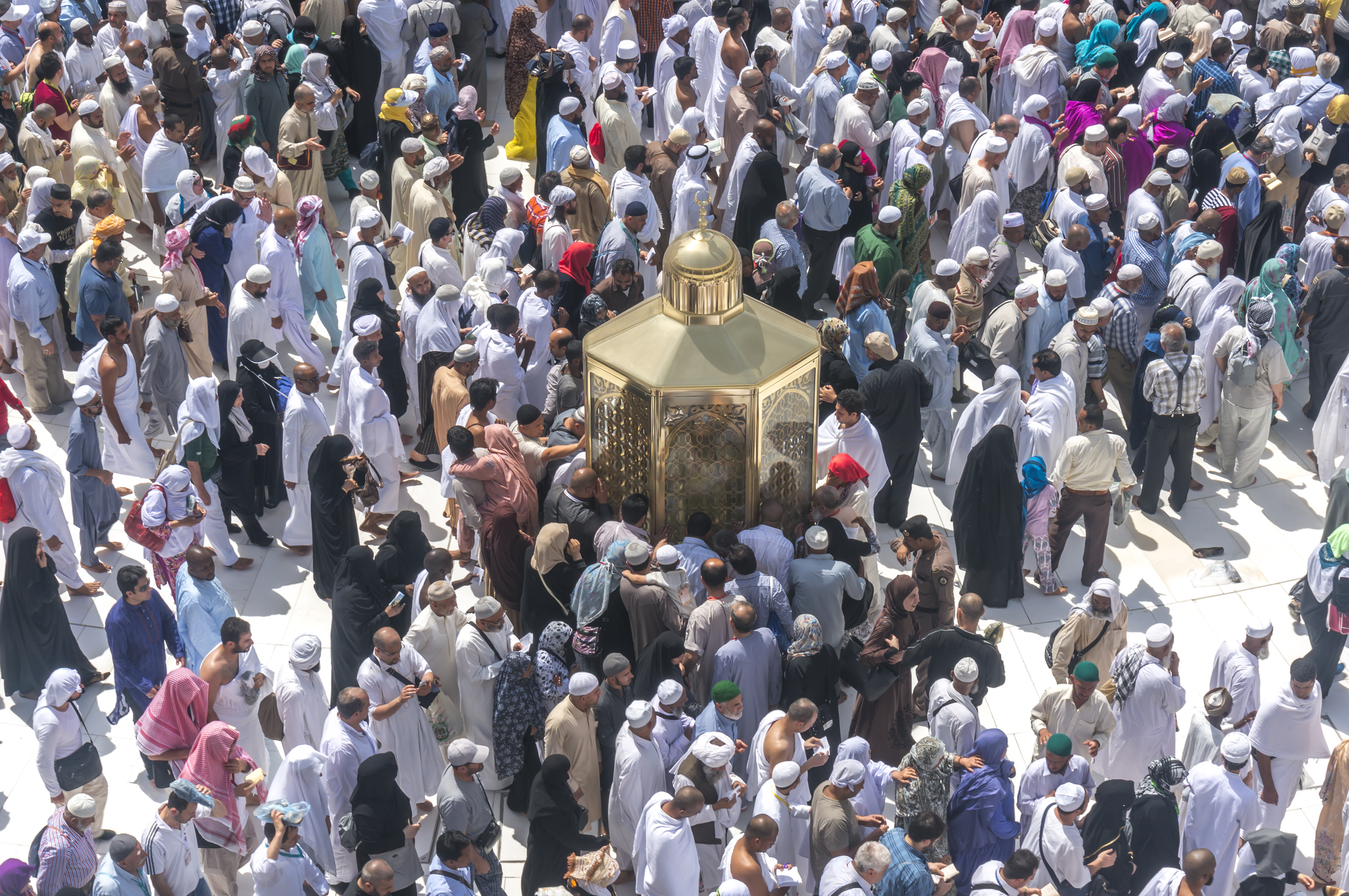 Hajj: Maqam Ibrahim


