
IslamiCity
Listen PodCasts, Live Quran, Watch Videos @VideoHub

Every year, Allah blesses us as Muslims with sacred seasons unlike others. The first ten nights and nine days of Dhul Hijjah are one of these blessings and sacred seasons. These are not ordinary days and nights in the Islamic calendar.
Rather, they are among the most virtuous, precious, and beloved days and nights in the sight of Allah Almighty. They are arriving soon carrying immense opportunities for worship, repentance, mercy, and spiritual renewal.
Across the world, Muslims welcome these blessed days with prayer, fasting, remembrance of Allah, charity, and preparation for Eid Al-Adha and the pilgrimage of Hajj. In a world overwhelmed by social media distraction, materialism, and endless routines, the ten days and nights of Dhul Hijjah offer Muslims a powerful opportunity to reconnect with Allah and rediscover the true essence of faith and blessings.
The spirit, status and value of these days are clearly emphasized in the teachings of our Prophet Muhammad (PBUH) who said: "There are no days in which righteous deeds are more beloved to Allah than these ten days. The companions asked, "Not even jihad for the sake of Allah?" He (PBUH) replied, "Not even jihad for the sake of Allah, except for a man who goes out with his life and wealth and returns with neither" (Sahih Al-Bukhari).
This statement upraises the first nine days of Dhul Hijjah above all other days of the year in terms of the virtue of good deeds performed during them. Allah Himself highlights their importance in the Qur'an when He says: "By the dawn and by the ten nights" (Surah Al-Fajr 89:1-2).
Many classical scholars interpreted these ten nights as referring to the first ten days of Dhul Hijjah, revealing their sacred spirit, status and value in Islam. These are days and nights in which the gates of mercy are opened widely, rewards are multiplied, and hearts are invited to return sincerely to their Creator. What makes these days and nights especially unique is that all major acts of worship are performed within them simultaneously. The prayer, fasting, charity, remembrance of Allah, Qur'an recitation, sacrifice, and Hajj all converge during this sacred period.
For this reason, the they become a unique spiritual journey for every Muslim, whether they are standing on the plains of Arafah during Hajj or worshipping quietly in their homes far from Makkah.
The spirit of these days and nights is deeply connected to the legacy of Prophet Ibrahim (PBUH) who remains one of the greatest examples of submission, sacrifice, and unwavering faith in Allah. When Allah commanded Ibrahim (PBUH) to sacrifice his beloved young son Ismail (PBUH), he obeyed without hesitation, trusting completely in the wisdom and mercy of his Lord.
Ismail (PBUH) himself responded with patience and obedience, displaying extraordinary faith at such a young age. Before the sacrifice could take place, Allah replaced Ismail (PBUH) with a ram and transformed this moment into an eternal symbol of devotion and surrender. Every year, Muslims commemorate this profound event during Eid Al-Adha through the act of sacrifice, remembering that true faith requires us to place Allah above all our worldly attachments, love and desires.
One of the most important acts encouraged during these blessed days is the remembrance of Allah. We should increase our recitation of Takbir, Tahmid, Tahlil, and Tasbih. It was narrated that the early Muslims would fill their homes, markets, and mosques with the sound of Takbir during these days, creating an atmosphere of worship and gratitude.
In modern times, when people are often consumed by worldly noise and digital distractions, remembering Allah becomes even more essential for inner peace and spiritual clarity. Fasting during the first nine days of Dhul Hijjah is also highly recommended, especially on the Day of Arafah, which is considered one of the greatest days of the entire year.
The Prophet (PBUH) said regarding fasting on the Day of Arafah: "It expiates the sins of the previous year and the coming year" (Sahih Muslim). This incredible promise reflects Allah's immense mercy toward us. A single sincere day of fasting can become a means for forgiveness covering two years of sins. The Day of Arafah is also the climax of Hajj, when millions of pilgrims gather in humility and devotion seeking Allah's forgiveness and mercy. It is a day filled with supplication, tears, repentance, and hope, as Allah frees countless souls from Hellfire and accepts sincere prayers. The act of sacrifice during Eid Al-Adha further reinforces the values of generosity, gratitude, and social solidarity.
Muslims who are financially able sacrifice an animal in remembrance of Prophet Ibrahim's obedience and distribute its meat among family members, neighbours, and the poor. The sacrifice is not merely a ritual involving animals; rather, it symbolizes our willingness to sacrifice selfishness, greed, arrogance, and attachment to worldly desires for the sake of Allah.
Last but not least, I would like to call and remind all our Muslim brothers and sisters around the world that the first ten nights and days of Dhul Hijjah are a universal call to make an urgent spiritual leap of transformation. As these blessed days arrive each year, every Muslim is gifted with a priceless opportunity that may never return again. No one knows whether we will witness again another Dhul Hijjah in our lifetime.
For this reason, we should strive to fill every moment of these days and nights with worship, repentance, kindness, and sincere devotion. Through fasting, prayer, charity, remembrance, sacrifice, and good character, we can attain Allah's mercy and draw closer to Him. May Allah accept our deeds, forgive our sins, bless the pilgrims performing Hajj and allow all Muslims to benefit fully from the sacred blessings of the first ten nights and nine days.
Dr Hamoud Yahya Ahmed Mohsen, Assistant Professor of Literature at the Department of English Language and Literature, AbdulHamid AbuSulayman Kulliyyah of Islamic Revealed Knowledge and Human Sciences, International Islamic University Malaysia (IIUM). Malaysia.
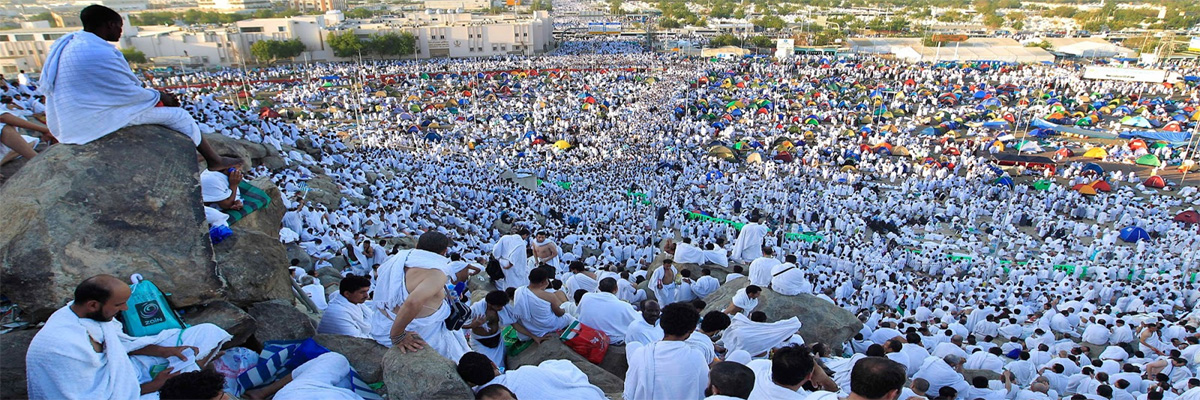 Fasting on the Day of Arafah


