
IslamiCity
Listen PodCasts, Live Quran, Watch Videos @VideoHub

We live in an age of relentless critique of inherited ideas. This freedom has been amplified by the rise of social media, where everyone is an author and every voice enjoys the privilege of publication. There is little scrutiny of whether a person is qualified to comment on a subject or not. After 9/11, Islam in particular became the target of intense vilification, to the extent that even Muslims themselves have grown uncertain about their own origins.
Furthermore, the last two decades have produced an army of outspoken, bold, charismatic, articulate, educated, and accomplished atheists who have left no stone unturned in placing religion under the microscope. While some adopt a sophisticated tone, many do not hesitate to ridicule faith-even at the cost of deeply offending believers.
Whether God exists or not, whether science stands in conflict with religion, or whether Islam can coexist with the West-these questions lie outside the scope of this essay. Here, we approach the discussion from an altogether different angle: a perspective often overlooked, yet deeply personal to the author. Rather than examining the academic dimension, we shall explore the experiential one.
If we wish to determine whether the roots of something are true, one method is to examine its fruits. In the same way, if we are to judge an ideology, philosophy, or worldview, we must ask: What are the consequences of embracing it? What kind of human beings did it produce? How did they think? How did they act? How did they interpret the events of their lives? How did they face adversity? How did they respond to victory? What was their relationship with God? How did they treat others? What were their priorities? How did they structure their hierarchy of life's objectives? Did their beliefs elevate their moral standards? Did their values refine their ethics? Did they undergo a genuine spiritual transformation?
Instead of debating scriptural interpretations or questioning the authenticity of prophetic sayings, we shall examine the lives of followers as reflected in their biographies. Are they worthy of mention in the annals of history? Can we learn something profound from them? Are they deserving of imitation? Do they merit reverence?
Ali ibn Abi Talib (RZA) was the fourth caliph of Islam. He was not a prophet and therefore not infallible. Yet when we study the accounts of his life, the mind is astonished at how a human being could ascend to such heights of righteousness without the mantle of prophethood. His entire life stands as a living embodiment of virtue, yet a few examples will suffice to illustrate our point.
Through spiritual insight, he knew in advance who would ultimately kill him. On one occasion, while sitting with his companions, his future assassins passed by. He informed his companions that these very men would be responsible for his death. Naturally, they asked why he did not eliminate them if he possessed such knowledge. It was a logical question-one anyone might have asked. His answer was simple: because God had not willed it.
This response captures the essence of Islam-submission to the will of God. If we knew someone intended to kill us, how far would we go to prevent it? Yet the Lion of God, whose courage needs no introduction, took no action to save his life, because he understood that his death at a specific time and by specific individuals was divinely ordained. Before the decree of God, he entertained no second thought. Eventually, he was martyred by those very individuals.
Throughout his life, he practiced profound renunciation of worldly comforts. Once, there was nothing in the house to eat for himself, his wife Fatimah (RZA), and his sons Hasan ibn Ali (RZA) and Husayn ibn Ali (RZA). At that moment, a needy person knocked at their door. The only valuable possession they had was Fatimah's shawl. Without hesitation, she sold it in the marketplace and gave the money to the needy man. Neither she nor her husband nor their sons uttered a complaint. All four surrendered to the divine will and remained content despite the absence of basic necessities.
To the modern individual of 2026, such accounts may appear like scenes from a novel or verses from poetry. Yet they are documented episodes from the lives of the earliest Muslims. The unavoidable question arises: if religion is a delusion-and if Islam is, as Sam Harris calls it, "a mother lode of bad ideas"-how could it produce such extraordinary human excellence? How can a false belief generate such moral greatness?
One may debate God's existence, the relationship between science and religion, or the compatibility between Islam and the West. Yet who can deny that those whose lives were infused with Islam were great human beings-by Islamic or Western standards alike?
When atheists such as Richard Dawkins write bestselling books like The God Delusion, they and their readers often remain unaware of this moral, ethical, and spiritual dimension. One must ask: can a secular atheistic worldview produce human beings possessing even a fraction of the moral refinement exhibited by the companions of Muhammad (PBUH)? And if such elevation was attained by the students, what must have been the stature of their teacher?
If Muhammad (PBUH) had been merely a political leader, reformer, warrior, or intellectual-but not a prophet-he would have displayed triumph and vengeance upon the conquest of Makkah. Instead, he entered the city with his head bowed in humility before God and forgave his fiercest enemies without hesitation. This is not the conduct of a man seeking worldly dominance; it is the behavior of one who has attained unmatched moral and spiritual heights. And if the beliefs and principles that shaped such a character are called a delusion, then perhaps humanity needs that "delusion."
No other alleged delusion in history has served such an immense purpose. The lives of the first Muslims testify that what they experienced in the companionship of their mentor was nothing short of an inner revolution. It was a transformation of the soul, a lifting of veils, a quenching of spiritual thirst, a plunge into the ocean of divine mysteries. Such depth cannot reasonably be dismissed as delusion.
A delusion may convince a person of falsehood, but it cannot elevate him above his lower instincts. It may serve the ego, but it cannot conquer it. It may inflate desires, but it cannot inspire sacrifice for a higher cause.
It is often said that a person's true nature is revealed in how he treats those beneath him. Zayd ibn Harithah (RZA) had been sold into slavery as a child and later adopted by the Prophet (PBUH). When his biological parents eventually located him, Muhammad (PBUH) gave him the freedom to choose between returning to them or remaining with him. Zayd (RZA) chose to remain. Such a choice reflects the Prophet's (PBUH) character. Was Zayd (RZA) also deluded?
This enlightenment did not end with the first generation. It continued among the descendants, especially within the Ahl al-Bayt (family of the Prophet (PBUH)), and through countless saints and scholars who preserved a legacy of luminous intellects, purified hearts, and beautiful souls.
Yet the discourse does not end here. Why do we not witness such greatness today? The answer is simple: religiosity in our age is often reduced to ritual performance and outward conformity. In the Prophet's time, a person was considered religious only after undergoing deep spiritual purification.
Today, Muslims frequently neglect this inner dimension and focus solely on external observances. Such superficiality produces little moral elevation and, in turn, contributes to the perception that religion is hollow. When religiosity lacks fragrance, it strengthens the illusion that faith is a delusion.
Here enters Sufism (Tasawwuf). The inheritors of the Prophet's inner states are the Sufis-those who understand religion as inward transformation rather than outward form. They concern themselves with the world within. They pursue wisdom essential for comprehending the Prophet's true character. Their insights allow them to do justice to the depths of Islam.
When sincere seekers encounter genuine Sufis, they often glimpse the Prophet's character reflected in their conduct. In them, knowledge and action harmonize; words and deeds align; inner states correspond with outward expressions. There is coherence, authenticity, and equilibrium. That is why the Sufi possesses a magnetism that mere preaching cannot generate.
Since Sufism demands heightened consciousness, it is widely misunderstood and criticized. Many so-called scholars dismiss it without experiencing its depths. Yet true saints find no contradiction between the Qur'an and authentic Sufi teachings. The difference between the layman and the saint is gnosis-marifah-the unveiling of divine reality.
Ironically, while some Muslims refute Sufism, Western scholars increasingly study figures like Ibn Arabi and Rumi, recognizing their intellectual and spiritual depth-even if only academically. The pearls they produced centuries ago continue to answer questions arising in a technological age shaped by AI.
A skeptic may ask: among so many religions and philosophies, why Islam? A closer examination reveals that most systems emphasize limited domains of existence. Only a comprehensive code of life encompassing intellectual, spiritual, physical, psychological, social, political, and economic dimensions merits the description "divine." Islam integrates all these aspects while balancing worldly life with the hereafter. Thus an activist like Abul Ala Maududi (RHT) and an ascetic like Rabia al-Basri (RHT) both draw inspiration from the same source.
So what is religion? Delusion to the atheist, belief to the novice, intellect to the believer, and metamorphosis to the Sufi.
In the blessed month of Ramadan, may we pray for this metamorphosis-for every human being carries a divine spark within. Under the guidance of authentic spiritual masters, this hidden jewel may be polished. Then Ibn Arabi the philosopher becomes Ibn Arabi the mystic. Rumi the scholar becomes Rumi the lover. Muhammad Iqbal the poet becomes Iqbal the Sufi. Wasif Ali Wasif the writer becomes Wasif the saint. Azhar Waheed the thinker becomes Azhar the gnostic (arif).
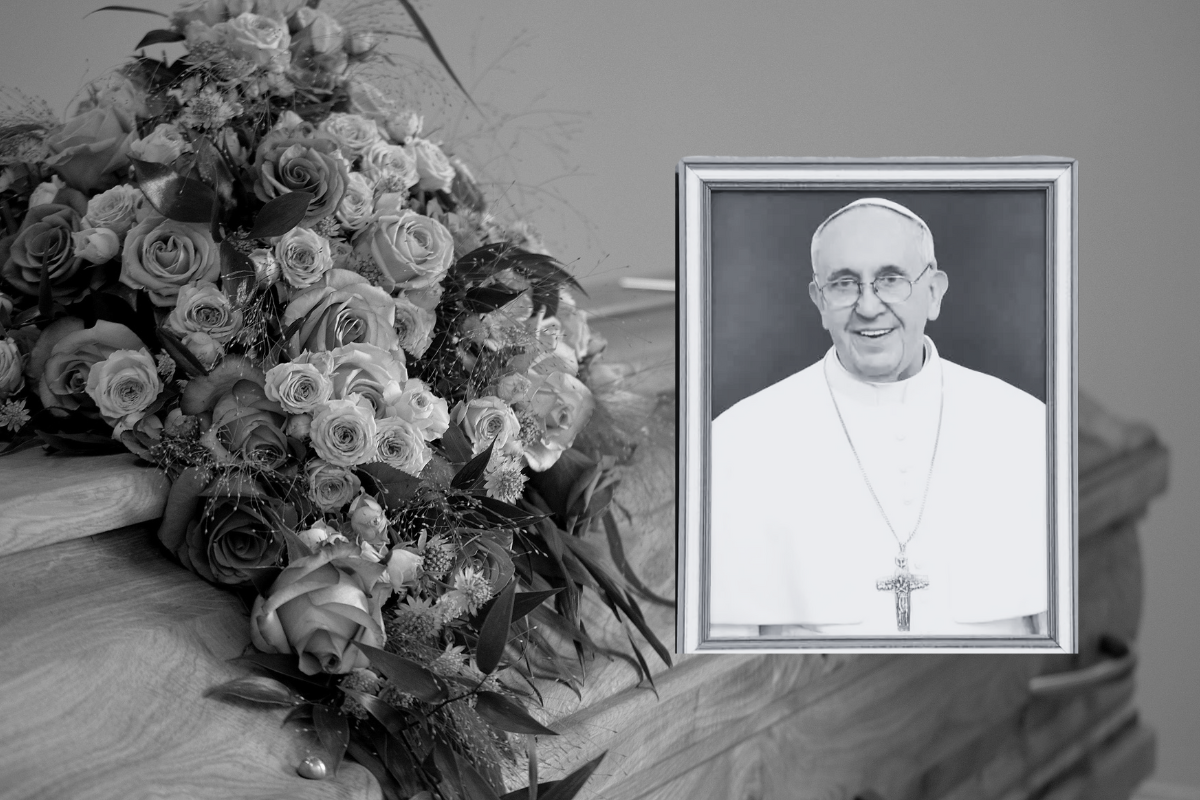 Pope Francis Has Died - A Muslim Reflects on His Legacy


