
IslamiCity
Listen PodCasts, Live Quran, Watch Videos @VideoHub

History does not collapse in a single moment. It loosens slowly, almost imperceptibly, until what once seemed unshakable begins to feel provisional. Power rarely disappears when its armies weaken; it fades when belief in its legitimacy erodes.
For nearly a quarter century, a chain of crises has been quietly redrawing the architecture of global authority. None of these events alone signaled the end of an era. Together, they have altered how much of the world perceives the West and its claim to moral centrality.
The attacks of September 2001 were a genuine rupture, but the era that followed reshaped international life in ways still unfolding. Military interventions expanded, legal exceptions multiplied, and systems of surveillance became normalized. A language of universal rights continued to guide official discourse, yet it increasingly coexisted with policies justified as necessary departures from those same principles. A gap opened between declared values and applied practices. In the realm of geopolitics, such gaps do not remain invisible.
The financial crisis of 2008 deepened this fracture. Entire populations absorbed the shock of collapse while major institutions were stabilized by public resources. Trust, once strained, does not fully recover. It accumulates as memory, shaping how later crises are interpreted. What had once appeared as a self-correcting system began to look, to many observers, like one capable of protecting its own centers of power.
Within Western societies themselves, the following decade revealed an unexpected fragility. Political polarization intensified, confidence in institutions declined, and narratives of democratic stability grew less convincing. The rise of populist movements and the tensions surrounding recent elections made visible what had long been building beneath the surface: a crisis not only of governance but of coherence. A system that had long projected stability outward was now confronting its own internal contradictions.
The pandemic further exposed structural limits. Inequalities in access to care and vaccines, fragmented international coordination, and the strain placed on public systems revealed how thin the veneer of global solidarity could become under pressure. As Albert Camus once observed, great crises reveal both the strength and the limits of human institutions. They also shape how future actions are judged.
Then came Gaza. The devastation that followed the attacks of October 2023 reverberated far beyond the region. Images of destruction, the scale of civilian suffering, and the paralysis of international mechanisms produced a profound shift in global perception. International courts were engaged, and legal debates over grave violations of international law-including allegations under the Genocide Convention-entered the formal arena of global justice. For many across the Global South, the events in Gaza crystallized a long-standing sense of asymmetry: principles invoked in one context, applied differently in another. Whether expressed in legal terms or moral language, this perception has become a geopolitical force in its own right.
Perception is not a trivial matter in international affairs. It shapes alliances, public opinion, and the willingness of nations to accept the authority of those who claim to lead. In many parts of the Middle East, Africa, and Asia, recent decades are interpreted through a deeper historical memory. Military interventions, strategic alliances, and recurring narratives of civilizational struggle have revived older symbolic frames. This does not mean contemporary conflicts are literal continuations of medieval campaigns. It means that history, once evoked, acquires a life of its own in the collective imagination. And in geopolitics, imagination often precedes reality.
Meanwhile, scandals involving prominent figures and transnational elites have eroded public trust further. The revelations surrounding Jeffrey Epstein reinforced the perception that networks of influence can operate beyond the reach of ordinary accountability. The issue extends beyond a single individual. It touches a broader anxiety about the transparency and integrity of systems that claim legitimacy while appearing opaque to those they govern.
All of this unfolds within a shifting global landscape. Economic and political influence is dispersing. New alliances are forming across Asia, Africa, and the Middle East. The rise of multiple centers of power does not mean the West has lost its influence. It means that influence is no longer singular, and authority no longer uncontested. A multipolar world is not an abstract theory; it is an emerging reality.
Empires rarely recognize the moment when their narrative ceases to persuade. They continue to speak in the language of universality even as their audience grows more skeptical. Since the early twenty-first century, a succession of crises-security, financial, political, sanitary, and moral-has gradually weakened the coherence of the Western story about itself. Gaza has become a focal point in that evolution, intensifying debates about law, justice, and consistency in international conduct. For many observers, the scale of destruction and suffering there has crossed a threshold that forces the world to ask whether the principles that once underpinned the international order still hold meaning in practice.
The question is not whether the West will vanish. Civilizations do not disappear overnight. The question is whether it can reconcile its proclaimed ideals with its perceived actions. Arnold Toynbee once suggested that civilizations fall not because they are destroyed from without, but because they fail to respond creatively to the challenges before them. Legitimacy, once eroded, is difficult to restore.
What we are witnessing may not be the collapse of a system, but the quiet end of an illusion: the belief that moral authority can remain intact while its application appears uneven. Power endures as long as the world believes in its justification. When that belief begins to falter, history does not announce the change with a dramatic break. It simply turns the page.
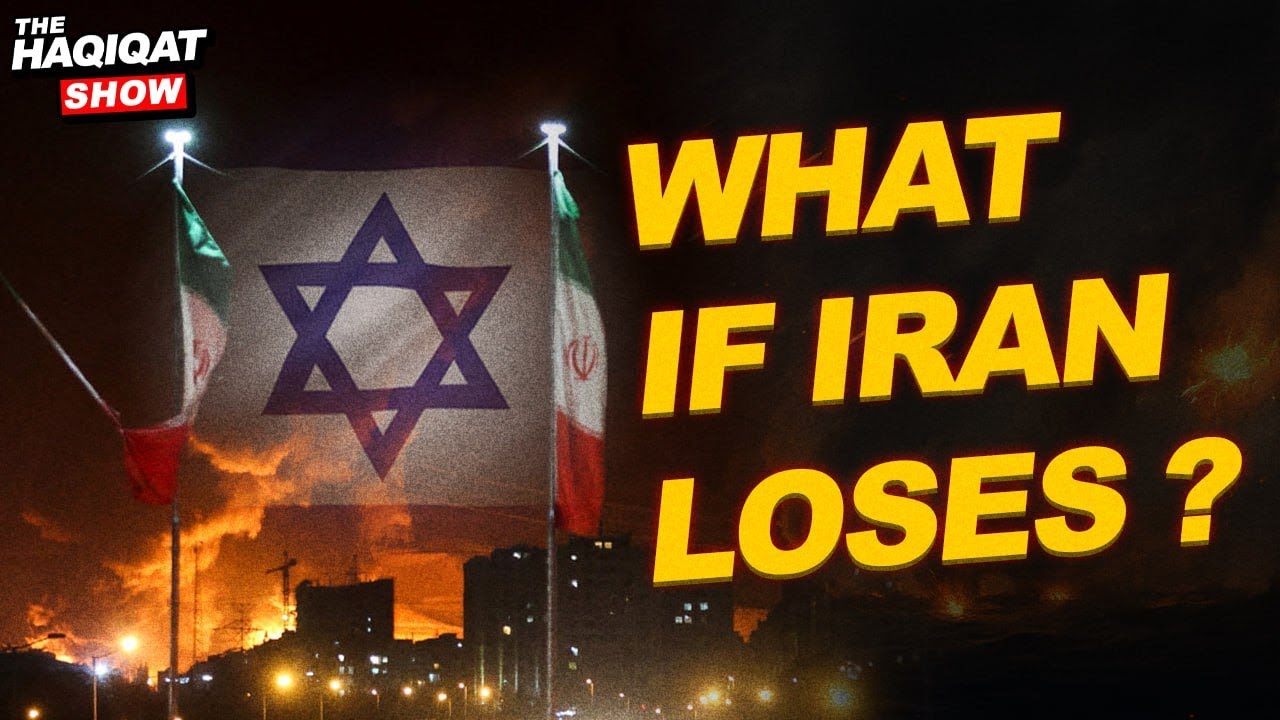 What Will Happen to the Muslim World If Iran Is Defeated?


