
IslamiCity
Listen PodCasts, Live Quran, Watch Videos @VideoHub

As 2025 draws to a close, a quiet but powerful moment unfolds across the Muslim world. It does not always happen in masajid or public gatherings. Often, it happens in silence-late at night, scrolling through reflections online, or alone with one's thoughts after salah.
Muslims everywhere are asking the same question: What am I taking into the next year-and what can no longer come with me?
Across social platforms, discussion forums, and personal reflections, recurring themes emerge. They reveal not just resolutions, but a deeper collective awareness-one rooted in accountability, sincerity, and the desire to return to Allah with a lighter heart.
One of the most common admissions shared is the struggle with consistency in worship. Missed prayers. Long gaps without Qur'an. Dhikr that fades during busy days.
This struggle is not new, but the honesty surrounding it is striking. Many are no longer pretending they are fine-they are acknowledging the gaps.
The Prophet ﷺ said:
"The most beloved deeds to Allah are those that are consistent, even if they are small."
Leaving behind inconsistency does not mean expecting perfection. It means choosing small, sustainable acts of worship and refusing to let guilt replace action.
Another recurring theme is exhaustion-mental, emotional, and spiritual-caused by endless scrolling and comparison.
Many admit that social media has stolen their peace, distorted their self-worth, and consumed time that could have been spent in remembrance or rest.
Allah reminds us:
"Know that the life of this world is but amusement and diversion..."
(Surah Al-Hadid, 57:20)
Leaving this behind does not require abandoning technology entirely. It requires intention-using tools without letting them use us.
Countless reflections speak of emotional heaviness caused by grudges, constant conflict, or relationships that drain the soul.
Islam does not ask believers to remain in harm, nor does it encourage carrying resentment indefinitely. Forgiveness is not forgetting-it is freeing the heart.
The Prophet ﷺ said:
"No one forgives except that Allah increases them in honor." (Sahih Muslim 2588)
Many Muslims are entering 2026 choosing peace over pride.
Perhaps the most painful burden people are leaving behind is despair-feeling unworthy of Allah's mercy because of past mistakes.
But Allah's response to despair is clear:
"Do not despair of the mercy of Allah. Indeed, Allah forgives all sins."
(Surah Az-Zumar, 39:53)
Carrying guilt without repentance paralyzes the soul. Leaving it behind allows for healing and growth.
A powerful shift is happening. Muslims are no longer chasing grand, unrealistic resolutions. Instead, they are choosing sincerity.
The Prophet ﷺ taught:
"Actions are judged by intentions." (Sunan Abi Dawud 2201)
A few minutes of Qur'an daily. One prayer improved at a time. One bad habit replaced slowly. This is the path many are choosing.
Gratitude is emerging as a central intention-not just saying Alhamdulillah, but living it.
Allah says:
"If you are grateful, I will surely increase you."
(Surah Ibrahim, 14:7)
Gratitude reframes life. It softens hardship and strengthens faith.
Many Muslims are choosing to enter the new year without old wounds. Forgiving others. Forgiving themselves. Letting Allah handle what they cannot.
This is not weakness-it is spiritual maturity.
Above all, Muslims are carrying one central intention into 2026: returning to Allah.
Not as perfect servants-but as sincere ones.
Allah promises:
"So remember Me; I will remember you."
(Surah Al-Baqarah, 2:152)
Leaving something behind is not a loss. Often, it is the very thing that allows light to enter.
As the year changes, the lesson is clear: Growth is not loud. Transformation is not instant. And guidance is not earned through perfection-but through humility, effort, and trust in Allah.
May we enter 2026 with lighter hearts, clearer intentions, and stronger connection to our Creator.
"Our Lord, grant us good in this world and good in the Hereafter, and protect us from the punishment of the Fire."


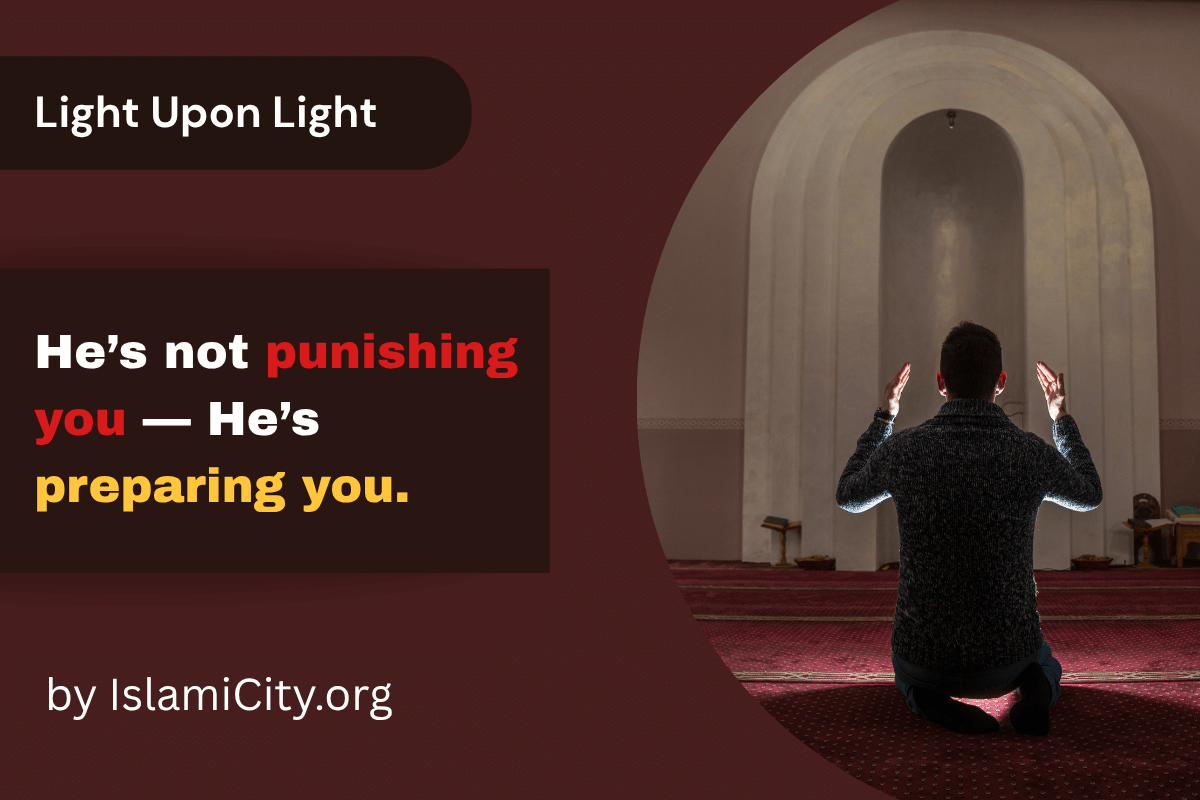 How Allah Breaks You Before He Builds You - Light Upon Light by IslamiCity ...