
IslamiCity
Listen PodCasts, Live Quran, Watch Videos @VideoHub

War has the power to crush buildings, bury memories, and fracture the very rhythm of life, yet it can never fully extinguish that sacred spark Allah places in every human heart-the yearning to learn, to understand, to rise above the ruins.
Recently, my dear friend Dr. Iyad M. Y. Eid from the Department of Sociology and Anthropology at IIUM sent me videos from Gaza that shook me to my core. There, in the midst of fire, genocide, hunger, and devastation, he has opened a university-not made of concrete but made of resolve, not powered by electricity but by conviction.
The Ibn Khaldun International WAQF College for Sociology, established on 20 September 2025, stands as a living defiance to despair, a fragile yet glowing lantern in a night that has lasted too long. Its purpose is simple yet revolutionary: to give Palestinian youth, and eventually students worldwide, the chance to pursue higher education without financial barriers, even when the world around them is collapsing.
It is difficult to imagine that in a land where schools have been obliterated, where libraries have turned to dust, where entire families sleep under open skies, students still line up for English classes. Yet this is exactly what is happening.
One hundred sixty Palestinian boys and girls have officially completed their first English level, sitting for an exam on 21 November 2025-a milestone that the world might consider small, but in their context, it is monumental. Over five hundred more wait eagerly for their chance, hoping that a classroom will open, that a volunteer teacher will arrive, that a few textbooks will be found.
Watching those videos, my heart trembled. I saw young faces filled not with fear but with an eagerness that felt almost miraculous. I heard their English phrases-simple, hopeful, spoken with accents shaped by pain but elevated by determination. They smiled, they laughed, they leaned forward to answer questions, their eyes shining with something rare: the belief that they still have a future, that learning is their lifeline, that knowledge is a shield and a promise.
As I watched, tears blurred my vision, because these images awakened a part of my soul I thought had healed. They took me back to the days of my own childhood-two long years spent in a refugee camp on the desolate border between Iraq and Iran. I remember the endlessness of time there. Days moved like wounded animals, dragging their weight through the dust. Every morning, I prayed that life would pause until I could escape, until I could breathe air that did not smell of fear.
And above all, I longed for learning. I longed for someone to come and give meaning to the hours, to teach us even one new word, one new skill, one new idea. But we had almost nothing-only occasional visits from UN workers or volunteers who organized short programs, and I would run to attend, hungry not for food but for knowledge. That hunger never left me. So when I see these young Palestinians, learning under the shadow of warplanes, writing with broken pencils on makeshift desks, I see my younger self reflected in them.
And I understand, in a way that goes beyond words, the magnitude of what Dr. Iyad has done. In a place where everything screams "stop," he has whispered "continue." In a place where destruction is the loudest language, he has chosen the silent language of hope. His university is not merely a building; it is a spiritual act.
It is a lived interpretation of the profound hadith of the Prophet Muhammad ﷺ: "If the Last Hour comes while one of you has a palm seedling in his hand, which he can plant before it falls, let him plant it."
This hadith is not metaphorical-it is literal. It commands us that even as the universe collapses, even as the final trumpet is blown, the believer does not succumb to paralysis. He plants, he builds, he teaches, he continues. Because action, even in the face of annihilation, is a testimony of faith. What struck me most about the students in the videos is not just their courage-it is their dignity. They have lost homes, parents, siblings, schools, yet they still choose the path of learning.
It is as if they are telling the world: "You can destroy our buildings, but you cannot destroy our minds." Their determination reveals a truth we often forget: education during war is not a luxury. It is an act of survival. It is the rope that ties a child to the belief that tomorrow is worth waiting for. And this leads me to a painful yet necessary question-one directed at myself, at you, and at anyone reading this, whether scholar or ordinary citizen. Have we truly appreciated the ni'mah, the blessings, that Allah has bestowed upon us?
We live in peace so deep that we have forgotten it is a blessing. Our children attend school without wondering if the building will still stand tomorrow. We drink water without fear. We open our laptops without hearing sirens. And yet, we complain. We take safety as a right,
not a gift. War zones remind us that peace is not the natural condition of humanity; conflict is. Peace is a miracle we have grown blind to. The second question we must confront is harder: What is our responsibility toward those who suffer while we sleep in comfort? Allah commands us to be rahmah-mercy-for one another.
But mercy is not merely charity, nor is it a fleeting expression of sympathy. The greatest form of mercy is to share knowledge, because knowledge is the only weapon that defends without shedding blood, the only medicine that heals without pain, the only inheritance that neither war nor occupation can confiscate. And here, the Qur'an warns us with an image that is as sharp as it is humbling:
كَمَثَلِ الْحِمَارِ يَحْمِلُ اَسْفَارًاۗ
-like a donkey carrying books. This verse describes those who possess knowledge but do not benefit from it, nor allow it to benefit others. They carry the weight of learning without its light, its guidance, or its responsibility.
This Qur'anic metaphor confronts us directly: What value does our knowledge have if it never reaches those who need it most, especially those whose worlds have been shattered by war? To hoard knowledge in times of crisis is to betray its purpose.
When we transfer knowledge, we plant seeds in souls that war cannot uproot. We give tools for rebuilding, for leading, for preserving heritage, for resisting injustice with intellect rather than mere survival.
Whether the conflict is in Gaza, Sudan, Yemen, Ukraine, Myanmar, or any other wounded corner of this earth, our responsibility remains the same: to teach, to guide, to uplift, to support, and to remind the broken-through action, not rhetoric-that the world has not abandoned them. Not everyone can go to Gaza, but everyone can contribute. Some can teach online. Some can donate books. Some can provide resources. Some can raise awareness. Some can pray sincerely. Each act is a brick in rebuilding what war has attempted to erase.
Education in wartime is a declaration of existence. It is the soul refusing to surrender. It is the child holding a pencil as if it were a sword of light. As I think of those students-smiling despite the rubble around them-I am reminded that knowledge is not only power. It is salvation. It is the breath that keeps a people alive.
And perhaps the greatest miracle is this: while war tries to teach them fear, they choose instead to learn hope. They choose to learn English. They choose to believe in tomorrow. And in that choice, they teach the world a lesson we desperately need to remember: that even in the darkest, most suffocating night, the human spirit still turns-instinctively, unshakeably-toward the light.
Dr. Abdul Wahed Jalal Nori is an academic in the Department of Fundamental and Inter-Disciplinary Studies, AbdulHamid AbuSulayman Kulliyyah of Islamic Revealed Knowledge and Human Sciences, International Islamic University Malaysia
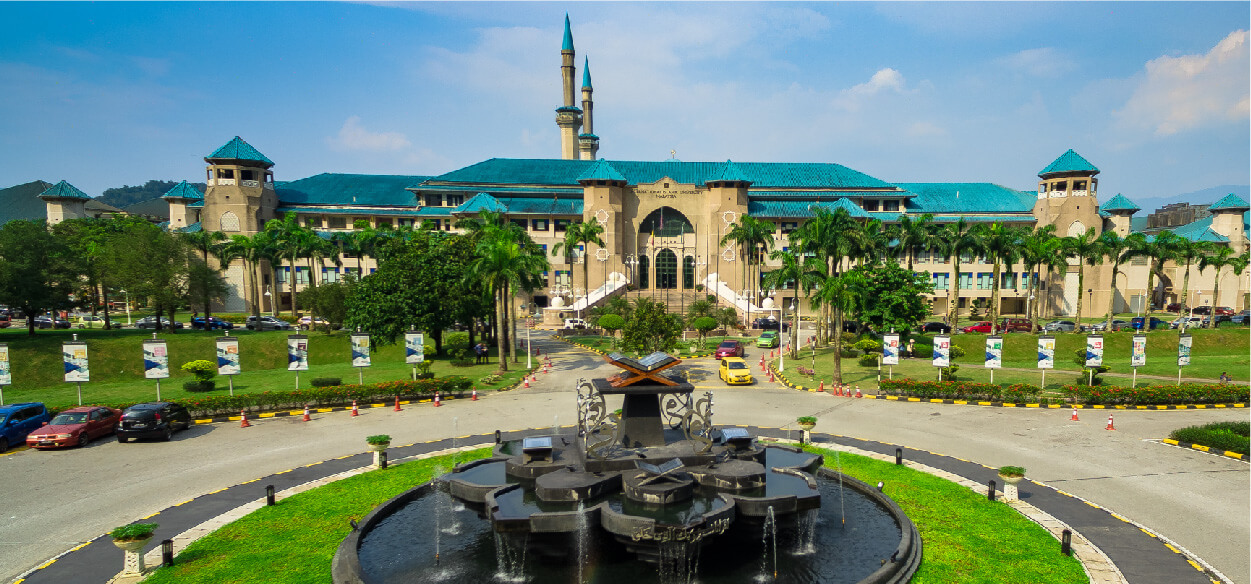 IIUM: Forging Leaders, Shaping Futures


