
IslamiCity
Listen PodCasts, Live Quran, Watch Videos @VideoHub

The United Nations Educational, Scientific and Cultural Organization (UNESCO) is a specialized agency of the United Nations dedicated to promoting peace and international cooperation in education, science, and culture. It provides a platform for global collaboration by establishing international standards and implementing programs aimed at building peace and fostering a more sustainable future.
UNESCO's work spans several key areas, including ensuring quality education for all and nurturing global citizenship. It supports scientific initiatives and policy development that advance progress and international cooperation, particularly in areas such as climate change and clean water. Additionally, UNESCO is responsible for safeguarding cultural heritage, promoting cultural diversity, and strengthening relationships among nations through shared values. The organization also upholds freedom of expression and encourages the free flow of ideas and knowledge.
The core work of UNESCO is deliberated in its General Conference, which is conducted every two years to determine the policies and main activities of the organization. The conference is attended by representatives of UNESCO's member states, associate members, as well as observers from non-member states, intergovernmental organizations, and non-governmental organizations (NGOs).
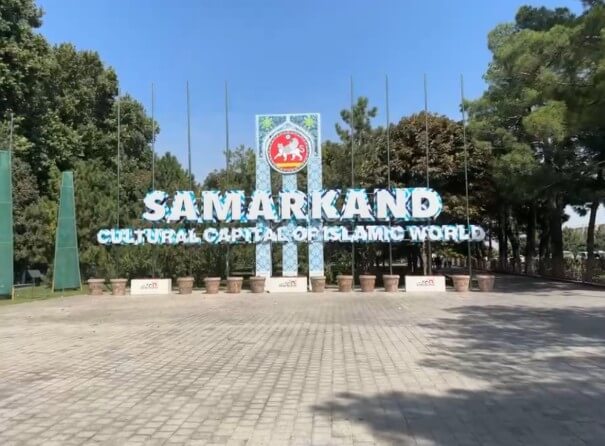
In 2025, the ancient city of Samarkand, Uzbekistan, became the center of global dialogue and cultural diplomacy as it hosted the 43rd session of the UNESCO General Conference. This historic event marked the first time in over four decades that the conference was held outside Paris, symbolizing a shift toward inclusivity and regional representation. The General Assembly, held from 30 October to 13 November 2025, was attended by many world leaders, including Uzbekistan's President Shavkat Mirziyoyev, who welcomed the delegates to Samarkand which is a city that has earned its place in human history as a center of humanistic ideas, unique knowledge, and inter-civilizational dialogue. More than simply hosting the event, Uzbekistan's role conveyed a deeper philosophical message, namely the revival of humanism rooted in the Silk Road's legacy of intercultural exchange, tolerance, and the pursuit of knowledge.
Samarkand's many places of interest warmly welcomed the conference delegates. The city's architecture, from the Registan to the Shah-i-Zinda necropolis, served as a living backdrop to the conference, reminding delegates of the enduring power of cultural heritage to inspire unity and peace. These remarkable sites further impressed upon them the significant roles the city has long played in education, culture, scientific development, and human civilization.
Humanism in Action: Themes of the 43rd Session
The 43rd UNESCO General Conference was not just a formal or symbolic event but a gathering where real, practical plans and future actions were discussed and decided. At the conference, Uzbekistan's emphasis on humanism was reflected in several key themes, namely:
Samarkand was indeed honored to host the UNESCO General Conference and proudly viewed it as an opportunity to contribute positively to the world and its communities, demonstrating its commitment to global causes such as culture, education, and heritage. Hosting the event has elevated Uzbekistan's global profile as a mediator and cultural leader. The country also demonstrated its dedication to multilateralism, providing a model for how emerging nations can contribute meaningfully to global governance. Overall, the conference strengthens Uzbekistan's international reputation and underscores its role in promoting culture and cooperation.
Looking ahead, Uzbekistan is poised to become a regional hub for education, heritage research, and intercultural dialogue. The country's investments in digital infrastructure, academic exchange, and cultural tourism reflect its commitment to these humanist ideals.
Uzbekistan's role as host of the 43rd UNESCO General Conference was more than symbolic and marked a transformative event. By placing humanism at the center of global discourse, Uzbekistan reminded the world that peace begins with understanding, and understanding begins with culture. In the shadow of Samarkand's ancient domes, a new vision of global cooperation emerged, the one that honors the past while embracing the future.
In conclusion, Uzbekistan is rapidly becoming a regional center for education, culture, and science, reflecting the vision articulated by President Shavkat Mirziyoyev in his address at the 80th session of the United Nations General Assembly. His strategic vision for New Uzbekistan emphasizes prosperity for its people, regional peace, and global solidarity. By linking national development with global responsibility, the country is establishing itself not only as a reforming state but also as a proactive partner in addressing humanity's pressing challenges, from poverty reduction and education reform to climate change, conflict resolution, and intercultural dialogue. Uzbekistan's message is clear, that the future of humanity must be guided by dignity, cooperation, and collective responsibility.
Assoc. Prof. Dr. Otabek Mukhammadiev is Deputy Director of Imam Bukhari International Scientific Research Center, Samarkand, Uzbekistan
Shukran Abd Rahman is a Professor of Industrial and Organizational Psychology at the Department of Psychology, AbdulHamid AbuSulayman Kulliyyah of Islamic Revealed Knowledge and Human Sciences, International Islamic University Malaysia. He was a Fellow Researcher at the Imam Bukhari International Scientific Research Center, Samarkand, Uzbekistan.
 Palestinian flag over UNESCO: A call for more action


