
IslamiCity
Listen PodCasts, Live Quran, Watch Videos @VideoHub

In every generation, hearts search for direction. The pace of modern life has left many Muslims yearning for calm, clarity, and authenticity, a way to live with faith amid confusion. The answer has always been close: in the life of the Messenger of Allah ﷺ. His story is not a relic of the past; it is the living map of divine guidance. To know his Sīrah is to walk his path.
What is Sīrah?
The word Sīrah (سيرة) comes from the Arabic root sāra - yasīru (سارَ - يسيرُ), meaning "to travel" or "to journey." It signifies a path or way of life, the course one takes through this world. Technically, Sīrah refers to the biography of the Prophet Muhammad ﷺ: his words, actions, tacit approvals, physical appearance, character (akhlāq), and life experiences from birth to death. Yet it is more than history; it is revelation in motion, divine guidance lived, practiced, and exemplified.
When the Qur'an was revealed, it came into his life, shaping his responses, consoling his grief, and illuminating his choices. Every verse descended into context. Through the Sīrah, the Qur'an becomes real, visible, human.
Scholars also use the term Fiqh al-Sīrah, the understanding (fiqh) of the Prophet's life. It means studying events not as distant facts, but as lessons full of wisdom. It is to ask: What does this moment in his life teach me about patience, leadership, or compassion today?
The Prophet ﷺ as the Living Qur'an
ʿĀ'ishah رضي الله عنها once described the Messenger of Allah ﷺ in a single, luminous phrase:
كَانَ خُلُقُهُ الْقُرْآنَ
"His character was the Qur'an." (Ṣaḥīḥ Muslim, 746)
This means that his conduct reflected the very teachings of the Qur'an; he lived by its commands, avoided its prohibitions, and exemplified its manners. He was not the Qur'an itself, but the most perfect human expression of its guidance.
To observe his Sīrah is therefore to see revelation translated into life, mercy in action, humility in leadership, and justice in daily dealings. Through him, the words of Allah were not only recited but realised, shaping a model of balance, forgiveness, and steadfast truth.
Why the Sīrah Matters Today?
In an age when morality is fragmented and examples are fleeting, the Sīrah anchors us to something constant. It offers clarity when ideology divides, and compassion when the world grows harsh.
Fiqh al-Sīrah: From Knowledge to Transformation
A true understanding of Sīrah is not merely memorising events; it is living their meaning. When the Prophet ﷺ forgave the people of Ṭā'if after they rejected him, he taught us forgiveness born from strength, not weakness. When he shared food with the poor, he taught that generosity begins in the home. When he smiled even in hardship, he showed that hope is an act of faith.
Fiqh al-Sīrah moves us from information to transformation. It trains the heart to see divine wisdom in every turn of history.
The Path Forward
It was narrated from 'Abdur-Rahman bin 'Amr As-Sulami that: He heard Al-'Irbad bin Sariyah say: The Messenger of Allah ﷺ delivered a moving speech to us which made our eyes flow with tears and made our hearts melt. We said: 'O Messenger of Allah. This is a speech of farewell. What did you enjoin upon us?' He ﷺ said:
"I am leaving you upon a (path of) brightness whose night is like its day. No one will deviate from it after I am gone but one who is doomed. Whoever among you lives will see great conflict. I urge you to adhere to what you know of my Sunnah and the path of the Rightly Guided Caliphs, and cling stubbornly to it. And you must obey, even if (your leader is) an Abyssinian leader. For the true believer is like a camel with a ring in its nose; wherever it is driven, it complies." (Ibn Mājah 43, ṣaḥīḥ)
That path remains open for us, the Sīrah and the Sunnah of the Prophet ﷺ lighting each step. To study it is to remember who we are and what we were created for. It is to see Islam not as abstract law, but as lived mercy. May Allah grant us hearts that walk where the Prophet walked, hearts that find in his journey the courage to live with faith, compassion, and purpose.
اللَّهُمَّ ارْزُقْنِا مُرَافَقَتَهُ فِي الْجَنَّةِ
"O Allah, grant us companionship with him in Paradise." *
*This du'a is derived from the ḥadīth of the man who asked the Prophet ﷺ for this very thing, and the Prophet said:"Then help me by making many sujūd (prostrations)."(Ṣaḥīḥ Muslim, 489)
Dr. Nurul Jannah binti Zainan Nazri is an Assistant Professor of Qur'an and Sunnah Studies at International Islamic University Malaysia (IIUM). She is passionate about ḥadīth text criticism, prophetic Sīrah, contemporary issues in the Tafsīr and Ḥadīth, environmental and scientific concerns, gender studies, and sociology. With a keen analytical perspective, her work explores the complexities of these fields, engaging both classical scholarship and modern challenges. She has presented her research at international conferences worldwide and has made significant contributions to books and academic journals, fostering meaningful discourse in her areas of expertise.
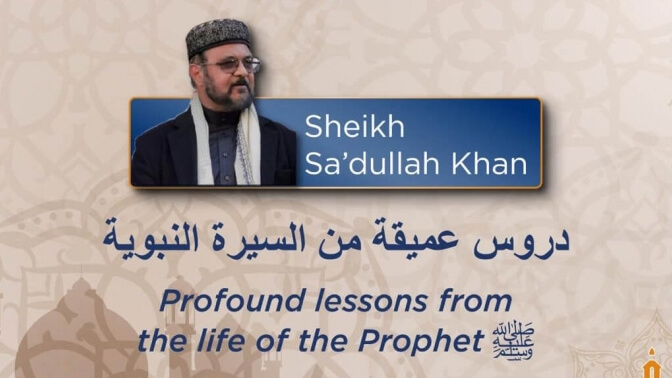 Series: Profound Lessons From Life of The Prophet


