
IslamiCity
Listen PodCasts, Live Quran, Watch Videos @VideoHub

In a 1921 interview titled "My First Impressions of the USA," Albert Einstein offered sharp criticism of the Prohibition era. He remarked that the prestige of the American government had "undoubtedly been lowered considerably by the Prohibition law," noting, "Nothing is more destructive of respect for the government and the law of the land than passing laws which cannot be enforced." He linked the rise in crime directly to Prohibition's failure, calling it an "open secret."
Einstein further reflected on the deeper social consequences, arguing that Prohibition "undermines the authority of the government." He emphasized the role of the public house-not merely as a drinking establishment, but as a vital space for public dialogue. "The public house is a place which gives people the opportunity to exchange views and ideas on public affairs," he explained. Without such venues, he observed, Americans lacked organic platforms for civic engagement, leaving the press, which is largely influenced by vested interests, to dominate public opinion (Albert Einstein, Ideas and Opinions).
Accordingly, the social and political instability of America during the Prohibition era stemmed from four interconnected failures: the government's inability to unify the public under enforceable legislation; the rise in crime due to legal loopholes; the suppression of public involvement through the reduction and control of public spaces; and the manipulation of national discourse by a press saturated with private interests. Together, these forces undermined democratic cohesion and reshaped the country's socio-political landscape in ways that echo through modern governance.
In spite of the longstanding recognition that prevailing systems are, in effect, betrayals of both nations and their peoples, the various stakeholders-both internal and external-remain firmly invested in their preservation. This suggests that more than governance is at stake; there are entrenched interests, ideological convictions, and geopolitical calculations that render reform not merely unlikely, but actively resisted.
When faced with existential or national challenges, people instinctively gravitate towards Islamic principles, desiring their integration into constitutional and legislative structures as much as possible. For some, this originates from religious conviction; for others, it reflects aspirations for self-empowerment and national self-determination. Still others view the current legal background as a lingering vestige of colonial influence. Regardless of motivation, there is a shared yearning for Islamic values to permeate the behavioral patterns of authorities.
This divergence in vision explains the unrelenting rift between governments and their citizenries. They operate on fundamentally different wavelengths, unable to communicate effectively or pursue unified national goals. Mutual mistrust has become entrenched: governments act with impunity doing what they want, while citizens comply out of necessity doing what they must. Laws are often crafted not to elevate society, but to preserve ideological status quos, resulting in a fragile, transactional relationship that resembles a marriage of convenience more than an honorable social contract.
If in America-as Einstein observed-laws were enacted that could not be enforced, in many Muslim-majority countries laws are indeed enforceable, yet applied in ways that neither significantly improve public welfare nor foster happiness. It is self-evident which of these conditions casts a darker shadow over society. While America's challenge lay in the enforceability of its laws, Muslims often grapple with the nature of the laws themselves, either due to the absence of authentic Islamic standards or the presence of legal frameworks that contradict them.
No wonder, then, that among Muslims, the gaps in governance styles and the glaring loopholes in implementation have led to noncompliance and security violations, not merely in the conventional physical sense, but rather in spiritual, moral, psychological, and socio-economic dimensions. Every segment of society bears responsibility, some more than others, and some in terms of intent and aims, and others in terms of means and methods. The public yearns for what is intrinsically desired but not offered, while governments rigidly demand compliance with laws that are often draconian and imposed undemocratically.
Each side, when viewed through the other's lens, appears deficient; and the more they double down on their respective agendas, the more blame they shoulder in the eyes of the opposition. This is a recipe for disaster, fueling a rise in both genuine and fabricated crimes among citizens and increasing state-sponsored ruthlessness driven by the need to impose order and demand respect for authority.
These tensions inevitably permeate the level of ideas as well, distorting the very definitions of obedience and disobedience, justice and injustice, guilt and innocence, good and evil-sometimes beyond recognition, yet still promoted as valid. It was within this incoherent environment that the hypocritical labels of terrorism, radicalism, jihadism, and fundamentalism emerged. And only such an environment can sustain them.
This tug-of-war between governments and their citizens stalls true development and civilizational progress, creating a dynamic of one step forward, two steps back. One need not look further than the disheartening legacies of the Muslim world over the past two centuries.
More than any other institution, mosques stand as enduring pillars of freedom and civic participation within Muslim communities. Rooted in spiritual purpose yet deeply woven into the social fabric, mosques offer inclusive spaces where individuals gather and engage in a culture of activism, encouraging moral reflection, community service, and social responsibility.
In truth, mosques are among the most authentic and potent platforms for such engagement. This is precisely why governments often fear their influence and the visionary individuals who seek to fulfill mosques' mission as outlined in the Qur'an and exemplified by the Prophet's life. To mitigate perceived risks and under the guise of "prevention is better than cure," authorities frequently intervene, hijacking the planning, construction, operation, and overall functioning of mosques.
Such interference has significantly altered the character of mosques, diminishing their vitality and compromising their calling. Evidence of this includes: locking mosques outside of obligatory prayer times; vetting full-time and part-time staff; screening guest speakers to ensure that discussions remain within approved boundaries and so, to prevent any form of dissent; censoring religious, social, and educational activities; monitoring and even scripting Friday sermons and other official addresses to make sure nothing goes off track.
Essentially, mosques are no longer pulsating community hubs. They have been relegated to peripheral roles within the bureaucratic machinery of state-controlled institutions. Their spiritual and societal importance is overshadowed by an obsession with architectural grandeur and ornamental detail, transforming them from sources of inspiration and guidance into mere symbolic relics.
Equally complicit in this troubling dynamic are Muslim educational systems that lack sincerity and authenticity. Rather than aiming to enlighten and empower Muslims, these institutions often function as tools of mass indoctrination. They are designed to control narratives and shape minds in accordance with political agendas. Tragically, this manipulation is frequently driven more by external influences than by internal convictions, with governments and their sprawling institutional bodies acting as intermediaries.
In such systems, education is reduced to a collection of methods, channels, and bureaucratic strategies. It is framed as a universal human right, yet stripped of its salient Islamic purpose. The emphasis lies on form over substance, on means rather than meaningful outcomes. Students are not nurtured into exemplary human beings or devout Muslims; instead, they are molded into obedient subjects to perform as passive recipients of state-sanctioned ideologies.
Independent educational efforts that fall outside the governmental stream are rarely permitted. Alternative content-especially that which challenges official narratives-is viewed with suspicion or outright hostility. When this controlled education is reinforced by government-dominated print, broadcast, and digital media, a multilayered mechanism emerges-one that persistently attempts to shape the Muslim intellect and regulate the entirety of his being.
More often than not, these mechanisms work against the genuine Islamic interests and spiritual aspirations of the people. The result is a Muslim who is socially and politically loyal to terrestrial visions, yet only superficially devoted to the divine will of Almighty Allah. In such a setup, how can governments-the very architects of this distortion-expect to be truly loved or respected?


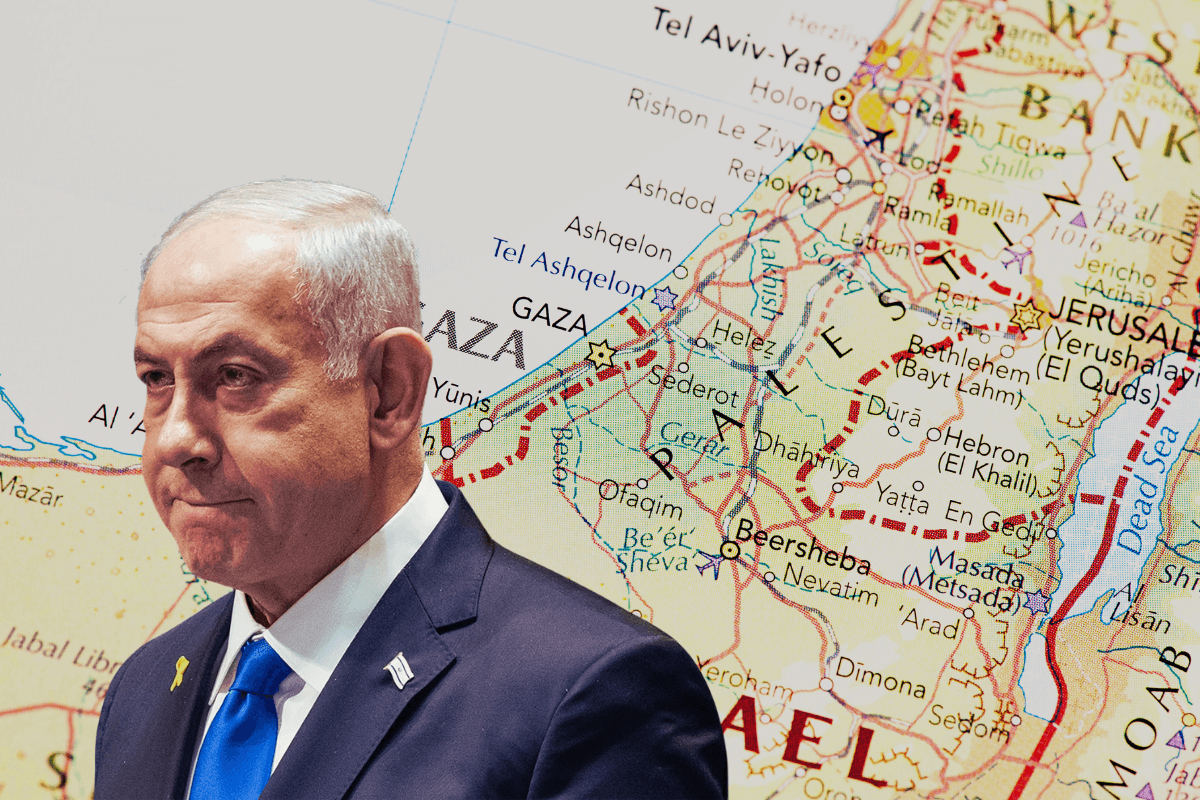 Muslim Nations Warn of Crisis as Israel Pushes "Illegal" Land Grab