
IslamiCity
Listen PodCasts, Live Quran, Watch Videos @VideoHub

Israel's unsuccessful attack on the Qatari capital prompted Arab and Muslim leaders to gather not far from where Israel had struck and issued "strong" statements condemning the aggressor for its "blatant violation of international law and norms."
They also commended "the civilized, wise, and responsible stance adopted by the State of Qatar" in response. What difference will this stance of the Organization of Islamic Cooperation (OIC) and the Arab League (AL) leaders make in reality? Some international observers have expressed their reservations about any practical outcome of such rhetoric.
The American news outlet CNN commented, "When the summit ended, they issued a wordy communique condemning Israel and reaffirming solidarity with Qatar. Missing in the communique, however, was any concrete action." AP, another US-based news agency observed, "Summit leads to little action after Israeli strike on Hamas in Doha."
The recent Arab-Islamic summit reminds us of several earlier activities related to the concept of Muslim unity over the past few decades. In 1969, an arson attack in Jerusalem's Al-Aqsa mosque led leaders of Muslim-majority nations to meet in Rabat, Morocco and lay down the foundation of the OIC.
The new political institution enthusiastically undertook activities not only to liberate Jerusalem from Zionist occupation, but also to promote general developments of the Muslim world. It incorporated political, economic, and cultural activities along with a military design to liberate Jerusalem, representing a billion-strong Ummah.
However, based on our findings up to the mid-1980s, we may suggest that despite its vast potential, the institution failed to fulfill its objectives due to the lack of political will. The OIC had declared, "[t]o achieve close cooperation and mutual assistance in the economic, scientific, cultural and spiritual fields, inspired by the immortal teachings of Islam," but many decades later, it still did not succeed in generating the political will necessary for achieving their stated objectives.
Quoting a Washington D.C.-based Stimson Center fellow, however, the Qatar based Aljazeera has described the pact as a watershed phenomenon for both countries. According to the author, one should understand this development primarily as a political signal of solidarity and strategic cooperation, rather than an unconditional war guarantee.
Reporting a Pakistani politician's claim, that Pakistan's nuclear program would be available to Saudi Arabia, The Times of Israel downplayed the implications of the pact. It claimed that "Saudi Arabia was willing to sign a normalization deal with Israel conditional on the establishment of a Palestinian state. Israel has no conflict with Saudi Arabia, which also has a long, tense rivalry with Iran."
In an article in Harvard Kennedy School's Belfer Center, one analyst wrote an article entitled "Beyond the Hype: Pakistan-Saudi Defense Pact Is Not a Saudi Nuclear Umbrella." Citing the relatively long history of Pakistan-Saudi defense cooperation, the author assures the readers that the pact only symbolizes a longstanding alliance that has been "formalized, not transformed." Because of such diverse opinion about the possible outcome of the defense pact, one should take a longer historical view to evaluate these two developments.
Notable changes have taken place in the Muslim world between 1969 and 2025: The Muslim population has increased by almost a billion during the period. In addition, the nature and character of Muslim nationalist elites changed significantly during the past half-century. As Ibn Khaldun pointed out more than six centuries ago, with the passage of time, ruling elites become more stable and comfortable with their lavish lifestyle and lose the original enthusiasm of their ancestors. Their commitment to core values that motivated earlier generations became diluted. Their responses to Israeli aggressions demonstrate this.
Nationalist leaders have become increasingly repressive over the past few decades: the armed forces, originally designed to defend the country from external threats, have become increasingly involved in defending the interests of nationalist elites. At the same time, younger generations seem to have become more conscious of their economic potentials and their political rights and responsibilities. Over the decades, Israel has also changed its posture from simply seeking refuge form European persecution to establishing a Jewish state by denying the rights of Palestinian existence. What are possible implications of these developments for the Muslim world?
Some Muslim nationalist leaders, however, not only approved but also endorsed the idea of nationalism, quoting a phrase that "Love of the homeland is part of faith," attributing the phrase to a hadith.
Nationalist leaders in Egypt, undivided India, Algeria and Indonesia used the idea extensively although the phrase does not appear in any authentic hadith collection. In addition, the Arabic word that is used in the text is 'watan' which could be translated as the place of birth leaving the followers to define the place of birth whether it would be one's village, city, district, province or region. Interestingly, Muslim nationalist leaders hardly quoted this phrase during the post-colonial period.
In this context, one must remember ideas of the Indian poet-philosopher Muhammad Iqbal. Living during the same period, he seemed to have comprehended implications of nationalism very well. Although he demanded independent nations for Muslims, he was very careful in presenting the idea. He seemed to have adopted a pragmatic approach in his proposed idea of a Muslim state/ nation. He recommended post-independent Muslims to dive into their "deeper self, temporarily," to gain independence from the colonial yoke.
Iqbal also recommended that post-independent Muslim nations establish a joint platform to govern their affairs. Iqbal's recommendation motivated some Muslim leaders to establish the OIC decades later. How does the idea of nationalism relate to today's situation? It relates to today's situation particularly in the context of Palestine and the Islamic summit conferences held both in 1969 and 2025.
In 1969, many nationalist leaders who led their independence movements were still alive, and the original values of their message, such as 'national pride' and 'national self-determination', still motivated them. The ignition of the Al-Aqsa Mosque sparked protest movements all over the Muslim world and Iqbal's recommendation of the unity of Muslim states was still fresh among many Muslims, and as a result, the OIC came into existence.
By 2025, OIC's commitment to Palestine had weakened significantly. They passed resolutions without any follow-up. They left the Palestinians alone to fight for their existence, which encouraged Israel to manipulate OIC countries independently. Within a decade, Israel achieved a breakthrough, and slowly, OIC countries abandoned resolutions on the subject. Soon, Israel began to increase pressure on Palestinians and continued to grab more land aggressively, resulting in ethnic cleansing and genocide. Israel also undertook aggressive diplomacy and a media campaign by alluring OIC member states, independently invoking their 'national interest' and creating elite interests.
In 1947, when the UN began to consider the Jewish demand for a state in Palestine, Saudi Arabia was one of the very few Muslim countries that had UN membership, and the founder of modern Saudi Arabia, King Abdul Aziz Ibn Saud, expressed his strong reservations about Zionism and conveyed his views to the US administration. He warned President Truman that the recognition of the state of Israel in Palestine wound constitute "an unfriendly act" toward the Arabs.
Later, King Faisal Ibn Abdul Aziz played a significant role in establishing the OIC and in the 1973 October War that followed the oil embargo against those states that supported Israel. It took decades for the United States to repair the relationship with Saudi Arabia. Why have the Saudis abandoned their original position on Zionism and Palestine?
Perhaps due to their materialistic pragmatism. Israel's increasing military might seems to have led it to compromise with its historical role in the Palestinian crisis. Not only the Saudis, but also all other Muslim nation-states have adopted a similar stance over the past decades, and that explains the ineffectiveness of OIC resolutions. Does this mean Arnold Toynbee was right in his observation that nationalism would lead to tribalism? Have not Muslim countries moved toward polytheistic beliefs by endorsing the idea of nationalism and then pursuing elite interests?
Interestingly, however, nationalist elites continued to play their so-called Islamic card. This double standard laid down the seeds of extremism among many youths. One can easily find this in the case of Pakistan where the ruling political and military elites have successfully exploited their "Islamic bomb" card to consolidate power on the one hand, and marginalized the democratic process by denying former Prime Minister Imran Khan from participating in politics.
The Pakistani military leader did not feel ashamed of having 'halal' lunch at the White House with US president when US sponsored Israeli aggression continues to starve the people of Gaza.
In addressing these questions, one should remember the Prophetic saying, "The believers, in their mutual kindness, compassion, and sympathy, are just like one body. When one of the limbs suffers, the whole body responds to it with wakefulness and fever." How does this Prophetic teaching differ from the NATO type clause that the Pak-Saudi defense pact agreed on? When the Prophetic teachings fail to motivate, will a defense pact clause that involves only two members of the OIC community make a difference? How exactly does religious obligation fail where state pragmatism would succeed? Muslim intellectuals need to consider these questions.
At its core, this crisis highlights the tension between faith based principles and pragmatism. We have noted the pragmatism adopted by the 20 th -century poet-philosopher Iqbal. Will such pragmatism be effective today?
In addressing this question, one should note that Muslims are in a much stronger position today than they were a hundred years ago. Most observers would agree with the view that Muslim countries do not need military action to prevent Israeli aggression. If they implement AL resolutions of the 1950s and OIC resolutions of the 1970s, Israel would have no option but to follow UN resolutions on the subject and allow all refugees to return and to define its borders etc. Their cultural, diplomatic, economic and trade boycott of Israel would suffice.
However, these countries do not seem to have the moral courage to do so. Even in the absence of the boycott idea of the 1970s, Turkey played an effective role in mediating between Israel and Hamas in 2011 in the release of Israeli captive Gilat Shalit. Ahmet Davutoglu, the former Prime Minister and Foreign Minister of Türkiye, who played a key role in the Gilat Shalit release case, has proposed a pragmatic mechanism to follow at the UN General Assembly's 80th anniversary but Muslim leaders are hardly paying attention to those recommendations.
Israeli genocidal actions in Gaza and the rest of Palestine have attracted attention of fair-minded people all over the world. Street demonstrations are more vocal in many Western countries than in Muslim countries. Some non-Muslim countries have come forward with more pragmatic and functional proposals. South Africa's case in the International Criminal Court related to Gaza genocide and Columbia's proposal to create an international army under the banner of the UN are noteworthy among them.
One may find a reflection of the Gaza crisis in the recently published book Genocide in Gaza: Voices of Global Conscience edited by a Jewish and a Muslim academic. In other words, the OIC leaders do not require an Islamic bomb; what they need is the will to effectively challenge Israeli hegemony in the region.
The current Gaza crisis seems to have shaken all these aspects of life and created an environment of challenge and hope. Prospects of peace would depend on a successful response to the current crisis.
After meeting with a notable number of Muslim leaders during the UN General Assembly's 80th session, President Trump has come forward together with the Israeli leader with his final peace proposal on the subject claiming that he wants to "move forward to better things in the region." However, there is nothing new in his 'new' proposal. We have noted Israel knocking down numerous proposals and commitments since 1948.
President Trump himself at times has expressed frustration at Israeli behavior. Earlier, Presidents Obama and Sarkozy in a leaked audio accused him being a liar. Under such circumstances, President Trump's attempt to impose any 'peace' proposal is very unlikely to succeed.
Muslim leaders know very well that "Verily, Allah will not change the condition of a people until they change what is in themselves (13: 11)." Muslim leaders hardly realize that the people of Gaza have provided them with the unique opportunity to demonstrate to the rest of the world that divine guidance has the potential to establish peace. They only need to stand up for truth and justice.


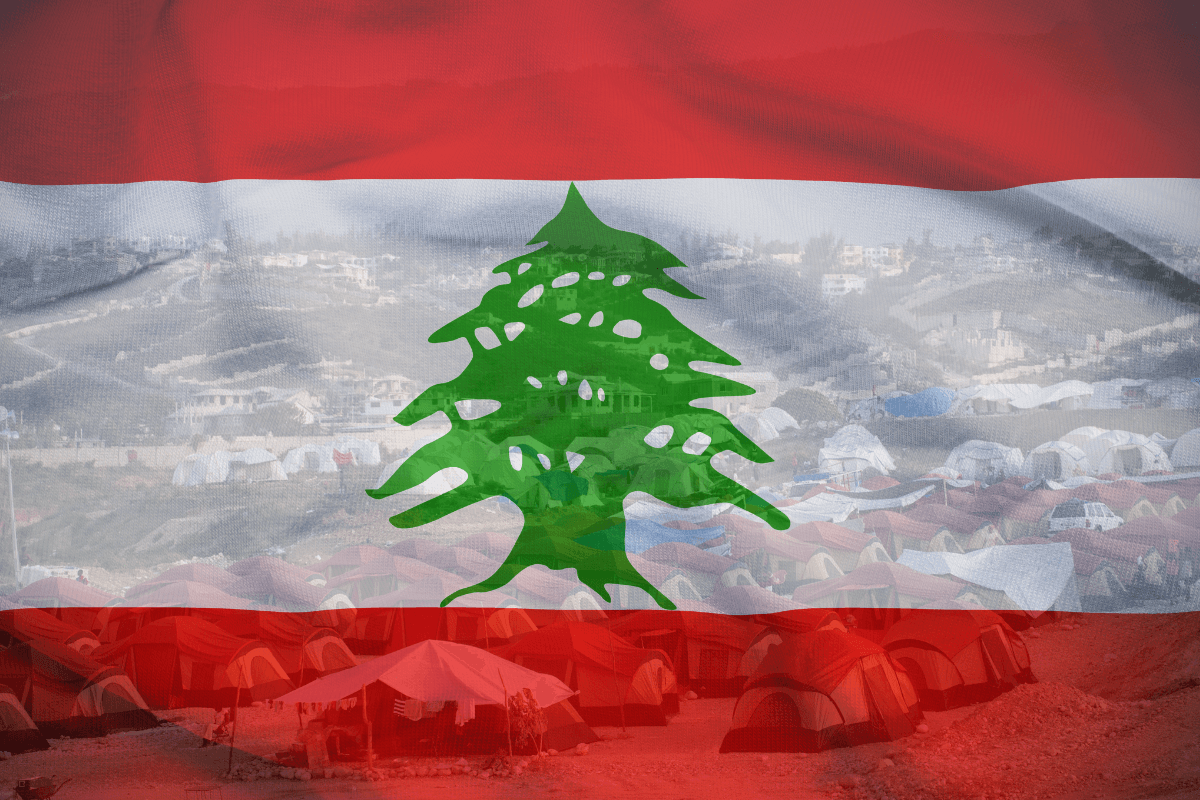 Deadly Attack Hits Ain al-Hilweh Palestinian Refugee Camp in Lebanon