
IslamiCity
Listen PodCasts, Live Quran, Watch Videos @VideoHub

On the eve of October 7, 2023, Gaza was widely described in global media as a "toxic slum," a place of despair and neglect. Yet, as Dr. Norman Finkelstein emphasizes, this characterization merely scratches the surface. For the people of Gaza, this environment has been their reality from birth to death-an enforced confinement under conditions comparable to a concentration camp.
Gaza's history is one of systematic isolation and oppression. Since 1948, it has been described repeatedly by international observers and officials as a concentration camp. Elm Burns, a UN official in the 1950s, and Al Gore Sr., during his 1967 visit, both noted the extreme confinement and suffering of Gaza's population. By 2004, even the former head of Israel's National Security Council, Guora Island, described Gaza as a "huge concentration camp."
The imposition of the Israeli closure policy in 1990 and the full blockade in 2006 further sealed Gaza off from the West Bank and the wider world. Israel tightly controls movement, imports, airspace, and waters, regulating life down to the humanitarian minimum necessary for survival. By October 2023, Gaza was widely described not just as a slum, but as a "rubbish heap" and a toxic environment by major international observers.
Over decades, Israel has conducted multiple military operations in Gaza, including Operation Cast Lead (2008) and Operation Protective Edge (2014), resulting in thousands of civilian deaths and widespread destruction. Despite Hamas exploring all nonviolent avenues-diplomacy, international law, cooperation with UN inquiries like the Goldstone Commission, and civil resistance-Gaza remained under siege. Israel's response to protests, such as the Great March of Return in 2018, targeted civilians, including children, medics, and journalists.
Finkelstein argues that the people of Gaza, left with no viable options, faced an existential choice: continue to languish under inhumane conditions or resist in the only way available to them. The events of October 7, 2023, were a desperate act, comparable to historical slave revolts, notably Nat Turner's rebellion in 1831. These acts of resistance, he emphasizes, should be understood within the context of systemic oppression rather than as exceptional acts of immorality.
The global narrative often frames Palestinian resistance as barbaric or uncivilized, particularly in the U.S. and Europe. Yet, as Finkelstein notes, Israel's actions dwarf those of Hamas in scale and scope. While the October 7 attacks resulted in significant casualties, the long-term devastation wrought by Israel has killed tens of thousands of Gazans, including large numbers of children, making the moral distinction between combatants and civilians deeply contested.
The geopolitical context further complicates the situation. Israel has leveraged the conflict to consolidate regional power, influencing alliances like the Abraham Accords while continuing the blockade and military campaigns. U.S. plans, such as Trump's 21-point proposal for Gaza, emphasize disarmament of Hamas as a precondition for any Israeli concessions, essentially tying humanitarian relief and political progress to Palestinian compliance.
Finkelstein critiques these plans as largely performative, noting that real power remains with Israel, which he argues is intent on ethnic cleansing under the guise of security. He draws parallels between historical atrocities and contemporary Israeli policies, highlighting the moral and legal gaps in international enforcement.
Interestingly, there is evidence of a shift in public opinion within the United States, both among progressive youth and certain right-leaning MAGA circles. While Israel has long counted on public amnesia and media support, these shifts suggest the possibility of a more critical domestic discourse in the future. Nevertheless, as history has shown, political leaders often rely on narratives that obscure moral accountability.
Gaza's plight is not merely a consequence of recent conflicts but the result of decades of structural oppression, military sieges, and political marginalization. The events of October 7, 2023, reflect a desperate population responding to a long-standing system of confinement and deprivation. As Finkelstein argues, understanding this historical and political context is crucial to interpreting resistance not as an anomaly, but as a human response to injustice.
In Gaza, the toxic slum is not a temporary condition-it is a permanent cage that shapes every aspect of life, leaving its people with few options other than defiance in the face of systematic eradication.
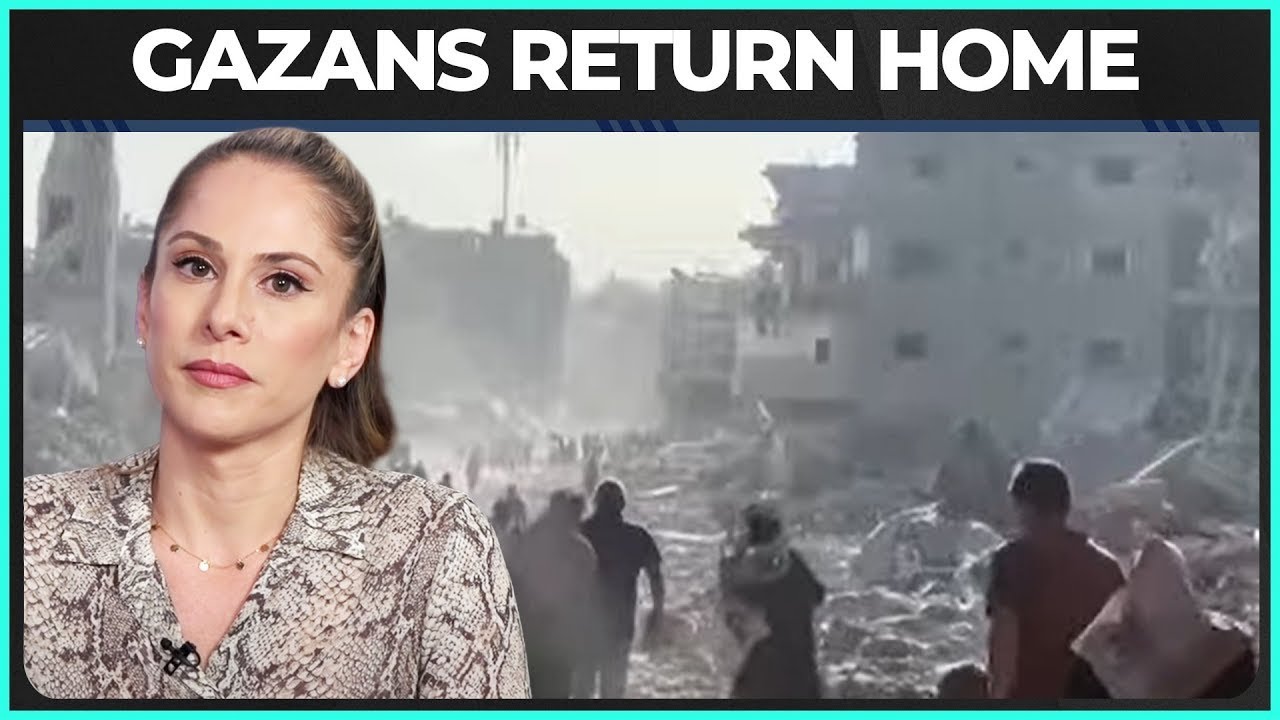 Gaza Apocalypse: Annihilation Equal to Six Atomic Bombs


