
IslamiCity
Listen PodCasts, Live Quran, Watch Videos @VideoHub

At a time when the international community is struggling with war, inequality, and environmental crises, the voices of leaders who consistently champion peace, justice, and human dignity stand out with clarity.
Among them are President Shavkat Mirziyoyev of Uzbekistan and Prime Minister Anwar Ibrahim of Malaysia, both of whom underscore their countries' commitment to building a more just and peaceful world.
President Shavkat Mirziyoyev and Prime Minister Anwar Ibrahim have both outlined the commitment of the two countries to supporting peace initiatives at global stage, highlighting that peace is inseparable from human well-being.
Their speeches in many platforms converged on several key themes, especially the urgency of dialogue and cooperation, the reform of global institutions to better serve developing nations, and the necessity of sustainable development anchored in fairness.
At their bilateral meeting on February 5, 2025 in Malaysia, President Shavkat Mirziyoyev and Prime Minister Anwar Ibrahim charted the way forward to realise their shared agenda for peace and wellbeing. Both leaders agreed to intensify strategic dialogue through a dedicated foreign ministers' platform, implement a comprehensive road map, and expand preferential trade. They emphasised joint initiatives in green energy, smart agriculture, innovation, and pilgrimage tourism as priority sectors. The meeting also underscored the importance of cultural and academic exchanges, as well as joint efforts to counter terrorism, radicalism, and Islamophobia globally.
In the speech at the 80th UNGA, President Mirziyoyev renewed Uzbekistan's commitment on peace building, warning against the deepening of conflicts, wars, and inequalities. He called for reforms to the UN Security Council and endorsed the Pact for the Future, ensuring that international institutions remain relevant to today's threats.
Similarly, Prime Minister Anwar, though was represented by the Foreign Minister in the recent UNGA, has consistently advocated for a more equitable global order, urging reforms to narrow the economic and social divides, restore trust in multilateralism, and deliver justice to nations of the Global South.
President Mirziyoyev highlighted Uzbekistan's achievements in education, citing the reduction of poverty from 35% to 6.6%, the expansion of access to preschool and higher education, and significant investments in green energy and water sustainability. He proposed new international platforms, such as a World Water Conservation Forum and a Regional Hub for Green Technologies, to address pressing environmental challenges.
On many occasions, Prime Minister Anwar Ibrahim has stressed climate justice and the need to ensure that developing countries are not left behind in the green transition. The Malaysia Madani vision underscores the balance between economic progress, social equity, environmental responsibility, and moral values. The initiatives and emphases in both Uzbekistan and Malaysia demonstrate a strong commitment to achieving the Sustainable Development Goals (SDGs).
Both leaders register the emphases on moral urgency on humanitarian crises. President Mirziyoyev called for an end to hostilities in Gaza, reiterated support for a two-state solution, and expressed concern for the war in Ukraine and the plight of Afghanistan.
Prime Minister Anwar's interventions similarly highlight Palestine, Myanmar, and Ukraine, framing Malaysia as a principled advocate for diplomacy, justice, and peace. Indeed, both leaders underscore serious attention be given to peace, humanitarian concerns, and global crises. Their alignment demonstrates a shared conviction, that global security cannot be achieved without addressing humanitarian suffering and resolving conflicts through dialogue.
A unique convergence of Uzbekistan and Malaysia lies in their emphasis on Islamic civilisation as a source of wisdom for today's world. Uzbekistan, under President Mirziyoyev, has invested in promoting the ideas of Islamic enlightenment.
At the UNGA, he announced the opening of a Center of Islamic Civilization in Tashkent and proposed a special UN presentation on the scientific and spiritual contributions of scholars such as Imam al-Bukhari, Imam al-Tirmidhi, and Imam al-Maturidi. For Uzbekistan, reviving and sharing this heritage is part of fostering global dialogue, tolerance, and mutual understanding.
Prime Minister Anwar, has frequently underscored civilisational vision by stressing that Islamic values, namely justice, compassion, unity, and ethics must shape responses to modern crises. He has been championing the move towards the development of curricula that highlight Islamic civilisation not merely as doctrine but as a tradition of values and learning that enriches humanity. By linking the Madani framework to these principles, Anwar presents Malaysia as a bridge between civilisations and a voice for ethical global leadership.
Both leaders regard youth as the custodians of peace. Mirziyoyev proposed a World Youth Movement for Peace headquartered in Uzbekistan, while Anwar frequently underscores education, character-building, and interfaith understanding as essential for preparing a responsible generation. Their shared priority reflects an understanding that long-term peace cannot be secured without nurturing values in the next generation.
Uzbekistan and Malaysia, though geographically distant, are connected by a shared vision of global peace rooted in dialogue, justice, sustainability, and the wisdom of Islamic civilisation. Their leaders' commitments, as being reiterated in many fora, reaffirm their roles as advocates for the Global South and as builders of bridges across nations and cultures.
As President Mirziyoyev and Prime Minister Anwar remind the world, nurturing peace and well-being requires both institutional reform and moral renewal. From Samarkand to Kuala Lumpur, their voices contribute to a growing chorus that insists: the future must be built on solidarity, compassion, and shared human dignity.
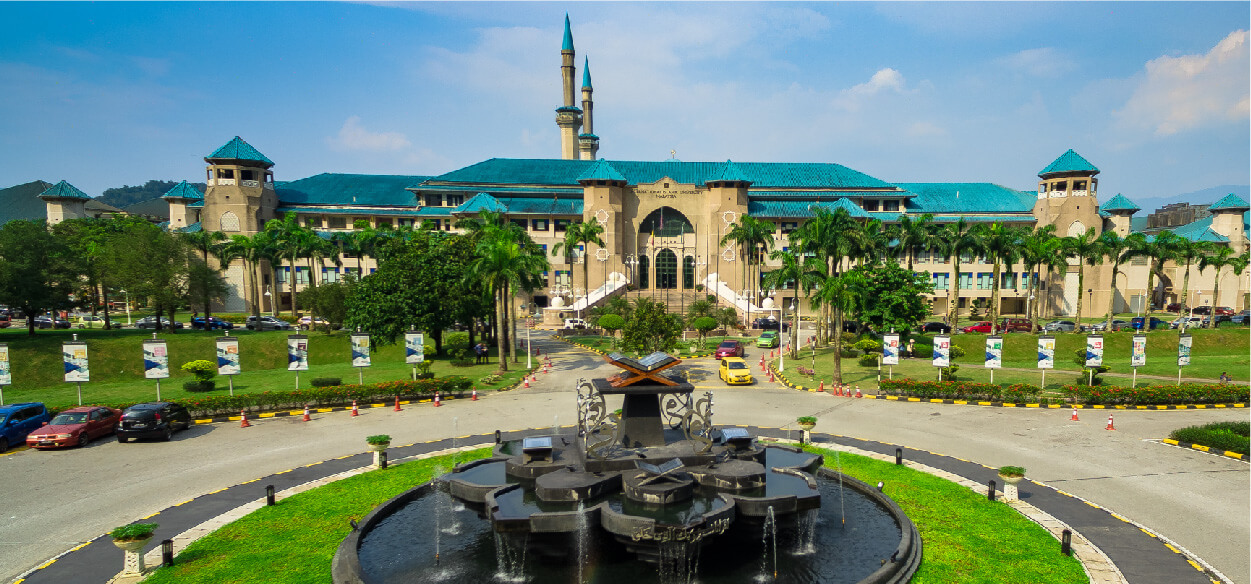
Shukran Abd Rahman is a Professor of Industrial and Organisational Psychology at the Department of Psychology, Abdul-Hamid Abu-Sulayman Kulliyyah of Islamic Revealed Knowledge and Human Sciences, International Islamic University Malaysia. He is currently a Fellow Researcher at the Imam Bukhari International Scientific Research Center in Samarkand, Uzbekistan.
 Faith in Action: Educating for Peace, Justice, and Human Dignity


