
IslamiCity
Listen PodCasts, Live Quran, Watch Videos @VideoHub

At the UN General Assembly's special peace summit on 22 September 2025, world leaders reached a historic turning point: over 150 countries now officially recognize the State of Palestine.
The New York Declaration, affirming Palestinian statehood and the two-state solution, passed with 142 votes in favor. Major Western powers - France, the UK, Canada, Australia, Portugal, Belgium, Luxembourg, Malta, Andorra - joined the Global South, Arab League, EU states, and long-time supporters in affirming that Palestinian statehood is an irreversible international reality.
Israel and the United States stood largely isolated, as speaker after speaker condemned the Gaza war, settlement expansion, and collective punishment, while calling for urgent recognition, ceasefire, and humanitarian aid.
President Emmanuel Macron
Announced formal recognition of Palestine.
Condemned Hamas' October 7 attacks but declared Israel's war in Gaza unjustifiable.
Called for:
Immediate ceasefire.
Hostage release.
Humanitarian aid.
Reform of Palestinian governance excluding Hamas.
Linked future French cooperation with Israel to progress toward peace.
Prince Faisal bin Farhan Al Saud, Foreign Minister
Reaffirmed support for a Palestinian state on 1967 borders with East Jerusalem as capital.
Condemned Israeli aggression in Gaza and the West Bank.
Urged all countries to recognize Palestine.
Declared that recognitions are not symbolic, but enforce Palestinians' irreversible right to self-determination.
António Guterres
Called the situation "morally, legally, and politically intolerable."
Condemned both Hamas' October 7 attacks and Israel's collective punishment of civilians.
Declared Palestinian statehood a right, not a reward.
Annalena Charlotte Alma Baerbock
Delivered an emotional appeal citing testimonies from children in Gaza and Israeli hostages' families.
Stressed equal value of Palestinian and Israeli lives.
Urged an irreversible path toward two states.
President Mahmoud Abbas (video address)
Thanked countries recognizing Palestine.
Reaffirmed PA's commitment to peace and reform, excluding Hamas from governance.
Called for free elections and full UN membership.
Warned against forced displacement.
King Abdullah II ibn Al Hussein
Condemned Gaza war and West Bank settler violence.
Reaffirmed Jordan's custodianship over Jerusalem holy sites.
Called for immediate ceasefire and aid.
Warned regional stability is at stake.
President Recep Tayyip Erdoğan
Called Israel's war in Gaza crimes against humanity and genocide.
Demanded ICC accountability.
Reiterated Turkey's support for Palestinian unity and sovereignty.
Declared recognition of Palestine irreversible.
President Luiz Inácio Lula da Silva
Described Gaza as genocide.
Linked the situation to justice at the ICJ.
Called for ceasefire, hostages' release, and humanitarian relief.
Pledged Brazil's role via Global South and BRICS.
Prime Minister Luís Montenegro
Announced recognition of Palestine.
Condemned Hamas terrorism but also Israeli excesses.
Called recognition essential for peace.
Pledged aid and reconstruction support.
President Prabowo Subianto
Condemned Gaza catastrophe as one of the worst in modern history.
Called Palestine the unfinished business of decolonization.
Reaffirmed support for a Palestinian state with East Jerusalem as capital.
Urged Muslim countries to unite behind recognition.
Foreign Minister Ismaïla Madior Fall
Spoke as chair of the UN Committee on Palestinian Rights.
Condemned Gaza war as mass atrocities.
Urged African Union members to intensify support.
Called for an international protection force for Palestinians.
Prince Albert II, Sovereign Prince
Officially recognized the State of Palestine under international law.
Reaffirmed Israel's right to secure borders and Palestine's right to a sovereign, democratic state.
Stressed peace requires hostage release, Hamas' disarmament, and mutual guarantees.
Declared: "Peace cannot be issued by decree - it is built through common will."
President Cyril Ramaphosa
Reiterated South Africa's ICJ genocide case against Israel.
Declared Gaza war genocide and ethnic cleansing.
Called for sanctions and suspension of military cooperation with Israel.
Framed solidarity with Palestine as part of anti-apartheid legacy.
President João Lourenço
Backed the New York Declaration and AU stance on a two-state solution with East Jerusalem as Palestine's capital.
Condemned Hamas' Oct 7 attacks and demanded hostage release.
Criticized Israel's disproportionate response and use of starvation against civilians.
Confirmed Angola's recognition of Palestine.
Prime Minister Anthony Albanese
Announced recognition of Palestine.
Condemned Israel's blockade and bombings as excessive and indefensible.
Stated recognition reflects Australia's commitment to law and justice.
Called recognition a way to restore hope to Palestinian youth.
Foreign Minister Sameh Shoukry
Described Gaza's situation as catastrophic.
Rejected attempts to push Palestinians into Sinai.
Reaffirmed Egypt's mediation role.
Called a sovereign Palestinian state the only guarantee of regional peace.
Prime Minister Pedro Sánchez
Spearheaded Europe's recognition wave.
Condemned Gaza as a human disgrace.
Pledged humanitarian aid and stronger EU pressure on Israel.
Declared recognition a duty, not an option.
Prime Minister Mark Carney
Broke precedent by recognizing Palestine.
Condemned Hamas October 7 attacks but called Israel's war collective punishment.
Stated recognition essential to save the two-state solution.
Pledged humanitarian aid and urged the U.S. to reconsider its veto.
Prime Minister (Taoiseach) Micheál Martin
Announced recognition of Palestine, citing Ireland's history of colonization.
Condemned Gaza war as collective punishment.
Urged EU partners to follow Ireland's lead.
Expanded humanitarian support.
Prime Minister Bart De Wever
Recognized Palestine.
Denounced settlements as deliberate sabotage of peace.
Called for an arms embargo on Israel.
Declared recognition as a starting point for policy change.
Prime Minister Jonas Gahr Støre
One of the first Western states to act on recognition.
Criticized Israel's refusal to negotiate.
Declared recognition a necessary corrective.
Pledged humanitarian and development aid.
Prime Minister Luc Frieden
Recognized Palestine.
Condemned Israel's disproportionate Gaza war.
Called silence in the face of genocide complicity.
Urged collective EU pressure on Israel.
Malta
Prime Minister Robert Abela
Confirmed recognition of Palestine.
Called for ceasefire, hostages' release, and PA reform ("one law, one gun").
Emotional appeal referencing injured Gaza children treated in Malta.
Foreign Minister Ahmed Attaf
Welcomed summit as proof of global consensus.
Called to expand recognitions and secure full UN membership for Palestine.
Urged confronting Israel's annexation plans.
Stressed need for Palestinian unity.
Foreign Secretary Yvette Cooper
Announced UK's recognition of Palestine.
Affirmed two states as the only path to peace.
Condemned Hamas' Oct 7 attack and Israel's blockade, escalation, and settlements.
Called for ceasefire, hostage release, aid access, and lasting peace framework.
Takeshi Iwaya, Foreign Minister
Co-chaired working group on Palestine's economic viability.
Backed urgent support and reforms for the Palestinian Authority.
Condemned Israel's settlements, annexation, and Gaza crisis; urged Hamas to release hostages.
Said recognition of Palestine is "when, not if" and warned of measures if Israel blocks peace.
Foreign Minister Imma Tor Faus
Announced recognition of Palestine.
Condemned hunger and displacement as weapons of war.
Recognition conditioned on demilitarization and Hamas exclusion.
Deputy Prime Minister Tanja Fajon
Recognized Palestine alongside Spain, Ireland, Norway.
Declared Gaza crisis genocide.
Warned history will condemn hesitation.
Called for immediate ceasefire, hostages' release, and aid.
Foreign Minister Johann Wadephul
Reaffirmed:
No border changes outside 1967 lines without agreement.
Settlements are illegal.
ICJ ruling must be respected.
Reaffirmed commitment to both Palestinian statehood and Israel's long-term security.
Foreign Minister Lars Løkke Rasmussen
Endorsed recognition but made it conditional:
Hostages released.
Hamas disarmed/excluded.
PA reforms.
Palestine demilitarized.
Foreign Minister Caspar Veldkamp
Signed New York Declaration.
Recognition will come later as part of political process.
Warned EU measures may pressure Israel.
Called for democratic PA and exclusion of Hamas.
Minister of State for Foreign Affairs Soltan bin Saad Al-Muraikhi
Condemned decades of occupation and recent Israeli strike on Doha.
Declared Israel fully responsible for Gaza destruction.
Called for Palestinian sovereignty and UN accountability.
Minister of State Khalifa Shaheen Al Marar
Welcomed growing recognitions of Palestine.
Called for ceasefire, hostages' release, humanitarian access.
Urged UN Security Council action.
Stressed a legitimate PA is essential, with Hamas excluded.
Deputy Prime Minister Alexei Overchuk
Reminded that Russia recognized Palestine decades ago, following UN Resolution 181 (1947).
Condemned Israeli annexation plans (E1 area) and Gaza blockade as a "death sentence."
Reaffirmed East Jerusalem as Palestine's capital.
Secretary-General Ahmed Aboul Gheit
Declared summit a turning point to save Palestine and humanity.
Reminded UN created Israel by resolution - the same must apply to Palestine.
Called for protection against killings and punitive measures.
Urged an irreversible two-state path.
Urged "rigorous work" on Palestinian reform and sovereignty.
Declared: "The time has come for peace."
Declared recognitions are not symbolic but enforce Palestinians' irreversible right to statehood.
Pledged continued work with partners to end aggression and achieve lasting peace.
This summit marked the largest diplomatic recognition of Palestine in history.
Over 150 states now officially recognize Palestine.
Recognition extended across Europe, Africa, Asia, Latin America, and Oceania.
Gaza war described by many leaders as genocide.
Israel and U.S. were increasingly isolated.
Recognition framed as:
A moral obligation (Ireland, South Africa, Spain).
A strategic necessity (France, UK, Canada, Australia).
A legal corrective (Germany, Luxembourg, Belgium, Norway).
Historic Turning Point: Palestinian statehood is no longer a debate - it is now an international consensus. The two-state solution has been reframed as the only viable future for peace and justice.
Security Council push: Secure 9 votes, focus on persuading U.S. to abstain, not veto.
Governance readiness: Commit to elections and anti-corruption reforms.
Alliances: Mobilize EU, Arab League, AU, and key middle powers to unify pressure.
If veto continues: Use General Assembly majority, expand recognitions, strengthen institutions.
Bottom line: Success depends on overcoming or outlasting the U.S. veto through alliances and sustained diplomacy - paving the way for Palestine to become the UN's 194th member state.


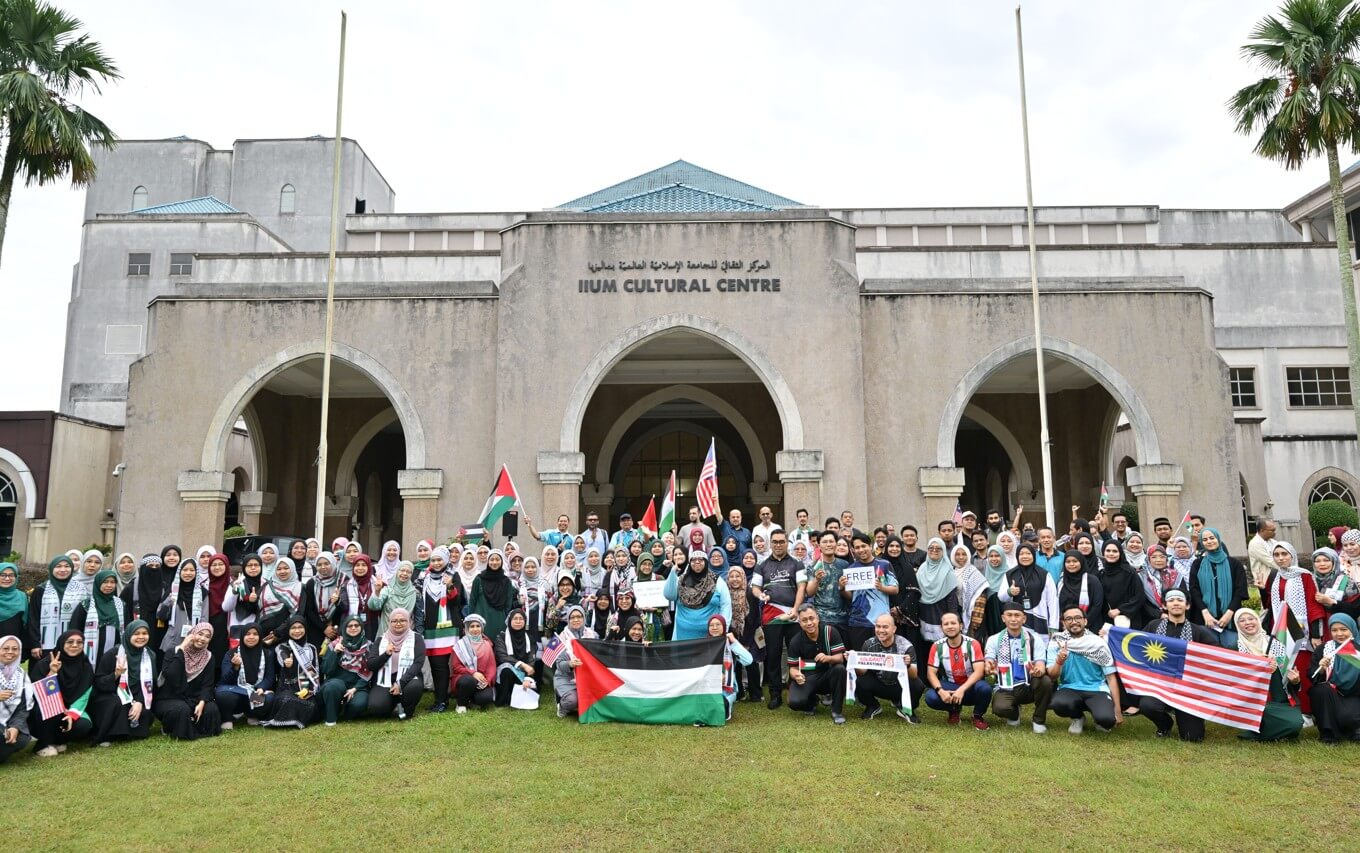 From IIUM to the World: A Call for Justice and Peace in Palestine