
IslamiCity
Listen PodCasts, Live Quran, Watch Videos @VideoHub

Netanyahu's gamble to annihilate Gaza and pursue a 'greater Israel,' turning Israel from a supposed democracy into a global pariah, is what David Hearst calls the 'worst evil of the century.'
No brakes, internally or externally. Hearst argues earlier Israeli incursions (Gaza, south Lebanon) were finite and constrained by Israel's own security establishment. In contrast, today there are "no handbrakes"-not from Shin Bet, not from the IDF high command, and not from Israel's traditional allies.
From punishing Hamas to targeting Palestinians. He contends the current war aims extend beyond armed groups to Palestinians as a whole, citing the systematic demolition of Gaza City and the dismissal of dissenting Israeli security advice.
US enabling, partisan cracks. Hearst calls the Biden administration's role a "big disappointment," adding that while encouragement now comes from Trump, notable splits are appearing within the US Republican coalition. Cracks are emerging, but "not quickly enough to stop the carnage."
Premeditation matters. For Hearst, the distinguishing feature is calculation: the campaign exhibits "malice aforethought," fitting the legal and moral contours of genocidal intent.
From security to theology. Hearst reads the project as religious-nationalist: reclaiming "biblical Israel," foreclosing any viable Palestinian state, and engineering demographic-territorial facts that make reversal impossible.
Purging constraints. Netanyahu replaces advisers who contradict him; critics within the professional services are sidelined. The war's political utility for Netanyahu, Hearst suggests, outweighs any military logic offered by the IDF.
A region and a West in retreat. Hearst locates this within a broader post-"War on Terror" exhaustion: Western interventionism failed, the US is in moral retreat, and Israel's most extreme elements are setting policy-especially in the West Bank.
Seven near-deals torn up. Hearst says Israel's negotiators have repeatedly "penciled in" agreements that Netanyahu later destroyed; in some cases, Hamas signed documents in front of senior US officials, only for Israel to renege.
Politics over hostages. He argues Netanyahu's calculus is domestic: prolonging war maintains his political survival, despite Israeli security voices warning continued operations mostly kill hostages and Palestinians without achieving strategic ends.
The team and the tactic. Ron Dermer-depicted as key to the starvation-and-siege strategy-is now leading Israel's talks after "softer" negotiators were pushed aside. Proposals associated with Trump ally Steve Witkoff are "ignored" unless Trump himself intervenes.
Development without people. Hearst describes circulating PowerPoints that imagine Gaza as a depopulated mega-project-"paradise of buildings and roundabouts without any people," financed and branded by foreign patrons.
Human erasure. Practicalities-recovering bodies from rubble, rebuilding on mass graves-are hand-waved away. A "pay-to-leave" scheme for Palestinians features in the latest versions.
Sumud (steadfastness). Hearst believes "some will take the money," but most will refuse because they understand the conflict is fundamentally "about land." He honors the "heroism" of Gaza's civilians and frontline journalists.
Historic responsibility. Citing Balfour and Sykes-Picot, Hearst says UK leaders owe specific duties to Palestinians. He criticizes Labour leader/PM Keir Starmer's drift to a Blair-style alignment with Washington that, in practice, has enabled Israel's campaign.
Starmer's record. From an LBC interview implying support for cutting Gaza's utilities to procedural maneuvers that muted ceasefire votes, Hearst paints Starmer as choosing party positioning over human-rights instincts he once displayed.
What the public should ask.
When will the UK stop supplying parts for Israeli aircraft?
What do UK surveillance flights collect, and who receives it?
Will Britain actively support ICC/ICJ processes (evidence sharing, arrests if warrants issue), or carve Israel an exception?
Hearst's bottom line: press the UK to apply its own stated policies-two-state rhetoric, international law-consistently and without impunity carve-outs.
Reform's rise, Labour's bind. Hearst anticipates a French-style realignment: a stronger far right, a weakened center, and a left that is fragmented and hesitant. He argues Starmer revived Blairism "without demand," and lacks Blair's political charm to sell austerity-tinged realism amid stagnant wages and high prices.
Party mechanics. Internal purges and "authoritarian style" have left Starmer short of loyalists; meanwhile Farage can bide his time, professionalize candidates, and capitalize on Labour's stumbles over multiple election cycles.
Two forces that end wars. Hearst offers a historical rhyme: the Vietnam War ended through the resilience of the people under fire and the steady turn of US public opinion. For Gaza, he says, the determinative pair may be Palestinian steadfastness and shifting American sentiment.
Longest UK protest wave in years. Mass marches, arrests, and civil actions have re-shaped discourse; polls in the US showing majority skepticism about arming Israel signal a profound legitimacy crisis for the war.
Unexpected voices, consequential effects. Hearst highlights Tucker Carlson's evolution-from initial post-Oct. 7 positioning to trenchant interrogations of pro-Israel politicians (e.g., Ted Cruz) and programming that platforms alternative narratives (e.g., Palestinian Christians). He doesn't claim Carlson has become pro-Palestinian; rather, Carlson's realism/isolationism questions whether support for Israel serves US interests.
Piers Morgan's journey. Morgan has hosted many critical voices, corrected earlier credulity about sensational claims, and begun directly challenging Israeli guests on press freedom and civilian harm. Hearst places Morgan within liberal Zionism: "a plague on all your houses," still faulting Hamas's disregard for life, but now acknowledging Israel's conduct may meet atrocity thresholds.
Why this matters. For Hearst, these shifts splinter the once-automatic bipartisan/media consensus-on both the US right and center-left-weakening Israel's diplomatic shield precisely when it most relies on it.
When costs bite. Hearst argues Israeli policy changes only when the costs-diplomatic, economic, social-become undeniable: talent flight, isolation, and a perception that "biblical Israel" ambitions harm Israel's own interests.
US (and UK) levers. The decisive brake remains Washington: a clear decision to "pull the plug" on arms and political cover would transform Israeli behavior, much as British policy shifts reshaped dynamics in Northern Ireland. Until then, Hearst fears "a lot of mayhem and death."
Rejecting myths. He cautions against the liberal-Zionist "get-out clause" that blames only settlers; in his view, settler maximalism effectively "runs the show," and intra-Israeli dissent is about Israel's internal order more than Palestinian rights.
Avoiding a religious war. Turning a territorial struggle into a civilizational-religious conflict-via Al-Aqsa provocations and explicit messianic framing-would multiply Israel's adversaries and prolong catastrophe.
Strategic intent, not drift: Hearst frames Gaza as a calculated campaign aimed at eliminating Palestinian political horizons, not merely degrading Hamas.
Political survival > hostages or strategy: Netanyahu repeatedly scuttles near-deals; domestic politics trump military logic.
Real-estate dystopia: Elite plans imagine Gaza rebuilt without Palestinians; "sumud" is the chief counterforce.
UK/US accountability gap: Legal tools (ICC/ICJ) exist; the question is whether London and Washington will actually use them.
Narrative fracture: Shifts by Carlson and Morgan puncture the consensus that long protected Israeli policy from sustained Western scrutiny.
Endgame lever: A meaningful turn likely requires US withdrawal of arms/cover plus sustained Palestinian resilience and global public pressure.
What concrete "costs" would most rapidly change Israeli policy-sanctions, arms suspensions, visa bans, or tech/export controls?
Which UK legal levers are realistically actionable in the near term (export licenses, universal jurisdiction cases, evidence to ICC)?
How can protest energy convert into durable political vehicles without fragmenting the left?
This summary is based on the UNAPOLOGETIC interview with David Hearst, co-founder and editor-in-chief of Middle East Eye.
David Hearst is co-founder and editor-in-chief of Middle East Eye. He is a commentator and speaker on the region and analyst on Saudi Arabia. He was the Guardian's foreign leader writer, and was correspondent in Russia, Europe, and Belfast. He joined the Guardian from The Scotsman, where he was education correspondent.
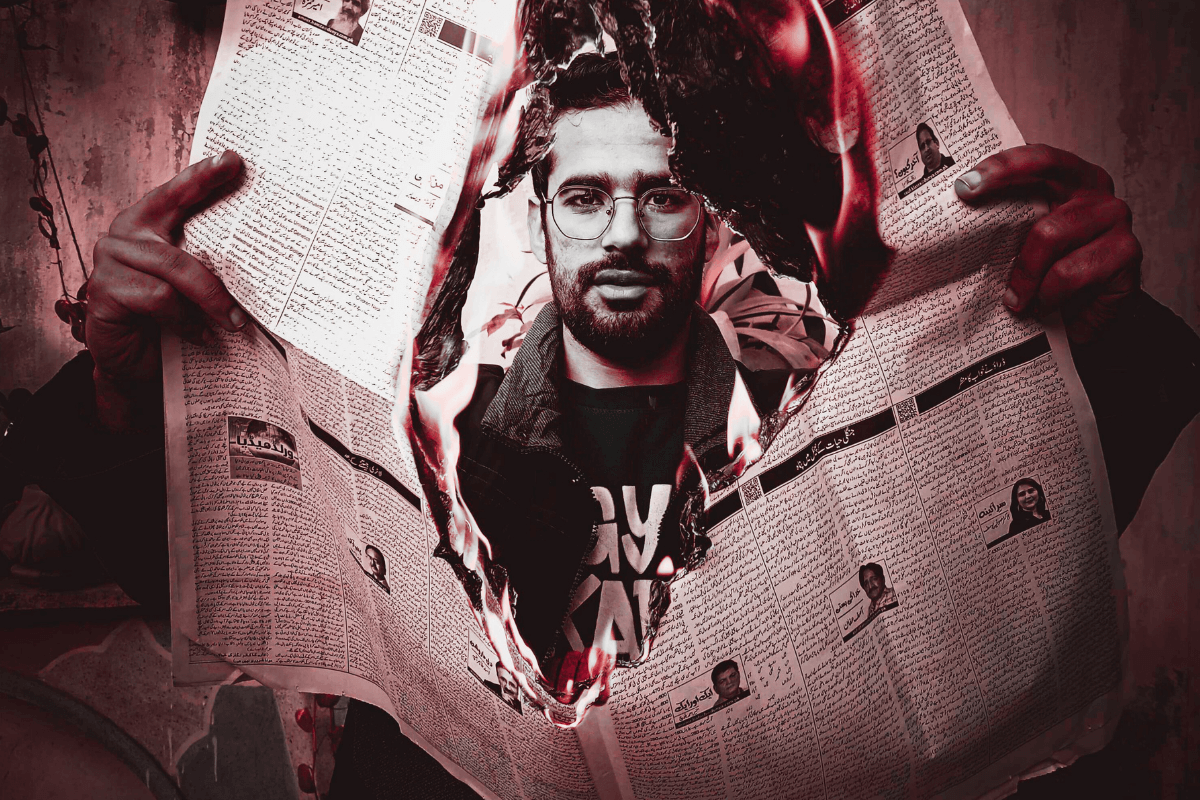 Why does Israel target Palestinian journalists in Gaza?


