
IslamiCity
Listen PodCasts, Live Quran, Watch Videos @VideoHub

Uzbekistan, a Central Asian nation rich in history and culture, stands at the crossroads of the ancient Silk Road. Known for its vibrant cities such as Samarkand, Bukhara, and Khiva, the country has long been a center of Islamic scholarship, art, and trade.
Since gaining independence in 1991, Uzbekistan has been navigating a path of political, economic, and social development while maintaining its deep-rooted traditions. In recent years, the government has embarked on visionary reforms aimed at advancing the nation, strengthening its global presence, and enhancing the well-being of its citizens.
All the renewal and transformation initiatives taking place in new Uzbekistan are aimed at serving the interests of Uzbek people, reflecting their aspirations, and shaping a bright future for Uzbekistan. Under the initiatives of the country's leadership, special attention is paid to preserving the traditions and values of Islam, drawing a clear line between genuine belief and false religious ideas, and safeguarding young people from falling under the influence of alien ideologies. In this regard, thoughtful and balanced reforms are being implemented.
In some parts of the world, unfortunately, misguided policies in the social and religious spheres have caused a certain extent of tension between governments and their people. Such scenarios have also led to the intensification of ethno-confessional conflicts. These situations pose serious threats to global security and stability, demanding increased vigilance, prudence, and the adoption of well-considered measures. In this regard, the reforms carried out in Uzbekistan under the guiding principle of "For the Dignity of Man" have garnered broad support among the multi-ethnic population. It is noteworthy that these prudent policies have yielded positive results, especially evident in the religious sphere.
It is only natural that experts and scholars are keen to understand the key factors behind the success of these reforms, especially in ensuring a healthy socio-spiritual environment and religious stability in New Uzbekistan. The practical dimensions of the religious and educational reforms being implemented in Uzbekistan under the initiative of the President can be observed in the following key areas:
Further advancing this legal infrastructure, in 2021, a new version of the Law "On Freedom of Conscience and Religious Organizations" was adopted. This legislation provides firm legal guarantees for the free and unimpeded functioning of religious organizations throughout the country. Between 2017 and the present, Uzbekistan has adopted three distinct legislative acts and 56 normative legal documents aimed at structuring and regulating the operations of the religious and educational sector. It is important to underscore that the religious-educational domain is inherently sensitive and multifaceted.
It should be noted that the field of religious education is both highly sensitive and intricately nuanced. As such, decisions in this area are not made hastily but rather through meticulous consideration. It is guided by a principle rooted in one of the traditional Uzbek proverbs, "measure seven times, cut once", with the aim of ensuring long-term societal harmony and public trust. The experience of recent years has demonstrated repeatedly that any reform failing to consider the historical experience, spiritual identity, and long-term aspirations of the people is unlikely to yield beneficial outcomes. From this perspective, the President's insistence that all legal and policy documents concerning religion be drafted without haste and rooted in the public interest should be regarded as a prudent and strategic initiative.
It must also be acknowledged that a ready-made, stable model of religious policy cannot simply be imported from abroad. While international experience can and should play an important role, any such model must respect national religious traditions, consider Uzbekistan's multi-ethnic and multi-confessional context, and most critically align with the country's national interests.
One notable example occurred on October 18, 2016, during the 43 rd Session of the Council of Foreign Ministers of the Organization of Islamic Cooperation (OIC), held in Tashkent. At this high-level gathering, the President proposed the establishment of the Imam Bukhari International Research Center in Samarkand, a center envisioned as a platform for deepening the study of Islamic scholarship and disseminating the moral and intellectual heritage of Islam.
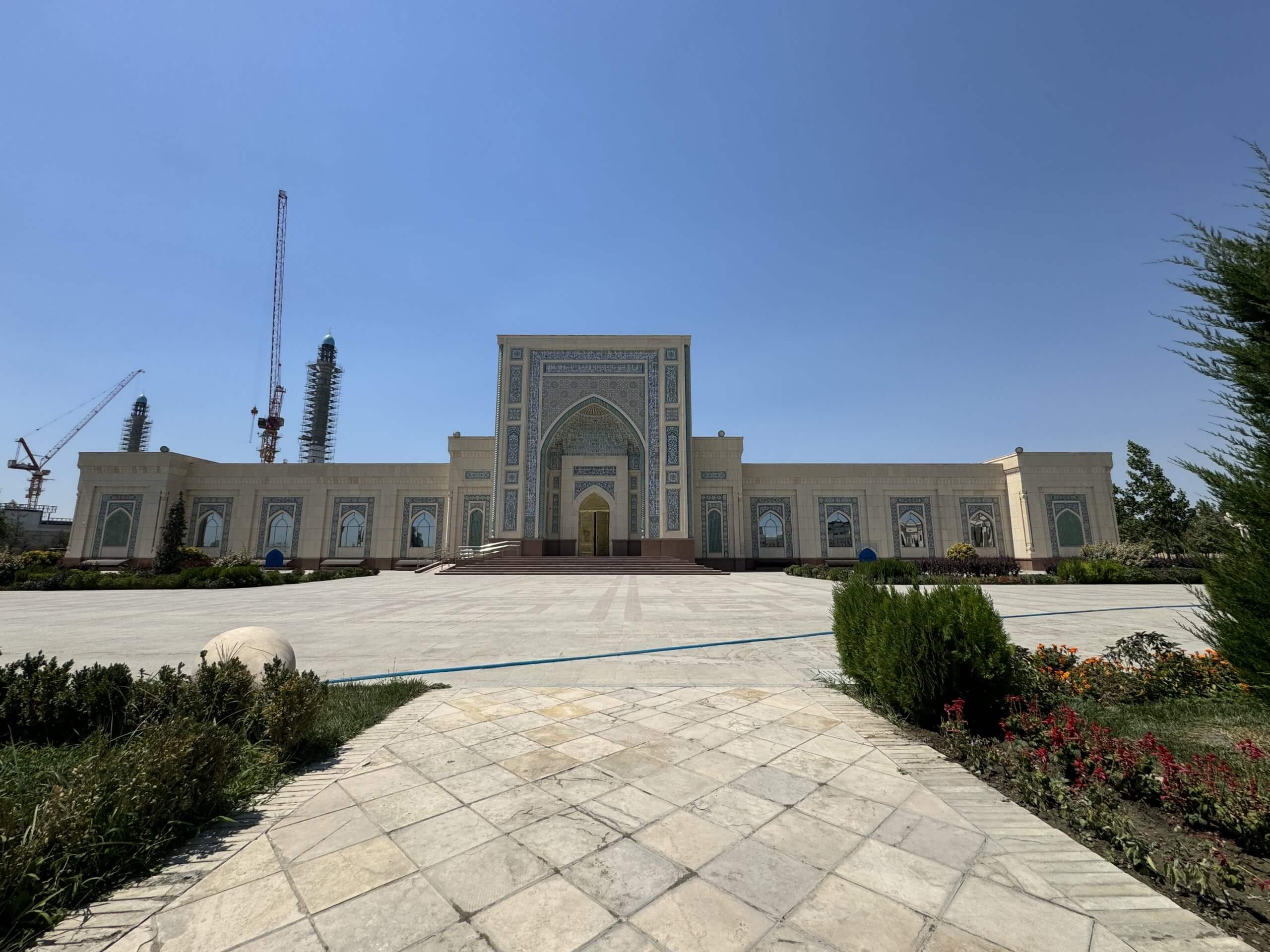
In 2017, when addressing the 72nd Session of the United Nations General Assembly, the President of Uzbekistan succinctly expressed his firm position against the growing global trend of associating Islam with violence. In his speech, he emphasized:
"We resolutely condemn those who associate our sacred religion with violence and bloodshed, and we will never reconcile with them. Islam calls us to goodness and peace and encourages the preservation of true human virtues."It was during this same forum that the President introduced the idea of establishing the Center for Islamic Civilization in Uzbekistan. This visionary initiative aims to showcase the vast scientific, spiritual, and constructive heritage of Islam. With its scholarly depth and civilizational significance, the center is designed to function as a bridge between the rich intellectual traditions of Islamic culture and the modern world.
In addition, a significant achievement on the international front came with the adoption of a special resolution entitled "Enlightenment and Religious Tolerance" at the plenary session of the UN General Assembly, an initiative put forth by Uzbekistan. The resolution is dedicated to promoting interreligious tolerance, fostering mutual respect among faith communities, ensuring religious freedom, and protecting the rights of believers worldwide. Notably, this resolution was supported by more than 100 member states of the United Nations, underscoring the global resonance of Uzbekistan's approach to peaceful religious coexistence.
In 2018, the International Islamic Academy of Uzbekistan was established as the country's flagship institution for training specialists in Islamic studies, theology, and the study of classical sources. This academy now serves as the leading educational hub for cultivating scholarly expertise in these fields.
Another significant initiative is the enhancement of knowledge and professional competence among imams and religious leaders. To address this, the Advanced Training Center, along with its four regional branches, was launched. Each year, hundreds of imams participate in these programs, acquiring updated knowledge and skills tailored to the realities of contemporary religious and social life.
In order to revive the scholarly traditions of renowned hadith scholars such as Imam Bukhari, Imam Termizi, and Imam Dorimi, a Hadith Science School was established in Samarkand. This institution is dedicated to both restoring the intellectual legacy of these great figures and advancing research in hadith studies.
Given the historical prestige and influence of Bukhara as a center of Islamic learning, and its role in training generations of religious leaders, the Mir Arab Higher Madrasa was re-established. Throughout its history, this institution has educated not only scholars within Uzbekistan but also leading religious figures across Central Asia. Today, respected Islamic scholars and leaders in countries such as Russia, Azerbaijan, Kazakhstan, Kyrgyzstan, and Tajikistan can trace their academic roots to the Mir Arab madrasa.
Additionally, in the ancient city of Termez, home to many prominent Islamic scholars, a new international research center, institute, and religious educational institution named after Imam Termizi has begun operation. The Imam Termizi International Research Center has already translated and published more than 30 classical works by Imam Termizi, Hakim Termizi, and other scholars from the region into the Uzbek language, thus making their intellectual heritage more accessible.
Recognizing the continued relevance of the teachings of Imam Maturidi, a scholar who played a pivotal role in shaping Islamic theology and guiding Muslim belief, the Imam Maturidi International Research Center was established in 2020. The center has translated into Uzbek some of his most significant works, including "Ta'wilat al-Qur'an" and "Kitab at-Tawhid."
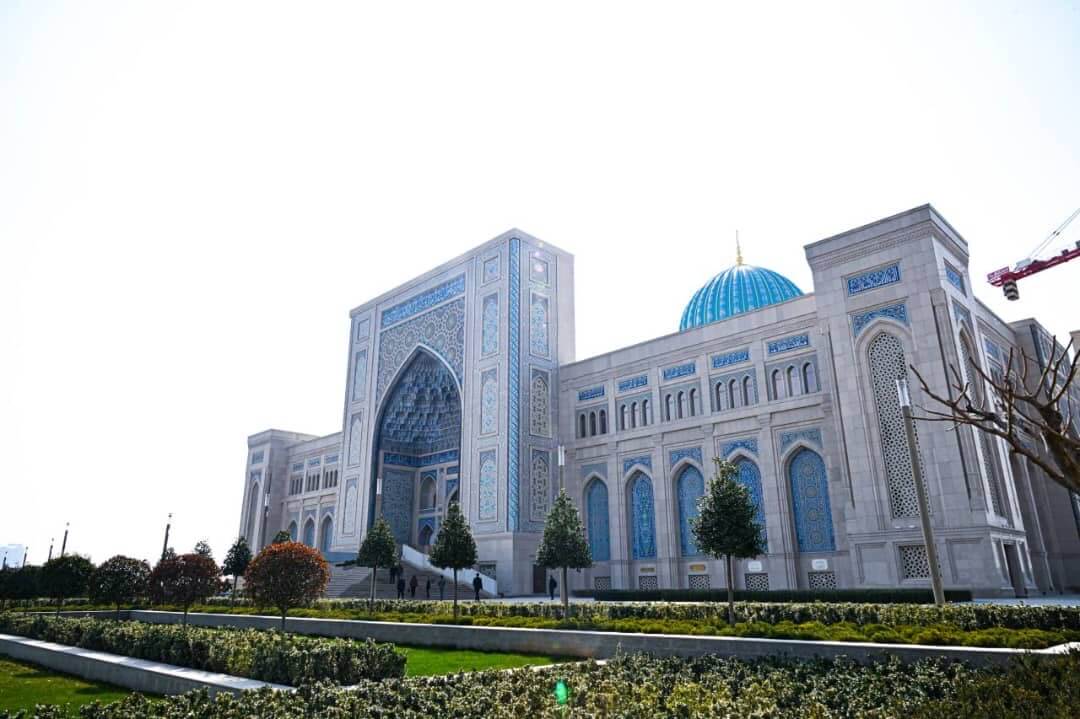
It is important to highlight that these institutions play a crucial role in conveying the true essence of Islam to both the people of Uzbekistan and the wider Muslim community. In combating the influence of extremist ideologies, encouraging a love of knowledge and science among youth, and nurturing moral and ethical values, these centers are actively advancing the noble idea of "Enlightenment Against Ignorance."
On the initiative of the President, over 500 mosques, madrasas, and revered shrines have been renovated as a mark of honor to the religious values and great scholars of the Islamic tradition. These restoration efforts include significant sites such as the Imam Termizi, Shaykh Muhammad Sodiq Muhammad Yusuf, and Suzuk Ota mosque complexes in Tashkent; the Abu Muin Nasafi complex in Karshi; the Sultan Uvays Qarani shrine in Namangan; and the shrines of Bahauddin Naqshband and the Seven Pirs in Bukhara.
Similar large-scale reconstruction efforts are actively continuing at the Imam Bukhari Complex in Samarkand, which houses the tomb of the great muhaddith. The complex is scheduled to be completed and opened to the public in 2025. Undoubtedly, this sacred site will become a prominent destination of reverence, drawing visitors from across the Muslim world.
The overarching objective of these development and restoration projects is not merely preservation, but the revitalization of the spiritual potential of society by linking the nation's great historical legacy with the present day. These initiatives serve as a bridge connecting the intellectual and moral wealth of the past with the values and aspirations of modern Uzbekistan.
One of the key objectives of Uzbekistan's reforms in the religious and educational spheres is to revive and promote the country's immense contributions to human civilization. By doing so, the state seeks to inspire younger generations toward enlightenment, encourage scientific inquiry, and pave the way for a new trajectory of innovative development rooted in a rich national and cultural heritage.
It must be emphasized that strengthening cooperation among Muslim countries, addressing common global challenges, and promoting unity within the Ummah have become increasingly critical. In this context, the mobilization of scholarly, institutional, and cultural capacities across the Muslim world is of exceptional importance.
In line with this vision, Uzbekistan has hosted numerous international academic conferences dedicated to the scholarly legacies of the great Islamic thinkers of Central Asia. These conferences, organized by national research institutions in partnership with leading global Islamic studies centers, have become key platforms for intercultural and interreligious dialogue.
In line with the President of Uzbekistan's vision to promote the nation's spiritual and intellectual heritage, a series of international conferences have been organized- in 2018 on Abdukholiq Gijduvani and Bahauddin Naqshband, in 2020 and 2025 on Imam Maturidi, and in 2024 on Imam Termizi. These scholarly forums brought together over 100 distinguished theologians and academics from across the globe, underscoring Uzbekistan's growing role in global Islamic scholarship.
As part of an initiative proposed by the President of Uzbekistan at the 78 th Session of the United Nations General Assembly, an international conference titled "Islam - A Religion of Peace and Kindness" was held in 2024 in the historic cities of Tashkent and Khiva. The prestigious forum brought together more than 70 religious leaders, muftis, and prominent Islamic scholars from 22 countries. The conference underscored the urgent global need to establish peace, resolve conflicts through non-violent means, and advance interfaith dialogue. Uzbekistan's experience in fostering religious tolerance was showcased as a model of best practice for promoting harmony in diverse societies.
One of the most vivid illustrations of this humanistic and forgiving approach is the repatriation of Uzbek citizens from conflict zones in Syria and Iraq. Through a series of special operations under the name "Mehr" (compassion), nearly 500 women and children were safely brought back from war-torn regions. This initiative has been widely recognized as a bold expression of the Uzbek government's commitment to human dignity, compassion, and second chances.
Such actions have played a crucial role in preventing radicalization and violent extremism, especially among youth. By promoting a correct understanding of Islam as a religion of construction, knowledge, and humanity, these efforts have helped anchor spiritual values within a broader societal context of peace and harmony.
It must be clearly stated that no stable spiritual environment can be established without elevating public awareness and intellectual capacity. Analysis of extremist and terrorist groups reveals a common pattern: they specifically target socially vulnerable individuals with low levels of education and limited capacity for critical thinking. Their recruitment strategies focus on those who are poorly informed, economically marginalized, or disconnected from mainstream society.
In response, the President of Uzbekistan has prioritized education as a strategic pillar of national reform. Particular emphasis is placed on enhancing school education and vocational training aligned with labor market needs. These forward-looking initiatives are not only social or economic in nature but they serve as long-term safeguards against ideological manipulation and radical influences. Indeed, the international community has increasingly acknowledged Uzbekistan's achievements in this domain, with global experts recognizing the country's education-based approach to countering extremism.
In conclusion, the religious and educational reforms undertaken at the initiative of the President of Uzbekistan serve as a comprehensive framework for securing freedom of conscience, protecting youth from destructive ideologies, and cultivating a new generation of qualified scholars and spiritual leaders. Most importantly, they contribute to ensuring social peace, religious tolerance, and the stability of the national spiritual environment, which are indispensable for the development of a just and cohesive society.
Dr. Shahzod Islamov serves as Deputy Director of the Imam Maturidi International Scientific Research Center under the Cabinet of Ministers of the Republic of Uzbekistan, where he advances scholarly studies on Maturidi theology and promotes harmony through rigorous academic research anchored in Islamic tradition.
 How Did Prophet Muhammad Show Mercy and Compassion to Humanity?


