
IslamiCity
Listen PodCasts, Live Quran, Watch Videos @VideoHub

Orthodox nun Mother Agapia Stephanopoulos shares her powerful firsthand account, revealing the hidden struggles of Christians in the Holy Land, life under Israeli occupation, and the urgent fight to preserve Christianity's birthplace, in an interview on the Tucker Carlson Network.
Mother Agapia Stephanopoulos, an American-born Orthodox nun, has lived in the Holy Land since 1996. She paints a stark picture: Palestinian Christians live under the same restrictions and hardships as Palestinian Muslims. In Bethlehem, Jerusalem, Jericho, and other Christian holy sites-most under Palestinian Authority jurisdiction-Christians are blocked by Israel's occupation from freely practicing their faith, visiting family, or accessing healthcare.
Christians in Bethlehem, for example, need Israeli permits to enter Jerusalem to worship at the Church of the Holy Sepulchre. These permits are rarely granted, especially in times of heightened conflict. Despite being the direct descendants of the earliest Christians, they live in what she describes as "a gilded cage."
Mother Agapia recounts how Israel's settlement expansion and wall construction have severed Christian communities from their churches, schools, and each other.
The Wall: Built deep inside Palestinian territory-often on Christian-owned land-ostensibly for security but in practice to annex territory.
Example: The wall cuts off Bethany from Jerusalem, blocking nuns from reaching their convent. It even appropriated land from a Christian boys' home.
Infrastructure Discrimination: License plates determine movement-yellow plates for Israelis (access to all roads), green/white for Palestinians (severe road restrictions).
Her Experience: As a nun, she sometimes used her diplomatic-style plates to ferry Christians across checkpoints, helping families see loved ones.
She rejects the Western media narrative that Muslim-Palestinian society is hostile to Christians:
In her Christian school, 98% of students were Muslim, and about half the staff was Muslim.
Muslim neighbors respected her religious habit, recognizing shared values like fasting, almsgiving, and family care.
While differences exist, the Palestinian culture is historically interwoven with both faiths.
Christian numbers in Israel/Palestine have dropped dramatically since 1948. She argues this is due to deliberate Israeli policies making life unlivable for Palestinians-Christian and Muslim alike.
Land Confiscations: Generational olive groves seized for settlement roads and houses.
Economic Strangulation: Destroyed businesses, blocked access to jobs, and constant harassment push families to emigrate.
"Living Death": The loss of land and freedom while remaining physically alive.
Mother Agapia criticizes U.S. evangelical leaders like Ted Cruz and Mike Johnson for supporting Israel without acknowledging the persecution of Holy Land Christians.
Christian Zionists: Adherents of a theology she calls "heretical," rooted in 19th-century rapture doctrines, prioritize building modern Israel and a Third Temple over Christ's teachings on compassion.
Impact: They fund settlements built on confiscated Palestinian Christian land.
She recounts multiple examples:
Jacob's Well Factory: A Christian-owned factory in Nablus destroyed by Israeli forces without court order.
Church Properties: The Knesset sits on land leased from the Jerusalem Patriarchate. Other church lands have been taken through legal loopholes or deception.
Graffiti & Vandalism: Religious sites defaced with anti-Christian messages.
She details cases of Palestinian Christian children killed by Israeli soldiers, often with no repercussions:
Example: Christine Sada, 12, killed when soldiers opened fire on her family car in Bethlehem's Shepherd's Field.
Parallel Treatment: Palestinian Christians face the same lethal risks as Muslims-teen boys, regardless of religion, can be shot for perceived defiance.
During the Second Intifada, Israeli forces besieged Bethlehem, including the Church of the Nativity.
Casualties: A bell ringer shot dead inside; an altar boy killed by a sniper.
Siege Tactics: Destroyed infrastructure, blocked food and medicine.
Personal Role: She smuggled medicine to people trapped inside.
Mother Agapia disputes the framing of Hamas as purely an Islamic terror group:
Describes them as a resistance movement responding to decades of dispossession.
Argues Gaza's blockade, destroyed airport, and strangled economy constitute an "open-air prison."
She links the shrinking Christian populations across Iraq, Syria, and Lebanon to a broader "Greater Israel" strategy, enabled by U.S. foreign policy.
Syria: Before the war, vibrant Christian communities thrived under Assad; now many are displaced.
Iraq: Nearly all Christians have been driven out since the U.S.-led invasion.
Harassment: Priests and nuns spat on, crosses vandalized, churches defaced.
Settler Violence: U.S. citizen Palestinians beaten to death with no arrests.
Movement Restrictions: Even Palestinian-American Christians cannot use Tel Aviv's airport-must cross via Jordan under Israeli control.
Christian churches, including the 3rd-century St. Porphyrius, have been bombed. She dismisses claims these are accidents, citing targeted strikes on visible crosses.
Temple Mount: Currently home to Al-Aqsa Mosque, Islam's third holiest site.
Christian Zionist Goal: Demolish the mosque to rebuild the Third Temple, believing it will trigger apocalyptic prophecy.
Her Warning: Such an act would ignite massive global conflict.
She urges U.S. Christians to:
Educate themselves about Palestinian Christians' plight.
Challenge political and church leadership that uncritically supports Israel.
Visit the Holy Land to meet local Christians, not on Israeli state-guided tours.
Advocate politically to end unconditional U.S. support for policies destroying the Christian presence in Christ's birthplace.
Mother Agapia frames the struggle as both political and spiritual:
Politically: U.S. leverage could end the occupation and allow a free Palestinian state.
Spiritually: The world must decide whether to live by Christ's compassion or enable ethnic cleansing in His name.
Without action, she warns, the Holy Land's churches will become "museums" instead of living centers of faith.


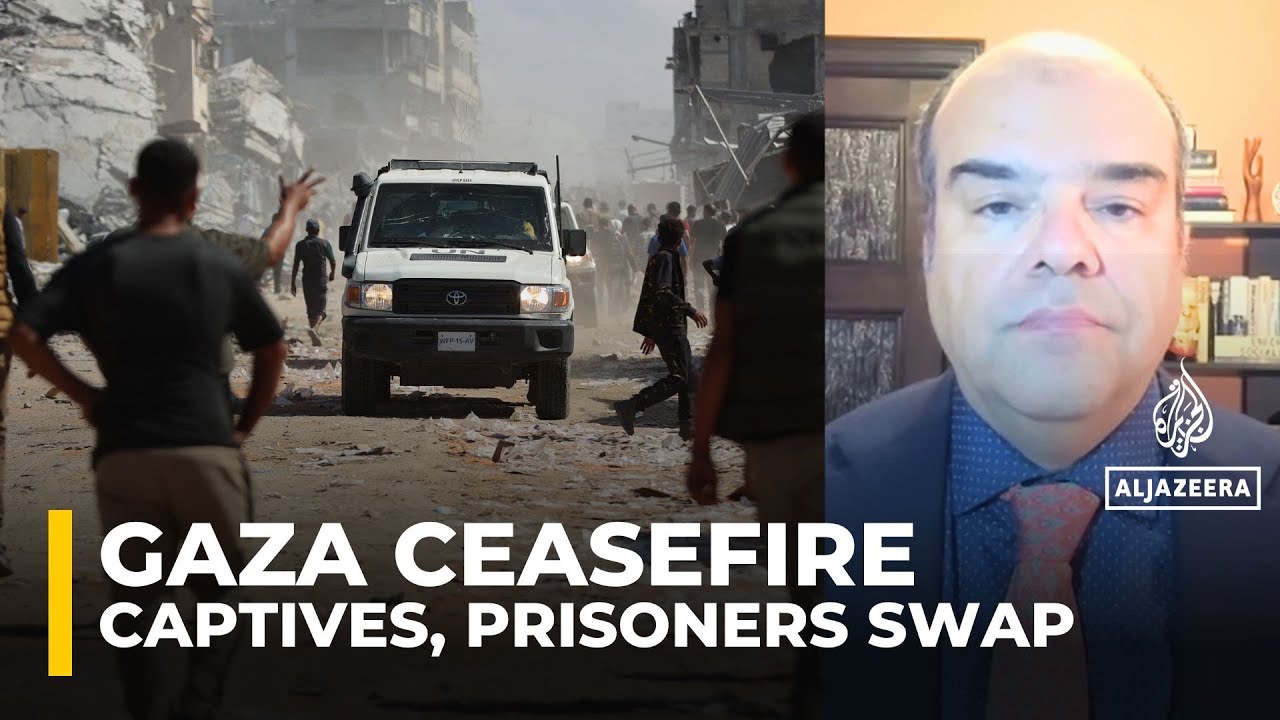 Ceasefire Without Justice: How the Gaza Deal Masks Continued Occupation