
IslamiCity
Listen PodCasts, Live Quran, Watch Videos @VideoHub

SRINAGAR, KASHMIR - The Indian government has sparked outrage after banning 25 books in Indian-controlled Kashmir, accusing them of spreading "false narratives" and inciting "secessionism" in the disputed region.
The Home Department in New Delhi claimed that the banned works "glorify terrorism, misguide youth, and encourage violence against the Indian state." Among the blacklisted titles are internationally acclaimed works, including Booker Prize winner Arundhati Roy's Azadi: Freedom, Fascism, Fiction, historian A G Noorani's The Kashmir Dispute 1947-2012, and academic Hafsa Kanjwal's Colonizing Kashmir: State-building Under Indian Occupation.
Officials allege the books could "deeply impact the psyche of youth by fostering grievance, victimhood, and terrorist heroism."
Hafsa Kanjwal, a US-based Kashmiri academic, slammed the ban as proof of India's "deep insecurity" over its control of the territory.
"On one hand, the state celebrates literature with festivals; on the other, it censors the histories and voices of Kashmiris," Kanjwal said, describing the move as part of a larger "settler colonial" strategy - erasing memory, history, and identity, then replacing them with state-approved narratives.
Earlier this year, authorities also confiscated over 600 books by influential Islamic scholar Syed Abul A'la Maududi, heightening concerns of religious and ideological censorship.
Critics say this is the latest in a series of crackdowns following Prime Minister Narendra Modi's 2019 decision to revoke Kashmir's semi-autonomous status.
Anuradha Bhasin, whose book A Dismantled State: The Untold Story of Kashmir After Article 370 is among those banned, joins other writers in warning that the move is part of an authoritarian trend.
Mona Bhan, co-editor of the banned Resisting Occupation in Kashmir, called the ban "a hallmark of fascist regimes that fear truth," accusing India of trying to "suppress critical thinking and credible scholarship" while imposing its own version of history.
Kashmir remains one of the world's most militarised zones, claimed in full by both India and Pakistan. A decades-long insurgency in the Indian-administered region has left tens of thousands dead, with locals widely viewing it as a legitimate freedom struggle.
The United Nations continues to recognise Kashmir as a disputed territory, with multiple resolutions affirming the right of Kashmiris to self-determination through a plebiscite - a promise yet to be fulfilled.
With this sweeping book ban, critics fear not just the erasure of Kashmiri voices from shelves, but from history itself.


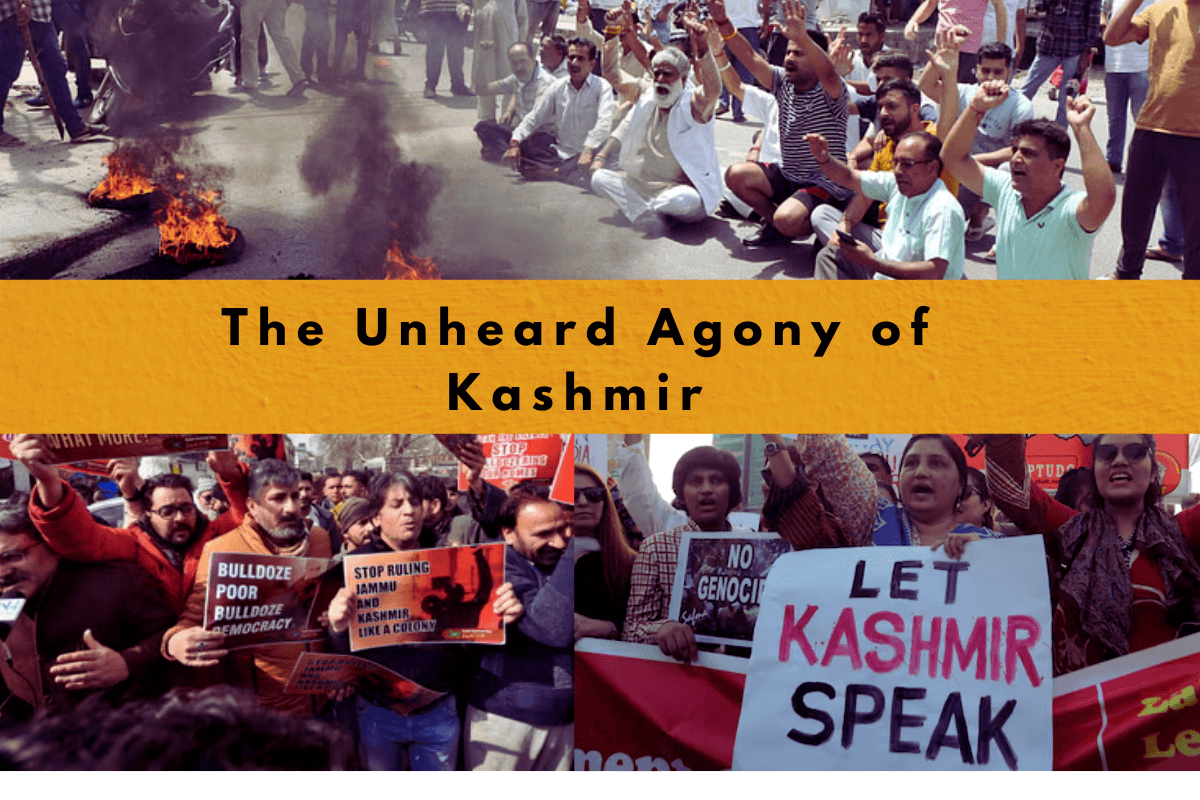 The Unheard Agony of Kashmir: A Chronicle of Historical Grievances and Ongo...