
IslamiCity
Listen PodCasts, Live Quran, Watch Videos @VideoHub

The Honorable Secretary of Defense Pete Hegseth is known not only for his political commentary and military service but also for the prominent tattoos that cover his biceps, chest, and torso-about a dozen in total. One of the most notable is the Arabic word "كافر" (kafir), which translates to "infidel" in English.
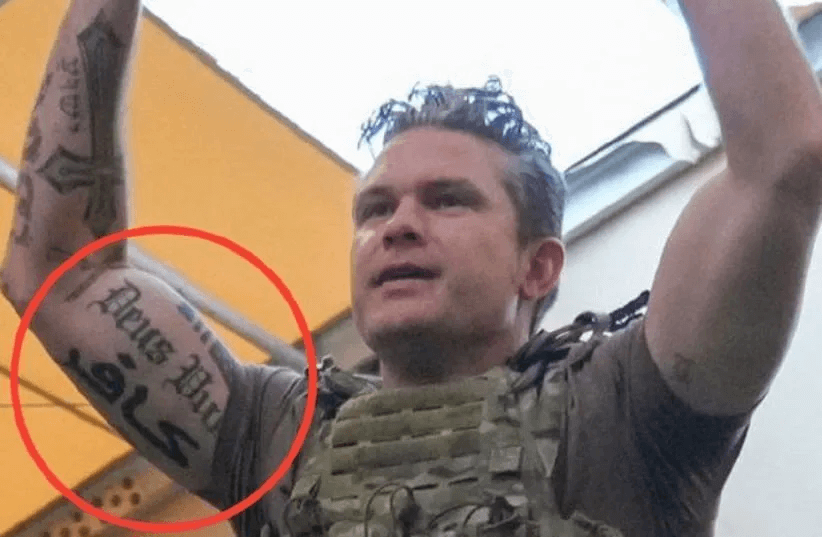
As a native Arabic speaker and a U.S. Air Force veteran, I took particular interest in that tattoo. Given the misunderstandings that often surround this term-especially in Western discourse-I feel compelled to clarify both the meaning of the word kafir and address a few misconceptions surrounding Hegseth's tattoos.
This is false. The Arabic word kafir refers to someone who rejects or disbelieves in God-it does not specifically mean a Westerner or any non-Muslim. In Islamic terminology, it denotes disbelief in the monotheistic message.
Contrary to what many assume, Islam does not label Jews and Christians as kafirs-instead, they are referred to respectfully as "People of the Book" (Ahl al-Kitab). In fact, Muslim men are permitted under Islamic law to marry Christian and Jewish women, but not polytheists or those who reject all forms of belief in God (i.e., kafirs in the strictest theological sense).

It is worth noting that the term "infidel" is also found in the Bible, where it similarly refers to those who are unfaithful or unbelieving. In essence, the word carries the same meaning across the Abrahamic traditions: a disbeliever-not a cultural enemy or someone of a different nationality.
Another misconception is that people with many tattoos must be gang members or criminals. Secretary Hegseth, despite having multiple tattoos-including one that says "Infidel"-has never been accused of aggravated assault, robbery, rape, or murder. Yet, stereotypes persist, especially when tattoos appear on Latino or Black individuals. The reality is that societal bias often plays a role in how tattoos are perceived, particularly in relation to race.
Let's be honest-if Hegseth were not a white man, the public reaction to his ink might be vastly different. It's important to challenge those double standards and recognize that tattoos, in and of themselves, don't determine a person's character or criminality.
The word "infidel" has a long and complicated history. Prior to the spread of Islam, Christians in Europe used the term to describe non-Christians or those considered enemies of the Church. Over time, the word became militarized-especially during the Crusades-and was used to justify war and colonization.
In Arabic, the term kafir simply translates to "one who disbelieves." It is not a racial slur, nor should it be wielded as a term of mockery or superiority. It's a theological category, not a blanket label for the West.
So next time someone tries to act like a smart-aleck or misuses the term kafir, remind them: "Don't be a fool. Kafir means disbeliever-not Westerner, not American, not you."
Mahmoud El-Youseph is a Palestinian freelance writer and retired U.S. Air Force veteran. He writes on issues related to politics, religion, and justice. Feedback or comments? Contact him at: [email protected]


 US Sanctions Palestinian Officials for Pursuing Israel in World Courts