
IslamiCity
Listen PodCasts, Live Quran, Watch Videos @VideoHub

In an era where global conversations increasingly demand accountability, nuance, and honesty, it is critical to examine uncomfortable truths about ideologies that have shaped the modern world.
One such ideology is Kahanism-an offshoot of Zionism that openly embraced fascism, racial supremacy, and ethnic cleansing. Though widely condemned today, its roots and rhetoric continue to influence Israeli politics and policies, often in more veiled forms.
This chilling phrase captures the dehumanizing ideology of Meir Kahane, an American-born rabbi and founder of the Jewish Defense League (JDL) and later the Kach party in Israel. Known for his incitement against Arabs and Palestinians, Kahane advocated for their total expulsion from Israel and the occupied territories. He openly called for apartheid policies, segregation, and the enforcement of Jewish law (halakha) as state law.
His language echoed genocidal rhetoric used in other fascist regimes throughout history, setting the stage for violence not only in theory but also in action.
The 1985 bombing assassination of Alex Odeh, a Palestinian-American civil rights advocate, is just one example of the brutal tactics employed by extremist Zionists in the U.S. and abroad. While no one was officially convicted, strong suspicions remain that members of the JDL were behind his murder.
One of Kahane's supporters, Carl Benjamin Gorstein, later took part in brutal massacres in occupied Palestine, further revealing the trajectory from hateful ideology to mass violence.
To understand the Kahanist trend, it must be contextualized within Revisionist Zionism-a strand of Zionism that opposed the mainstream socialist-labor Zionist movement. Founded by Ze'ev Jabotinsky, revisionists advocated for a Greater Israel, including present-day Jordan, Lebanon, Syria, and parts of Iraq.
Prominent revisionist newspapers during the 1930s disturbingly praised fascist leaders like Hitler, Mussolini, and Kemal Atatürk, drawing admiration not for antisemitism, but for their totalitarian control and anti-communist stance. Some Zionist groups like the Stern Gang even proposed an alliance with Nazi Germany to establish a Jewish ethno-state.
It is tempting to draw a clean line between far-right Zionist extremism and the more palatable Labor Zionism represented by figures like David Ben-Gurion. However, historical evidence reveals that both wings shared a commitment to Jewish supremacy in Palestine.
The Haganah, often labeled as a "moderate" militia, gave the green light for atrocities committed by the right-wing Irgun and Lehi (Stern Gang) during the 1948 Nakba, including the Deir Yassin massacre. This coordinated violence was foundational in driving out over 700,000 Palestinians from their homes.
The Haganah, Irgun, and Lehi eventually merged to form what is now the Israeli Defense Forces (IDF)-blurring the lines between extremist militias and state military forces. Revisionist Zionism's political party, Herut, morphed into today's Likud Party, currently led by Benjamin Netanyahu.
While Kahane's Kach party was banned in 1994 and labeled a terrorist organization by the U.S., many of his ideological successors now hold influential positions in Israel's parliament and military. They push for open annexation of the West Bank, Jewish-only settlements, and further displacement of Palestinians.
In his book They Must Go, Kahane detailed his vision of an ethnically pure Jewish state. Arabs would be forced to pledge loyalty to Jewish sovereignty and be stripped of voting rights. Those who refused would be expelled by force. He also called for:
Kahane admitted that democracy and Zionism are incompatible. He chose Zionism-fully embracing racism and authoritarianism.
Even liberal Zionists acknowledge the contradiction: Can Israel be both Jewish and democratic? As one Israeli commentator stated, "You cannot reconcile the two. Israel must choose." For Kahane, the answer was simple-be undemocratic and achieve a state with full Jewish supremacy.
But others remain trapped in what Kahane called a "schizophrenic document"-Israel's Declaration of Independence, which promises both democracy and a Jewish state. In practice, the democratic façade often masks the systemic oppression of Palestinians.
Kahane's territorial vision went far beyond current Israeli borders. He cited the Bible as justification for claiming:
This messianic irredentism isn't fringe. Many leading Zionists, including Ben-Gurion, echoed similar aspirations, revealing a deep-seated colonial desire that continues to shape expansionist policies.
The danger of ideologies like Kahanism is not just in their extremism, but in how much of their core logic continues to influence "mainstream" Israeli politics today-especially in the normalization of settler colonialism, ethnic cleansing, and apartheid policies.
The path forward cannot be built on a foundation that regards an entire people as a "cancer." True peace, justice, and reconciliation in Palestine-Israel can only begin with dismantling the racist, supremacist ideologies that have long dictated the terms of occupation.
If democracy, human rights, and dignity matter-then we must name these ideologies for what they are: fascism in the cloak of nationalism.


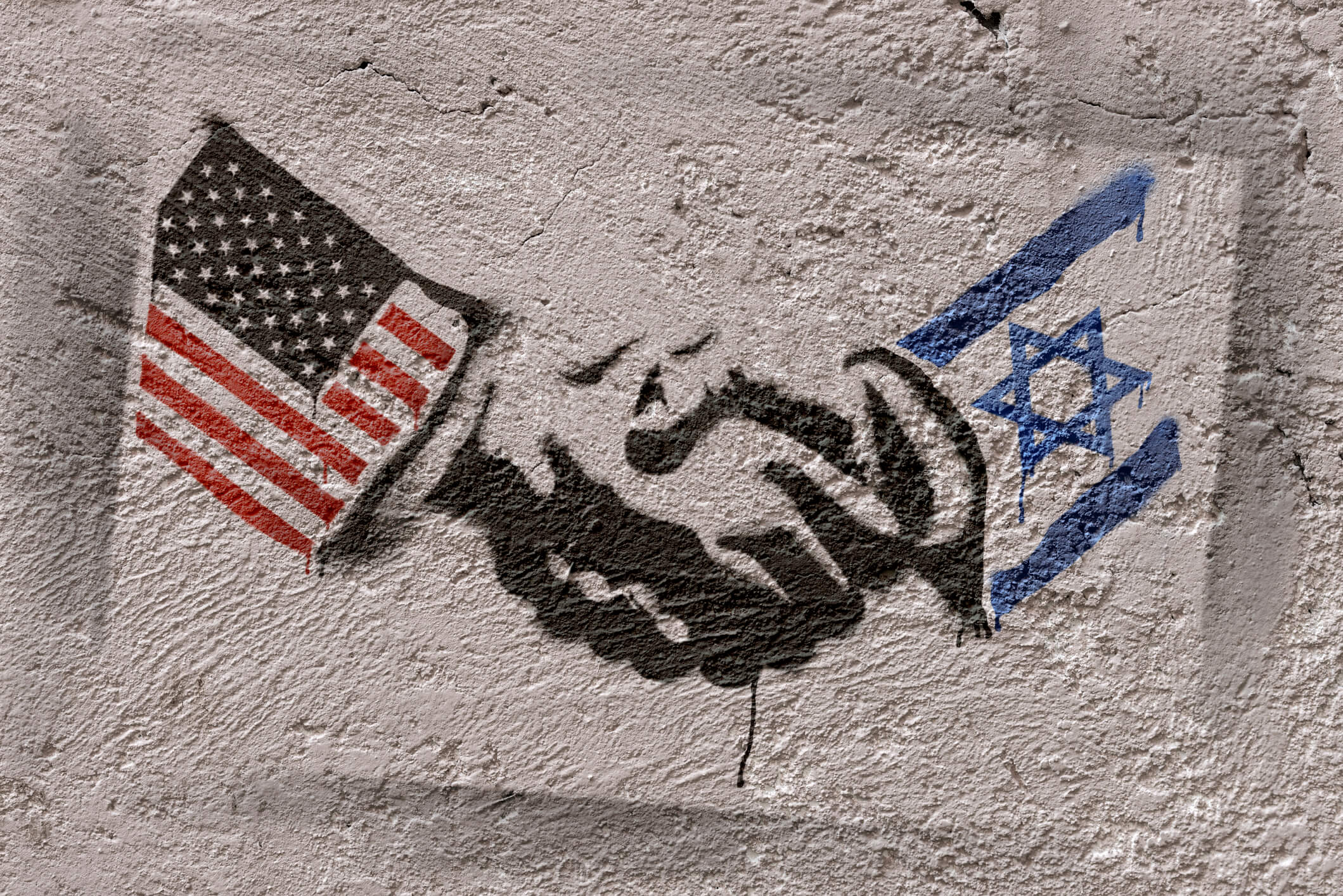 The West and Israel: Architects of Deceit, Masters of Manipulation