Summary of "The ENTIRE History of The Persian Empire":
The video presents a comprehensive historical overview of Persia (modern-day Iran), one of the world's oldest and most resilient civilizations. From prehistory through modern times, Persia has repeatedly emerged as a center of power, culture, and innovation despite invasions, occupations, and civil wars.
Ancient Beginnings and Elamite Civilization (7000-1000 BCE)
- Early agricultural settlements like Choga Golan date back to 7200 BCE.
- The Elamite civilization (centered in Susa) was Persia's first major culture, distinct in language, matriarchal respect, nature-focused religion, and artistic motifs.
- Despite frequent invasions by Mesopotamians, Elam remained a cultural and trading hub, connecting India, Mesopotamia, and Egypt.
Arrival of Iranian Tribes and the Medes (2000-550 BCE)
- Indo-Iranian nomads migrated in waves and merged with Elamite society.
- The Medes formed the first unified Iranian state under Deioces and later destroyed Assyria in alliance with Babylon.
Achaemenid Empire under Cyrus the Great (550-330 BCE)
- Cyrus the Great founded the Achaemenid Empire (first Persian Empire), conquering Babylon, freeing the Israelites, and promoting tolerance.
- He established efficient administration (satraps), a postal system, and religious freedoms.
- His successors, Darius I and Xerxes, expanded the empire, built infrastructure (qanats, roads), and waged wars against Greece (Marathon, Thermopylae, Salamis).
- The empire, the largest of its time, was known for tolerance, innovation, and influence on governance.
Fall to Alexander the Great (330 BCE)
- Alexander defeated Darius III due to superior leadership and Persian weakness, absorbing Persia into his empire.
- Persian cities like Persepolis were burned, and Greek culture mixed with Persian traditions during the Hellenistic period.
Parthian and Sassanian Empires (247 BCE - 651 CE)
- Parthians, nomadic Iranians, resisted Rome and revived Persian power, promoting a noble-driven, semi-democratic system.
- Sassanids centralized power, promoted Zoroastrianism, and developed arts, engineering, and the Silk Road.
- Persia clashed with Byzantium, became a rival superpower, and was considered the peak of pre-Islamic Persian civilization.
Islamic Conquest and Cultural Influence (651-1258 CE)
- Arabs defeated the Sassanids, imposed Islam, and taxed non-Muslims.
- Despite initial resistance, Persia deeply influenced Islamic civilization in language, science, art, and administration.
- Under the Abbasid Caliphate, Persian intellectuals thrived in Baghdad's Golden Age, contributing to mathematics, astronomy, and literature.
Mongol Invasions and Timur (13th-15th Century)
- The Mongols devastated Persia, destroying cities and irrigation, ending the Islamic Golden Age.
- Timur (Tamerlane) continued the destruction while promoting architecture and the arts, leading to brief recovery and fragmentation.
Safavid Empire and Rise of Shi'ism (1501-1736)
- The Safavids, led by Shah Ismail, established Twelver Shi'ism as Iran's state religion, creating a distinct Persian Islamic identity.
- They clashed with the Sunni Ottomans, modernized their army, and flourished culturally under Shah Abbas I.
Decline and Foreign Domination (18th-19th Century)
- The empire fragmented under external (Ottomans, Russians) and internal pressures.
- Persia lost territory in the Russo-Persian Wars, and European powers divided Iran into spheres of influence.
- Corruption and weak leadership led to economic and political dependency.
Modernization and the Pahlavi Dynasty (1925-1979)
- Reza Shah Pahlavi modernized Iran through secular reforms but ruled autocratically.
- During WWII, the Allies occupied Iran for its oil and strategic value.
- His son, Mohammad Reza Shah, was overthrown after increasing Western ties, repression, and a CIA-backed coup (1953) against Prime Minister Mossadegh.
Islamic Revolution and Contemporary Iran (1979-Present)
- Ayatollah Khomeini led the 1979 Islamic Revolution, replacing the monarchy with a theocratic republic.
- Relations with the West collapsed (e.g., Hostage Crisis), and Iran fought a brutal war with Iraq (1980-88).
- Iran is now a regional power, influenced by its Persian heritage while asserting Shi'a leadership across the Muslim world.
- It remains geopolitically significant, strengthening ties with China, Russia, and BRICS while under Western sanctions.


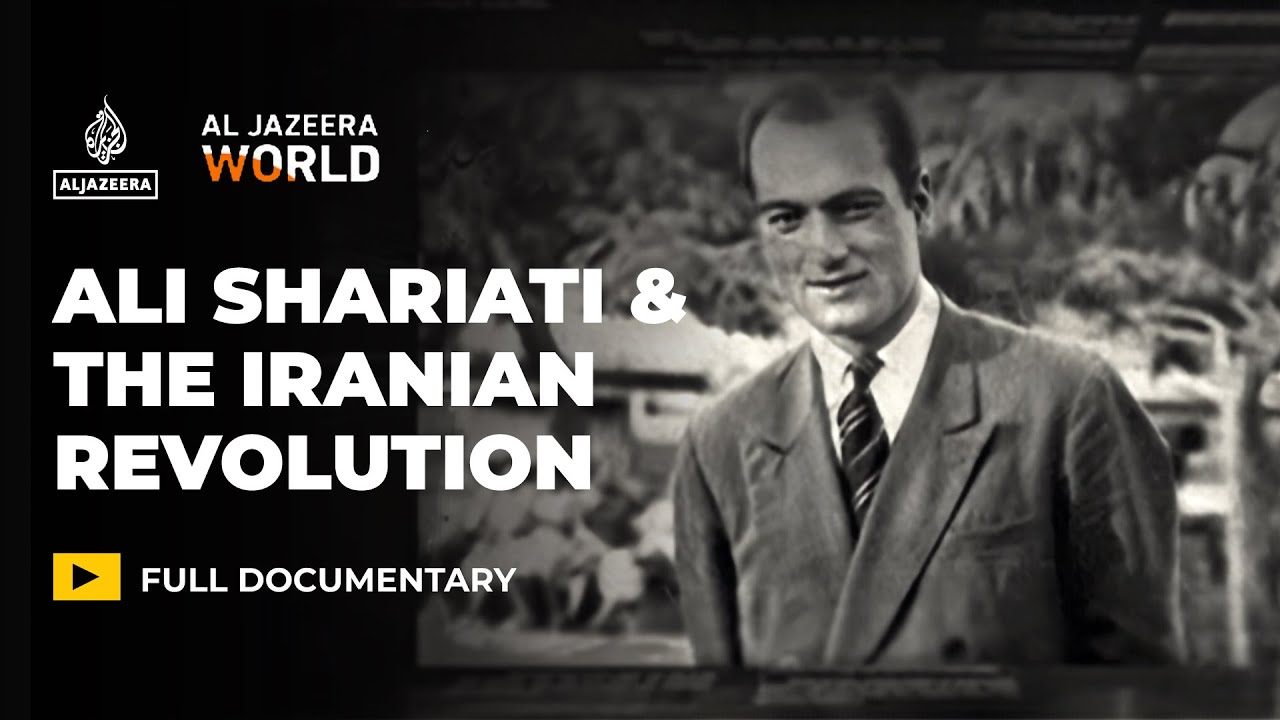 Ali Shariati: The Revolutionary Thinker Whose Ideas Changed Iran


